

The legislation at root of the ‘fake news’ flap is itself a ‘muddied mess’
ColoradoPolitics.com’s Joey Bunch offered some enlightening insights earlier today about the headline-making face-off in Grand Junction between a veteran state lawmaker and his local newspaper’s publisher. That smackdown probably doesn’t need another recap; if you haven’t read Bunch’s blog post on the subject, please do so.
Then, read a solid story-behind-story by Complete Colorado’s Sherrie Peif about the seemingly innocuous bill that served as the catalyst for the clash between state Sen. Ray Scott, R-Grand Junction, and Grand Junction Daily Sentinel Publisher Jay Seaton. Whatever the outcome of Scott vs. Seaton – which could even include a threatened libel suit by the latter against the former – Peif makes clear the prospects of the bill itself, so far, aren’t bright. Hearings already have been delayed twice as the bill’s sponsors and evidently many others try to tinker with its details to get it ready for prime time.
Senate Bill 40, introduced in the upper chamber by Sen. John Kefalas, D-Fort Collins, would require government agencies subject to the Colorado Open Records Act, or CORA, to disclose requested data in the format in which it was created. For example: an Excel spreadsheet of a agency’s employees and their pay. Such an enhancement to CORA could make it easier, as Peif points out, for reporters to track down something like specific employees and their pay whereas under the current law, the agency might reconfigure the data before its release. In principle, the change would be a good thing. We newsies sure would like it.
Yet, even though such a provision is intended to strengthen the law and thus bring more transparency to government, the fine print in the proposal is said to be riddled with problems. Assorted stakeholders have raised issues, reports Peif, who writes that the legislation “is becoming a muddied mess.” For instance:
“It’s a resource issue for us,” said Nate Haas, spokesman for (the University of Northern Colorado in Greeley). “The bill as written would require upfront and recurring costs surrounding data formatting that include purchasing equipment and hardware, data storage, and increased staff and increased staff time required to manage a separate database to comply with the law. As it is right now, because of resource limitations, we’re required to manage open records with staff whose primary responsibilities reside elsewhere.”
And Peif notes this concern by the state Attorney General’s Office:
…the Attorney General’s office is worried about metadata – or data that might include prior changes and comments to a document – and other personally identifiable information being released inadvertently.
We’ll spare you the old saw about lawmaking and sausage making, but you get the idea. Read Peif’s full report for more details; here’s that link again.


Trump wants to give Iran ‘last chance’ to strike a deal before ‘decapitation’
Christian Datoc
christian-datoc@coloradopolitics.com
Updated 26 minutes ago
President Donald Trump said this week’s talks with Iran will be the “last chance” for the Middle Eastern country to avoid a severe escalation in the war. Trump called off plans to strike Iran’s energy infrastructure over the weekend after...
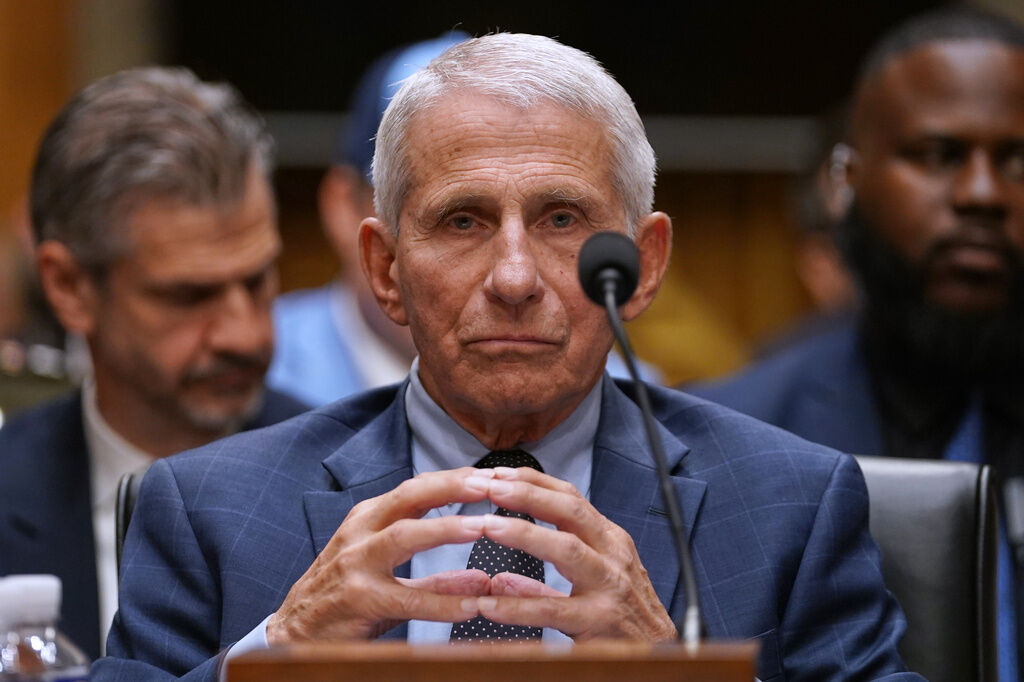
Fauci told Congress higher COVID-19 fatality rate than he calculated in diary: ‘More like 0.2-0.3%’
Mia Cathell
mia-cathell@coloradopolitics.com
Updated 32 minutes ago
Dr. Anthony Fauci privately calculated that COVID-19 had a significantly lower fatality rate than what he told Congress a month later at the outset of the pandemic. On March 11, 2020, the day that the World Health Organization declared COVID-19...

Senate advances judicial nominee, Montezuma County judge agrees to discipline | COURT CRAWL
Michael Karlik
michael.karlik@coloradopolitics.com
Updated 2 hours ago
Welcome to Court Crawl, Colorado Politics’ roundup of news from the third branch of government. A U.S. Senate committee advanced a judicial nominee from Colorado, plus a Montezuma County judge agreed to receive discipline for his misconduct that stops short...

Iran’s leaders show a united front over the war but are divided over what the goal is
The Associated Press
the-associated-press@coloradopolitics.com
Updated 4 hours ago
CAIRO (AP) — With escalating attacks against U.S. bases and its allies over the past week, Iran’s leaders are showing considerable unity over their war strategy: hanging tough, determined to show Iran can endure more than America and its allies...

Courageous Colorado bucks Trump’s federal stupidity | Miller Hudson
Miller Hudson
miller-hudson@coloradopolitics.com
Updated 1 hour ago
There are several theories regarding the rhythm of American politics. The most frequently cited is the pendulum hypothesis — positing that episodes of liberal dominance are then interrupted by spans of conservative control. Since Ronald Reagan’s presidential election in 1980,...

A historic moment during another major drought | Rachel Gabel
Rachel Gabel
rachel-gabel@coloradopolitics.com
Updated 3 days ago
Gustav Sumnick emigrated from Germany, traveled to Oklahoma and decided rather than be a Sooner, he wanted to be a farmer. He moved north to Nebraska and married an Irish immigrant farmer’s daughter. They farmed near Fremont, Nebraska, where the...

Tunnel to Towers brings 9/11 steel to Denver
Nicholas Fogleman
nicholas.fogleman@denvergazette.com
Updated 5 hours ago
A nationwide tour commemorating the 25th anniversary of 9/11 brought a piece of the World Trade Center to Denver on Saturday as the Tunnel to Towers Foundation hosted a ceremony at the Wings Over the Rockies Air & Space Museum....
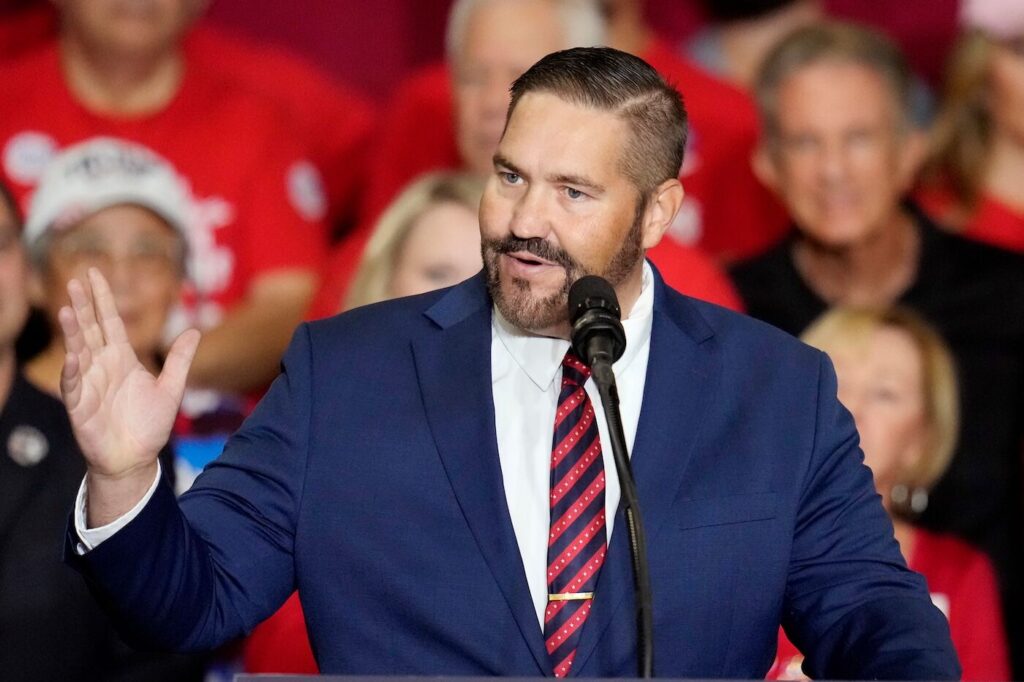
Top officials in Arizona’s Maricopa County agree on how to oversee elections | OUT WEST ROUNDUP
The Associated Press
the-associated-press@coloradopolitics.com
Updated 5 days ago
ARIZONA Officials agree on election oversight PHOENIX — Election officials in Arizona’s most populous county reached an agreement a week before the state’s July 21 primary on how to jointly oversee the vote, ending a prolonged legal battle. Republican Maricopa...

Colorado can’t forget the lessons of COVID | Jon Caldara
Jon Caldara
jon-caldara@coloradopolitics.com
Updated 3 hours ago
We are finally getting a clearer picture of what happened during COVID. Not because the people who locked us up, masked our faces and forced unproven chemicals into our bodies have suddenly become transparent, but because Anthony Fauci’s COVID-era diary...
Historic preservation supporters organize to oppose Trump changes | Bob Loevy
Tom Cronin
tom-cronin@coloradopolitics.com
Updated 3 days ago
Historic preservation organizations in Colorado Springs, the remainder of Colorado and across the nation are organizing to resist a recent effort to relax and weaken historic preservation laws in the United States. In Washington, D.C., the Advisory Council on Historic...