

US Supreme Court hears case on Colorado’s Exoneration Act
The U.S. Supreme Court heard the case last week of a Colorado woman who wants to reimbursed for the fines she paid before her felony convictions were overturned.
If she wins when the Court’s decision is announced in the next couple of months, the ruling would invalidate a state law that requires exonerated convicts to prove they are “actually innocent” and not just “legally innocent” before they can be reimbursed.
The woman, Shannon Nelson, argues the Colorado law violates the Due Process Clause of the Constitution’s 14th Amendment.
She was convicted in 2006 on five counts of physically and sexually abusing her four children. She was sentenced to 20 years in prison.
She appealed and a jury acquitted her during a second trial.
By that time, the Colorado Department of Corrections had taken $702.10 out of her inmate account to be applied to court-ordered restitution of about $8,000 she was supposed to pay. After she was acquitted, she demanded to be paid back.
The Department of Corrections and the courts refused, saying her acquittal does not prove by “clear and convincing evidence” that she is “actually innocent” under guidelines of Colorado’s Exoneration Act.
Nelson’s attorney argued the state of Colorado is trying to override the “presumption of innocence” granted as a constitutional right to anyone accused of a crime.
When she filed her case before the state district court, the judge ruled that he lacked authority under state law to order that she be reimbursed. On appeal, the Colorado Court of Appeals said state law does allow her to be reimbursed for fines she paid after her conviction.
The Colorado Supreme Court reversed the decision a second time by saying courts cannot reimburse fines paid by exonerated criminal defendants until they prove “actual innocence.”
Last week, Colorado Solicitor General Frederick Yarger tried to present the same argument to the U.S. Supreme Court, where it was met with skepticism by liberal and conservative judges.
“This is the state’s money,” Yarger said. “It was properly taken pursuant to a conviction.”
Only if Nelson could prove her innocence of the criminal charges should the state be obligated to compensate her, he said.
“We’re not talking about compensation,” Justice Ruth Bader Ginsburg replied. “We’re talking about getting your money back.”
Chief Justice John Roberts added, “You keep talking about compensation. We’re talking about restitution.”
Stuart Banner, the attorney for Nelson, said repaying court costs to exonerated defendants has been “normal practice for centuries.”
“What Colorado is doing here has never been done before,” he said.
Justice Elena Kagan said repaying Nelson would be “the most natural, obvious thing in the world.”
She added, “It seems as though the obligation on the state’s part is immediately to put a check in the mail.”
Although the case is centered on the Exoneration Act, it more broadly touches on states’ rights to determine terms of incarceration for convicted criminals.
Nelson’s petition before the U.S. Supreme Court says, “Colorado appears to be the only state that requires defendants to prove their innocence before they can get a refund of monetary penalties when a conviction is reversed. It is hardly surprising that Colorado stands alone because Colorado’s scheme is so clearly contrary to due process.”
Gov. John Hickenlooper signed the Exoneration Act into law in 2013 to compensate people wrongfully convicted of crimes by as much as $70,000 a year. It also authorizes refunds for fees and costs paid to the state.
The state Supreme Court ruling implies that the reversal of Nelson’s conviction proves only that her attorneys made a good enough argument to convince a jury but they did not prove she was completely innocent.
The ruling, which was opposed in a strong dissenting opinion by Colorado Justice William W. Hood III, also is disputed by powerful civil rights organizations.
Among them are the Institute for Justice and the Cato Institute, two public policy groups that joined in an amicus, or friend-of-the-court, brief filed with the U.S. Supreme Court.
“Both [the Institute for Justice] and [the Cato Institute] are deeply troubled by the suggestion – implicit in Colorado’s challenged legal scheme – that the right to property can be made contingent on affirmative proof of innocence,” their amicus brief says. “The right to property is not limited to individuals who can undertake the daunting and expensive task of marshalling proof of innocence.”
Colorado’s law could allow the state to unjustly seize the money and property of “vulnerable” persons, “and it would potentially subject all Americans to an unjust and unconstitutional obligation to prove their innocence” before their property is returned, the Institute for Justice and Cato Institute brief said.
The money taken from Nelson was a portion of the court fees imposed on many criminal convicts. It included a $125 fine paid to Colorado’s Crime Victim Compensation Fund; a $162.50 “surcharge” for Colorado’s Victims and Witnesses Assistance and Law Enforcement Fund; a $35 “docket fee”; a $25 “time payment fee”; and restitution of $7,845. The exact total was $8,192.50.
Nelson’s appeal to the U.S. Supreme Court was consolidated into a single case that included Louis Alonzo Madden, whose 2005 conviction for patronizing a prostituted child was overturned on appeal. The Colorado courts denied his claim for reimbursement of $4,413 in court fees and costs.

Top officials in Arizona’s Maricopa County agree on how to oversee elections | OUT WEST ROUNDUP
The Associated Press
the-associated-press@coloradopolitics.com
Updated 4 days ago
ARIZONA Officials agree on election oversight PHOENIX — Election officials in Arizona’s most populous county reached an agreement a week before the state’s July 21 primary on how to jointly oversee the vote, ending a prolonged legal battle. Republican Maricopa...

Colorado Politics Calendar Aug. 3-9
Rachael Wright, Special to Colorado Politics
rachael.wright@coloradopolitics.com
Updated 4 days ago
CoPo’s weekly political calendar will help you find political and public-policy events throughout Colorado. It includes candidate and issue campaign events, public policy meetings, court hearings, state and local party conventions, assemblies, debates, rallies, parades, speaking engagements, traveling dignitary appearances,...
The primary political reform and precondition for all others | SONDERMANN
Eric Sondermann
eric-sondermann@coloradopolitics.com
Updated 4 days ago
In its current state, the American political system has no end of ailments. Far too many factors accelerate polarization and work against moderation and narrowing the differences. Media, and the way so many citizens limit themselves to agreeable, reinforcing sources,...
Susemihl wins surprise victory to replace Steve Durham as Colorado Springs state senator | A LOOK BACK
Rachael Wright, Special to Colorado Politics
rachael.wright@coloradopolitics.com
Updated 4 days ago
Forty-five years ago this week: In a closed session, the vacancy committee for Colorado’s Senate District 12 selected attorney Peter Susemihl to complete Sen. Steve Durham’s, R-Colorado Springs, term. Durham resigned his seat to become Region 8 Director of the...
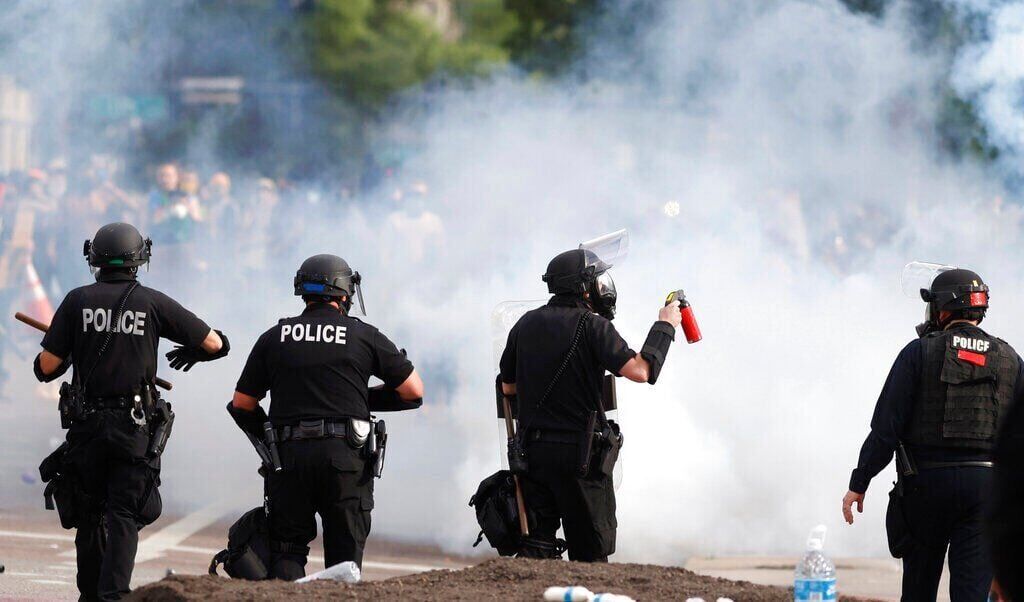
10th Circuit partially revives lawsuit over 2020 Denver protest injuries
Michael Karlik
michael.karlik@coloradopolitics.com
Updated 8 hours ago
The Colorado-based federal appeals court revived a man’s claims against Denver on Friday after concluding a trial judge resolved the case in the city’s favor without analyzing two of the three instances of alleged excessive force and other constitutional violations....

At conservative summit, Colorado Republican leaders concede Democrats’ election edge
Marissa Ventrelli
marissa.ventrelli@coloradopolitics.com
Updated 1 day ago
Four Republican state lawmakers told attendees at a gathering of conservative leaders on Friday they doubt their party can win statewide races, noting that Colorado’s electorate has been shifting toward Democrats but adding they see an opening in several pockets....
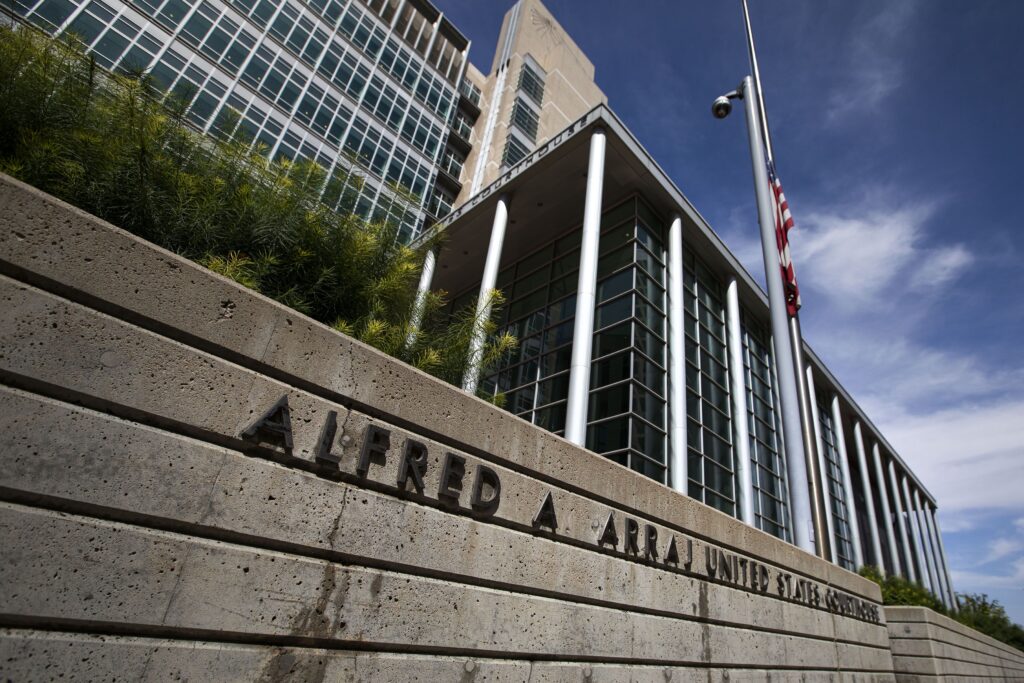
Federal judges find Colorado immigration judge violated several orders
Michael Karlik
michael.karlik@coloradopolitics.com
Updated 1 day ago
Multiple federal judges in Colorado have freed people from immigration custody after determining that one immigration judge violated their directives for properly conducting bond hearings. For nearly a year, Colorado’s U.S. District Court has faced a flood of habeas corpus petitions...
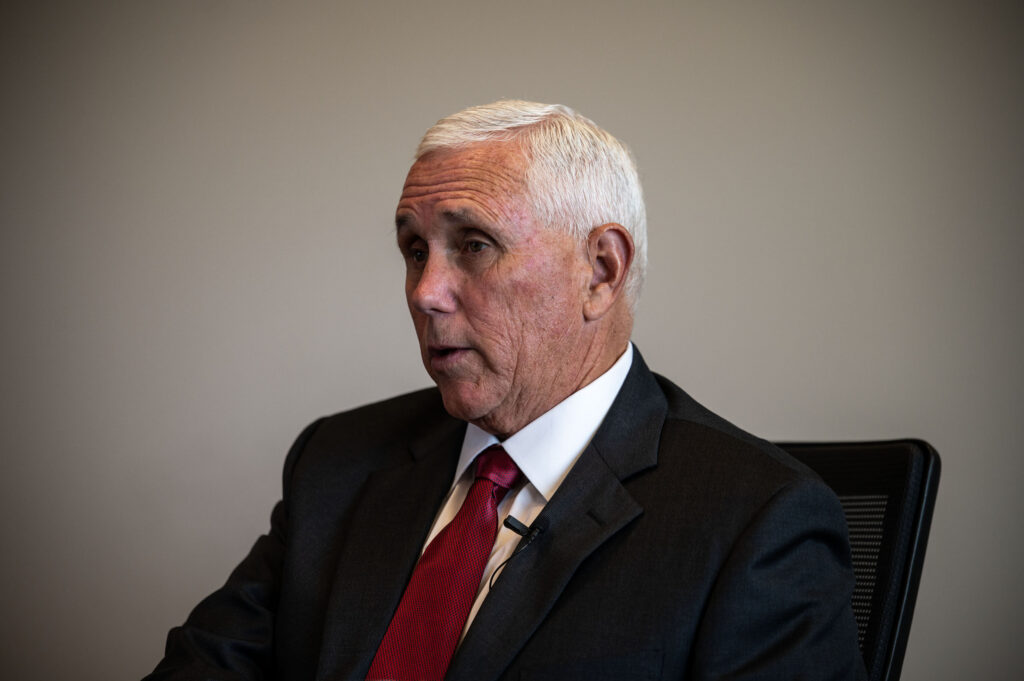
Q&A with Mike Pence | Former vice president says GOP’s populist turn from conservatism isn’t permanent
Ernest Luning
ernest.luning@coloradopolitics.com
Updated 1 day ago
Former Vice President Mike Pence says he’s concerned that the Republican Party has taken a populist turn away from bedrock conservative principles during President Donald Trump’s second term, but he believes the party will return to its roots when Trump...

New federal plan sets short-term rules for Colorado River management
Marianne Goodland
marianne.goodland@coloradopolitics.com
Updated 2 days ago
Interior Department’s plan spares Colorado from mandatory cuts for now After years of stalled negotiations among the seven states that rely on the Colorado River, the federal government on Friday released its own plan for managing the drought-strained system. Calling...
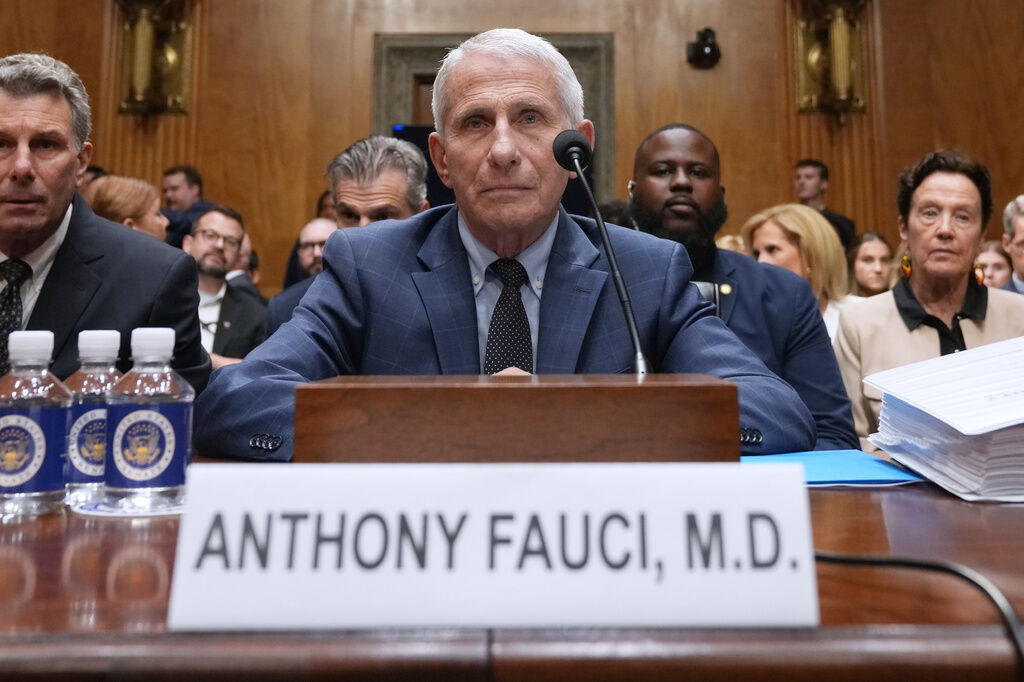
Fauci’s diary details blooming outrage toward ‘far right,’ softness toward Biden and China
Hudson Crozier
hudson.crozier@washingtonexaminer.com
Updated 2 days ago
Dr. Anthony Fauci increasingly railed against “far right” critics of his approach to COVID-19 issues while describing strong support from the Biden White House in his pandemic-era diary, which was recently released by Congress. The former National Institute of Allergy...