

Denver ethics code debate focuses on meals, event tickets
An annual $300 limit on meals and event tickets a Denver City Council member could accept from a company doing business with the city may be too low compared to current prices, one councilman said at the Council’s third meeting to discuss ethics code changes proposed by Councilman Kevin Flynn.
The Finance and Governance Committee delayed action on Flynn’s proposed ordinance amending the city code until Jan. 17, 2017, after the most recent discussion included Councilman Paul Lopez‘s belief that the $300 limit was an inappropriate amount.
“It’s one thing if it’s someone who’s bidding on a city contract, that doesn’t pass the smell test,” Lopez said, and should be turned down. “But it would be easy to hit that $300 limit with some very benign events. And I have a hard time remembering if we’ve ever had a violation on any kind of rule like this.”
Lopez also felt the monetary limit should be based on “our realities, not California’s,” and wondered if Flynn’s proposed limit was premature.
Flynn noted many major cities have similar limits or those that are lower than $300, including the state of Colorado.
Councilwoman Mary Beth Susman pointed out a Council member could use money from their own budgets to purchase such tickets.
“It’s odd that it would be OK if I use taxpayer money, then I could go,” she said. “But if I don’t use taxpayer money, I might not be able to go. That might not play well in headlines.”
Flynn said the limits of $300 and four meals or events tickets per year would not apply to more public banquets or awards dinners, and a waiver provision is available that could be sought before an event a member of Council questioned. He also stressed the tickets would have to come directly from someone doing business with the city or who the council had some type of jurisdiction over in their dealings with the city.
“The entire ethics code is mostly concerned with the one-on-one influence, not the public meals and events,” Flynn said. “Things like meals with contractors or lobbyists are the ones we want to put limits on.”
Assistant City Attorney David Broadwell said if event tickets are offered to a council member by a nonprofit, they can be accepted and would count against the four-per-year limit.
“If there’s any indication the tickets come from one of the event sponsors and that sponsor does business with the city, there could be a problem,” Broadwell said.
Lopez and others also questioned Flynn’s proposal to ban the solicitation of donations for the city or charitable groups by Council members, if the person or entity being solicited holds “or reasonably could be anticipated to apply for a contractual relationship to the city,” and if the Council member exercises “official action” over the person or entity being solicited. The change is to avoid the appearance of “quid pro quo” for making charitable donations.
“I think the problem with undue influence of elected officials happens when we accept corporate campaign donations, not in the day-to-day stuff,” Lopez said. “That’s where we need to see a change.”
Also discussed was aligning Flynn’s bill with a recently approved measure regarding financial disclosure reporting. That bill awaits final approved by Council. Councilwoman Robin Kniech said she would like to amend the measure to require the reporting of all gifts received, no matter the amount. Currently, there is a $50 threshold amount for reporting gifts.
“I think that just makes it the cleanest, easiest way to do it and it’s the most common practice in other cities,” Kniech added.
Other changes in Flynn’s bill adds to the conflict of interest section of the ethics code to include immediate family members who are board members of a group that does business with the city, and the bill would ban the acceptance of cash or gift cards of any amount – instead of a $25 threshold- from a restricted source.
Flynn’s proposal would also add second-degree family relations, such as aunt, uncle, niece and nephew, along with first-degree in-laws, like parents, siblings and children in-law, to those considered first-degree or immediate family members. All such relations would be taken into account in cases of conflict of interest, gifts, supervision of family members and the use of public office for private gain violations.
Another change would set up an ethics board member nominating commission and process, taking that role out of the hands of the Council. Flynn said under the current code, “We select our own judge” to hear any potential code violations.
“I think it would help instill public confidence that the work we do is done without any undue influence,” he added.


Colorado Politics Calendar July 27-Aug. 2
Rachael Wright, Special to Colorado Politics
rachael.wright@coloradopolitics.com
Updated 4 days ago
CoPo’s weekly political calendar will help you find political and public-policy events throughout Colorado. It includes candidate and issue campaign events, public policy meetings, court hearings, state and local party conventions, assemblies, debates, rallies, parades, speaking engagements, traveling dignitary appearances,...

The through line from Donald Trump to Victor Marx | SONDERMANN
By Eric Sondermann
by-eric-sondermann@coloradopolitics.com
Updated 4 days ago
Over 10 years ago, before Donald Trump could ever defeat Hillary Rodham Clinton, he had to first engineer a hostile takeover of the Republican Party. Prior to his descent of that golden escalator, the previous seven Republican presidential nominees had...

Colorado districts prepare for school year amid mental health cuts. But will less cellphone distractions help?
Marissa Ventrelli
marissa.ventrelli@coloradopolitics.com
Updated 2 days ago
The signs of a new school year are everywhere — buses in the shop, teachers unpacking boxes, families ticking through supply lists — but behind the familiar rituals, Colorado districts are preparing for a year defined less by routine than...
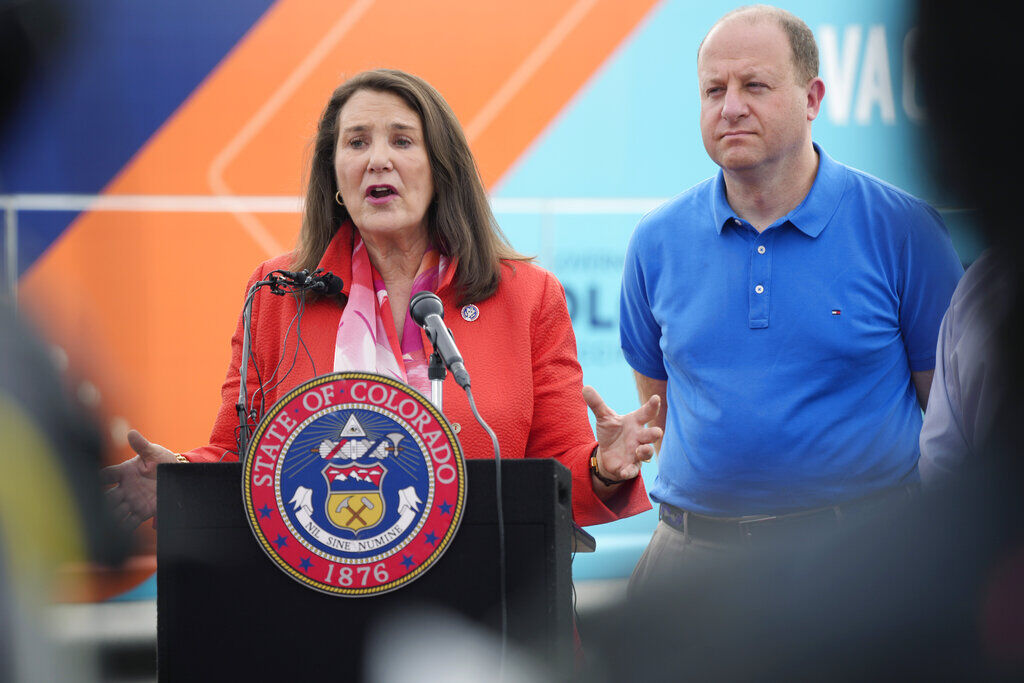
Armstrong staffer considers congressional bid, DeGette angers rural communities with wilderness act | A LOOK BACK
Rachael Wright, Special to Colorado Politics
rachael.wright@coloradopolitics.com
Updated 3 days ago
Forty-five years ago this week: If the lines were drawn just right, Republican Sen. Bill Armstrong stood the chance of losing his office manager, Ruth Fountain. Fountain admitted she was seriously thinking about running for Colorado’s new congressional seat in...
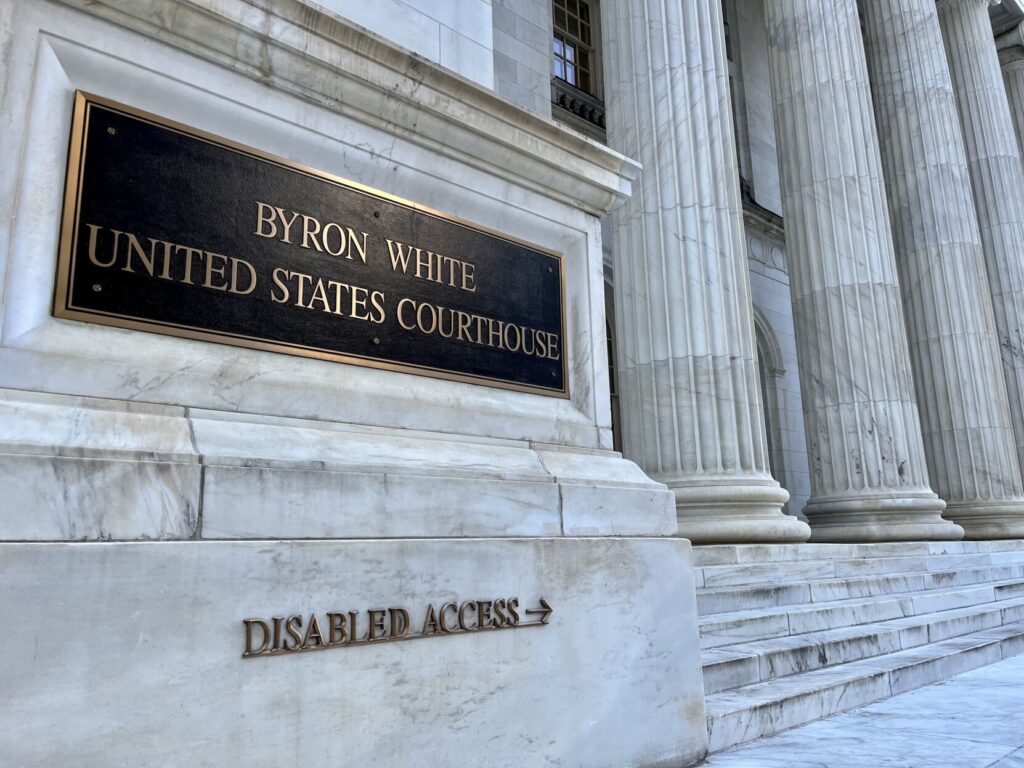
10th Circuit dismisses woman’s lawsuit following 10-year attempt to undo restraining order
Michael Karlik
michael.karlik@coloradopolitics.com
Updated 1 day ago
The Denver-based federal appeals court rejected a woman’s challenge on Friday to a restraining order imposed on her more than a decade ago, finding that she cannot credibly claim she will be prosecuted for violating the restraining order through her...
10th Circuit dismisses woman’s lawsuit following 10-year attempt to undo restraining order
Michael Karlik
michael.karlik@coloradopolitics.com
Updated 2 days ago
The Denver-based federal appeals court rejected a woman’s challenge on Friday to a restraining order imposed on her more than a decade ago, finding that she cannot credibly claim she will be prosecuted for violating the restraining order through her...
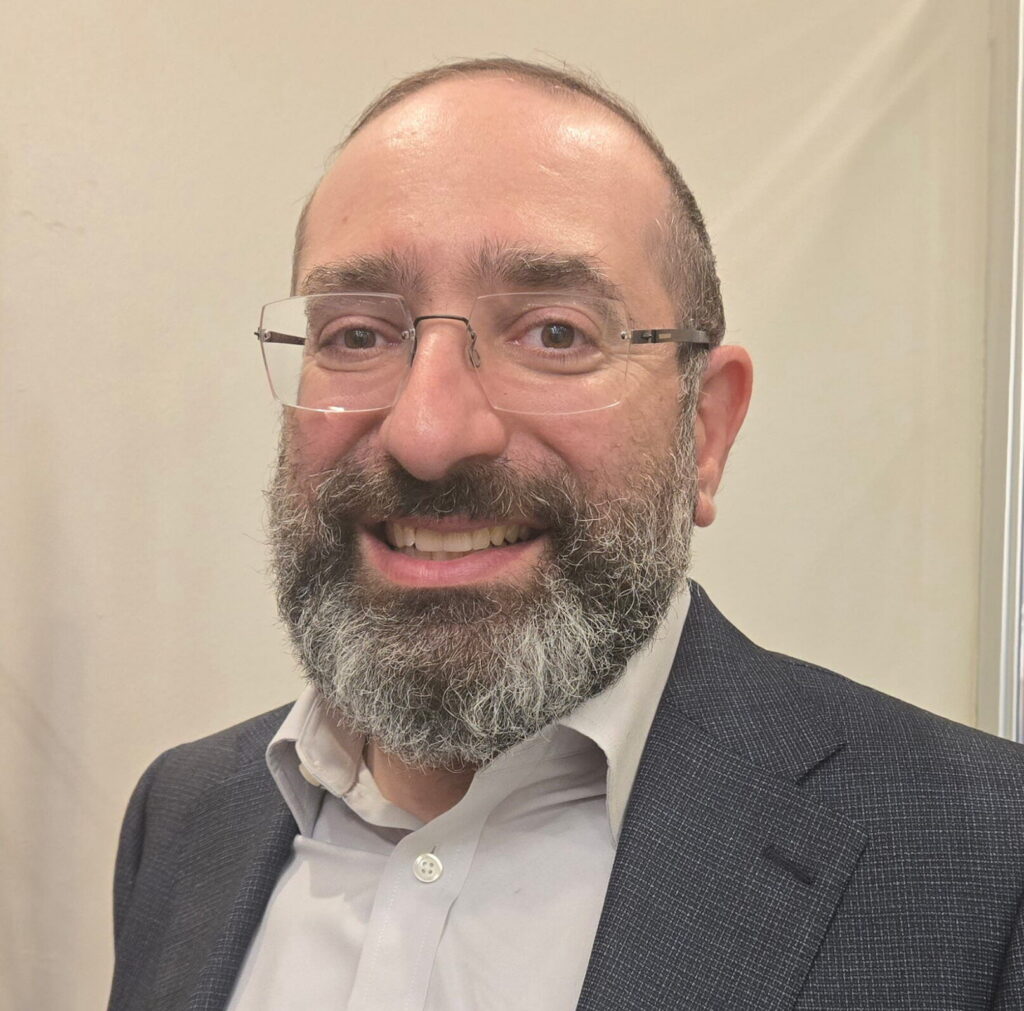
Surprise candidate Shimon Blau cleared to face off against Melat Kiros in November
Ernest Luning
ernest.luning@coloradopolitics.com
Updated 1 day ago
Unaffiliated congressional candidate Shimon Blau, a Denver doctor, has qualified by petition for the general election in Colorado’s 1st District, where Democrat Melat Kiros defeated 15-term U.S. Rep. Diana DeGette in last month’s primary, the Colorado Secretary of State’s Office...
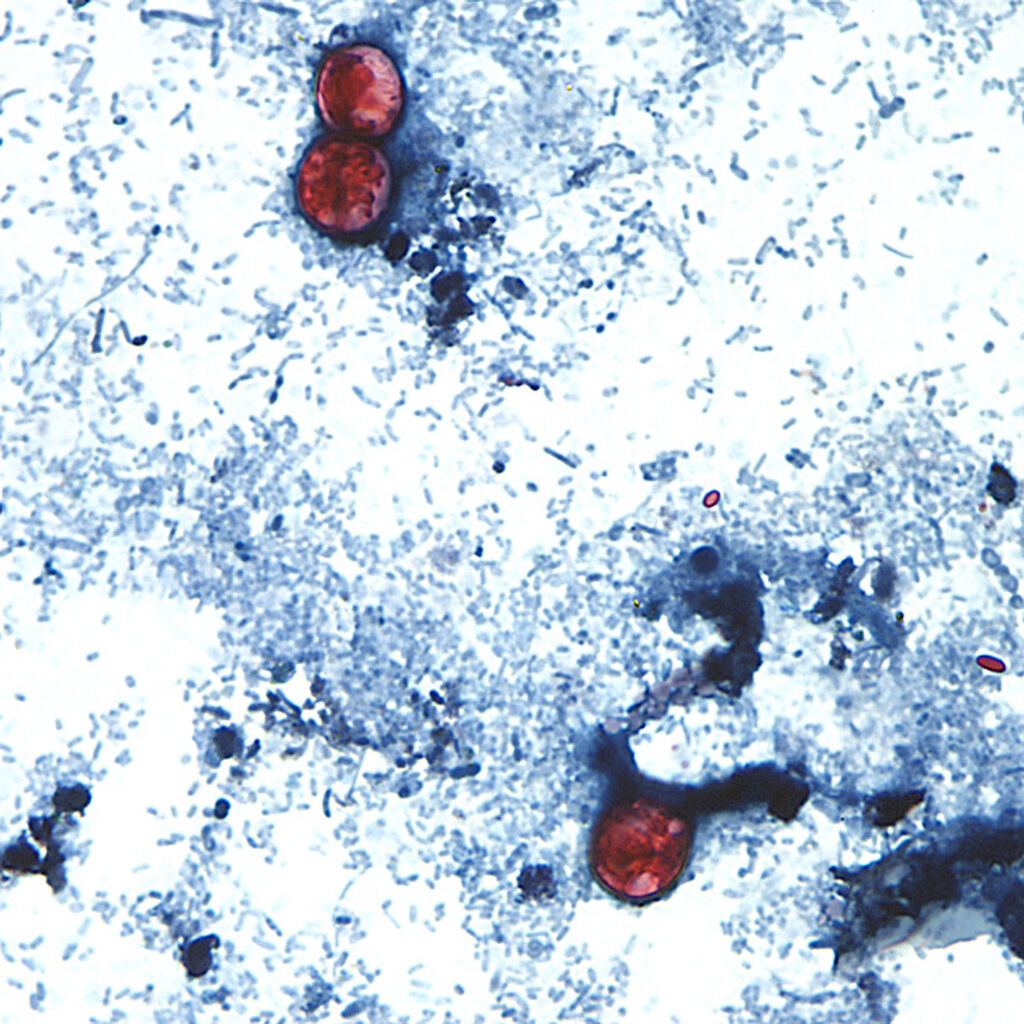
Colorado produce not tied to nationwide cyclospora outbreak, agriculture officials say
Marissa Ventrelli
marissa.ventrelli@coloradopolitics.com
Updated 21 hours ago
There is no indication that the recent outbreak of cyclospora, a fecal parasite that has contaminated food and water across nearly every state, can be linked to produce grown in Colorado, according to the state’s Department of Agriculture. “Colorado growers...

UNC opens College of Osteopathic Medicine
Marissa Ventrelli
marissa.ventrelli@coloradopolitics.com
Updated 2 days ago
The University of Northern Colorado held a grand opening for its new College of Osteopathic Medicine on Friday, with Gov. Jared Polis in attendance to celebrate the culmination of a two-year, $127.5 million project. The project was funded through legislation...
Colorado equal pay law does not require plaintiffs to allege gender-based retaliation, appeals court finds
Michael Karlik
michael.karlik@coloradopolitics.com
Updated 16 hours ago
The 2019 Colorado law aimed at rooting out pay discrimination on the basis of sex does not require a plaintiff to allege their employer retaliated against them for sex- or gender-related reasons, the state’s second-highest court decided on Thursday. Lawmakers...
PREV
PREVIOUS

Colorado gun law backfires; Wyoming loads up with Magpul deal
Magpul Industries announced a mega-deal to supply ammunition magazines to the Marines last week, a boon for Cheyenne and a loss for Colorado. Magpul, one of the country’s largest producers of ammunition magazines and other accessories, left Colorado in protest of the state’s 2013 gun laws that limited the size of magazines to 15 rounds. […]

Primary election measures signed by Hickenlooper
Colorado Gov. John Hickenlooper signed Proposition 107, a measure calling for presidential primary elections to be held every four years, and Proposition 108, a measure allowing unaffiliated voter participation in primary elections, on Tuesday, Dec. 27. Proposition 107 was approved by 64 percent of state voters in the Nov. 8 general election. The measure allows unaffiliated […]