

Ahead of the big vote, where does Colorado stand on election security?
Security and accuracy are what make the U.S. election system work correctly, so when either one of them is suspected or found to be at fault, it raises concerns from the public and those who oversee its operation.
Last week, Colorado’s voter registration system was the subject of a Denver CBS4 investigation that uncovered several potential fraudulent votes cast in the names of Coloradans who had died. The cases of four dead men and women – one had died as long as eight years ago – casting ballots occurred in El Paso, Denver and Jefferson counties. District attorneys are now investigating for possible prosecution.
CBS4 provided a list of names to state elections officials last month and aired a story about the investigation Sept. 22. Colorado Secretary of State Wayne Williams and county clerks deleted the names of 78 other deceased voters, along with the names of the four deceased voters in the CBS4 story.
A news release from Williams’ office noted every mail ballot cast in Colorado must have a signature on the return envelope. That signature is matched to a signature on file from the voter (typically a recent voter or Department of Motor Vehicle transaction). Only when a person’s signature is forged or a person witnesses a fraudulent signature could a ballot be counted when it was fraudulently cast, the release noted.
Registration info matched against several state, national lists
Ben Schler, legal and policy manager in the secretary of state’s office, explained a number of steps taken to ensure Colorado voter registration is complete and updated.
Colorado and its counties must follow the National Voter Registration Act‘s list-maintenance guidelines to decide whether to remove names from the voter rolls, Schler noted. A county may not remove a voter from the rolls unless it receives written notice from that voter, has other information that a voter’s residence has changed, the voter fails to respond to a county notice about the change in residence, or the voter does not vote in two consecutive general elections after the county’s notice.
A county may not cancel a voter’s record without matching the voter’s name, date of birth, and either a Colorado driver’s license number, the last four digits of a Social Security number or a residential address, Schler stated.
Death: The Colorado Department of Public Health and Environment provides a monthly list of people who died, which is imported into the Statewide Colorado Registration and Election, or SCORE, system, and counties cancel all voters who meet minimum matching criteria. The office has also recently gained access to the Social Security Death Index, which is imported into SCORE monthly for counties to check and act as necessary, Schler added.
However, federal and state laws require an exact match on name, birth date, and either full address or Social Security number to remove the name of a voter who has died, so not every such name can be canceled without extensive research, he noted. Williams planned to work with legislators to make it easier to cancel the names of voters who die. In some cases, people die outside Colorado or in another country, so election officials might not receive word that a registered voter has died.
Felony convictions: Each month, the Colorado Department of Corrections provides a list of people now incarcerated or on parole for felony convictions and the Colorado U.S. Attorney‘s office sends quarterly notices of people convicted of a felony. That information is available in SCORE and counties cancel registrations based on minimum matching criteria. Schler said once a felon completes parole, it is up to them to register to vote.
Address change: The monthly National Change of Address database identifies voters who have moved. If a county comes across a name of a voter that has moved out-of-state, the voter’s record is marked “inactive,” so he or she won’t receive a ballot in the mail. Each night, a file from the Colorado Department of Revenue shows people who either received a new driver’s license or updated their current address information, which is imported into SCORE and counties use the information to register voters or update existing records.
“I think we have a pretty good process, and we’re working to improve it even more,” Schler said, particularly with the Colorado Department of Motor Vehicle‘s driver’s license offices.
Currently, those offices ask people who apply for or renew their license if they want to register to vote. Schler said many people decline because they don’t want to take the extra time. A new license registration system set to go online in February should allow motor vehicle staff to tell people they will use their information to register them to vote, unless they decline, Schler explained. If they agree, a postcard is sent to ask them if they want to affiliate with a party. Schler said driver’s license office staff will also try to weed out duplicate voter registrations by asking people if they have changed their name.
Returned mail: State legislation addressed some “glitches” in the system and clarified what notices counties send to registered voters, Schler said.
“We had some poor definitions of what mail bounce-back messages meant, so now we have every clerk’s office who receives one make that voter inactive and they will fall off the list eventually,” he said. “I think we’ll see a big chunk of that after the 2016 election and again after the 2020 election.”
New programs: A future source called the Electronic Registration Information Center, or ERIC, includes 21 states and the District of Columbia, Schler noted. The program will allow participating states to share voter registration and driver’s license information and includes the national death list.
“None of these lists are perfect,” Schler said, “but I think we’ll be capturing a whole bunch of people who die and can potentially remove them from the rolls,” he said.
State Election Director Judd Choate said another new program, based in Kansas, includes 30 states sharing voter registration lists after each general election to help find voters who may have cast ballots in more than one state. The program found several people had voted in Arizona, Kansas and Colorado.
Security measures good, but report raises questions
Behind the scenes, making sure Colorado voter registration information is safe and secure from online prying eyes involves ongoing measures, said Trevor Timmons, chief information officer in the secretary of state’s office.
“After those other breaches, we scanned our logs to see if we had any activity from the same sources and we didn’t find any sign that had occurred” with SCORE, Timmons said.
Online security was further enhanced with more computer blocks put in place, so known hackers have even more barriers in their way, he added.
“We also reached out to state and federal homeland security officials, the City and County of Denver to set up what we call a ‘fusion center’ for real-time monitoring and response,” Timmons noted.
State and private online security contacts were also “put in the loop,” he said.
Timmons said in Colorado, registration and ballot counting systems are separate; the voting tabulation system is not on the internet.
If a registration system breach did occur on Election Day, Timmons said provisional ballots would be a last-ditch method to allow voters to cast ballots. But he remains confident SCORE is safe and secure.
“We did some significant load testing on SCORE and did about 150,000 voter registration transactions that occurred in 15 days during the 2014 election,” Timmons said. “We had it going at a rate of about 10 transactions a second for two hours, which is way more than what could really happen, and we saw no errors.”
Online issues that surfaced during this year’s presidential caucus led to code changes before the June primary, which did not have any problems, Timmons said.
However, Boulder County Republican Party Chairwoman Peg Cage noted a 40-page report from a local election watcher found two state reports could not ensure that all ballots sent out and returned were accepted or rejected in the county. Cage said the report claimed some Green Party members received primary ballots that should have been limited to either Democratic or Republican voters.
Timmons responded that since people can change their party affiliation to vote in the primary, then change it back after the election, it makes tracking voting results and ballots extremely difficult.
“So really for a period of 30 to 60 days, you can’t reconcile the information from those reports with what you get when you canvass returned ballots,” he said. “It’s very, very difficult to account for every person and their ballot and the status of it at any one time.”
“I think we’re getting mired down in a lot of muck about data and what clerks and officials are to do about it,” Cage said. “We’re forgetting this is a primary election where people have gone to their caucuses and sent officials up to the next level, they’ve selected candidates to be on the ballot. This is for the parties to choose who will represent them, not for you guys to be able to play with numbers and big machines and stuff like that.”
Cage said the state should not be involved in primary elections, they should be run by the political parties.


Colorado justices grill debt collector about compliance with law
Michael Karlik
michael.karlik@coloradopolitics.com
Updated 7 hours ago
The Colorado Supreme Court repeatedly pressed a debt collection company last week to explain how its lawsuit against a Boulder woman for an unpaid credit card balance complied with the specific requirements that state lawmakers have created. Portfolio Recovery Associates,...

Artificial intelligence working group agrees on framework to replace Colorado law
Marianne Goodland
marianne.goodland@coloradopolitics.com
Updated 13 hours ago
A group that has been working on artificial intelligence policy has reached an agreement on a framework that would replace the regulations adopted by Colorado legislators two years ago. The agreement has the backing of Gov. Jared Polis, who reluctantly...

Proposal to levy new fees on alcohol products in Colorado dies
Marissa Ventrelli
marissa.ventrelli@coloradopolitics.com
Updated 14 hours ago
The proposal to collect millions in new fees on alcohol products — dollars to be earmarked for Colorado programs aimed at addressing the behavioral and physical health effects of alcohol abuse — died on Tuesday. House Bill 1271 sought to...
The numbers that Republicans say show Democratic midterm targets are a ‘political hallucination’
Rob Crilly, Washington Examiner
rob.crilly.washington.examiner@gazetteedit.wpenginepowered.com
Updated 12 hours ago
Democrats keep expanding their battleground map of midterm target seats, but do they really have any chance in some of the districts they claim they can win? Of the 44 districts listed by the Democratic Congressional Campaign Committee as targets,...

Pam Bondi subpoenaed for April 14 House deposition on Epstein files handling
Kaelan Deese, Washington Examiner
kaelan.deese.washington.examiner@gazetteedit.wpenginepowered.com
Updated 15 hours ago
The House Committee on Oversight and Government Reform issued a subpoena Tuesday compelling Attorney General Pam Bondi to sit for a deposition on April 14 as part of an ongoing investigation into the Justice Department’s handling of the Jeffrey Epstein...
Capitol Police chief asks for record-breaking budget, citing 58% increase in threats to Congress
Emily Hallas, Washington Examiner
emily.hallas.washington.examiner@gazetteedit.wpenginepowered.com
Updated 15 hours ago
U.S. Capitol Police Chief Michael Sullivan on Tuesday argued sweeping threats against lawmakers justify his department’s historic budget request during a House Appropriations Committee hearing. Sullivan testified before the Legislative Branch Subcommittee on his budget proposal for fiscal 2027 funding....
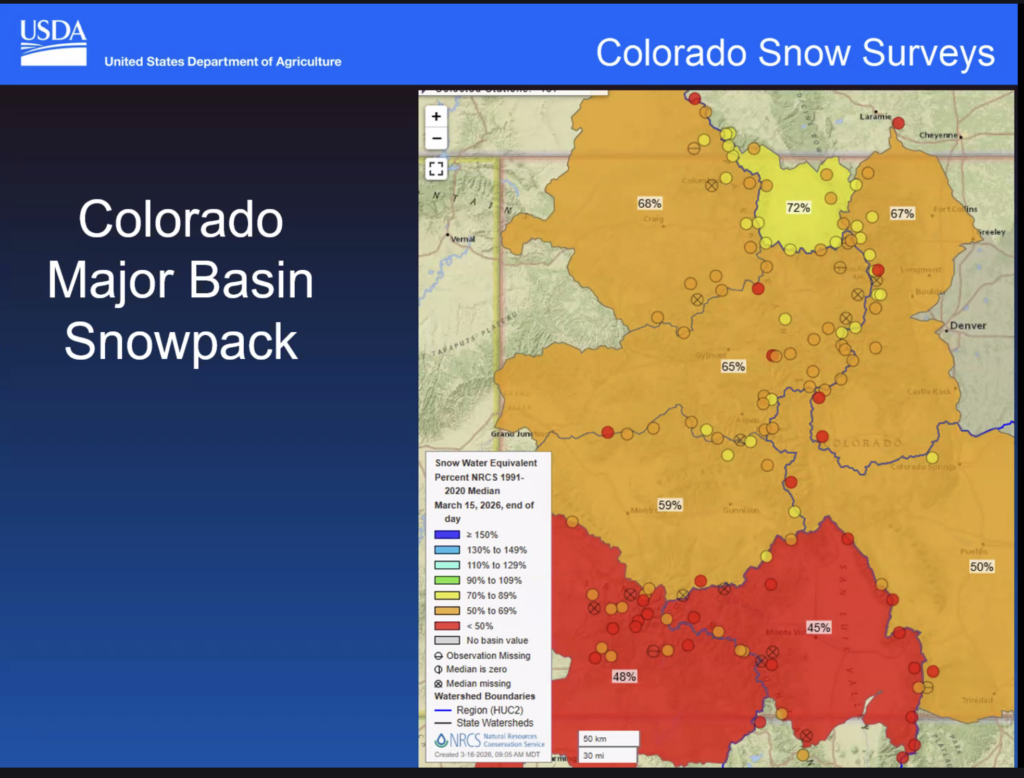
After ‘winter of defeat,’ Colorado hopes for wetter summer
Marianne Goodland
marianne.goodland@coloradopolitics.com
Updated 16 hours ago
With snowpack melt already peaking in some parts of the state and drought conditions worsening compared to last year, Colorado’s water watchers are hoping for a wetter summer, though they anticipate the situation deteriorating before getting better. Meanwhile, the governor...
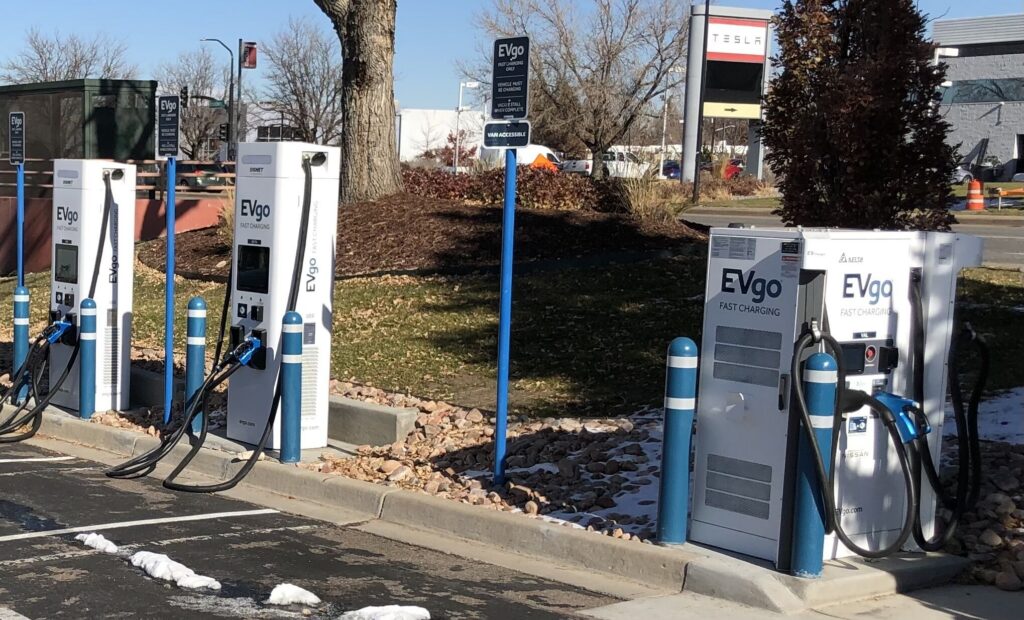
Colorado, Democrat states oppose proposal to require EV chargers be made with 100% domestic components
Scott Weiser
scott.weiser@gazette.com
Updated 16 hours ago
Colorado has joined a coalition of about 20 states in opposing a federal proposal that would require electric vehicle chargers funded with federal dollars to be made with 100% domestic components. The Federal Highway Administration is considering raising the domestic...
Colorado ethics panel tells legislator to attend sexual harassment training
Marianne Goodland
marianne.goodland@coloradopolitics.com
Updated 13 hours ago
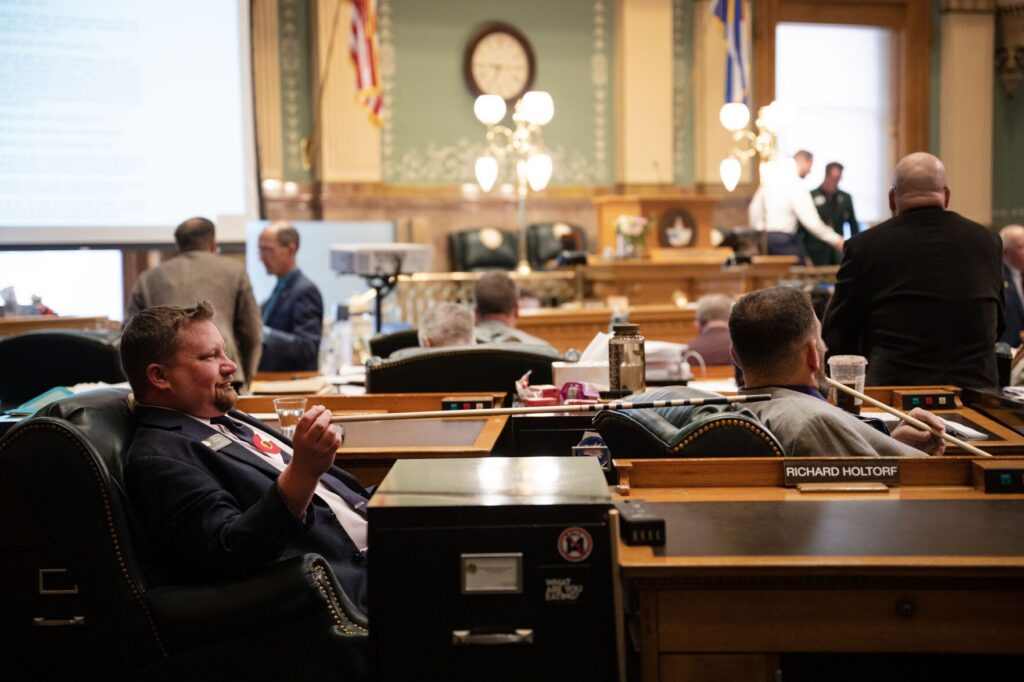
Colorado’s House ethics panel admonished a Republican legislator over allegations he used a master key to access areas of the Capitol that he was not permitted to enter and that he had made sexually harassing comments to several female lawmakers....
Appeals court agrees defendant’s speech constitutionally protected against El Paso County judge
Michael Karlik
michael.karlik@coloradopolitics.com
Updated 14 hours ago
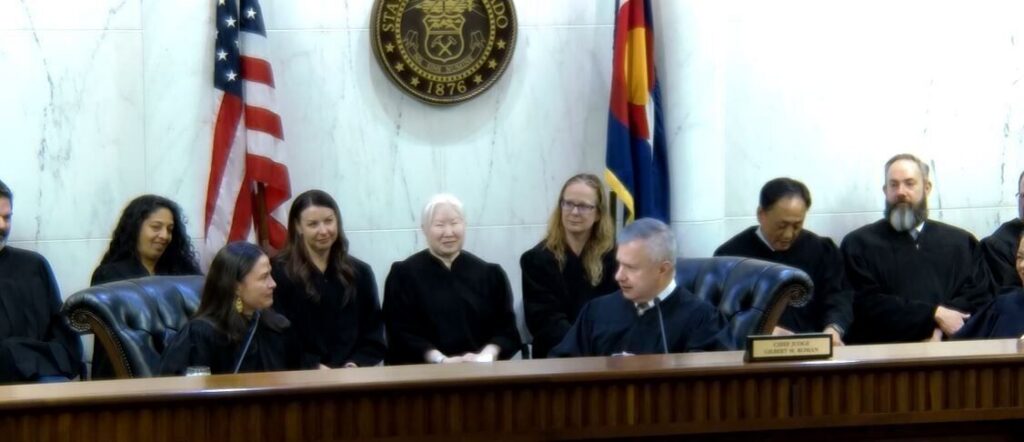
Colorado’s second-highest court agreed last week that a defendant’s critical statements toward a 4th Judicial District judge were constitutionally protected and could not form the basis of a retaliation charge. A three-judge Court of Appeals panel concluded that, in context,...