

State Fair finances, future up for grabs

For 11 days of the year, the Colorado State Fairgrounds is filled with music, livestock, thrill rides and fried things on a stick.
But most other days, there’s little fun happening at the fair site in Pueblo, the city that has served as host to the event since 1872.
And it’s the off-fair time that has become a financial back-breaker for management over the last several years. Year after year, the fair loses money because fairgrounds facilities fail to attract enough events during non-fair days to keep up with costs.

Crowds throng the Colorado State Fair in Pueblo on Sept. 6. Photo by Ernest Luning/The Colorado Statesman

Combine that reality with a lack of funding and continued borrowing from the State Treasurer’s Office, and it becomes increasingly evident to some that the fair cannot continue to function much longer under its current model.
“They have dug themselves into such a hole,” said State Auditor Dianne Ray. “They’re running deficits and they’re having to borrow money to continue operating every year. And it’s not sustainable.”
The fair’s financial difficulties have led some to ponder something that was once unthinkable — moving the fair out of Pueblo, chatter that has stoked passionate response from Pueblo supporters.
Fair officials contend the situation is not as bleak as some say. They believe they are starting to right the ship and that anticipated new local funding and an upcoming shift in management will allow organizers to focus on providing year-round attractions that will ease financial hemorrhaging.
But they acknowledge there have been difficulties and that, in order to fully turn things around, the state must provide more resources.
“Those fairs that stay out of the newspapers and are successful receive tremendous amounts of subsidies on the local level and on the state level,” said state fair General Manager Chris Wiseman.

A Colorado Springs mom and her daughter pause for a moment amid attractions at the Colorado State Fair in Pueblo in this file photo.
Photo by Ernest Luning, The Colorado Politics

“There are more things we can do here to improve the business of the fair, but there’s also things that need to be done at the state level to help out as well.”
Audit details financial woes
A 2014-2015 fiscal year financial audit details key money problems.
The fair, which operates under the state Department of Agriculture, has been losing money for at least the last 13 years. That includes a $3.3 million operating loss during the ’14-’15 fiscal year. And that loss was a half million dollars greater than the one examined in a previous audit.
Ray said the fair’s losses have little to do with cotton candy sales or petting zoo visits.
“During fair-time operations, they are break-even or they usually make a little money,” she said. “It’s that off-fair time that they don’t have enough activities bringing in revenue to offset expenses and depreciation (of state-owned fair facility assets). And they’re running about $800,000 to $900,000 deficits total for the year.”
Another issue has been a decreasing contribution from Pueblo governments. Although the fair generates $29 million in annual economic impact to Pueblo and the state’s economy, the city and county of Pueblo contribute just a combined $300,000 annually.
Financial support from the City of Pueblo has dropped off over the last few years. Pueblo Council President Steve Nawrocki said economic realities there have made it difficult for the city to contribute more.
The city’s budget has seen deficits in the millions over the last six years he’s been on the council. Because of that, the city has had to make cuts all around, including having to reduce the number of city employees by more than 100 over the last few years, Nawrocki said.
“It certainly can be higher,” Nawrocki said of the city’s financial contribution to the fair. “And if we had the ability, that wouldn’t be an issue. But our city has seen a long, hard road to recovery from the Great Recession.”

Bacon-wrapped turkey legs, hot dogs and corn on the cob are all available at Bacon Habits on Main Street at the Colorado State Fair in Pueblo.Photo by Ernest Luning/The Colorado Statesman

Then there’s the dearth of events taking place at the fairgrounds when the fair isn’t going on. Wiseman said fairgrounds facilities are used just 48 percent of the time throughout the year. He would like to bring that number up to 75 percent by attracting events that include car shows, boxing matches and concerts.
“We haven’t focused on it the way we should,” Wiseman acknowledged.
Fair on the upswing?
But Wiseman said it’s unfair to lay the entire blame on fair management and insists the financial numbers aren’t as bad as what has been reported from the 2014 audit.
Wiseman said it’s important to note that the recent audit studied the previous fiscal year and that the fair is not expected to suffer a loss this year and might even make enough money to make up for previous losses.
Wiseman also said the audit findings do not accurately detail the fair’s “real cash loss.”
The $3.3 million operating loss doesn’t factor taxpayer contributions that total $2 million, he said, nor does it take into account $750,000 in facility depreciation losses.
“When you take those into account, the actual loss is $500,000 (annually),” he said. “Accumulated over the last five years, it’s $1.4 million.
And the 2015-1016 fiscal year marked the first time “in a long, long time” that the fair had received general fund money from the Legislature.
Wiseman also expects Pueblo’s funding role to increase going forward. Nawrocki said city tax revenue is up over last year. That’s thanks in part to Pueblo’s efforts to bring a more diverse economy to the longtime blue-collar, manufacturing community.

Funnel cakes and jumbo corn dogs are among the treats available at the Colorado State Fair in Pueblo, which wraps up its annual 11-day run on Sept. 7.Photo by Ernest Luning/The Colorado Statesman

“You’re going to see Pueblo step up to do more for the fair,” Wiseman predicts. “The city is looking at what options they have in order to do something now. Before the end of the year, we’ll be making an announcement of additional funding for the fair. I’d be very surprised if that didn’t happen.”
Wiseman also sees an upcoming change in management structure as being beneficial to fair sustainability.
Wiseman was recently appointed deputy commissioner for the Colorado Department of Agriculture and will be stepping down as fair general manager after this summer’s fair.
He feels he will be able to work in his new capacity with a new manager, who he hopes will bring a heightened focus on bringing more events to the fairgrounds.
“I think we do have momentum,” he said.
But Ray said she’s heard it all before.
“They come in and tell me and the legislative Audit Committee that every single year,” she said. “They’ve got some new angle and sometimes it’s a little more money — $100,000 here, $100,000 there.”
“They need a million-dollar influx. I need to hear something from them that they’ve figured out how to increase revenues by a million dollars or find donors or donations, corporate donations, whatever.”
Wiseman agrees that the fair needs more funding from the state. A management study authorized by the Legislature is expected to be completed in March. That will give lawmakers a better understanding how to proceed with future fair funding.
But Wiseman said it’s important to note that a state fair really isn’t designed to make money in the first place.
“The size of the infrastructure you need to do an annual fair doesn’t sustain itself for the rest of the year,” he said. “Fairs themselves aren’t built to be profit centers. They never will be.”
Wiseman points to a $6 million deficit that was racked up during a brief period in the 1990s when the fair was privatized.
“If fairs were good business, there would be businesses doing fairs,” he said.
Talk of leaving Pueblo
The fair’s struggles have led some to suggest that it might be time for the operation to move out of Pueblo.
During a July Audit Committee hearing, state Sen. Tim Neville, R-Littleton, said it’s worth having a conversation about a venue move and that the Pueblo site should not be considered a “Holy Grail.”
The possibility of a move to the National Western Complex in Denver was also discussed at the hearing.
But Gov. John Hickenlooper has supported keeping the fair in Pueblo. And Audit Committee Chairwoman Lucia Guzman, D-Denver, the Senate minority leader, called the state fair “a southern Colorado treasure” that should stay in Pueblo.
Wiseman said the fair’s average daily attendance is higher than the stock show’s. He doesn’t think changing venues would do any good.
“Everyone says, ‘Let’s move this thing to Denver because in Denver there’s all the people and they will come,’” he said. “We’ve got the attendance here. Yes, we need to improve some of our operations. But the bottom line is, moving it probably won’t solve the problem. It may actually make it worse if we have to duplicate this facility in another location.”
Nawroki said it just wouldn’t seem right to move the fair out of Pueblo.
“It’s been here since the very beginning,” he said. “I feel strongly that when you think of Pueblo, you think of the state fair. It’s the market center for all of southeastern and southwestern Colorado and northern New Mexico, primarily all agriculture and ranching.”
“That’s what the importance of our fair is to us, to be able to celebrate and perpetuate that culture.”
— Twitter: @VicVela1

Colorado Politics Calendar Aug. 3-9
Rachael Wright, Special to Colorado Politics
rachael.wright@coloradopolitics.com
Updated 4 days ago
CoPo’s weekly political calendar will help you find political and public-policy events throughout Colorado. It includes candidate and issue campaign events, public policy meetings, court hearings, state and local party conventions, assemblies, debates, rallies, parades, speaking engagements, traveling dignitary appearances,...
The primary political reform and precondition for all others | SONDERMANN
Eric Sondermann
eric-sondermann@coloradopolitics.com
Updated 4 days ago
In its current state, the American political system has no end of ailments. Far too many factors accelerate polarization and work against moderation and narrowing the differences. Media, and the way so many citizens limit themselves to agreeable, reinforcing sources,...
Susemihl wins surprise victory to replace Steve Durham as Colorado Springs state senator | A LOOK BACK
Rachael Wright, Special to Colorado Politics
rachael.wright@coloradopolitics.com
Updated 3 days ago
Forty-five years ago this week: In a closed session, the vacancy committee for Colorado’s Senate District 12 selected attorney Peter Susemihl to complete Sen. Steve Durham’s, R-Colorado Springs, term. Durham resigned his seat to become Region 8 Director of the...

10th Circuit partially revives lawsuit over 2020 Denver protest injuries
Michael Karlik
michael.karlik@coloradopolitics.com
Updated 1 day ago
The Colorado-based federal appeals court revived a man’s claims against Denver on Friday after concluding a trial judge resolved the case in the city’s favor without analyzing two of the three instances of alleged excessive force and other constitutional violations....

At conservative summit, Colorado Republican leaders concede Democrats’ election edge
Marissa Ventrelli
marissa.ventrelli@coloradopolitics.com
Updated 15 hours ago
Four Republican state lawmakers told attendees at a gathering of conservative leaders on Friday they doubt their party can win statewide races, noting that Colorado’s electorate has been shifting toward Democrats but adding they see an opening in several pockets....
Federal judges find Colorado immigration judge violated several orders
Michael Karlik
michael.karlik@coloradopolitics.com
Updated 9 hours ago
Multiple federal judges in Colorado have freed people from immigration custody after determining that one immigration judge violated their directives for properly conducting bond hearings. For nearly a year, Colorado’s U.S. District Court has faced a flood of habeas corpus petitions...
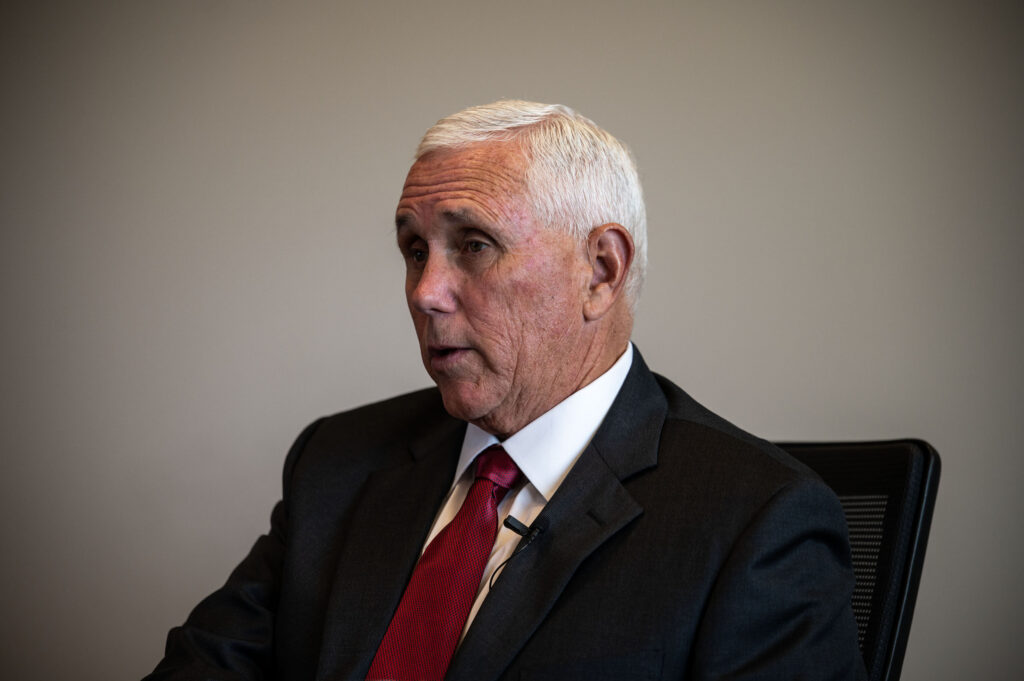
Q&A with Mike Pence | Former vice president says GOP’s populist turn from conservatism isn’t permanent
Ernest Luning
ernest.luning@coloradopolitics.com
Updated 12 hours ago
Former Vice President Mike Pence says he’s concerned that the Republican Party has taken a populist turn away from bedrock conservative principles during President Donald Trump’s second term, but he believes the party will return to its roots when Trump...
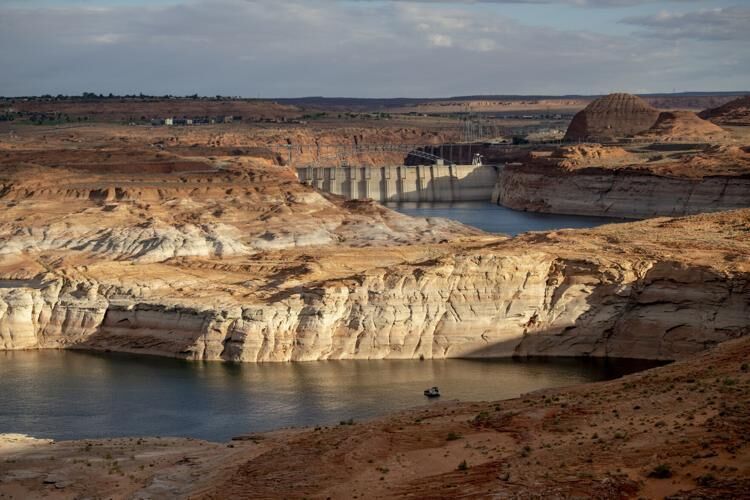
New federal plan sets short-term rules for Colorado River management
Marianne Goodland
marianne.goodland@coloradopolitics.com
Updated 1 day ago
Interior Department’s plan spares Colorado from mandatory cuts for now After years of stalled negotiations among the seven states that rely on the Colorado River, the federal government on Friday released its own plan for managing the drought-strained system. Calling...
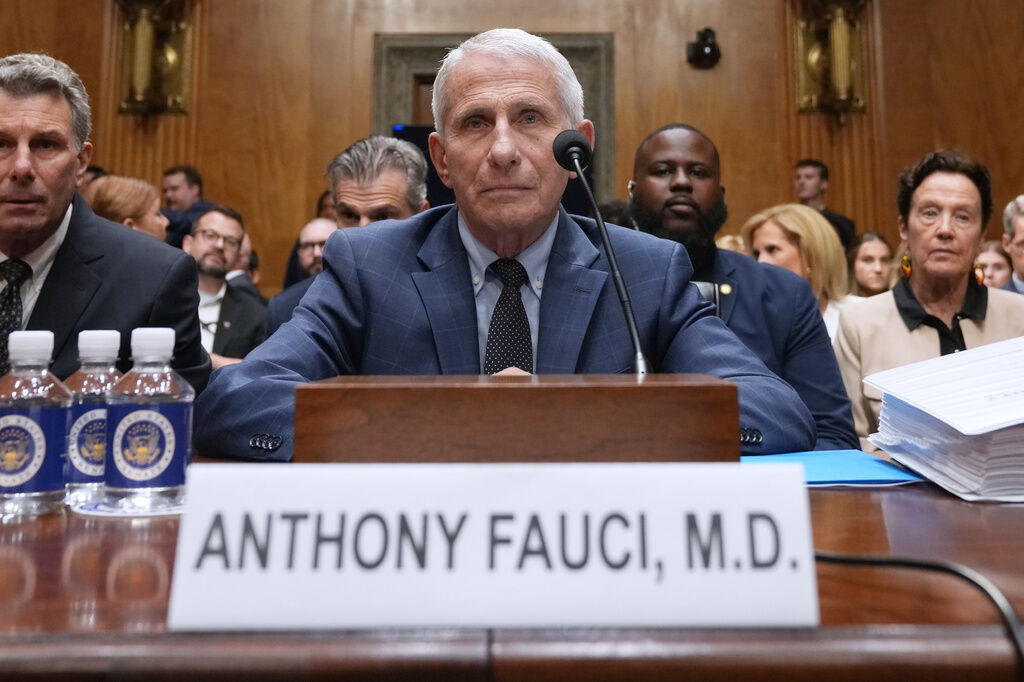
Fauci’s diary details blooming outrage toward ‘far right,’ softness toward Biden and China
Hudson Crozier
hudson.crozier@washingtonexaminer.com
Updated 2 days ago
Dr. Anthony Fauci increasingly railed against “far right” critics of his approach to COVID-19 issues while describing strong support from the Biden White House in his pandemic-era diary, which was recently released by Congress. The former National Institute of Allergy...
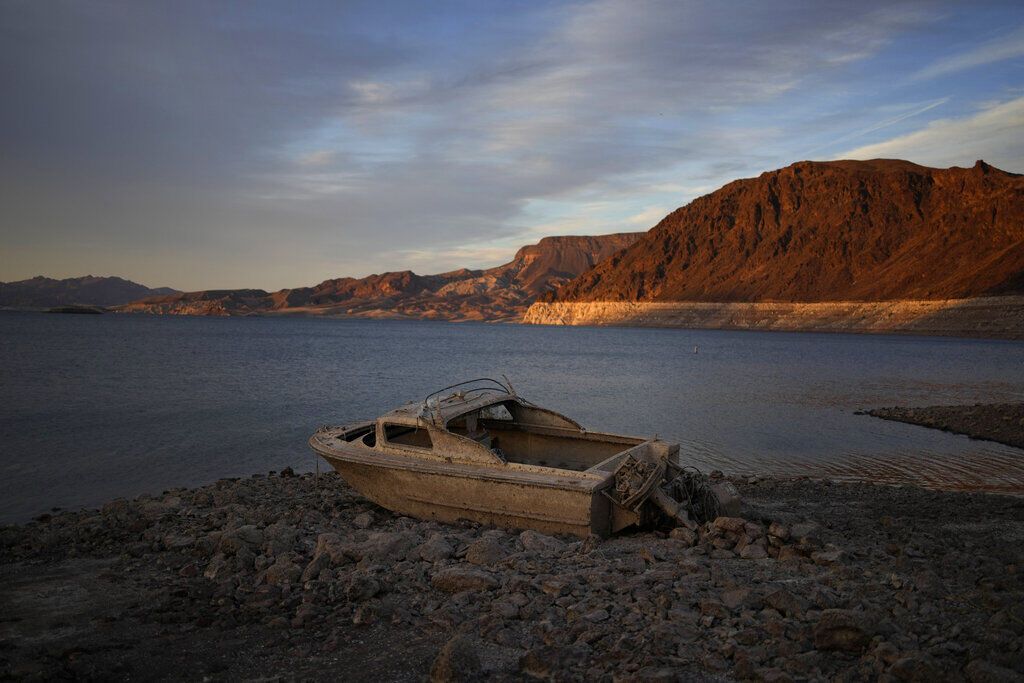
Colorado is spared mandatory cuts under federal Colorado River proposal
The Associated Press
the-associated-press@coloradopolitics.com
Updated 2 days ago
California, Arizona and Nevada to take less water under plan While Colorado has been spared from mandatory reductions, Arizona, California and Nevada would take less water from the Colorado River under a proposal announced Friday by the federal government to...
PREV
PREVIOUS

Hudson: Free-marketeers gather in Steamboat to celebrate Founding Fathers
The Steamboat Institute, consciously conceived as a conservative counterbalance to the Aspen Institute’s annual conferences, met last weekend to examine the health of the conservative project. After travel, lodging and registration, the 350-plus delegates probably dropped a thousand dollars apiece for the privilege. If you harbor any doubts that Americans are well on their way […]

'Sigh of relief' in NW Colorado after feds beat deadline to keep Colowyo mine open
For Lori Gillam, word that the Colowyo coal mine had dodged the threat of a shutdown ended months of nail-biting. Gillam, who owns Stockmen’s Liquor in Craig, said she was thrilled after learning last week the Interior Department’s Office of Surface Mining beat a federal court deadline Friday that will keep the mine open. “We’re […]