

Carleton discusses EPA updates to emissions, ozone standards
Even while dealing with the wastewater spill on the Animas River, the EPA is preparing for the rollout of updated standards on carbon emissions and ground-level ozone.
It’s an issue that brought Ron Carleton, EPA’s counselor to the administrator for agricultural policy, to Denver this week.
Carleton spoke to The Colorado Statesman about the updates, and the Obama administration’s new Clean Power Plan, which was finalized on Aug. 3.
The Clean Power Plan is the first national effort to reduce carbon dioxide emissions from power plants, primarily those that rely on coal. The plan has a target of shrinking emissions 32 percent by 2030, compared to 2005 levels.
Each state is required to develop its own reduction plan by next year to meet interim EPA targets in 2022. Colorado is among 10 states required to cut its emissions by 40 percent, compared to 2012 levels. Gov. John Hickenlooper, in a letter to Senate Majority Leader Mitch McConnell in May, said while meeting the reduction will be a challenge, the state intends to develop a compliant plan.
Carleton, who until January was the deputy commissioner of the Colorado Department of Agriculture, told The Statesman Colorado is well-positioned with regard to the Clean Power Plan. Colorado is in a leadership role to meet its targets, he said. He pointed to the state’s move toward renewables, required by voters a decade ago and the General Assembly in 2013.
“Colorado has done an outstanding job in being forward on the possibility of renewable energy and acting on it,” he explained.
The biggest concern he’s heard from the agriculture industry is over the impact the Clean Power Plan could have on electricity rates. But he believes long-term, utility rates and the environment will benefit from the plan. Short-term, Carleton hopes the impact on agriculture will be limited.
He said the industry was skeptical about climate change five to 10 years ago. There’s more acceptance of the idea today. “We in agriculture need to consider these important questions with regard to mitigation and adaptation,” Carleton noted. The EPA and the industry are now talking about sustainability practices that would better prepare agriculture for changing conditions, whether shifts in precipitation patterns, more intense weather events or drought, bringing in pests and invasive species.
Next on the EPA’s agenda: the roll-out of updated standards on ground-level ozone, produced primarily by combustion engines, when nitrogen oxide mixes with volatile organic compounds.
Federal law requires ozone standards be updated every five years, however the last update occurred in 2008.
Environmental groups sued the EPA last year when the standards were not updated on time. The current standard is 75 parts-per-billion; the proposed updated standard is within the range of 65 PPB to 70 PPB.
The U.S. Chamber of Commerce, which is fighting the new standard, says many major cities and counties haven’t been able to comply with the current standard. In Colorado, that includes Denver and most of the northern Front Range. Much of the nation will struggle to comply with the new standard, the Chamber adds.
Carleton said reducing the amount of ground-level ozone will reduce the incidence of health problems from ozone and smog, such as premature deaths and respiratory illnesses.
He explained that ground-level ozone is in the air people breathe, but the nation is at a point in its environmental situation where people usually can’t see the particulates. But they’re still there. “We still have unhealthful levels of ozone,” he said.
Once the standard is formally adopted, which is required to happen no later than Oct. 1 under the lawsuit, states will have to figure out the sources of ozone and how to address the reductions, Carleton noted.
“It’s a plan based on the best available science,” Carleton said.
Carleton also is working on changes to the Clean Water Act, which will go into effect on Aug. 27. Under the revised Act, also known as Waters of the US, the EPA and Army Corps of Engineers would assert jurisdiction and regulatory authority over waters that do not connect to navigable waterways. That could include intermittent streams and wetlands, isolated ponds and marshes, flood plains and seasonal flows.
Carleton believes the rules will have little impact on agriculture, and few requirements that farmers and ranchers would have to get special permits to use the water on their lands. “Agriculture will be protected in many ways from having to get permits,” he said.
– Marianne@coloradostatesman.com


U.S. Rep. Lauren Boebert’s son arrested, faces charges of sexual exploitation of minor
Matt Kyle
matt.kyle@denvergazette.com
Updated 11 hours ago
U.S. Rep. Lauren Boebert’s son Tyler Jay Boebert has been arrested and accused of recording and sharing a video depicting himself having intercourse with a minor, according to court records. The case originated in Garfield County in Western Colorado and...

Colorado audit finds $175K wasted on unused state-issued cellphones
Marissa Ventrelli
marissa.ventrelli@coloradopolitics.com
Updated 14 hours ago
Colorado spent nearly $175,000 on government issued cellphones for employees of various departments that went unused last year, according to a recent state audit. About 400 of the 6,688 cellphones issued to state employees received no calls or texts and...

Adams County water district may proceed with cost-recovery lawsuit against Denver for contamination
Michael Karlik
michael.karlik@coloradopolitics.com
Updated 13 hours ago
A federal judge rejected Denver’s arguments last week for pausing or dismissing a lawsuit brought by an Adams County special district seeking to recover its costs for addressing water contamination as a result of Denver firefighting activities. In January, the...
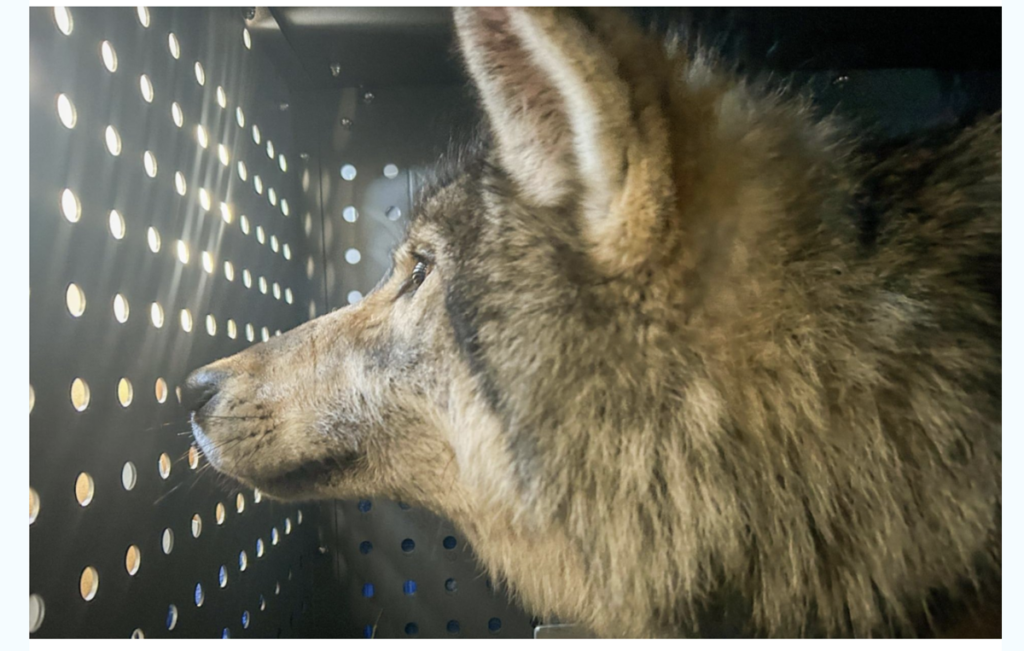
Hunter shot Colorado wolf after mistaking it for a coyote, wildlife office says
Marianne Goodland
marianne.goodland@coloradopolitics.com
Updated 14 hours ago
Colorado Parks and Wildlife said Monday that a female wolf from British Columbia that died in January was shot by a hunter who mistook her for a coyote. The wolf, identified as 2504‑BC, was one of 17 wolves relocated since...
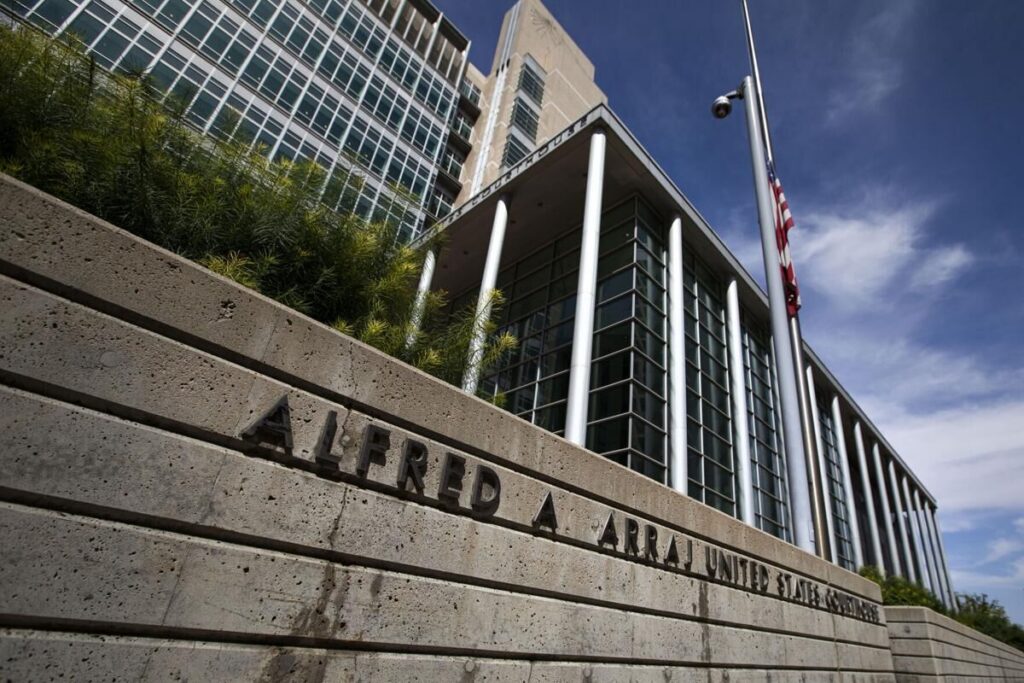
Federal judge declines to dismiss First Amendment retaliation claim against prison official
Michael Karlik
michael.karlik@coloradopolitics.com
Updated 10 hours ago
A federal judge agreed last month that an incarcerated Native American woman may pursue her claim of First Amendment retaliation against a prison official who allegedly interfered with her religious exercise. Yvonne Peterson resided at Buena Vista Correctional Facility for...
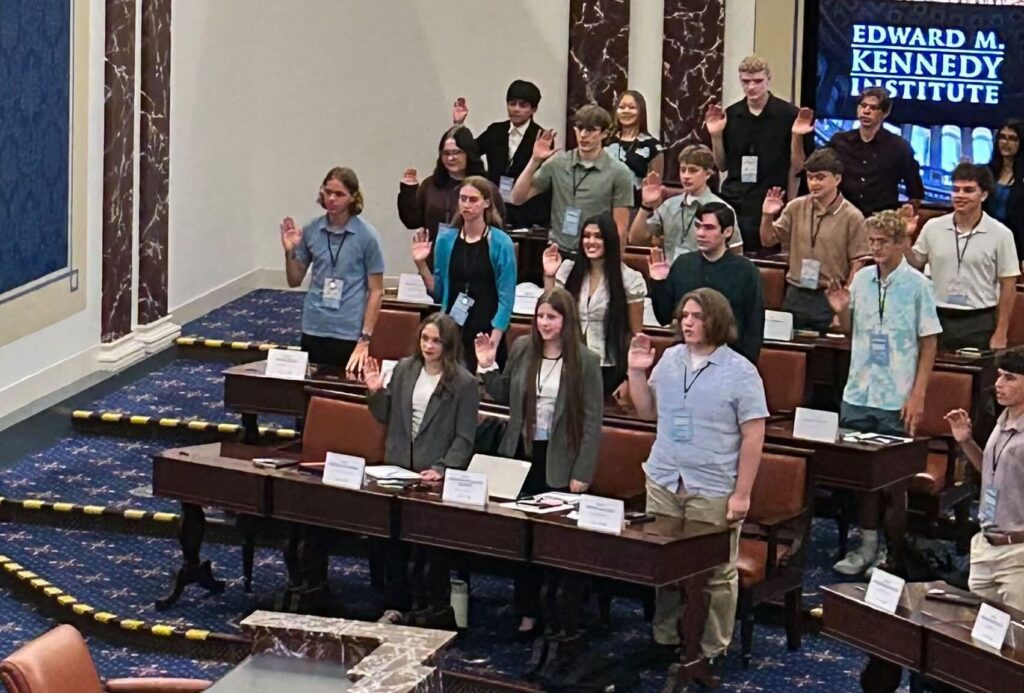
By the students, for the students: Sierra High School represents Colorado in developing national AI framework
Eric Young
eric.young@gazette.com
Updated 11 hours ago
To many, the recent, rapid development of generative artificial intelligence and its lack of frameworks and oversight may evoke comparisons to the unrestrained Wild West in the 1800s or the economic potential of the dot-com boom in the early 2000s....

Colorado’s troubled guardianship office pursues ‘cultural reset’
Marianne Goodland
marianne.goodland@coloradopolitics.com
Updated 10 hours ago
Colorado’s guardianship program, long criticized for mismanagement and high staff attrition, is undergoing a “cultural reset,” as its new director works to repair partnerships and prepare for a major expansion under recent legislation. Created by lawmakers in 2017, the Office...
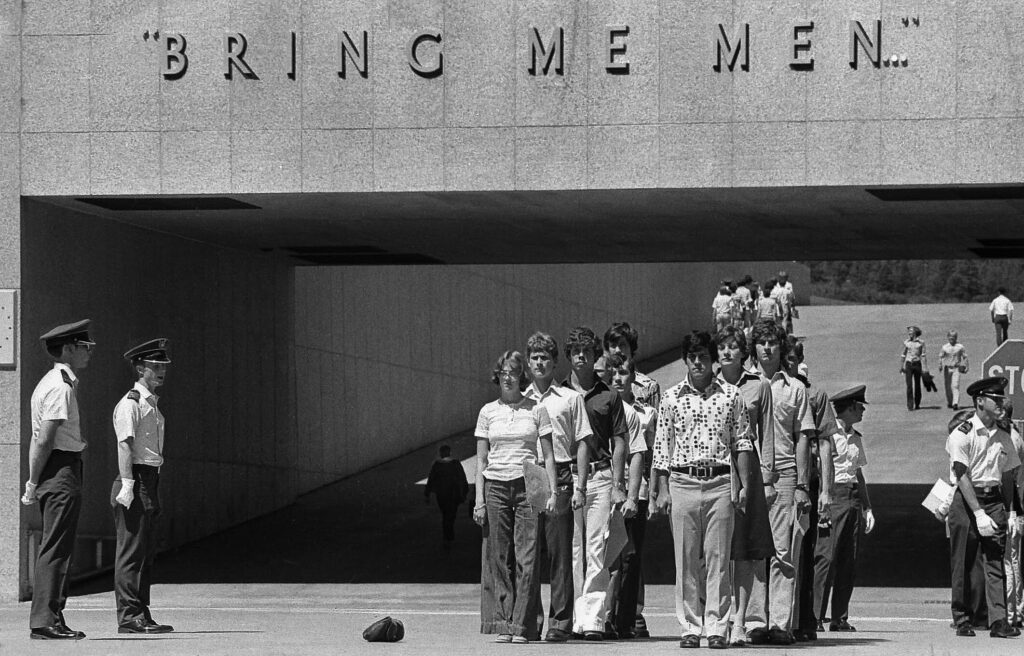
Fifty years later, women reflect on first coed class at the Air Force Academy, struggle for equality
Mary Shinn
mary-shinn@coloradopolitics.com
Updated 3 days ago
When the first female Air Force Academy cadets arrived 50 years ago this summer, they stood in front of an enormous sign on campus that read “Bring me men.” In the shadow of that sign, Kathleen Utley Kornahrens, one of...
As Lake Powell shrinks, marinas are having to adapt to dwindling water levels | OUT WEST ROUNDUP
The Associated Press
the-associated-press@coloradopolitics.com
Updated 6 days ago
ARIZONA Reservoirs near record lows PAGE — The Colorado River’s Lake Powell, the second largest reservoir in the U.S., is shrinking. A record-dry winter and extreme heat — as well as decades of overuse, chronic drought and climate change —...
U.S. Senate OKs funding bill to avoid government shutdown
Wire Services
wire-services@coloradopolitics.com
Updated 3 days ago
Hemp provision became point of contention WASHINGTON • The U.S. Senate in an overnight vote Saturday approved a short-term measure to fund federal agencies into early December and avoid a government shutdown during the middle of campaign season. The late-summer...
PREV
PREVIOUS
UPDATE: Hickenlooper swigs river water as slow recovery from EPA spill begins
AUG. 13 UPDATE: There may be nothing that Colorado Gov. John Hickenlooper won’t drink to prove a point, including the previously neon-orange water from the Animas River. A day before EPA administrator Gina McCarthy announced that toxicology tests show the water quality has returned to pre-contamination levels, Hickenlooper dipped his water bottle into the Animas […]

Webb: Renewed diplomatic relationship with Cuba good for America
The word “retirement” is not part of my vocabulary and since leaving the mayor’s office in 2003 I have not taken more than a few days off, except for vacations with my wife and family. But a knee replacement this summer, followed by more than a month of physical therapy, has given me time to […]