

Foreign-policy experts call for larger U.S. role in Middle East at CELL event
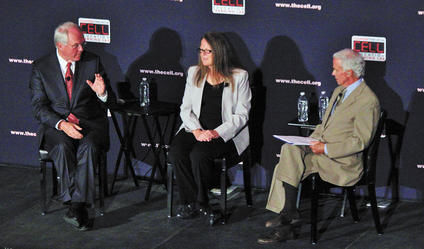
Two foreign-policy experts told a sold-out Denver crowd Wednesday that the Obama administration and its successor need to take a more active role in the Middle East as threats to the region’s stability intensify.
Former U.S. Ambassador Christopher R. Hill and American Enterprise Institute visiting scholar Mary Habeck didn’t always see eye-to-eye, but they did agree that a hands-off policy toward the Middle East is not an option as terrorist groups ISIS and al Qaeda expand their influence.

The two scholars were featured at the Counterterrorism Education Learning Lab event, “Global Threats to U.S. Security: ISIL’s Impact at Home & Abroad,” held at the Denver Art Museum and co-hosted by The Denver Post.
“I think we’re now in a bit of a free-for-all, and I think from a policy point of view we need to start tamping it down and I would say pay more attention,” said Hill, dean of the Josef Korbel School of International Studies at the University of Denver.
“And that does not mean boots on the ground,” said Hill, adding, “I promised I wouldn’t use that metaphor again, I’m so sick of it. But I do believe we need to kind of up our game diplomatically.”
While the Iranian nuclear deal has received the lion’s share of news coverage lately, Habeck ticked off several other developments she said warrant the same attention, including the spread of ISIS, the possible collapse of nation-states such as Syria, and the resurgence of al Qaeda.
“While we’ve been paying attention to ISIS and sort of have our eye on that really huge threat – I don’t want to minimize the threat from ISIS in any way – we have sort of taken our eye off, ‘What is al Qaeda doing?’ And in Syria, in particular, they’ve been taking territory and actually governing it,” she said.
“We’re hardly paying attention to it any longer, but sort of like a cancer, it’s out there spreading with no symptoms, and apparently no cure,” said Habeck, a senior fellow with the Foreign Policy Research Institute and former National Security Council special advisor. “It seems nearly everything and all of our solutions have failed.”
That doesn’t mean the United States should give up and head home, she said. Far from it: No other nation is better positioned to act an “honest broker” on the region’s varied, complex and entrenched conflicts.
“I think we’re extremely hard on ourselves. We’re always saying, ‘We’re such failures, why couldn’t we figure it out,'” said Habeck. “I’m not saying we don’t make mistakes. As Churchill said, Americans will try everything and fail at all of them until they finally do the right thing. That’s what Americans are like.”
Hill described the turmoil in the Middle East as “unprecedented, at least in the last 100 years,” starting with “the decline of the Arab nation-state.”
“The fact that when you take away the top layer of governments in these Arab countries, you don’t take it away and find that everyone wants to have a democracy – you find that people take refuge in other forms of loyalty, and those forms of loyalty are sectarianism and tribalism,” Hill said.
Habeck said the turmoil in Syria, where the government of Bashar al-Assad is in danger of crumbling under attack from ISIS and al Qaeda, refutes at least in part the oft-cited proposition that U.S. involvement in the Middle East has promoted radicalization.
“Well, we now know that that can’t be the entire explanation because we’ve not engaged in Syria, and there’s been more radicalization there than there ever was in Iraq,” Habeck said. “And almost twice as many people have now been killed in Syria as were killed during the war in Iraq up through American engagement.”
Anyone who insists that China is replacing the United States as the lead arbiter in international conflicts “clearly has not visited China,” said Hill.
“It’s pretty clear that we’re kind of it,” said Hill, a career foreign-service officer and four-time ambassador, most recently as U.S. ambassador to Iraq from April 2009 to August 2010. “And I think we have to be very engaged diplomatically.”
That said, he acknowledged the political difficulty in convincing the White House – any White House – to plunge into the highly charged situation in the Middle East.
“If you’re a political advisor to any administration, you say, ‘Don’t go there, it’s a loser, leave it alone, let those people sort it out, because it’s a loser. Nothing good will come of it,'” said Hill. “Well, alas, I think we owe it to ourselves, we owe it to everybody to kind of be engaged, to be engaged diplomatically, and try to sort things out.”
Even so, Habeck predicted that the 2016 presidential election would be a “national security election,” with the Middle East figuring prominently, “unlike 2012, where Americans by-and-large were not paying attention to the Middle East or foreign policy in general.”
“And I do believe that it’s going to be either number one or number two on the list of things that will have to be addressed by every single one of the candidates,” Habeck said. “People like a [Donald] Trump, who are great at bringing up problems but without actually giving us solutions, I think, are going to fade away.”
The two panelists, whose one-hour discussion was moderated by former ABC News foreign correspondent Greg Dobbs, differed in their view of Russia’s future as a global power.
“I think what we have in Russia is a declining power. I mean, ask any Russian what they think about the future. It’s pretty discouraging stuff,” Hill said. “When you are a declining power, you tend to be willing to take more risks, and I think that’s what we’re seeing with Putin.”
Based on her frequent visits to Russia in the 1990s, however, Habeck said that she sees signs that Russia is on the rebound.
“Demographically, that was a country that was in a death spiral,” Habeck said. “Russians were going to be extinct in I think it was 100, 120 years, because they were having so few children. He [Putin] actually managed to turn that around in one of the few times in human history that somebody has taken a country that’s in that kind of death spiral – and it isn’t going up, but it’s at least leveled off.”
“That country went from a negative birth rate to a positive birth rate, and that’s basically unheard of in human history,” she said. “The reason people have children is because they believe in the future.”
Both speakers had concerns about the Iranian nuclear deal, starting with the motivations of what Hill described as the “mullah-tocracy” running the nation.
“To me, we have the objective of avoiding war, which is great, of preventing Iran from developing nuclear weapons and preserving the peace in the Middle East,” said Habeck. “But our partners that we’re having conversation with, by partners I mean Iran, have as their objective completely different things. What they want is, in fact, to become the leaders of the Middle East, and they see nuclear weapons I’m certain as one of the ways forward to that.”
She also disagreed with “the kind of binary language that I’m hearing out of Washington,” characterizing the Iran deal as, “If we don’t use negotiations, that means we have to have all-out war. It’s either one or the other.”
Hill said there were a number of good reasons to pursue the bargain, starting with the threat of a nuclear-armed Iran and signs that the international economic sanctions had become a “depleting asset.”
“Everyone knows the sanctions have had very little effect on restraining their highly enriched uranium program,” Hill said. “I mean, you could argue they haven’t had any effect. They’ve impoverished the middle class but those are precisely the people we want on our side.”
Still, the agreement, which includes inspections to ensure that Iran is holding up its end of the bargain, may lead to what Hill called a “fateful moment.”
“If we find the Iranians cheating – and we will know – I don’t think we can just go back to sanctions. I think we’re going to have to decide do we want a military solution,” Hill said. “And we’re going to have to put our war paint on and we’re going to have to try to get the Brits and the French and the others to go with us. It’s going to be a very fateful decision.”
– valrichardson17@gmail.com

Federal judge directs plaintiff to revise complaint alleging Denver officers’ constitutional violations
Michael Karlik
michael.karlik@coloradopolitics.com
Updated 5 hours ago
A federal judge directed a plaintiff to revise his allegations on Wednesday to more precisely state what two Denver officers and the city itself allegedly did to violate his constitutional rights by facilitating his prosecution for murder until prosecutors dropped...
Federal judge explores new sanctions against ex-Colorado judicial discipline director
Michael Karlik
michael.karlik@coloradopolitics.com
Updated 9 hours ago
A federal judge on Wednesday directed Colorado’s former judicial discipline director, for the third time this year, to explain why she should not sanction him for his latest conduct in his litigation against the state’s judiciary. Christopher S.P. Gregory, who served...
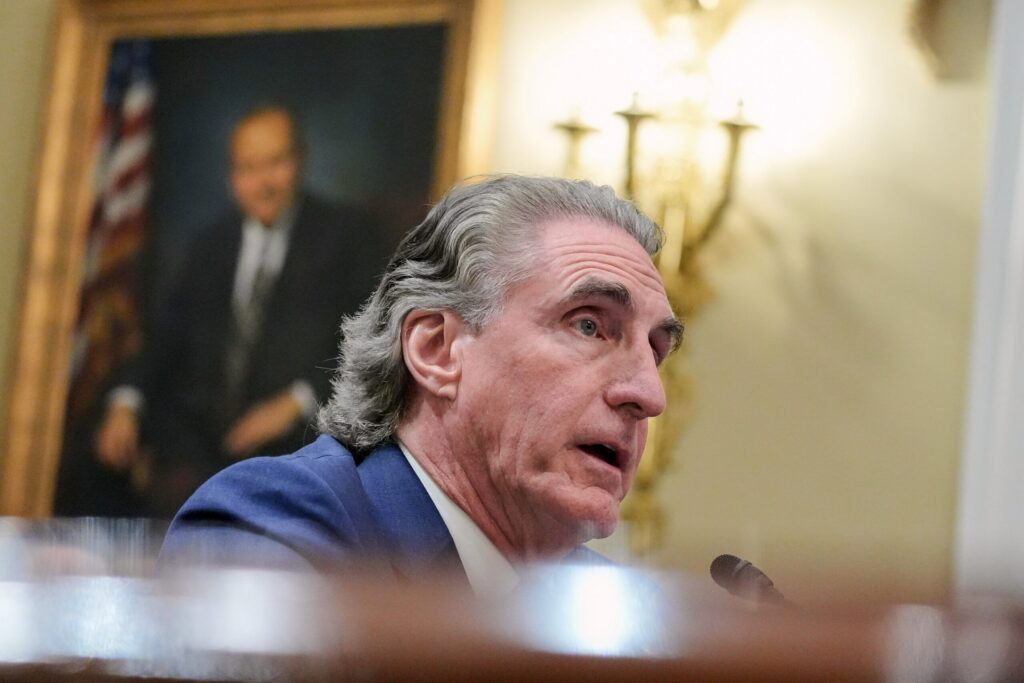
Colorado joins lawsuit challenging changes to Endangered Species Act
Marissa Ventrelli
marissa.ventrelli@coloradopolitics.com
Updated 9 hours ago
Colorado once more joined a coalition of states challenging the Trump administration — this time on proposed rules regarding the Endangered Species Act. The pair of lawsuits challenge new rules made under Interior Secretary Doug Burgum, who earlier said the...

Boebert challenger Eileen Laubacher says she’ll ‘break through the noise’ in Democrat’s 1st TV ad
Ernest Luning
ernest.luning@coloradopolitics.com
Updated 6 hours ago
Democratic congressional candidate Eileen Laubacher says she’ll take a different approach than her opponent in a campaign ad released Wednesday that opens with a cacophonous series of videos featuring Republican U.S. Rep. Lauren Boebert. “Eileen’s had enough of the noise...

Colorado congressman asks DOJ to investigate violent student ICE walkout
Nico Brambila
nico.brambila@denvergazette.com
Updated 8 hours ago
U.S. Rep. Jeff Crank is asking the Justice Department to investigate violence at last week’s anti-ICE student walkout in Denver, including whether outside organizations helped organize, fund, or influence the demonstration. Crank sent a letter Tuesday requesting the investigation to...

General election season is here. Where does mail-in voting stand?
David Zimmermann
david-zimmermann@coloradopolitics.com
Updated 12 hours ago
As the general election season approaches, the legal question surrounding the new U.S. Postal Service mail-in ballot requirements remains up in the air. With the case playing out in the courts, mail-in voting has not been changed substantially despite President...
10th Circuit orders second look at immunity for Kiowa County deputy over fatal vehicle crash
Michael Karlik
michael.karlik@coloradopolitics.com
Updated 7 hours ago
The Denver-based federal appeals court directed a trial judge on Tuesday to further analyze whether a Kiowa County deputy and the sheriff’s office may be sued for a fatal vehicle collision. The Colorado Governmental Immunity Act generally shields government entities and public...
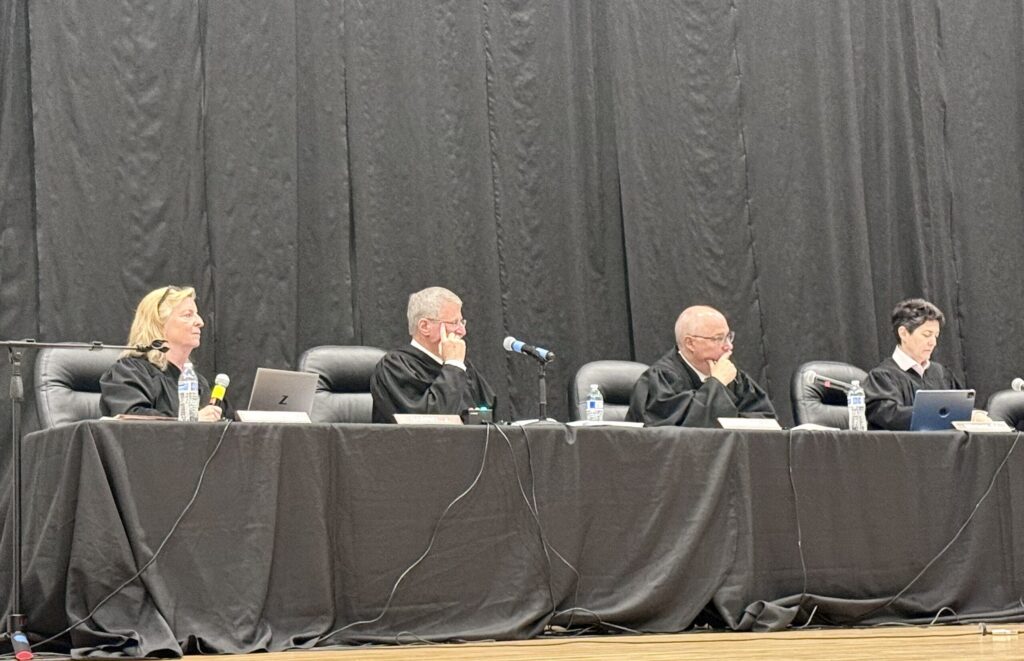
Colorado justices to hear appeal in Kendrick Castillo death lawsuit, ‘fugitive’ rule
Michael Karlik
michael.karlik@coloradopolitics.com
Updated 7 hours ago
The Colorado Supreme Court announced on Tuesday that it will decide whether it was proper to dismiss a lawsuit over the 2019 shooting death of Kendrick Castillo after the defendants paid the maximum amount of damages available to Castillo’s parents,...

Two more wolves killed by Colorado wildlife staff
Marianne Goodland
marianne.goodland@coloradopolitics.com
Updated 1 day ago
Two yearling wolves from the Copper Creek and Three Creeks packs in Pitkin and Rio Blanco counties, respectively, were killed by Colorado Parks and Wildlife staff on Monday. That brings to 19 the number of wolves that have died under...
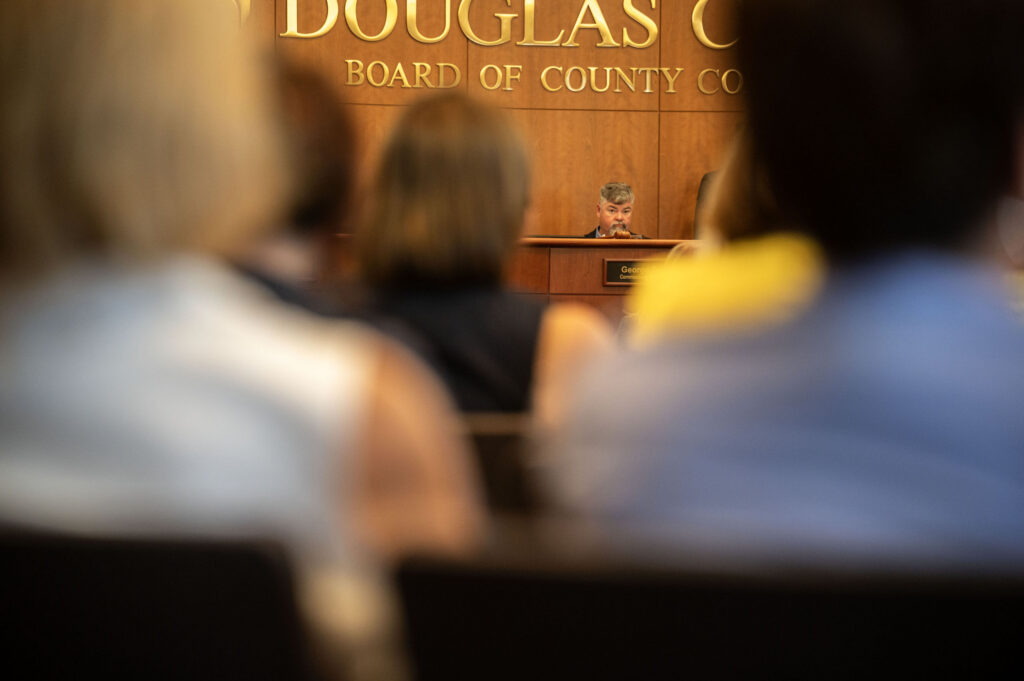
Federal judge dismisses Douglas County’s challenge to collective bargaining law
Nicholas Fogleman
nicholas.fogleman@denvergazette.com
Updated 16 hours ago
A federal judge dismissed claims brought by the Douglas County Board of Commissioners alleging that a state law granting county employees the right to organize and join labor unions violates free speech protections and conflicts with federal labor law. Douglas...
PREV
PREVIOUS

Hudson moves to AG's office, Gelt joins Akerman firm
Hudson named PIO for AG Coffman Colorado Attorney General Cynthia Coffman this week named Roger Hudson as the Department of Law’s public information officer and communications director. Hudson has more than 30 years experience in news, communications and media management, including a recent stint as the public information officer for the Colorado Department of Corrections. […]

Biennial panel discusses how to help women thrive in business
Thrive was the word of the day at the Women’s Leadership Luncheon at the Biennial of the Americas Festival last Wednesday. The luncheon featured a panel moderated by Alicia Menendez, anchor of FUSION’s “Come Here and Say That,” and included Patricia Milligan, senior partner and global leader for Mercer, and Danielle Saint-Lot, ambassador-at-large for the […]