

Cyberbullies, homemade hash oil targets of new laws taking effect

Crackdowns on cyberbulling and homemade hash oil are now on the books in Colorado.
The laws are among 19 new statutes that took effect July 1.
Those who are guilty of cyberbulling — harassment through interactive electronic media, such as social media — will now face up to six months behind bars.The law, a result of House Bill 1072, was spawned by a case involving Douglas County teenager Kiana Arrellano, who was harassed and encouraged to commit suicide by online bullies.
Arrellano attempted suicide by hanging but survived. However, the oxygen deprivation she suffered during the attempt caused brain damage and left her a paraplegic.
“At that time, law enforcement didn’t know they could go in and investigate the case and take it to the district attorney,” said state Sen. Linda Newell, D-Littleton, who sponsored the bill in the Senate. “With this, they would be able to do that.”
The law targets both direct and indirect forms of electronic harassment. Those include bullying through online message boards, where harassers often hide behind screen names and might not mention victims by name.
“A person sitting behind a computer and putting something out online, it may not look at first glance like it’s directed at a certain person, Newell said. “Then, through a series of posts, it’s clear who it’s intended for.”
Newell said she hopes the law raises awareness about online bullying, where harassing comments and pictures “can go out there and stay there in perpetuity.”
“This is a real social and cultural issue,” she said. “It’s going to take more than a bill to fix the problem with all the emerging technology around us.”
Meanwhile, House Bill 1305, which also took effect earlier this month, makes it illegal for unlicensed persons to produce marijuana concentrates, such as hash oil.
The law bans the use of explosive gases, including butane, to make homemade hash oil, which is made from concentrated marijuana resin.
State Rep. Mike Foote, D-Lafayette, a bill sponsor, said the legislation was a response to cases involving home explosions resulting from amateur hash oil production.
“There’s been many explosions in dense developments, like apartments and town homes, cases where kids are around,” Foote said. “It’s putting a lot of people at risk.”
Rep. Yeulin Willett, R-Grand Junction, a bill co-sponsor, said through a statement that the new law “will hopefully deter people from putting themselves and others in danger.”
The law creates a Class 2 drug felony, punishable by up to 8 years behind bars. Foote stresses that the law applies only to those who are not licensed to produce marijuana concentrates.
“It’s aimed at the guy who is trying to do this in his basement and garage,” Foote said. “It’s clearly unsafe and highly volatile.”
Foote, a Boulder County prosecutor, is also the co-sponsor of another new law that makes changes to criminal statute.
Senate Bill 5, which was carried in the Senate by John Cooke, a Republican from Greeley, requires a defendant in a first-degree assault case to undergo testing for communicable diseases if his or her bodily fluids comes in contact with a victim, first responder or medical care provider.
Examples of communicable diseases include HIV and hepatitis.
“That’s a huge worry for victims of violent crimes,” Foote said. “The new law can either put their mind at ease or give them a head start on treatment.”
A judge can require a defendant to pay the testing costs, and the results must be reported to the court within 10 days.
The new statute is an expansion of an existing law that requires testing in second- and third-degree assault cases.
— Twitter: @VicVela1

Colorado Supreme Court upholds police search of car based on arm movements
Michael Karlik
michael.karlik@coloradopolitics.com
Updated 6 hours ago
The Colorado Supreme Court decided last week that Denver officers’ search of a vehicle was constitutional, based on their perception of the occupants’ arm movements that a trial judge found to not be credible. Officers Keegan Grubb and Richard Eberharter...
Flat or graduated income tax? Colorado groups push dueling measures for November election
Marissa Ventrelli
marissa.ventrelli@coloradopolitics.com
Updated 10 hours ago
Colorado voters could face two opposing income-tax measures on the November ballot, with the dueling campaigns seeking to advance proposals that would take the state in sharply different fiscal directions. One initiative seeks to replace Colorado’s flat income tax with...
10th Circuit tosses Pueblo County sheriff defendants’ appeal in fatal shooting lawsuit
Michael Karlik
michael.karlik@coloradopolitics.com
Updated 13 hours ago
The Denver-based federal appeals court rejected an attempt from Pueblo County sheriff’s employees on Wednesday to rely on their own version of the facts to escape liability for fatally shooting an unarmed man outside a middle school. A trial judge...
Backers of Colorado road-funding initiative reject withdrawal deadline, negotiations with lawmakers continue
Marissa Ventrelli
marissa.ventrelli@coloradopolitics.com
Updated 11 hours ago
The standoff over Colorado’s road‑funding initiative will continue after supporters declined state lawmakers’ request to withdraw the measure, while both sides signaled they are still willing to pursue a broader agreement ahead of the fall deadline. Initiative No. 175, backed...

US primed for summer of unpredictable gas prices as Iran war rages on: ‘Living this uncertainty’
Emily Hallas, Washington Examiner
emily.hallas.washington.examiner@gazetteedit.wpenginepowered.com
Updated 13 hours ago
The war with Iran has made summer gas prices unpredictable, as President Donald Trump’s shifting messaging on hostilities keeps the energy markets in limbo. There’s little concrete direction on where gas prices could go in the coming months, an expert...

USPS proposes changes to mail-in ballots in states that don’t hand over voter rolls
Molly Parks, Washington Examiner
molly.parks.washington.examiner@gazetteedit.wpenginepowered.com
Updated 11 hours ago
The Postal Service proposed a new rule pushing states to turn over their mail-in and absentee voter rolls to the agency, a move in line with President Donald Trump’s March executive order tightening regulations on mail-in voting in federal elections....
Colorado justices uphold strict interpretation of consumer protection law against debt collector
Michael Karlik
michael.karlik@coloradopolitics.com
Updated 9 hours ago
The Colorado Supreme Court concluded last month that a debt collector failed to comply with state law by suing a woman for an unpaid credit card debt without documentation that it owned her account. Portfolio Recovery Associates, LLC filed a...

The Latest: US military launches strikes against Iran in response to downing of American helicopter
The Associated Press
the-associated-press@coloradopolitics.com
Updated 1 day ago
The U.S. military announced that it has begun strikes against Iran following the crash of a U.S. Army Apache helicopter off the coast of Oman. In a statement posted to social media, U.S. Central Command said the strikes would be...
Colorado governor signs bill requiring pollution controls, cost reporting for extended coal operations
Scott Weiser
scott.weiser@gazette.com
Updated 1 day ago
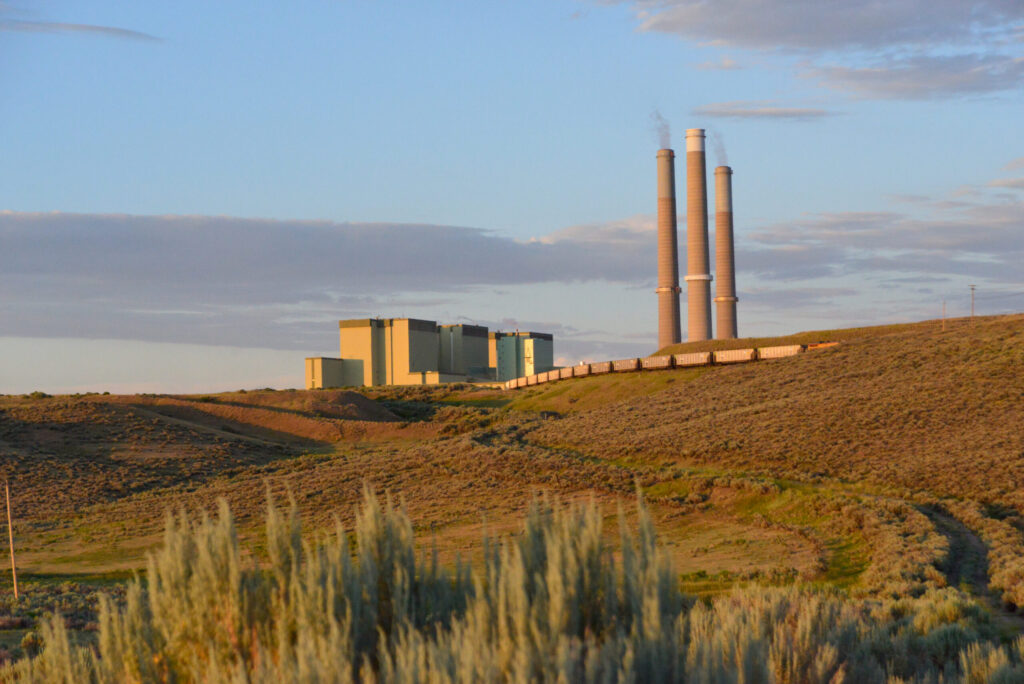
Gov. Jared Polis signed into law a bill in reaction to orders from the U.S. Department of Energy to keep older coal units online. The federal government’s instructions applied to Craig Unit 1 in Colorado, one of five coal units...

Mental Health Colorado names 2026 legislators of the year
Marissa Ventrelli
marissa.ventrelli@coloradopolitics.com
Updated 1 day ago
Six state lawmakers have received recognition from the advocacy organization Mental Health Colorado for their work during the 2026 legislative session. “Mental Health Colorado’s work to pass laws, change practices, and build a movement depends on courageous advocates and bipartisan...
PREV
PREVIOUS

Lakewood cake baker, gay couple square off before court of appeals
Masterpiece Cakeshop owner Jack Phillips says he was exercising his right to freedom of expression when he refused to bake a wedding cake for a gay couple, but the Colorado Civil Rights Commission called it unlawful discrimination. So the Lakewood baker took his case to the Colorado Court of Appeals, which heard oral argument Tuesday […]
Delegation firm on finishing Aurora hospital, holding Dept. of Veterans Affairs accountable
Like most Coloradans, the Congressional delegation was shocked and appalled in March when the Department of Veterans Affairs first informed us the VA replacement medical center in Aurora would cost a staggering $1.73 billion. The delegation had worked together to support an $800 million facility and helped authorize funds accordingly. These cost overruns and the […]