

Lakewood cake baker, gay couple square off before court of appeals

Masterpiece Cakeshop owner Jack Phillips says he was exercising his right to freedom of expression when he refused to bake a wedding cake for a gay couple, but the Colorado Civil Rights Commission called it unlawful discrimination.
So the Lakewood baker took his case to the Colorado Court of Appeals, which heard oral argument Tuesday in what has become a pivotal case nationally in the legal tug-of-war over religious freedom and same-sex marriage.
“Mr. Phillips has the same First Amendment right as the cake artist who doesn’t want to create a Confederate flag cake,” said Jeremy Tedesco, the Alliance Defending Freedom attorney who argued Phillips’ case before the court.
Ria Mar, the American Civil Liberties Union attorney representing Charlie Craig and Dave Mullins, countered, “Mr. Phillips is free to advocate and teach his beliefs in his personal life, but when opens a business that is open to the public, he is not free to use those beliefs to discriminate against others.”
“Religious beliefs do not put the cake shop above the law,” she said.
Phillips is one of a half dozen Christian small-business owners embroiled in legal battles after declining to provide services for same-sex ceremonies. So far none of the defendants — including a florist in Washington, a baker in Oregon and a photographer in New Mexico — has prevailed before administrative law judges or courts.
Twenty-one states, including Colorado, and the District of Columbia prohibit discrimination in public accommodations based on sexual orientation.
“If a same-sex couple can get married and then walk into a business and be turned away because they are gay, we have not achieved true equality yet,” said Mullins at a press conference following oral argument.
Attorneys for Phillips argue that he turned down the couple not because they were gay but because they wanted a cake to celebrate an event that goes against his beliefs. The bakery routinely sells cookies, bagels and specialty cakes to gay and straight customers alike, he said.
But requiring the baker to use his artistic talents to create a cake for a gay wedding is no different than compelling him to speak out in favor of same-sex marriage, said Tedesco.
“Americans are guaranteed the freedom to live and work consistent with their faith,” the attorney said. “Government has a duty to protect people’s freedom to follow their beliefs personally and professionally rather than force them to adopt the government’s views.”
Tedesco said that Phillips also refuses to make Halloween cakes, or cakes promoting a racist or hateful message.
“We still have rights as American citizens to pursue our faith and to pursue our free-speech rights,” Phillips said.
The couple filed a complaint with the Colorado Civil Rights Division after Phillips declined in 2012 to bake them a cake for a wedding reception following their marriage ceremony in Massachusetts. At the time, same-sex marriage was not legal in Colorado.
An administrative law judge ruled in the couple’s favor in December 2013, rejecting Phillips’ free-speech argument, saying, “The act of preparing a cake is simply not ‘speech’ warranting First Amendment protection.”
“Conceptually, Respondents’ refusal to serve a same-sex couple due to religious objection to same-sex weddings is no different from refusing to serve a biracial couple because of religious objection to biracial marriage,” said the order.
Phillips appealed the decision to the commission, which in May 2014 ordered him to “cease and desist discriminating” against gay couples seeking wedding cakes and to take measures, including “staff training,” to ensure that it doesn’t happen again.
Since then, Phillips has stopped making wedding cakes altogether, which he says has cost him about 40 percent of his business. So far he has not been fined or ordered to pay damages to Craig and Mullins, although the Court of Appeals could require him to do so.
In a similar case in Oregon, the owners of Sweet Cakes by Melissa were ordered last week by the state labor commissioner to pay $135,000 in “emotional damages” to a lesbian couple.
A ruling in the case is expected later this year. No matter the outcome, an appeal to the Colorado Supreme Court is likely.

Colorado board permits state to appeal injunction against arthritis drug price cap
Marissa Ventrelli
marissa.ventrelli@coloradopolitics.com
Updated 1 hour ago
A Colorado board voted Friday to allow the Attorney General’s Office to fight an injunction against a price cap on a drug that treats arthritis. A U.S. district court judge had granted the company Amgen a preliminary injunction, temporarily blocking...
Federal judge rejects constitutional claims, ‘expressions of hatred’ by Club Q defendant
Michael Karlik
michael.karlik@coloradopolitics.com
Updated 3 hours ago
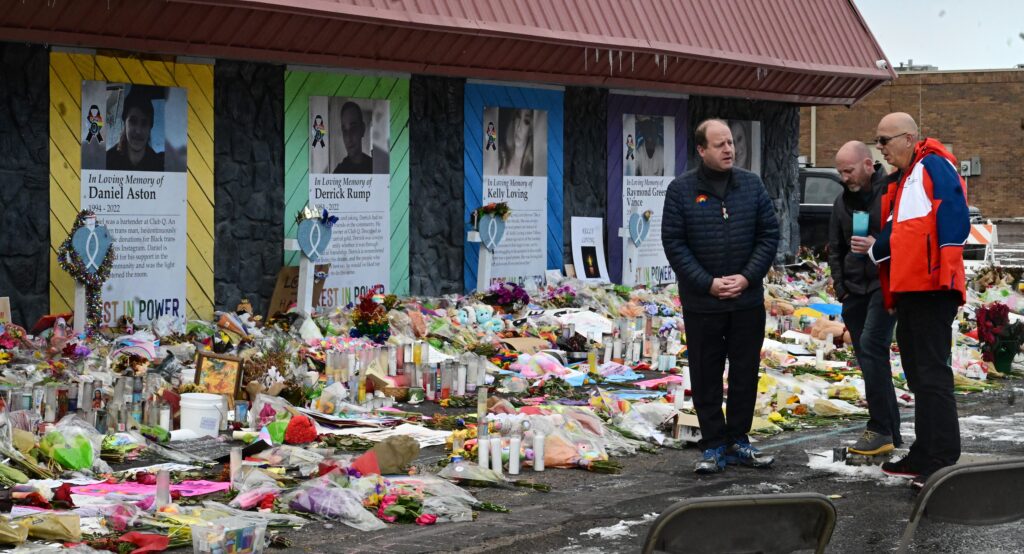
A federal judge rejected a defendant’s claims that he received constitutionally ineffective assistance of counsel while facing federal hate crime and firearms charges for murdering five people at a Colorado Springs LGBTQ nightclub in 2022. Anderson Lee Aldrich is serving...

Divided 10th Circuit upholds Colorado congestion fee on car rentals
Michael Karlik
michael.karlik@coloradopolitics.com
Updated 3 hours ago
The Denver-based federal appeals court concluded on Monday that a 2024 “congestion impact fee” that lawmakers imposed on short-term vehicle rentals did not conflict with a federal prohibition on certain airport-related charges. Beginning in the 1970s, Congress began limiting the...

Space Force should measure workforce needs as it prepares to double in size, GAO report says
Mary Shinn
mary-shinn@coloradopolitics.com
Updated 5 hours ago
The Space Force needs more people. It’s just not precisely sure how many more. A Government Accountability Office report released earlier this month found that the youngest and smallest military branch does not have a process to consistently or accurately...

Colorado schools receive $24 million for free meals program
Marissa Ventrelli
marissa.ventrelli@coloradopolitics.com
Updated 1 hour ago
The Colorado Department of Education is providing Colorado schools with nearly $24 million in grant funding to implement a free lunch program. Approved by voters in 2022, the Healthy School Meals for All provides free breakfast and lunch to all...
Secret Service agent placed on administrative leave after arrest for near-deadly hazing ritual
Claire Carter
claire.carter@washingtonexaminer.com
Updated 7 hours ago
A Miami Secret Service agent in Florida was placed on administrative leave following his arrest on Sunday in connection with a near-deadly hazing incident at a University of Miami fraternity. Marquez Christopher Pinder, 29, was arrested alongside two other individuals...
Forest fire west of Sedalia prompts evacuations in Douglas County
Nicholas Fogleman
nicholas.fogleman@denvergazette.com
Updated 9 hours ago
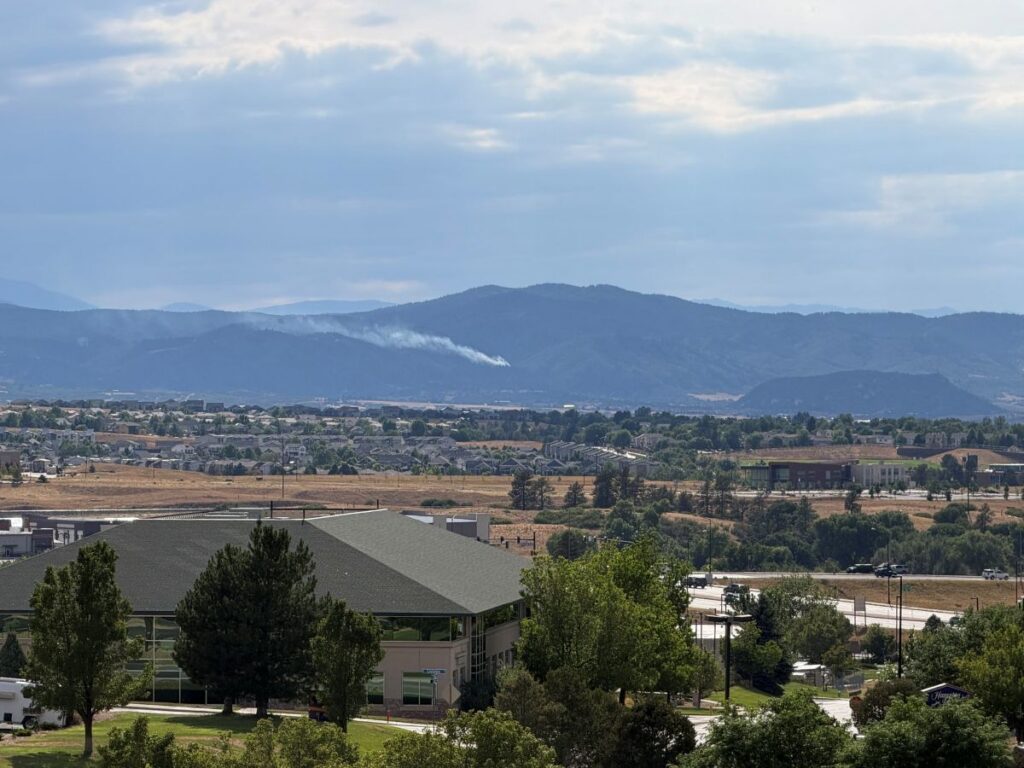
Emergency crews are responding to a forest fire burning west of Sedalia, prompting evacuation orders for nearby residents Sunday afternoon. At about 5 p.m. Sunday, the Douglas County Sheriff’s Office issued an evacuation order for residents within a 2-mile radius...

Airstrikes have paused and talks are pressing forward. But can the US and Iran take the off-ramp?
The Associated Press
the-associated-press@coloradopolitics.com
Updated 9 hours ago
WASHINGTON (AP) — The U.S. military has paused its airstrikes on Iran after nearly two weeks of intensifying bombing, while diplomatic efforts have pushed forward to try to avert a return to all-out war. But it remains to be seen...
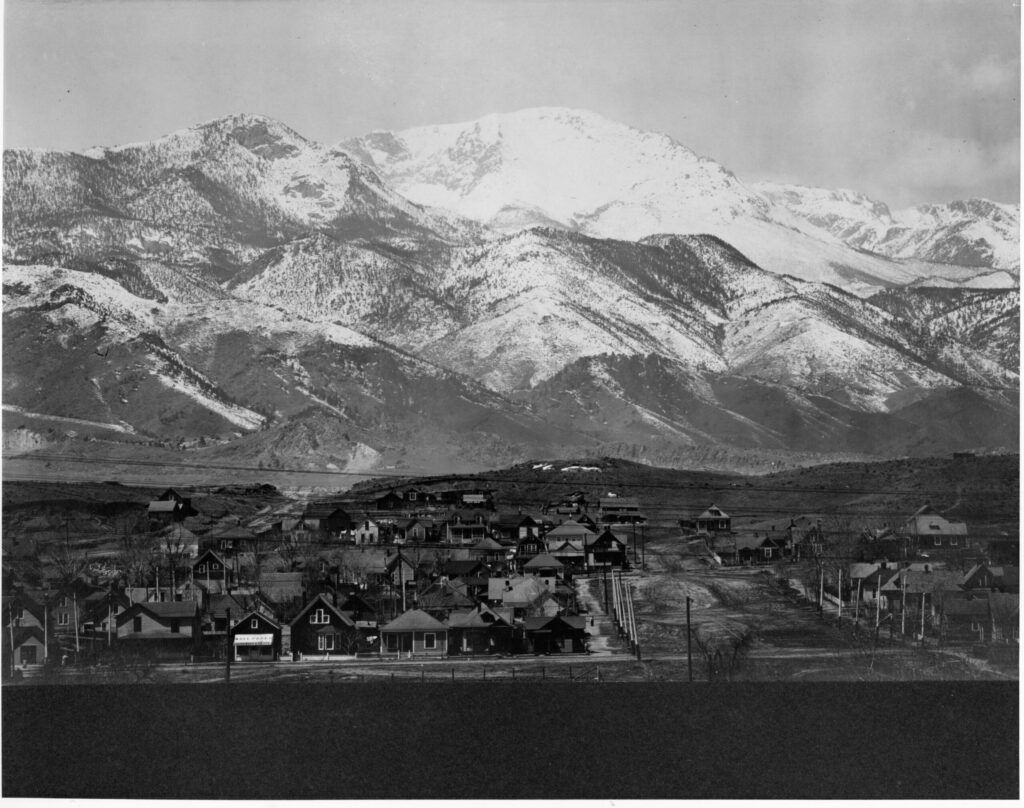
Penrose fortune paved the way for Colorado Springs to be a military, space and sports town
Mary Shinn
mary-shinn@coloradopolitics.com
Updated 9 hours ago
Colorado Springs is always working to catch the next big economic wave. “We’re always trying to figure out what the next thing is going to be,” explained Matt Mayberry, director of the Colorado Springs Pioneers Museum. In the early days,...
Colorado Politics Calendar July 27-Aug. 2
Rachael Wright, Special to Colorado Politics
rachael.wright@coloradopolitics.com
Updated 5 days ago
CoPo’s weekly political calendar will help you find political and public-policy events throughout Colorado. It includes candidate and issue campaign events, public policy meetings, court hearings, state and local party conventions, assemblies, debates, rallies, parades, speaking engagements, traveling dignitary appearances,...
PREV
PREVIOUS
Letter: Conservation fund a boon to state’s small businesses
Editor: The federal Land and Water Conservation Fund, which protects our country’s public lands that create economic opportunities for small businesses, is set to expire in less than 100 days unless lawmakers act quickly to reauthorize it. Small business owners understand the connection between the preservation of public lands and their bottom lines. National parks […]

Cyberbullies, homemade hash oil targets of new laws taking effect
Crackdowns on cyberbulling and homemade hash oil are now on the books in Colorado. The laws are among 19 new statutes that took effect July 1. Those who are guilty of cyberbulling — harassment through interactive electronic media, such as social media — will now face up to six months behind bars.The law, a result […]