

Colorado Health Exchange may be skating on thin ice

Two weeks ago I received an email from Sameer Parekh Brenn of Boulder containing the following appeal: “My family is being threatened with losing our healthcare coverage because Connect for Health is broken. Would you like to cover the story?”
He went on to say he expected to lose his coverage on June 8. Since I couldn’t get a story into print before then, I called and suggested he attend the Legislative Health Benefit Exchange Implementation Review Committee’s meeting scheduled for Friday, June 5, and tell his story to its members. Mr. Brenn, who had found my name and those of several other reporters through a Google search, thought this was a good suggestion. He promptly emailed Connect for Health to inform them he was speaking with me and planning to testify before the oversight committee. Within a few hours Connect for Health leapt into action, after months of desultory foot dragging.

Sameer Parekh Brenn of Boulder prepares to testify at the State Capitol on June 5 in Denver.Photo by Miller Hudson/The Colorado Statesman

The tale Sameer related to the committee on Friday morning was sufficiently convoluted to stretch the creative imagination of Kafka. Following the birth of his son in December, an event insured under his wife’s COBRA coverage, he then wanted to add his wife to his own Kaiser plan. In February he was assured that he could make this change, effective March 1 at a rate that was supposed to be $90 a month with premium subsidies. By May 11, after seemingly endless conversations with the Exchange and Kaiser, she had still not been added to his plan. Brenn had been paying for her coverage, however, without a subsidy, in hopes of making sure both mother and baby were covered. They weren’t, although Kaiser sent a bill for another $1,037.96 with a threat to terminate his coverage on June 8 if it hadn’t been paid.
Brenn was bounced like a ping-pong ball between Kaiser and the Exchange, usually after long hours spent on hold. However, once he told them he planned to tell the legislative committee how he’d been treated, the Exchange’s chief information officer, Adele Work, contacted him.
By the time he testified on Friday, Brenn’s case had been resolved. But, as he observed, “You can’t reasonably expect the Exchange’s IT officer to personally fix every appeal. While I’m happy with the outcome in my case, there seems to be something very wrong at the Exchange.”
State Sen. Ellen Roberts, R-Durango, thanked the man for taking the time to confirm the kind of complaints many legislators have been hearing from constituents. A pair of scheduled presentations raised further questions regarding the long-term viability of the Exchange.
Jeff Bontrager, Director of Research on Coverage and Access at the Colorado Health Institute, indicated the troubles at the Exchange run far deeper than bungled customer support. He broke down the options facing the Exchange into two categories: sustainability and exit strategies. Bontrager contended the Exchange could only be sustained if it generates sufficient revenues to cover its operational costs. This will only be achieved if the Exchange can attract a robust risk pool, far larger than its current base of customers, which has proven substantially smaller than originally forecast. Among the recommendations: services provided to Medicaid through the Exchange call center should be reimbursed in some fashion, while technology costs need to fall. The cost and value of “coverage guides” also require scrutiny.
The Independence Institute’s Linda Gorman raised another set of concerns. She estimated that perhaps as few as 7,000 Exchange clients are truly individuals who were entirely without insurance (or “running bare”) prior to Obamacare. The Affordable Care Act’s redefinition of those with sub-standard policies as uninsured distorts the actual impact of the program, she said. While those who had policies cancelled because of their failure to meet minimum coverage standards approached 160,000 Coloradans — and many of these are now happier with their expanded coverage — they were not truly “uninsured.”
Gorman pointed out that for many of the young or the abjectly poor it makes economic sense to refuse insurance. Rather than simplifying enrollment, the ACA application forms are substantially longer than they used to be despite the pre-existing condition exemption. She made the wry observation that salaried bureaucrats who drafted the bill’s provisions, and who can accurately predict their earnings year-to-year, underestimated the vast share of the workforce that sloshes back and forth across the Medicaid eligibility criteria. Establishing this eligibility has proven tedious and expensive. She suggested that making all health care expenditures pre-tax costs for individuals, as they are for employers, would improve system performance. She also took a swipe at the $6 million being paid to the so-called “coverage guides” for what are dubious results.
When Insurance Commissioner Marguerite Salazar appeared to testify, state Rep. Lang Sias, R-Arvada, quizzed her closely regarding the economic health of Colorado’s HealthOP consumer co-op, which has enrolled nearly half of all Exchange clients.
Salazar conceded that HealthOP was “under monthly supervision,” an acknowledgement the enterprise is dipping into its insurance reserves. The federal government provided these moneys on a “one-time,” “front-end only” basis. It is doubtful that most legislators at last week’s hearing recognized how unusual an arrangement this is. With one ACA consumer co-op already having failed, and several others on the brink of bankruptcies, HealthOP has the potential to emerge as a ticking time bomb for the Exchange.
If the U.S. Supreme Court throws out individual eligibility for premium subsidies in states with federally operated exchanges later this month, it should breathe some life into Connect for Health. Otherwise, we may find the Exchange contemplating the wisdom of turning its operations over to the federal government — one of the exit strategies suggested by Bontrager.
Standing just offstage are the advocates of a ‘single payer’, universal health care program for all Coloradans. Advocates are collecting signatures for a measure to appear on the 2016 ballot that was initially suggested by state Sen. Irene Aguilar, D-Denver, a physician. Its chances for success will hinge on whether or not voters have reached a point of health care reform fatigue. Nonetheless, a system collapse for Obamacare could persuade voters it was time to throw the baby out with the bathwater and be done with health care once and for all.
Miller Hudson is a former state legislator and a public affairs consultant. Reach him at mnhwriter@msn.com


Colorado Politics Calendar July 27-Aug. 2
Rachael Wright, Special to Colorado Politics
rachael.wright@coloradopolitics.com
Updated 4 days ago
CoPo’s weekly political calendar will help you find political and public-policy events throughout Colorado. It includes candidate and issue campaign events, public policy meetings, court hearings, state and local party conventions, assemblies, debates, rallies, parades, speaking engagements, traveling dignitary appearances,...

The through line from Donald Trump to Victor Marx | SONDERMANN
By Eric Sondermann
by-eric-sondermann@coloradopolitics.com
Updated 4 days ago
Over 10 years ago, before Donald Trump could ever defeat Hillary Rodham Clinton, he had to first engineer a hostile takeover of the Republican Party. Prior to his descent of that golden escalator, the previous seven Republican presidential nominees had...

Colorado districts prepare for school year amid mental health cuts. But will less cellphone distractions help?
Marissa Ventrelli
marissa.ventrelli@coloradopolitics.com
Updated 2 days ago
The signs of a new school year are everywhere — buses in the shop, teachers unpacking boxes, families ticking through supply lists — but behind the familiar rituals, Colorado districts are preparing for a year defined less by routine than...
Armstrong staffer considers congressional bid, DeGette angers rural communities with wilderness act | A LOOK BACK
Rachael Wright, Special to Colorado Politics
rachael.wright@coloradopolitics.com
Updated 3 days ago
Forty-five years ago this week: If the lines were drawn just right, Republican Sen. Bill Armstrong stood the chance of losing his office manager, Ruth Fountain. Fountain admitted she was seriously thinking about running for Colorado’s new congressional seat in...
10th Circuit dismisses woman’s lawsuit following 10-year attempt to undo restraining order
Michael Karlik
michael.karlik@coloradopolitics.com
Updated 2 days ago
The Denver-based federal appeals court rejected a woman’s challenge on Friday to a restraining order imposed on her more than a decade ago, finding that she cannot credibly claim she will be prosecuted for violating the restraining order through her...
10th Circuit dismisses woman’s lawsuit following 10-year attempt to undo restraining order
Michael Karlik
michael.karlik@coloradopolitics.com
Updated 2 days ago
The Denver-based federal appeals court rejected a woman’s challenge on Friday to a restraining order imposed on her more than a decade ago, finding that she cannot credibly claim she will be prosecuted for violating the restraining order through her...
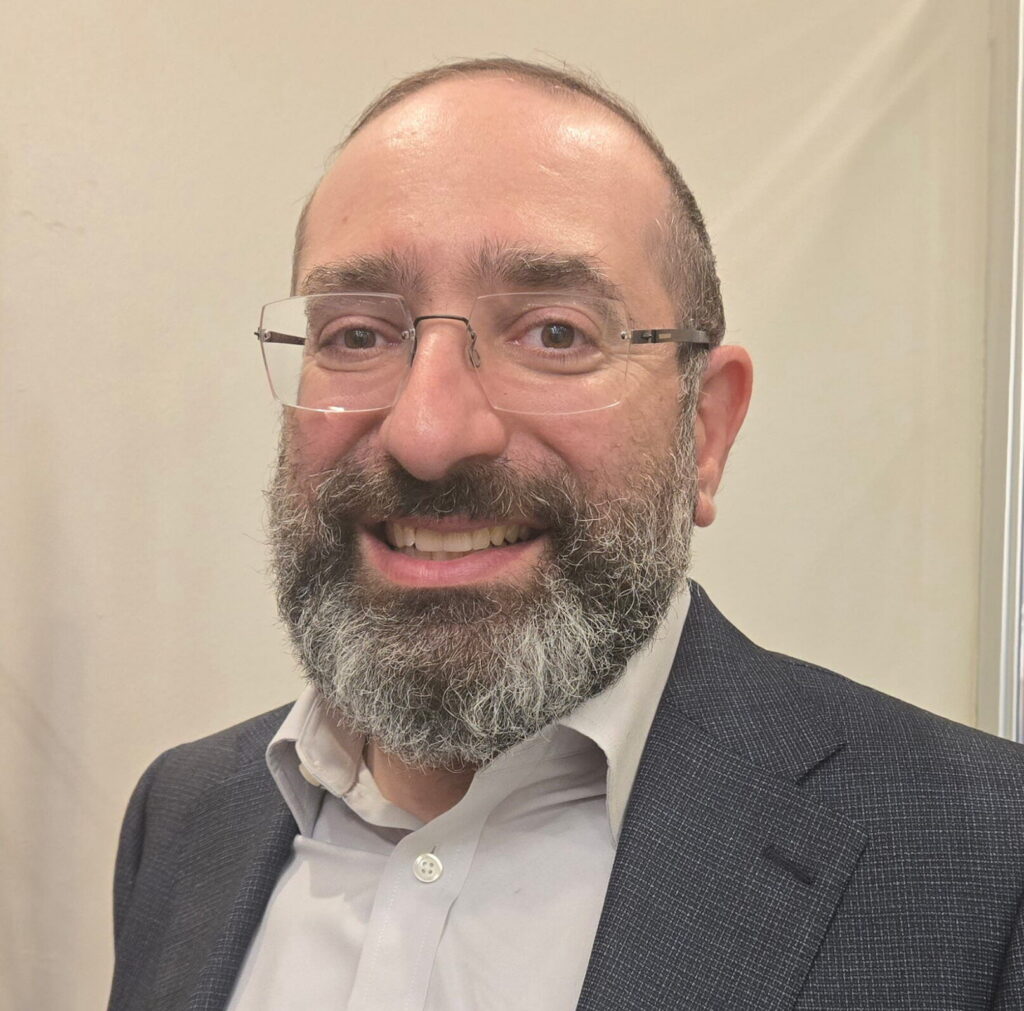
Surprise candidate Shimon Blau cleared to face off against Melat Kiros in November
Ernest Luning
ernest.luning@coloradopolitics.com
Updated 2 days ago
Unaffiliated congressional candidate Shimon Blau, a Denver doctor, has qualified by petition for the general election in Colorado’s 1st District, where Democrat Melat Kiros defeated 15-term U.S. Rep. Diana DeGette in last month’s primary, the Colorado Secretary of State’s Office...

Colorado produce not tied to nationwide cyclospora outbreak, agriculture officials say
Marissa Ventrelli
marissa.ventrelli@coloradopolitics.com
Updated 1 day ago
There is no indication that the recent outbreak of cyclospora, a fecal parasite that has contaminated food and water across nearly every state, can be linked to produce grown in Colorado, according to the state’s Department of Agriculture. “Colorado growers...

UNC opens College of Osteopathic Medicine
Marissa Ventrelli
marissa.ventrelli@coloradopolitics.com
Updated 2 days ago
The University of Northern Colorado held a grand opening for its new College of Osteopathic Medicine on Friday, with Gov. Jared Polis in attendance to celebrate the culmination of a two-year, $127.5 million project. The project was funded through legislation...
Colorado equal pay law does not require plaintiffs to allege gender-based retaliation, appeals court finds
Michael Karlik
michael.karlik@coloradopolitics.com
Updated 1 day ago
The 2019 Colorado law aimed at rooting out pay discrimination on the basis of sex does not require a plaintiff to allege their employer retaliated against them for sex- or gender-related reasons, the state’s second-highest court decided on Thursday. Lawmakers...
PREV
PREVIOUS

DeGette bill tackles diabetes disparities
With Native Americans 23 times more likely to be diagnosed with diabetes than non-Hispanic whites, U.S. Rep. Dianna DeGette, D-Denver, chose Denver Indian Health and Family Services as the location to announce new legislation on diabetes research focused on minority populations. “Colorado has a reputation for being a very fit state, but we’re not immune […]

Mountain climber Benitez faces hurdles to grow state’s outdoor industry
Luis Benitez has encountered all sorts of hardships as an elite mountaineer. He’s scaled the highest points on all seven continents 32 times and helped to rebuild a climbing company devastated by the 1996 Into Thin Air Mount Everest disaster. But some of his most daunting challenges could come in his new role as director […]