

DeGette bill tackles diabetes disparities

With Native Americans 23 times more likely to be diagnosed with diabetes than non-Hispanic whites, U.S. Rep. Dianna DeGette, D-Denver, chose Denver Indian Health and Family Services as the location to announce new legislation on diabetes research focused on minority populations.
“Colorado has a reputation for being a very fit state, but we’re not immune to diseases like diabetes,” DeGette said during the press event. “In fact, in the last 20 years, the rate at which Coloradans have been diagnosed with Type 2 diabetes has doubled. And minority communities are especially bearing the brunt of this burden.”
The legislation, known as the Eliminating Disparities in Diabetes Prevention, Access and Care Act of 2015, was introduced in Congress last week. It calls for the National Institutes of Health to “expand, intensify and support ongoing research and other activities with respect to prediabetes and diabetes, particularly type 2, in minority populations.”
The bill is sponsored by the Diabetes Caucus – the largest caucus in Congress, which DeGette co-chairs – along with the members of the African American, Hispanic and Asian American caucuses.
Diabetes rates vary substantially among racial and ethnic groups, DeGette said, with 16.1 percent of American Indians, 12.6 percent of African Americans and 11.8 percent of Latinos having a diabetes diagnosis.
DeGette held the press conference in the gym at DIHFS, where the clinic treats members of 150 different federally recognized tribes.
Tyler Alicks, an adult nurse practitioner at the clinic, said Native Americans are 23 times more likely to be diagnosed with diabetes than non-Hispanic whites, 1.6 times high death rate due to diabetes compared to the general U.S. population and are nearly twice as likely to suffer kidney failure related to diabetes.
“Our clinic is proud to support Congresswoman DeGette’s proposed legislations, the Eliminating Disparities in Diabetes Prevention, Access and Care Act of 2015, as our native population is disproportionately affected by diabetes and as the health status of Native Americans in general tends to be lower than the larger U.S. population,” he said.
Theresa Halsey, a patient diagnosed with diabetes in 2001, spoke about classes the clinic offers for those with the disease.

“What they do is they teach you how to eat, portion control,” she said. “One of the things that we’re learning is how to return to our traditional food. What I really like is that we’re learning to eat fresh fruit and vegetables.”
Halsey told The Colorado Statesman she’d weighed as much as 200 pounds prior to her diagnosis.
“But when I was initially diagnosed, people were wondering what was wrong with me because I went from 200 to 160,” she said. “And they’re going, ‘There’s something wrong with you, ’cause you’re losing a lot of weight.’ And I said, ‘Well, I’m working out, I’m trying.’ I started getting infections, my eyes were really blurry, my skin was really dry.”
Since then she has changed her diet from mostly fast food to one incorporating more fruit and vegetables, cooking her own meals and increased her exercise.
“We are going back to our traditional foods, the protein base especially, and that is buffalo,” she said. “I’m Lakota, and our people were buffalo people. So I know that people in the northwest, they eat salmon, and they’re salmon people. So all across the country, we’re going back to what we traditionally ate. We’re going back to our roots.”
The clinic offers a cooking class that teaches how to purchase and cook fresh vegetables.
“A lot of people don’t know how to eat vegetables, they don’t even know what it looks like,” Halsey said.
Roy Willis, a patient at Center for African American Health, also spoke during the press conference.
“Last year in June, I weighed like 300 pounds, and I couldn’t breathe, so I decided to go to the doctors to find out what was the deal,” Willis said.
He was diagnosed with diabetes and has been through two programs in an effort to manage his condition, at Kaiser and through the African American Diabetes Program.
“They were helping me manage my weight,” he said. “Now I weigh 159 pounds, not even been a year.”
“Type 2 diabetes is an epidemic in this country,” DeGette said. “And if we don’t act in a systematic national way to deal with this epidemic, it’s going to have tremendous personal cost, and it’s going to have tremendous financial costs.”
Catherine Benavidez-Clayton, a nurse practitioner at Clinica Tepeyac, said she supports DeGette’s bill wholeheartedly. Having the NIH conduct research into the contributing factors for diabetes within minority communities will help clinic like hers better serve their patients, she said.
“For us, it’s really heard to capture any outcome data of our programs,” she said. “We can’t change anything unless we know what we’re getting already.”
“It is the diet and exercise,” Halsey said. “People have to get up, even our kids. It’s our society. I think all of our kids are getting fat.”
– rachel@coloradostatesman.com


Immigration reporting measure fuels debate over Colorado’s role with ICE
Marissa Ventrelli
marissa.ventrelli@coloradopolitics.com
Updated 5 hours ago
A coalition of advocacy groups and several district attorneys rallied outside the Colorado Capitol on Thursday to oppose a ballot measure that, if approved by voters in November, would require state and local law enforcement to cooperate with federal immigration...

Colorado Politics Calendar Sept. 14-20
Rachael Wright, Special to Colorado Politics
rachael.wright@coloradopolitics.com
Updated 3 days ago
CoPo’s weekly political calendar will help you find political and public-policy events throughout Colorado. It includes candidate and issue campaign events, public policy meetings, court hearings, state and local party conventions, assemblies, debates, rallies, parades, speaking engagements, traveling dignitary appearances,...
The African roots of three Colorado leaders | SONDERMANN
Eric Sondermann
eric-sondermann@coloradopolitics.com
Updated 2 days ago
Colorado’s political transformation is measured in many ways. A once reliably red state (with asterisks) became purple and is now a rather deep blue. For better or worse, probably the latter, power is ever more consolidated along the Front Range...
Federal judge green-lights civil trial against ex-Fort Collins DUI officer
Michael Karlik
michael.karlik@coloradopolitics.com
Updated 24 hours ago
A federal judge ruled on Thursday that Fort Collins’ former “DUI officer” will face a civil trial for allegedly investigating a motorist for impaired driving without any reasonable suspicion to do so. In recent years, several people arrested by Officer...

Denver police reopen 13 sex assault cases after retesting Missy Woods’ CBI work
Jenny Deam
jenny.deam@gazette.com
Updated 21 hours ago
Thirteen previously closed Denver sexual assault cases have been reopened after the city’s crime lab retested DNA evidence once analyzed by former Colorado Bureau of Investigation forensic analyst Yvonne Woods. A police spokesperson told The Denver Gazette the once-closed cases...

Ballot measure aims to shift Colorado sporting goods tax revenue to land, water and wildfire projects
Marissa Ventrelli
marissa.ventrelli@coloradopolitics.com
Updated 8 minutes ago
Colorado voters this November will decide whether to direct a share of sales tax revenue from sporting goods — including bicycles and skiing equipment — toward land and water conservation, wildfire prevention and expanding outdoor recreation. Supporters say the measure...

Colorado Supreme Court suspends Mesa County judge pending misconduct investigation
Michael Karlik
michael.karlik@coloradopolitics.com
Updated 23 minutes ago
The Colorado Supreme Court suspended Mesa County Court Judge Michael J. Grattan on Thursday amid a misconduct investigation. The court’s Sept. 10 order gave Grattan 21 days to explain why his paid suspension should not continue through the end of...

Trump honors the fallen of the 9/11 terrorist attacks during Pentagon speech
Mabinty Quarshie
mabinty-quarshie@coloradopolitics.com
Updated 1 day ago
President Donald Trump and first lady Melania Trump honored the roughly 3,000 Americans killed during the Sept. 11, 2001, terrorist attacks during a ceremony at the Pentagon. The event marking the 25th anniversary of the deadliest attack on American soil...
Colorado Supreme Court changes course, dismisses case about special district bonds
Michael Karlik
michael.karlik@coloradopolitics.com
Updated 25 minutes ago
The Colorado Supreme Court declined on Friday to decide a dispute between a large-scale Commerce City development and the various districts financing it, after initially showing interest in the ongoing case. Colorado has roughly 2,800 special districts, which are local...
Colorado leaders express outrage and pain following 9/11 attacks | A LOOK BACK
Rachael Wright, Special to Colorado Politics
rachael.wright@coloradopolitics.com
Updated 1 day ago
Twenty-Five Years Ago This Week: “Responding to the 9/11 terrorist attacks, Colorado Gov. Bill Owens told reporters in a statement, “I join all Coloradans in expressing outrage and horror at the senseless terrorist bombings in New York and Washington D.C....
PREV
PREVIOUS
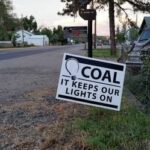
Northwest Coloradans rally to save Colowyo coal mine from shutdown
Lori Gillam isn’t a coal miner – she owns a liquor store in rural Moffat County – but she’s doing her part to help save the Colowyo mine after a federal judge’s ruling in a lawsuit filed by the environmentalist group WildEarth Guardians. Gillam said Tuesday she has removed beers from a half dozen Colorado […]

Colorado Health Exchange may be skating on thin ice
Two weeks ago I received an email from Sameer Parekh Brenn of Boulder containing the following appeal: “My family is being threatened with losing our healthcare coverage because Connect for Health is broken. Would you like to cover the story?” He went on to say he expected to lose his coverage on June 8. Since […]