

Ellen Roberts’ two-front abortion politics war
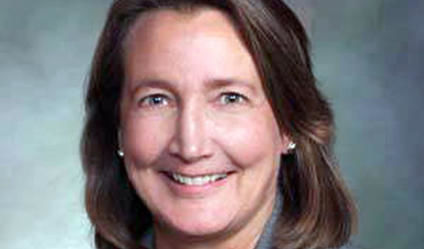
The potential U.S. Senate candidacy of a Durango lawmaker could pose a problem for U.S. Sen. Michael Bennet in 2016 — if she can survive her own party’s primary, according to a veteran political analyst.
And if Republican state Sen. Ellen Roberts does jump in the race, it’s already become apparent that she’ll have to deal with abortion politics from both sides of the political divide.
Roberts is considering a run against Bennet, the Democrat incumbent, next year. And independent political analyst Eric Sondermann thinks she would pose a difficult match-up for Bennet in a general election.
“She’s probably the last candidate Michael Bennet would want to run against,” Sondermann said.

Sen. Ellen Roberts

But can Roberts — who is pro-choice and was one of just a handful of Republicans to vote in favor of civil unions legislation two years ago — convince conservative voters to give her that opportunity?
“I cannot believe that this Republican Party would give the nomination to a pro-choice female without one heck of a fight,” Sondermann said.And Roberts learned recently that her challenges won’t just come from the far right over her positions on social issues polices.
Not long after a May 11 Durango Herald story broke the news that Roberts was considering a U.S. Senate run, a pro-choice group blasted Roberts’ record on women’s reproductive rights issues — specifically for Roberts’ recent support of a failed fetal homicide bill.
Cathy Alderman of Planned Parenthood of the Rocky Mountains said the bill, which sought to create criminal protections for the unborn, would have defined a fetus as a person, something that Coloradans have continually rejected.
“You cannot support fetal personhood issues and be pro-choice,” Alderman told the Herald.
This week, Roberts told The Statesman that she considers Planned Parenthood’s response to be “gratuitous.”
She now finds herself in an unfamiliar battle on social issues.
“This is not why I go to the Capitol,” Roberts said. “In nine years, I’ve never viewed myself as being there for social issues. And to find myself in the middle of this controversy is something I didn’t plan for. But we can’t keep averting our eyes to the fact that we do have a gap in our criminal code.”
Abortion politics remains in focus
The fetal homicide bill would have allowed prosecutors to file charges that include murder in cases where pregnant women are attacked and the fetus killed. The bill was a response to the gruesome March 18 attack on Michelle Wilkins of Longmont, who’s 7-month-old fetus died after being cut from her womb.
In 2013, the Legislature created the Crimes Against Pregnant Women Act, which put in place serious penalties for criminals who harm an unborn child — a bill that Roberts supported. But Roberts strongly advocated for the fetal homicide bill because she believes there are gaps in the current law that make it impossible for prosecutors to file the appropriate charges when a fetus is lost during an attack.
Roberts insists that the bill has nothing to do with limiting a woman’s right to choose — a right she supports.
“There’s nothing in that bill that went against Roe v. Wade,” Roberts said. “It’s a complete mischaracterization to keep saying it’s personhood. It seemed no matter how many times you walked people through why the word person was in the bill — and that it’s in fetal homicide bills across the country — it became a talking point to call it a personhood bill.”
But Alderman isn’t buying that argument. She believes that defining a fetus as a person anywhere in statute is a threat to abortion rights.“We believe that is against the values of Coloradans and they’ve demonstrated that at the ballot box,” Alderman said of voters having overwhelming rejected multiple efforts to create a personhood law.
Alderman believes that a fetal homicide law would be a step toward defining a fetus as a person in all categories of law, putting women’s reproductive rights in jeopardy while restricting access to abortion doctors.
“Whenever you open that door and create that slippery slope, that means you are not supporting policies that actually help women have access to health care services they need,” Alderman said. “And, in fact, you are potentially creating restrictions on that access.”
“So, from that point of view, if you agree that those restrictions are appropriate, we don’t consider your position to be pro-choice.”
But Sondermann thinks pro-choice groups like Planned Parenthood might want to do a better job of picking their battles.
“I’m not sure it’s a fight Planned Parenthood wanted to pick,” he said. “Pro-choice allies are tough enough to find on the Republican side of the aisle. I question the wisdom of dumping on those few allies you have.”
“It is indicative of almost a reflexive reaction on the Democrats’ side, when a Republican is even a potential candidate for Senate or Congress, to immediately react and play the ‘war on women’ card, whether the shoe fits or not.”
Abortion politics has played heavily into the last two Senate races. In 2010, Bennet won his first full term in the Senate after Republican candidate Ken Buck stumbled badly on women’s issues in the campaign.
Last year, former Democratic Sen. Mark Udall’s aggressive campaign to woo women was panned to the point that his efforts earned the nickname “Mark Uterus.” Women’s reproductive rights issues dominated that campaign, but Udall, who lost to current Republican Sen. Cory Gardner, did not have Bennet’s success in energizing women voters.
But if Roberts runs and earns the GOP nomination, Democrats would have to contend with a pro-choice, female candidate.
“I know a number of Republicans who would describe themselves similarly to me,” Roberts said. “We don’t want abortion illegal because we don’t see that solving the problem. Women will continue to have abortions regardless of whether they are legal. And it’s not really the role of government to get in the middle of that.”
“It’s an extremely personal, private issue that women face.”
But it’s that kind of talk that makes Sondermann wonder whether Roberts stands a chance in a Republican Senate primary, where candidates often are required to run to the right of their opponents in hopes of wooing a conservative pool of voters.
“Ellen Roberts is almost the opposite of the typical Republican Senate candidate,” he said. “You often look at three or four aspiring Republican candidates and say they appeal in a primary, but their appeal in a general election is limited. Ellen Roberts is the opposite. But she has a tough gauntlet to walk to get the nomination.”
Roberts is fully aware that her outspoken positions on reproductive rights and fetal homicide legislation make her a target for the left and the right.
“For anybody who said this was about politics and trying to advance my own cause, I mean give me a break,” Roberts said. “It’s just a reminder to people on either end of the spectrum that I don’t fit in their category.”
Roberts said she will take the summer to decide whether to run. If she does, she believes she can energize younger Republican voters who are searching for a “different kind of candidate.”
“I feel like, being from the party of limited government, that there is a personal sphere where government doesn’t need to go as long as other people aren’t being hurt,” she said. “That personal responsibility is a big component of what I believe in. That resonates a lot with younger voters.
— Twitter: @VicVela1


Grand Canyon flooding threatens economy that’s still recovering from a fire | OUT WEST ROUNDUP
Ernest Luning
ernest.luning@coloradopolitics.com
Updated 4 days ago
ARIZONA Flooding slams park’s economy Deadly flooding at the Grand Canyon is damaging the area’s economy, with a washed-out pipeline severing the South Rim’s water supply and shutting down lodging at the popular tourist vista for an indefinite period. The...

Immigration reporting measure fuels debate over Colorado’s role with ICE
Marissa Ventrelli
marissa.ventrelli@coloradopolitics.com
Updated 14 hours ago
A coalition of advocacy groups and several district attorneys rallied outside the Colorado Capitol on Thursday to oppose a ballot measure that, if approved by voters in November, would require state and local law enforcement to cooperate with federal immigration...

Colorado Politics Calendar Sept. 14-20
Rachael Wright, Special to Colorado Politics
rachael.wright@coloradopolitics.com
Updated 4 days ago
CoPo’s weekly political calendar will help you find political and public-policy events throughout Colorado. It includes candidate and issue campaign events, public policy meetings, court hearings, state and local party conventions, assemblies, debates, rallies, parades, speaking engagements, traveling dignitary appearances,...
The African roots of three Colorado leaders | SONDERMANN
Eric Sondermann
eric-sondermann@coloradopolitics.com
Updated 4 days ago
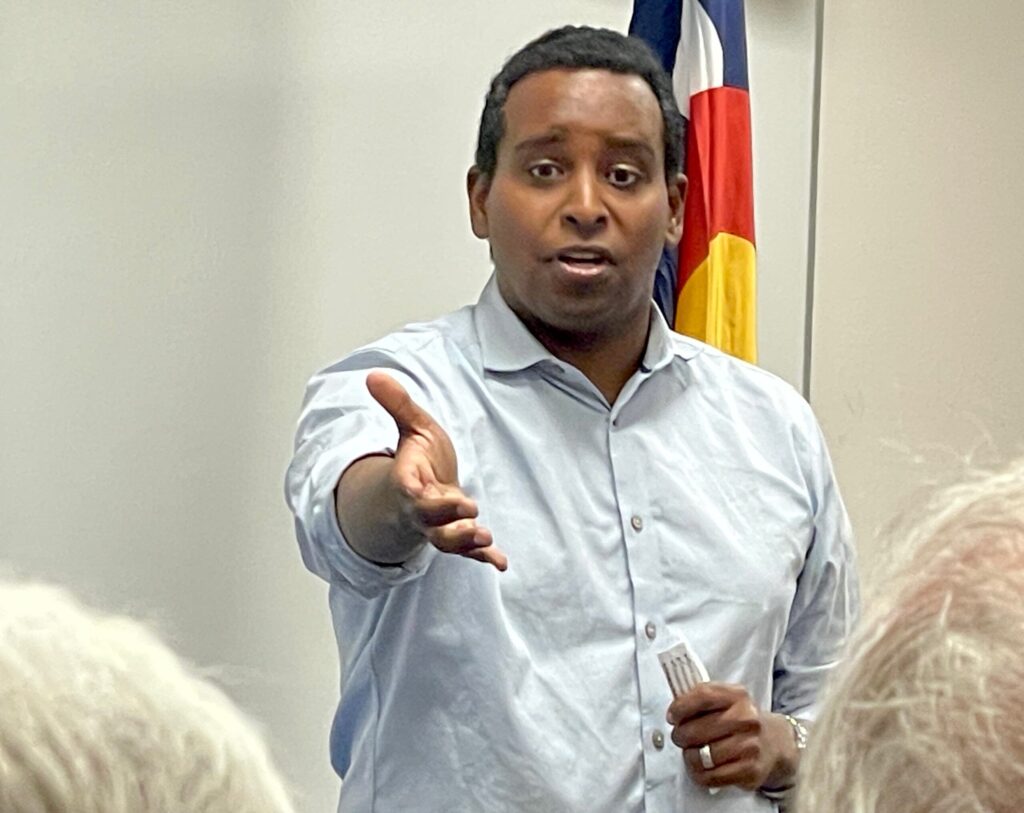
Colorado’s political transformation is measured in many ways. A once reliably red state (with asterisks) became purple and is now a rather deep blue. For better or worse, probably the latter, power is ever more consolidated along the Front Range...
Federal judge green-lights civil trial against ex-Fort Collins DUI officer
Michael Karlik
michael.karlik@coloradopolitics.com
Updated 2 days ago
A federal judge ruled on Thursday that Fort Collins’ former “DUI officer” will face a civil trial for allegedly investigating a motorist for impaired driving without any reasonable suspicion to do so. In recent years, several people arrested by Officer...

Denver police reopen 13 sex assault cases after retesting Missy Woods’ CBI work
Jenny Deam
jenny.deam@gazette.com
Updated 14 hours ago
Thirteen previously closed Denver sexual assault cases have been reopened after the city’s crime lab retested DNA evidence once analyzed by former Colorado Bureau of Investigation forensic analyst Yvonne Woods. A police spokesperson told The Denver Gazette the once-closed cases...

Ballot measure aims to shift Colorado sporting goods tax revenue to land, water and wildfire projects
Marissa Ventrelli
marissa.ventrelli@coloradopolitics.com
Updated 1 day ago
Colorado voters this November will decide whether to direct a share of sales tax revenue from sporting goods — including bicycles and skiing equipment — toward land and water conservation, wildfire prevention and expanding outdoor recreation. Supporters say the measure...

Colorado Supreme Court suspends Mesa County judge pending misconduct investigation
Michael Karlik
michael.karlik@coloradopolitics.com
Updated 1 day ago
The Colorado Supreme Court suspended Mesa County Court Judge Michael J. Grattan on Thursday amid a misconduct investigation. The court’s Sept. 10 order gave Grattan 21 days to explain why his paid suspension should not continue through the end of...

Trump honors the fallen of the 9/11 terrorist attacks during Pentagon speech
Mabinty Quarshie
mabinty-quarshie@coloradopolitics.com
Updated 2 days ago
President Donald Trump and first lady Melania Trump honored the roughly 3,000 Americans killed during the Sept. 11, 2001, terrorist attacks during a ceremony at the Pentagon. The event marking the 25th anniversary of the deadliest attack on American soil...
Colorado Supreme Court changes course, dismisses case about special district bonds
Michael Karlik
michael.karlik@coloradopolitics.com
Updated 1 day ago
The Colorado Supreme Court declined on Friday to decide a dispute between a large-scale Commerce City development and the various districts financing it, after initially showing interest in the ongoing case. Colorado has roughly 2,800 special districts, which are local...
PREV
PREVIOUS

Gov. John Hickenlooper: Making government work better
Colorado may have a divided legislature with Democrats leading the House and Republicans leading the Senate, but that doesn’t mean we have a divided state. Colorado’s Office of Legislative Legal Services — which houses many of the brightest, nonpartisan folks in the Capitol — reported that 682 bills were introduced this legislative session. About 55 […]

Federal term limits get kibosh, Duke recall fizzles over fears
Twenty Years Ago this week in The Colorado Statesman, the U.S. Supreme Court struck down an Arkansas law that put term limits on members of Congress, bringing to a screeching halt — at least for the time being — the principle at the federal level, five years after Colorado had launched the grassroots movement. Since […]