

Miller Hudson: Reggie Bicha: Warlock for the cheesehead coven at DHS
Mayors and governors infrequently sack appointees. And when it does occur, the culprit has usually committed some embarrassing personal indiscretion, or publicly objected to an administration policy or decision. These “Plum Book” jobs are all about loyalty. Rarer still is the appointee who submits his or her resignation in evident protest against the boss’s decisions.
The lone exception to this pattern in Colorado over the past half-century was Gov. Dick Lamm, who fired half his cabinet and most of his personal staff two years into his first term. This weekend “massacre,” following a series of staff blunders, occurred at a point when polls indicated Lamm couldn’t be re-elected to a second term. Clearing out campaign supporters with little or no management experience in favor of more experienced hands, this “reset” carried him through two more elections and a dozen years in the governor’s mansion.The recent letter signed by 84 of 100 Colorado legislators demanding new leadership at the Department of Human Services is unprecedented. It is not because previous cabinet members have all been well loved. Tom Norton comes to mind. His tenure at CDOT was replete with rancor and hard feelings. You could fill an auditorium with subordinates and local officials who still resent a bruising conversation with Norton. Nonetheless, his competence and his faithful execution of Bill Owens’ transportation agenda and priorities were never in question. Whether it was T-REX or budget battles Norton could and did bang heads together and produce results. Apparently this is what voters in Greeley must have felt they needed since they have twice elected him mayor.
When John Hickenlooper was elected governor in the otherwise Republican avalanche of 2010, Scott Walker was elected governor in Wisconsin. That result left Reggie Bicha, Wisconsin’s Secretary for Children and Families, looking for work. There were very few incoming Democratic governors. When Bicha interviewed with Colorado’s governor-elect he satisfied several of Hickenlooper’s predilections — he didn’t come from Colorado, he satisfied cabinet diversity goals and although he hadn’t attended an Ivy League university, Wisconsin and Minnesota degrees proved adequate. Colorado is one of only nine states where most human services are primarily delivered through county governments under state supervision. The newly elected administration arrived at the Capitol following a series of foster care fatalities across the state, including in Denver. The governor’s choice for chief-of-staff, Roxanne White, had served as administrator of the Denver County Human Services Department while Hick was mayor.
State Sen. Linda Newell, D-Littleton, who was elected in 2008, introduced and passed a bill in 2009 creating the state’s Child Protection Ombudsman Program to investigate the quality of care provided in these fatalities and similar cases. Employees within DHS report that Bicha and White moved swiftly to neutralize, obstruct and limit the Ombudsman’s authority, sweeping investigative reports under the rug. Hired by DHS as a contractor, one appointee quit in protest and by 2014 the state auditor reported the Ombudsman’s office was failing to meet its statutory obligations. Newell introduced another bill this year to guarantee greater independence for the Ombudsman over the vigorous opposition of Bicha and the governor. A compromise resolution has moved the office into the attorney general’s domain.Immediately following his confirmation, Bicha began to move a coterie of his former colleagues from Madison to Denver, bending state personnel rules in the process. In several cases he hired them as temporaries, waiting for the six months required to establish residency to pass before advertising job vacancies, then hiring those individuals “temporarily” filling these position as the obviously best qualified candidates. In other instances, he requested DPA exemptions from the Colorado personnel system’s residency requirements on the grounds that properly qualified candidates were not available locally. Fortunately there was a trove of top-notch human services talent in Wisconsin.
Within a year, six or seven former subordinates joined his staff. Reportedly another three or four have arrived recently. When state Personnel Director Kathy Nesbitt was asked why 43 percent of residency exemptions had been granted to a department with just 20 percent of state employees, she feigned shock and promised an investigation. Now vice president for HR at the University of Colorado, Nesbitt left DPA without issuing a report. Disgruntled state workers passed over for promotion at DHS privately refer to this imported contingent as Bicha’s “Wisconsin coven.”
But, as distasteful as this rule bending may be, it doesn’t explain why an overwhelming majority of legislators would express their lack of confidence in the department’s leadership. Sen. Newell is the first to point out that the letter wasn’t a document drafted by a handful of legislators over a liquid lunch. To the contrary, legislators would never have acted without repeated complaints from constituents, contractors and advocacy groups representing human service clients across the state. Despite protestations from the governor’s office that it was unaware of these concerns, Newell reports that the Senate minority leader, Morgan Carroll, informed the governor in February that a majority of her Democratic caucus was ready to support a Senate resolution of “no confidence” in Bicha. Democratic Sen. Lucia Guzman, chair of the Audit Committee and former Director of the Colorado Council of Churches — as kind a person as you will find serving at the Capitol — explained her decision to sign the letter by observing, “We just keep receiving one negative audit after another regarding DHS programs. Not one positive report.” A lobbyist summarizes Bicha’s response to the state auditor’s recommendations as insolent. “This is the kind of guy who gives arrogance a bad name,” she remarked. A Democratic Capitol staffer identified the signatures as an attempt on the part of legislators in both parties to go on record. “If there are more problems brewing, and they believe there are, then they can say their hands are clean,” she observed.
Violence at DYC facilities, possible sexual abuse at the Pueblo Regional Center, spending funds before they are appropriated and the overmedication of foster kids may be just the tip of the iceberg. State workers report that an increasing reliance on contractors has flipped the power curve within the department. “It used to be that we monitored contractors to insure their compliance — that they were doing what they were supposed to. Today, contractors run to Denver and complain we’re harassing them, and then we are the ones in trouble.”
There are widespread complaints of intimidation, threats of retaliation and an atmosphere of fear. Bicha is criticized for an overreliance on the CSTAT system he has installed to measure employee performance. “We’ve lost sight of the trees, of our clients, for the forest” one worker reports. “I spend so much time filling out paperwork that I don’t really know what is going on here anymore.”
But when things do go wrong, it is state employees who feel they will be blamed. DHS has also used the change in personnel procedures approved by voters to use “reorganizations” as a means of laying off unwanted workers. In one case, several employees are suing to recover their jobs. In another, it is alleged that the old job was merely retitled, the same duties assigned, and a new candidate hired. Turnover, surprisingly among higher-level employees, has been accelerating as the economy improves.
But Bicha may be bulletproof for now. He knows where all the bodies are buried, literally. When his department initially awarded the state’s emergency mental health services contract to an outside firm, rather than to local county mental health centers, it was Bicha who acceded to pressure from Roxanne White and tossed out the procurement as flawed. Bicha should feel betrayed now that George Del Grosso, executive director of the Colorado Behavioral Health Care Council, is calling for his head despite winning the re-bid emergency services’ contracts for the state’s mental health centers.
For the time being, it is doubtful his job will be in jeopardy. To paraphrase Lyndon Johnson, “It’s better to keep him inside the tent micturating out, than outside micturating in.”
Sen. Newell explains, “This is about the legislative body being responsive to the trend of troubling audits, incidents, and (negative) input from community providers and constituents. Our job is to communicate to the governor about those concerns. It’s in the governor’s hands now.”
Of course, with the lurking risk of further revelations of managerial incompetence, there are likely discreet calls being placed to the White House and Katherine Archuleta at the Office of Personnel Management in Washington inquiring whether there isn’t a vital slot at the U. S. Department of Human Services perfectly matched to Bicha’s talents. The governor would surely hate to lose him, but he’d never stand in the way of such a stellar career opportunity.
— Miller Hudson is a public affairs consultant. He can be reached at mnhwriter@msn.com.

Mysterious letter causes uproar, investigation in Mesa County GOP | A LOOK BACK
Rachael Wright, Special to Colorado Politics
rachael.wright@coloradopolitics.com
Updated 3 days ago
Twenty Years Ago This Week: An unregistered activist group calling themselves ‘The Colorado Republican Caucus’ mailed letters to at least 160 Republicans in Mesa County calling various Grand Junction Republicans “turncoats” and “traitors.” “The danger was that the letters were...

Colorado Politics Calendar Apr. 20-26
Rachael Wright, Special to Colorado Politics
rachael.wright@coloradopolitics.com
Updated 3 days ago
CoPo’s weekly political calendar helps you find political and public policy events throughout Colorado. It includes candidate and issue campaign events, public policy meetings, court hearings, state and local party conventions, assemblies, debates, rallies, parades, speaking engagements, traveling dignitary appearances,...
A happier budget week | Capitol M | Week of April 18, 2026
Marianne Goodland
marianne.goodland@coloradopolitics.com
Updated 2 days ago
It’s budget time at the state Capitol, and generally, it’s a humorless situation. It certainly was that way in the House last week, with a 15-hour reading of the long bill at 661 pages that resulted in lawmakers having to...

Colorado lawmakers advance bill to tackle Colorado’s prison capacity issues
Marianne Goodland
marianne.goodland@coloradopolitics.com
Updated 1 day ago
As lawmakers move the 2026–27 state budget toward completion, they are intensifying efforts to address overcrowding and capacity challenges within the Department of Corrections and related agencies—issues that have contributed to increased spending in the budget. The state Senate on...
Colorado justices, lawyers speak with rural students through outreach program
Michael Karlik
michael.karlik@coloradopolitics.com
Updated 9 hours ago
Members of the Colorado Supreme Court appeared before students from eight rural schools on Thursday to hear a pair of cases, field questions, and mark the first time the state’s newest justice participated in the long-running program. “I had such...
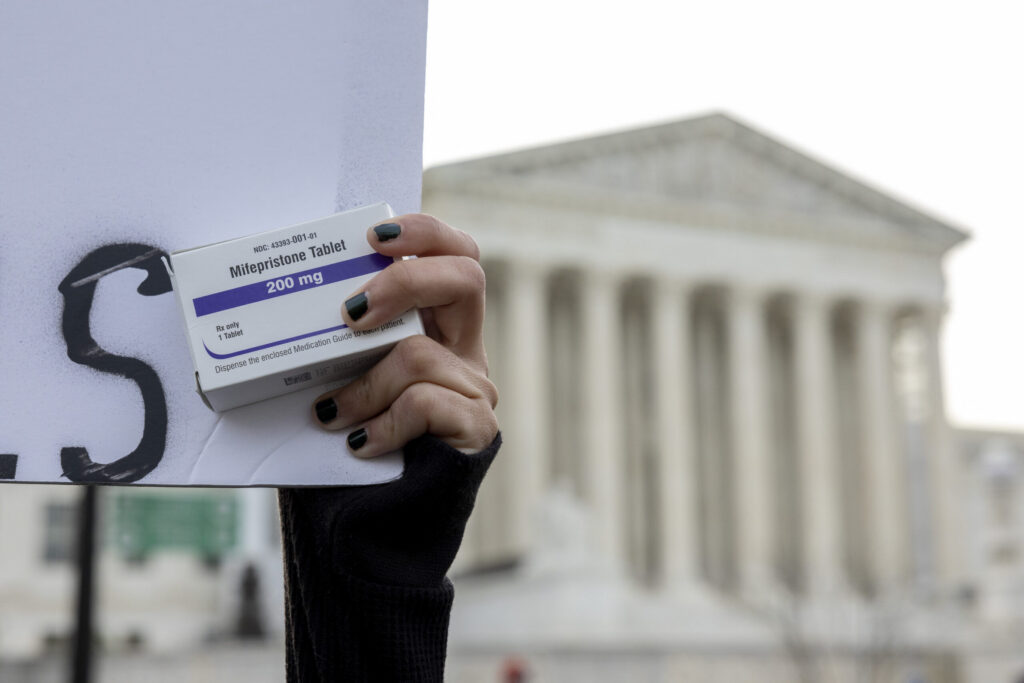
Democrats want Colorado colleges to provide medication abortion
Marissa Ventrelli
marissa.ventrelli@coloradopolitics.com
Updated 1 day ago
A bill proposing to require Colorado colleges and universities to provide abortion medication services cleared a legislative committee on Thursday. Advocates said the measure — which exempts religious-based institutions but applies to public, private, and community colleges — will improve...

Trump ‘in discussions’ with IRS to cut deal in tax record lawsuit
Brady Knox, Washington Examiner
brady.knox.washington.examiner@gazetteedit.wpenginepowered.com
Updated 1 day ago
President Donald Trump is in talks with the Internal Revenue Service to strike a deal over the release of his tax records. The news was revealed in a legal filing, where his legal team said they were in “discussions” with...
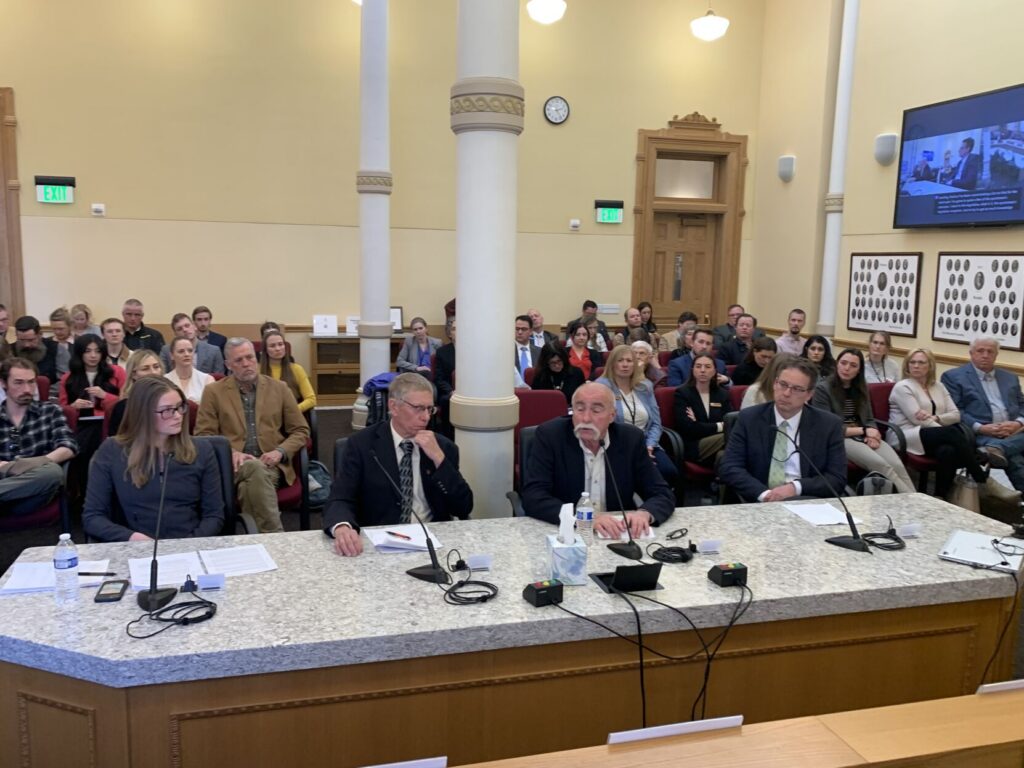
Governor’s wildlife commission picks face pushback ahead of Colorado Senate hearing
Marianne Goodland
marianne.goodland@coloradopolitics.com
Updated 1 day ago
Colorado’s largest coalition of hunters, anglers, and wildlife conservation groups is urging state lawmakers to reject two of Gov. Jared Polis’ latest nominees to the Colorado Parks and Wildlife Commission, setting up a contentious confirmation hearing before the Senate Agriculture...
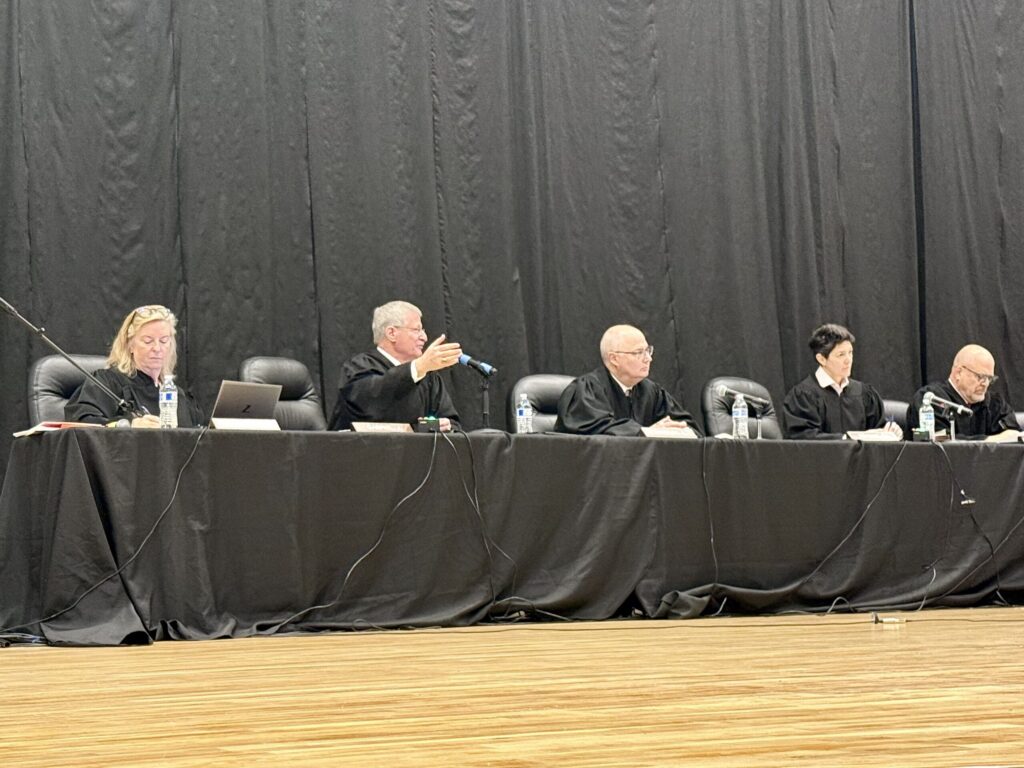
Colorado justices skeptical of snowboarder’s bid to revive injury lawsuit after signing new waiver
Michael Karlik
michael.karlik@coloradopolitics.com
Updated 10 hours ago
The Colorado Supreme Court seemed to agree on Thursday that a plaintiff is not entitled to continue his snowboarding injury lawsuit because he purchased another pass in the middle of litigation that released all past legal claims. “It says you’re...
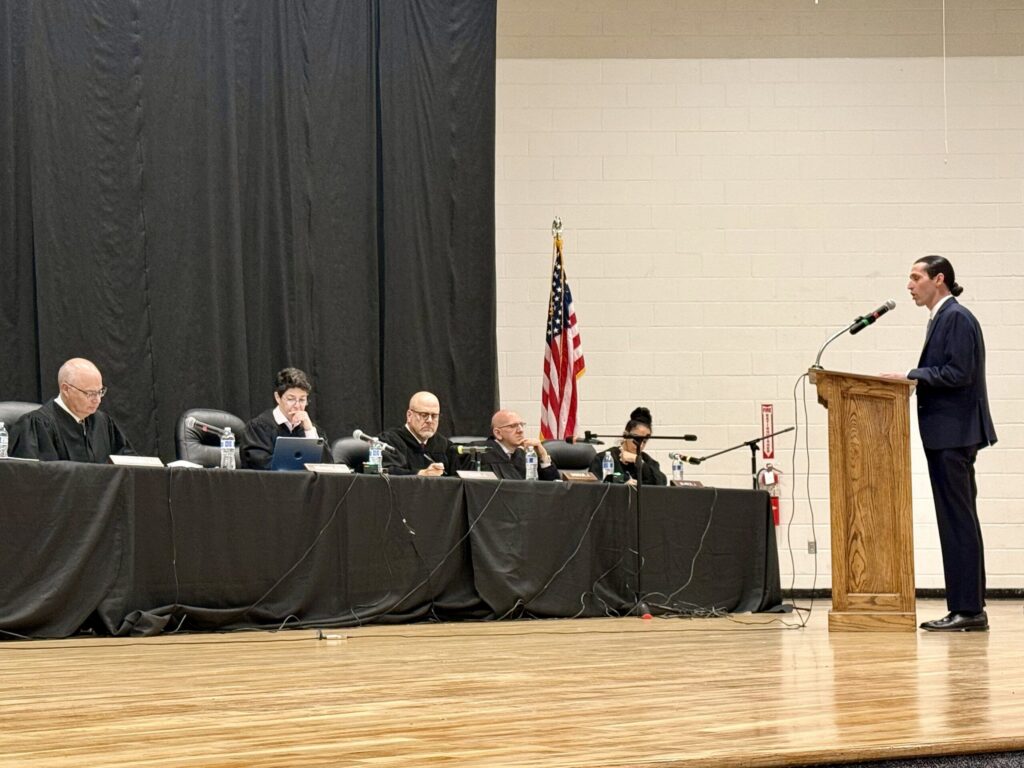
Colorado Supreme Court appears OK with revised ‘reasonable doubt’ instruction
Michael Karlik
michael.karlik@coloradopolitics.com
Updated 7 hours ago
The Colorado Supreme Court appeared largely comfortable on Thursday with the recently revised definition of “reasonable doubt” that is now part of the template jury instructions for criminal cases. To date, multiple Court of Appeals decisions have endorsed the constitutionality...
PREV
PREVIOUS
Governor signs workforce development legislation
Colorado students will be able to graduate with a high school diploma and an associate’s degree at the same time — and be prepared to work in a technical field — under a bipartisan bill that Gov. John Hickenlooper signed into law on Monday. That measure, along with a separate bill the governor signed at […]

Chandelier kicks off next phase of rehab
On Monday, contractors lowered the massive brass chandelier that hangs above the Colorado House of Representatives onto a platform and began taking it apart. It’s the start of the second phase of a three-year project designed to restore the legislative chambers to their historic appearance. “We like to say we’re lowering it, not that we’re […]