

Business, agriculture groups call for immigration solutions from GOP

Last year, Front Range grocery store customers ate plenty of sweet corn grown at Sakata Farms. But the Brighton producer’s other major summer vegetable, cabbage, didn’t make it to kitchen tables, left unharvested in the field. And forget about broccoli, another labor-intensive crop. The farm has supplied most of the metro-area’s locally grown broccoli in recent years, but its owners didn’t bother planting last spring, because they couldn’t count on having enough workers to get it to market.
“Overall, we have about a fourth of the workers we need,” said Robert Sakata, Jr., president of Sakata Farms and the founding president of the Colorado Fruit and Vegetable Growers Association. “That’s the main concern around the state. It doesn’t matter if the farms or orchards are large or small. There is a grower in Boulder who was only able to find 1/3 of his workforce,” he added. “He needed three, but could only find one. That’s a devastating effect on us. It’s all across the state, all across the country.”
Sakata’s father, Robert Sakata, Sr., started the farm with 40 acres in 1945 after his release from a Japanese-American internment camp in Utah, and has grown operations to 2,400 acres, spread over some 50 plots in Adams and Weld counties. He still comes in to work most days. The farm also grows pinto beans and bulb onions in the fall, but in recent years, they’ve turned over about a third of their acreage to winter wheat, because they can plant and harvest that by themselves, without relying on the seasonal labor force that all farms need.

Over on the Western Slope, Bruce Talbott of Talbott Mountain Gold out of Palisade – the orchards have been in the family since 1906, growing peaches, pears and wine grapes – said that he’s crossing his fingers this year that he can get what looks to be a bumper crop of peaches off the trees.
“Labor is our most limiting factor in agriculture for high-labor things like produce,” Talbott said. “We have to have a good labor force to survive. Especially when we get into harvest, it’s critical. That labor force has been harder to get over time.”
After hiring locally for a few years – frost had damaged the fruit, so he didn’t need as many workers for harvest, but still lost some crop – Talbott said that the orchards went through the federal government’s H-2A visa program to secure enough workers, but they made it to Palisade 29 days late.
“This year we have a big crop and can’t risk it,” he said, lamenting the expenses and delays he met by going through the system. “We were pruning peaches after petal fall, which I’ve never done in my life. We finished pruning grapes last week, because we never did blossom-thin, because we didn’t have the people to do it. We’re farming by triage. At this point, I’ve got my people here. It’s a challenge.”

Sakata, a registered Republican, and Talbott – he calls himself “an independent in a sea of Republicans” – are among a growing chorus of voices in the business and agricultural communities calling for GOP lawmakers to get off their duffs and fix the broken immigration system.
“It’s the extremes on both sides. We need to understand there’s more people on the middle and not let the extremes drive us on this,” Sakata said at his family farm’s central facilities in the center of Brighton. “I’m still optimistic that something will happen.”
“Part of the complication of what’s happened is, nobody in Congress trusts anybody anymore,” Talbott said. “What the hard-core Republican group is saying is, you give us border security, then we’ll give you the guest worker program. There’s that whole lack of trust – nobody believes anybody. I don’t know the answer, but the Republicans do need to get it together, because they are in charge at this point.”Brent Boydston, the Colorado Farm Bureau’s vice president for public policy, made a similar point.
“You hear from who screams the loudest,” he said. “We can only scream so loud.”
Boydston and Colorado Business Roundtable president Jeff Wasden, along with a consultant with the Partnership for a New American Economy, a national group of business and government leaders, met recently at the Farm Bureau’s Greenwood Village headquarters to argue the case for immigration reform.
Shrill voices on the right have been drowning out the business community for years, they said, and it’s time for powerful Republican constituencies to speak up and steer the conversation to reasonable solutions.
“Something needs to be done,” said Wasden. “There are two very different approaches – comprehensive, piecemeal. But something’s got to be done.”

Led by the bipartisan “Group of Eight,” including Colorado Sen. Michael Bennet, a Democrat, the Senate passed a broad immigration reform bill two years ago, but it was broken into pieces and languished in the Republican-controlled House.
The Colorado Farm Bureau participated in discussions with Bennet when the senators were crafting the bill, and Boydston said the agricultural community was happy with the results.
“You can’t let the perfect be the enemy of the good. No bill is absolutely perfect, but compromise is what the country’s built on,” he said, pointing to the Senate bill. “That work’s already been done. You could go dust it off, we’ve already passed it once, let’s do it again.”
“This is a Republican issue we’ve failed on, as a party,” said Wasden. “It is not the President’s issue, it’s Congress that needs to get something done. It’s well past time to get something done on immigration reform.”
According to a report prepared for the Business Roundtable, the United States ranks nearly last on a list of advanced economies when it comes to policies that make it possible to recruit and retain talent from around the globe. Germany, Australia, Singapore, the United Kingdom, Hong Kong, France, Switzerland and Canada all scored higher than the United States, which beat out only Japan, and only by a hair.
Wasden acknowledged that the gap between lawmakers on the right, who are demanding border security before tackling anything else, and those on the left, who want a solution for the estimated 13 million immigrants in the country illegally, might seem insurmountable.
“That seems to have been the sticking point. But that’s not an excuse not to have something done on the other issues where there’s incredible bipartisan support. I don’t think there’s one congressman who couldn’t stand up wanting safe communities. That’s not a partisan issue,” he said. “People understand the visa caps are unwieldy, they do not meet the needs of business – they are stifling us.”
The Business Roundtable’s own set of policy recommendations starts with border security, though the group labels it “community security,” Wasden noted. “We need to make sure we know who’s here and they’re not here to do us harm.”

After that, he said, the guest worker visa program needs to be fixed.
“People need to have the right types of workers to continue to innovate and move forward,” Wasden said, blasting what amounted to this year’s three-day window for certain types of visa applications. “What do you do for the other 362 days when companies are continuing to want to move forward? We don’t stifle the economy, we don’t put the brakes on people and say, hey, good luck next year, get in line.”
There’s also fixing the system so students educated in the United States can stay and boost the economy and establishing a verification system that’s “standard, uniform and easy to use,” he said.
When it comes to those already in the country, the Roundtable supports some kind of status program, as well as streamlining the process for immigrants attempting to follow the law.
“We’re not in favor of any amnesty or path to citizenship, but we’re in favor of a status that allows people to report crimes, that allows people to visit relatives out of the country who may be sick or dying, treating people like human beings,” Wasden said. “The folks who are trying to go through the system legally spend 10, 12, 14 years to go through those hurdles. We’ve all heard stories about people who try to do it. Why would you go through that process legally if you’re going to pay more cost, more expenses, to continue running into brick walls? At some point we’ve got to look at why that’s happening and make those who want to follow a legal path to becoming a citizen of the greatest nation in the world a path to do that.”
Boydston said that most of the arguments he’s heard from the more extreme voices on immigration are simply wrong.
“We’re coming at it from facts and reality. It seems like you get the ultra right – they’ll just throw out allegations. One thing we hear all the time is, if you’ll just pay people more it wouldn’t be an issue. Pay isn’t the issue. We had a farmer who was offering people 20-some bucks an hour. I’m pretty sure that 20-some dollars an hour is pretty good pay,” he said. “You can’t get people out there to work. Or if you get a native-born American, they show up at 8 a.m. and they’re quitting by noon. We’ve really lost the work ethic in this country.”
It’s not pay, he said. “The fact is, a lot of these jobs are seasonal, they’re in very rural areas of the state.”
In addition, he said, the H-2A visa program doesn’t address the real needs of farmers and ranchers.
“A dairy in Fort Morgan has different needs than a peach grower in Palisades, who has much different needs from a potato guy in the San Luis Valley, vs. a sheep grower in central Colorado. You have very distinct labor needs, yet you’re going to shove everyone into one rigid, inflexible program and say, here you go. Sheep herders have to have their sheep on the range by date certain and they’re waiting, waiting, waiting to know if they’re going to get their workers. If guys can’t get to their grazing leases, they’re only going to have to have so much feed at their place, they’re going to have to start depopulating their flock.”
Wasden said that it’s time for lawmakers to roll up their sleeves and get things done.
“The extremes are great,” he said. “They frame the debate.” Politicians risk being labeled sellouts or accused of abandoning the cause, he said. “At some point, we’re going to have to figure out how to sit down as adults. At some point, you’re adults. Fix some of these critical issues. We get frustrated with that inability to sit down and create those compromises.”
They agreed that Colorado’s Republican lawmakers are mostly favorable on the issue, singling out U.S. Sen. Cory Gardner and U.S. Rep. Mike Coffman for their own arguments in favor of overhauling the immigration system. They also praised freshman U.S. Rep. Ken Buck, who stood with Bennet and a large bipartisan group at the end of 2012 for the unveiling of the so-called Colorado Compact on immigration, agreeing on a framework of goals.
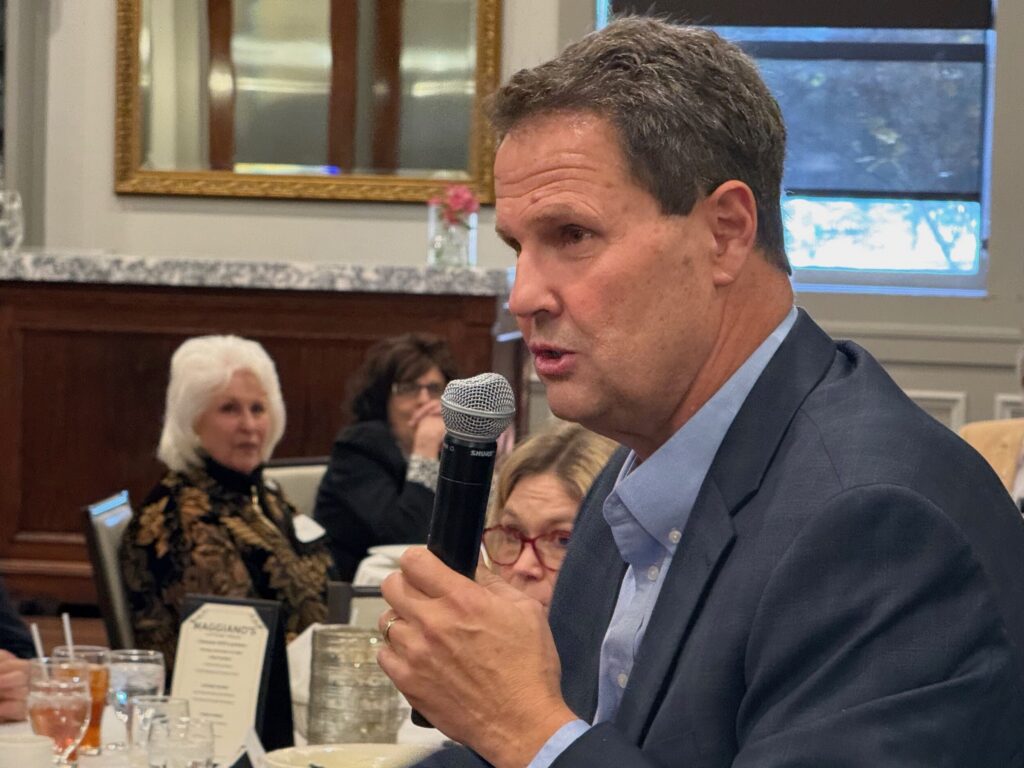
Buck told The Colorado Statesman this week that Republicans are moving ahead on immigration reform, although quietly and in steps.”There’s a very clear understanding in Congress that the immigration system is broken and needs to be addressed,” he said. “I am very confident we will work through most of those issues in the near future and deal with the remainder of the issues soon.”
“By the end of June we probably will have passed in the (House) Judiciary Committee six to eight immigration bills,” said Buck, who sits on the committee. Hearings are scheduled to start next week on overhauling the guest-worker program, with hearings about increasing visas for high-tech workers to follow.
“There’s a lot getting done on immigration,” Buck said. “I am a conservative, and I’m doing everything I can, as are other conservatives, to make sure we have an immigration system that works. Conservatives and Republicans want people to come to this country legally and to work in this country, and we want to expedite the system. I have a problem with the folks who want to make this a political issue by saying ‘comprehensive immigration reform or nothing.’ That’s not how it’s going to work. I hope they get on board and help us addressing this piece by piece, getting the solution right and then moving down the road with the different parts of the immigration issue.”
After strengthening the guest-worker program “at every level,” Buck said, and making sure that the border-security system is effective, then there will be the chance to grapple with the problem of the millions of immigrants already in the country.
“When we get those two issues completed, then we’ll deal with the issues the liberals are so concerned about, and that is to deal with the people in the country illegally,” he said. “Once the American people have confidence that we have dealt with the guest worker program and border security appropriately, then we can deal with the last part of the immigration issue effectively.”
But he cautioned against expecting anything like the provisions that were part of the 2013 Senate legislation.
“The problem with the liberal approach is, if we create a pathway to citizenship or give amnesty to 11 million people here illegally, then the federal government doesn’t have the incentive to fix the system with a good guest worker program or border security and then we’ll have the same problem in 10 years.”
Buck said he’s anticipating bipartisan support for whatever emerges, adding that there were plenty of House Democrats on board to “help this process along.”
He said that his perspective has changed a bit since he signed the Colorado Compact, but that the times have changed even more.”I think there’s less emotion surrounding the issue now than there was a few years ago. I think that we will work through the series of issues and I hope that soon we will have a President who will actually stop obstructing on this issue and work with Congress on this important goal,” Buck said.
Wasden and Boydston acknowledged that it’s a tricky issue politically but vowed that the agricultural and business groups would back Republicans who fear angering their base.
“We want to move into 2016 with this issue behind us,” Wasden said. As a Republican, he added, “We get frustrated because we see the history of the Republican Party with civil rights issues, immigration issues. We’ve lost our way on this particular issue, how we treat folks. This is an important issue for growing voter blocs. The reality is, this world is changing, times are changing, business is changing. At what point do we get caught up and realize we need to be out front on these things and not constantly be in a knee-jerk position?”
– Ernest@coloradostatesman.com


Colorado justices grill debt collector about compliance with law
Michael Karlik
michael.karlik@coloradopolitics.com
Updated 8 hours ago
The Colorado Supreme Court repeatedly pressed a debt collection company last week to explain how its lawsuit against a Boulder woman for an unpaid credit card balance complied with the specific requirements that state lawmakers have created. Portfolio Recovery Associates,...

Artificial intelligence working group agrees on framework to replace Colorado law
Marianne Goodland
marianne.goodland@coloradopolitics.com
Updated 14 hours ago
A group that has been working on artificial intelligence policy has reached an agreement on a framework that would replace the regulations adopted by Colorado legislators two years ago. The agreement has the backing of Gov. Jared Polis, who reluctantly...

Proposal to levy new fees on alcohol products in Colorado dies
Marissa Ventrelli
marissa.ventrelli@coloradopolitics.com
Updated 15 hours ago
The proposal to collect millions in new fees on alcohol products — dollars to be earmarked for Colorado programs aimed at addressing the behavioral and physical health effects of alcohol abuse — died on Tuesday. House Bill 1271 sought to...
The numbers that Republicans say show Democratic midterm targets are a ‘political hallucination’
Rob Crilly, Washington Examiner
rob.crilly.washington.examiner@gazetteedit.wpenginepowered.com
Updated 13 hours ago
Democrats keep expanding their battleground map of midterm target seats, but do they really have any chance in some of the districts they claim they can win? Of the 44 districts listed by the Democratic Congressional Campaign Committee as targets,...

Pam Bondi subpoenaed for April 14 House deposition on Epstein files handling
Kaelan Deese, Washington Examiner
kaelan.deese.washington.examiner@gazetteedit.wpenginepowered.com
Updated 16 hours ago
The House Committee on Oversight and Government Reform issued a subpoena Tuesday compelling Attorney General Pam Bondi to sit for a deposition on April 14 as part of an ongoing investigation into the Justice Department’s handling of the Jeffrey Epstein...

Capitol Police chief asks for record-breaking budget, citing 58% increase in threats to Congress
Emily Hallas, Washington Examiner
emily.hallas.washington.examiner@gazetteedit.wpenginepowered.com
Updated 16 hours ago
U.S. Capitol Police Chief Michael Sullivan on Tuesday argued sweeping threats against lawmakers justify his department’s historic budget request during a House Appropriations Committee hearing. Sullivan testified before the Legislative Branch Subcommittee on his budget proposal for fiscal 2027 funding....
After ‘winter of defeat,’ Colorado hopes for wetter summer
Marianne Goodland
marianne.goodland@coloradopolitics.com
Updated 17 hours ago
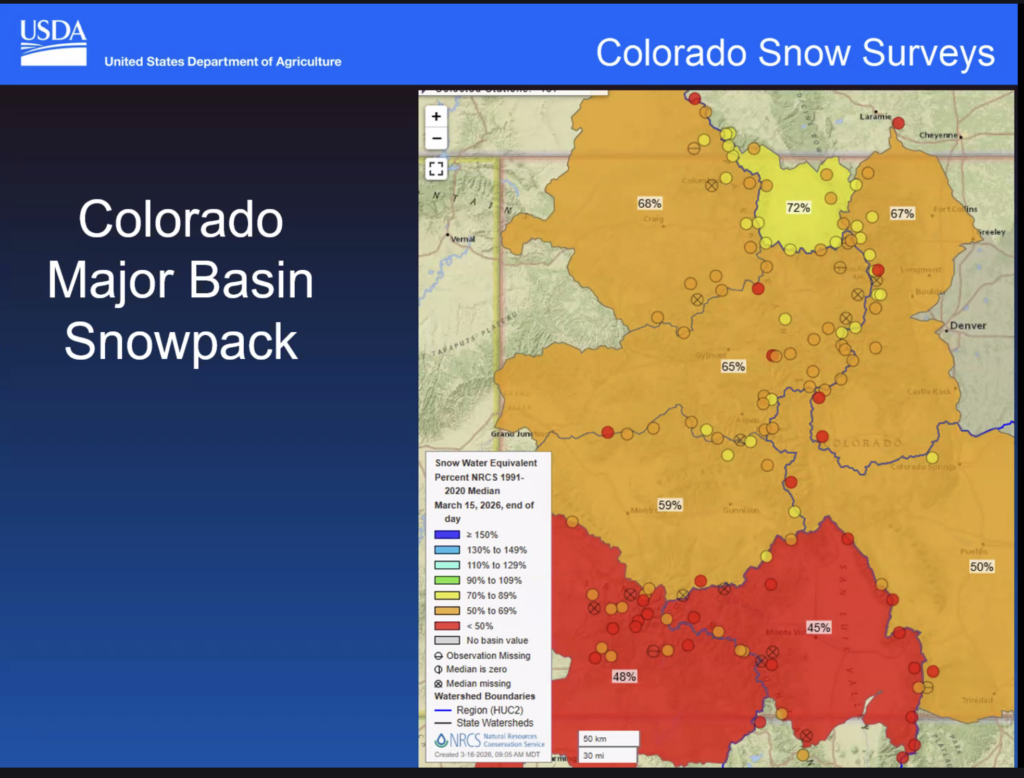
With snowpack melt already peaking in some parts of the state and drought conditions worsening compared to last year, Colorado’s water watchers are hoping for a wetter summer, though they anticipate the situation deteriorating before getting better. Meanwhile, the governor...

Colorado, Democrat states oppose proposal to require EV chargers be made with 100% domestic components
Scott Weiser
scott.weiser@gazette.com
Updated 17 hours ago
Colorado has joined a coalition of about 20 states in opposing a federal proposal that would require electric vehicle chargers funded with federal dollars to be made with 100% domestic components. The Federal Highway Administration is considering raising the domestic...
Colorado ethics panel tells legislator to attend sexual harassment training
Marianne Goodland
marianne.goodland@coloradopolitics.com
Updated 14 hours ago
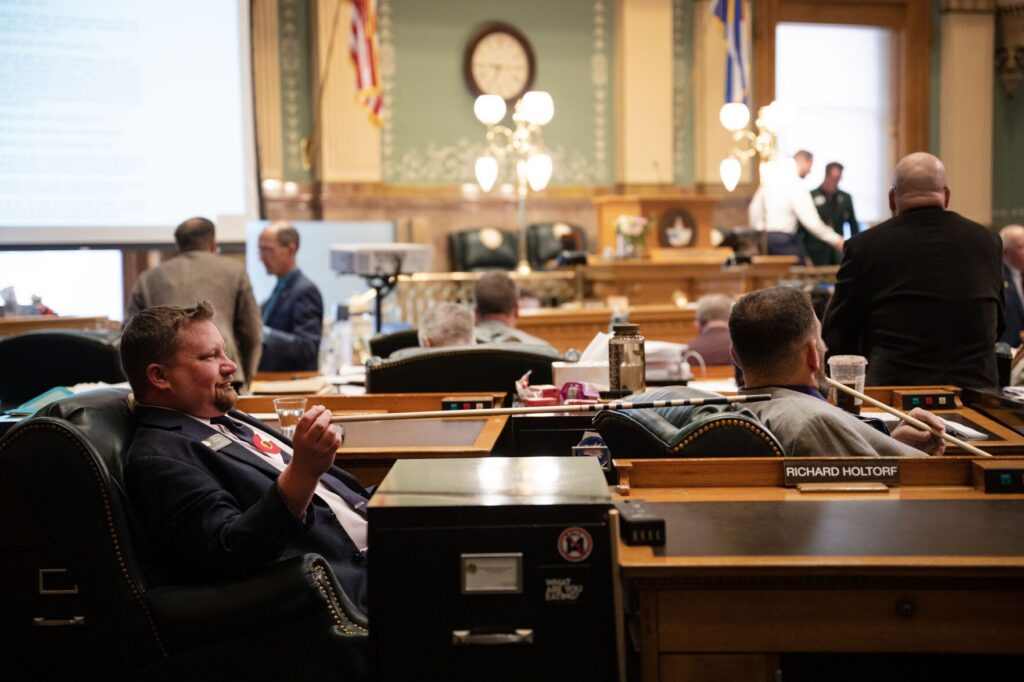
Colorado’s House ethics panel admonished a Republican legislator over allegations he used a master key to access areas of the Capitol that he was not permitted to enter and that he had made sexually harassing comments to several female lawmakers....
Appeals court agrees defendant’s speech constitutionally protected against El Paso County judge
Michael Karlik
michael.karlik@coloradopolitics.com
Updated 15 hours ago
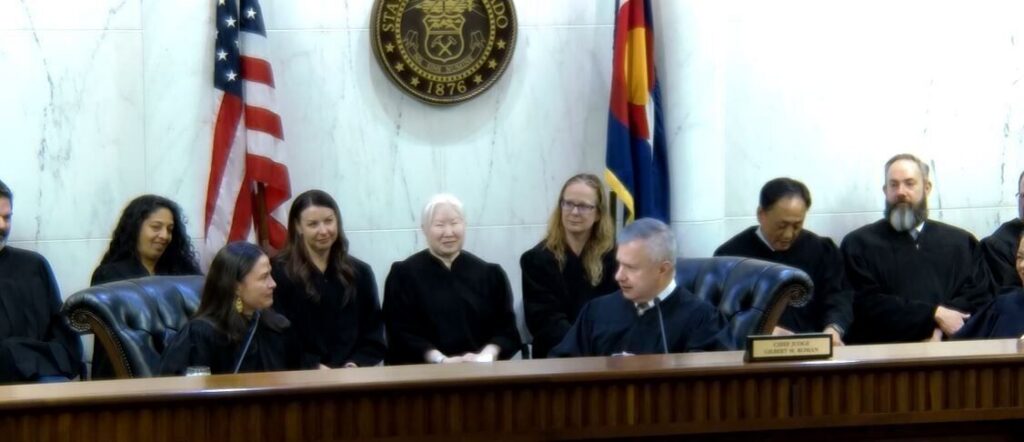
Colorado’s second-highest court agreed last week that a defendant’s critical statements toward a 4th Judicial District judge were constitutionally protected and could not form the basis of a retaliation charge. A three-judge Court of Appeals panel concluded that, in context,...
PREV
PREVIOUS
Cañon City considering Main Street smoking ban
Smoking outdoors on Main Street in Cañon City could become a fineable offense if the city council there moves forward with a proposal to ban the activity in its historic downtown. The issue was brought to the council by Kathy Schumacher, a Main Street business owner, and was discussed at the city’s General Government Committee […]

Hickenlooper tees off on Jeffco super at bill signing
Gov. John Hickenlooper this week accused the Jefferson County schools superintendent of playing politics over a perceived snub by the school district’s chief – a response that included a reference to a pop superstar’s visit to Jeffco a couple of years ago. The Democratic governor recently sought permission from Jeffco schools to hold an education […]