

From moving people to managing them | GUEST COLUMN
Transportation policy used to have a fairly uncomplicated purpose: move people safely, efficiently and reliably. Build roads where people drive. Maintain bridges before they fail. Add capacity where growth overwhelms the system. Provide transit where it makes sense.
Infrastructure was supposed to accommodate human behavior.
Colorado increasingly prefers the opposite arrangement.
Today, transportation policy is used not merely to serve the way people travel, but to change it.
Colorado’s Greenhouse Gas Transportation Planning Standard requires transportation planners to meet greenhouse-gas reduction targets. The old question was: where are people going, and how do we help them get there?
The new question increasingly becomes: how do we get them to travel differently?
That is a change in mission.
Consider the proposed Colorado Boulevard Bus Rapid Transit project.
CDOT currently estimates the project at roughly $215 million for about 7.5 miles of corridor. The existing bus route carries about 3,000 riders per day. Meanwhile, Colorado Boulevard itself carries between roughly 21,000 and 68,000 vehicles per day, depending on location.
CDOT believes improved service could substantially increase transit ridership. Good. If better buses persuade people to ride because they are faster, safer and more convenient, that is transportation choice working exactly as it should.
But another possibility being studied involves repurposing existing roadway space for dedicated transit and other multimodal uses.
That brings us to a distinction worth making:
Improving transit is transportation policy. Making driving less convenient so transit becomes relatively more attractive is behavioral policy.
If reducing vehicle miles traveled becomes an objective, the incentives change.
Slower driving, scarcer parking, removed lanes and repurposed roadway capacity can all influence behavior.
No conspiracy is required. The policy framework does the work.
And the public appears to understand the trade-off. In written comments obtained and reviewed by CBS Colorado during early public engagement, 74% opposed the Colorado Boulevard BRT proposal while just 10% supported it. It was not a scientific poll, but concerns repeatedly included congestion, lane reductions and damage to small businesses.
Those concerns deserve more than a public engagement checkbox.
Transportation projects do not occur on spreadsheets.
They occur in front of somebody’s business, somebody’s home and somebody’s driveway.
Corridor redesign can mean fewer parking spaces, altered access, restricted turns, years of construction disruption and displaced traffic.
For a planner, these are design variables.
For a small-business owner, they can determine whether a customer stops or keeps driving.
For a homeowner, they can determine whether traffic migrates onto neighborhood streets.
The benefits are advertised collectively. The burdens are imposed individually.
A transportation model can calculate vehicle movements. It cannot calculate the value of a customer who never comes back.
Then there is the language: mode shift, travel demand management, road diet, multimodal corridor, VMT reduction.
They sound antiseptic.
Translated into ordinary English, they often describe attempts to get people to make different choices.
Behavioral engineering apparently just needed better branding.
There is also an inconvenient geographic reality.
Colorado is not Manhattan.
The Front Range is a sprawling network of workplaces, neighborhoods, schools, hospitals and suburbs. A nurse may work across town. A contractor carries tools between job sites. A parent combines school, work, groceries and activities into a single automobile trip.
Transit can serve some trips very well.
It cannot serve all of them.
A transportation planner can eliminate a traffic lane. He cannot eliminate the reason you needed to make the trip.
The same philosophical conflict surfaced in the debate over Initiative 175.
Our proposed measure sought to direct specified existing transportation-related revenues more firmly toward roads, bridges, maintenance and roadway safety. We withdrew it after state leaders committed to pursuing short- and longer-term strategies for increasing road maintenance and repair funding.
The ballot fight ended.
The argument did not.
Initiative 175 exposed a larger question: what is transportation money actually for?
Colorado has an enormous existing road system requiring continual maintenance simply to preserve the mobility people already depend upon.
At the same time, the state is investing in transit expansion, electrification, multimodal corridors, bicycle infrastructure and policies intended to reduce automobile travel.
Some may be worthwhile.
But there is a fundamental tension between maintenance and transformation.
One asks how we preserve the transportation system Coloradans use today.
The other asks how we construct a system encouraging Coloradans to behave differently tomorrow.
Every dollar has an alternative use. Every lane has an alternative use. Every project reflects a priority.
Before government spends hundreds of millions transforming how citizens travel, it is reasonable to ask whether it has fulfilled the more basic obligation of maintaining the infrastructure those citizens already paid for.
That is not hostility toward transit.
Build good transit where demand supports it. Build bicycle infrastructure where it makes sense. Repair bridges. Maintain pavement. Improve intersections. Add capacity where growth requires it.
Then let citizens decide.
A transportation system should expand choices, not make one choice progressively worse until another becomes attractive.
Nor should businesses and homeowners along a corridor be expected to absorb the costs of someone else’s transportation experiment.
Colorado once focused on moving people.
Increasingly, it seems determined to manage them.
So the next time you are sitting in traffic beside a lane repurposed in the name of changing transportation behavior, consider whether what looks like poor planning actually reflects a different definition of success.
The traffic jam may not mean the policy failed.
The traffic jam may be the policy working exactly as intended.
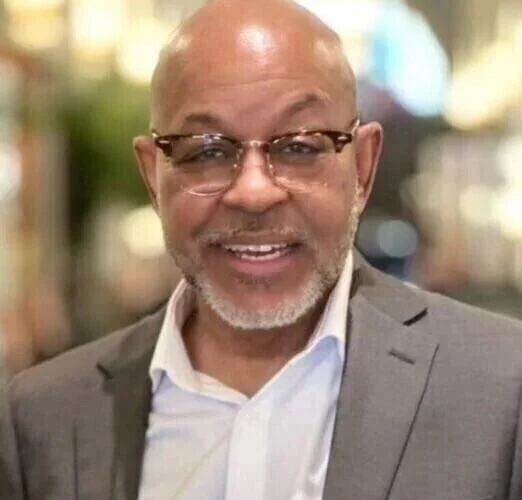
Michael A. Hancock writes a column every other Thursday for the Denver Gazette. He is a retired high-tech business executive and has been a Coloradan since 1973.

A path toward justice and public safety | PODIUM
Anthony Hartsook
ahartsockop@gmail.com
Updated 2 hours ago
Strangulation can be one of the most dangerous forms of assault; despite the lack of visible ailments it is accompanied by. Though strangulation leaves no broken bones, bruises or visible wounds, it is one of the strongest predictors of future...
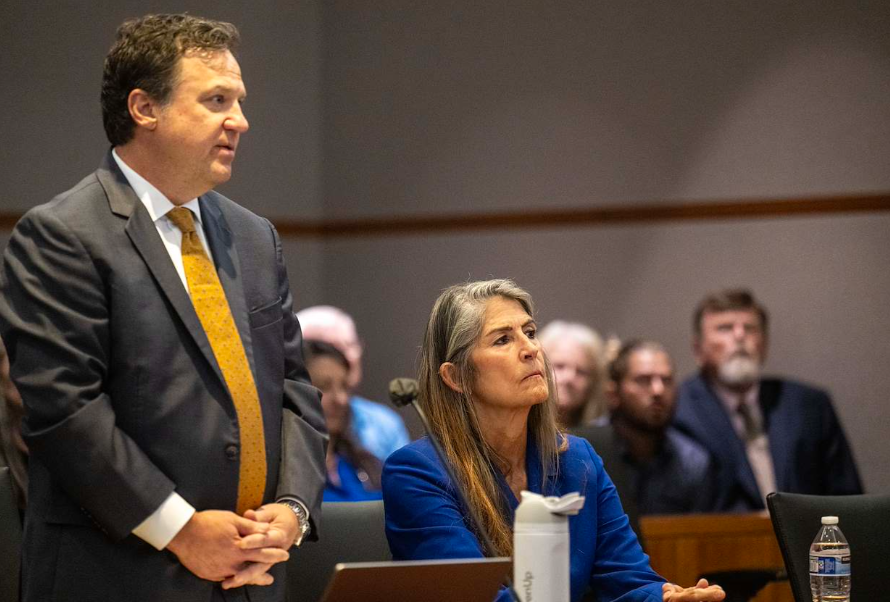
Disgraced ex-CBI analyst Missy Woods sentenced to prison in DNA scandal
Jenny Deam
jenny.deam@gazette.com
Updated 8 hours ago
A Jefferson County district court judge on Tuesday sentenced a disgraced former Colorado Bureau of Investigation DNA analyst to a decade in prison for altering and deleting data in scores of criminal cases over several years. Jefferson County District Judge...
Jason Crow endorses Democrats up and down Colorado’s ballot, chips in $100K for campaign efforts
Ernest Luning
ernest.luning@coloradopolitics.com
Updated 8 hours ago
Democratic U.S. Rep. Jason Crow on Tuesday formally endorsed more than 60 Democrats running up and down Colorado’s ballot and said he’s putting $100,000 into statewide and county campaigns and organizing programs to drive turnout in the fall election. Crow,...
Trumpicans thumb their nose at the Constitution | Hal Bidlack
Hal Bidlack
hal-bidlack@coloradopolitics.com
Updated 1 day ago
As is all too often the case, there are again too many interesting things appearing in Colorado Politics for me to comment on all of them. So let me tell you what I won’t be talking about before I get...

CoComandering? | Miller Hudson
Miller Hudson
miller-hudson@coloradopolitics.com
Updated 3 days ago
At 8 a.m., Friday morning, Aug. 28, 70 or 80 mostly bleary-eyed visitors to the Transportation Technology Center outside Pueblo packed a conference room to attend the Front Range Passenger Rail District’s (FRPRD) Board meeting. With the exception of those...

Even Dem court couldn’t abide theft of GOP seats | Dick Wadhams
Dick Wadhams
dick-wadhams@coloradopolitics.com
Updated 2 days ago
Thanks to the Colorado Supreme Court, Colorado voters will be able to reaffirm their support for the Independent Congressional Redistricting Commission after the court struck down the Democratic scheme to steal three Republican congressional seats. Billionaire-funded national Democratic groups from...

Chaotic meeting began with attempt to squelch public comment | Rachel Gabel
Rachel Gabel
rachel-gabel@coloradopolitics.com
Updated 2 days ago
When Attorney General Phil Weiser takes the governor’s office in January, he must immediately address the chaos of the latest round of appointees to the Colorado Parks and Wildlife Commission to assure stakeholders he’s willing to put pressure on the...

Graduated income tax proposal is a flat tax in disguise | Jon Caldara
Jon Caldara
jon-caldara@coloradopolitics.com
Updated 5 days ago
“Youth is wasted on all the wrong people.” That’s one of my favorite lines from “It’s a Wonderful Life.” The older I get, the less it sounds like a joke. Every generation inherits victories it did not win. Young Americans...

AI optimism vs. anxiety — podcasters debate this every night | Tom Cronin
Tom Cronin
tom-cronin@coloradopolitics.com
Updated 4 days ago
President Donald Trump, CNBC’s “Mad Money” host Jim Cramer and entrepreneurial “accelerationists” celebrate the AI revolution and the infrastructure data-center build-out. Cramer recently gushed, “I like data centers so much that I wish I lived in one.” Trump criticized any community...

Colorado House ethics committee issues ‘stern letter’ to Democrat over caucus funds mismanagement
Marianne Goodland
marianne.goodland@coloradopolitics.com
Updated 9 hours ago
The Colorado House ethics committee on Friday voted unanimously to issue a “stern letter” to Rep. Mandy Lindsay, D-Aurora, regarding her mismanagement of House Democratic caucus funds. The committee further voted to request that Lindsay resign as Democratic Caucus co-chair...
PREV
PREVIOUS
Disgraced ex-CBI analyst Missy Woods sentenced to prison in DNA scandal
A Jefferson County district court judge on Tuesday sentenced a disgraced former Colorado Bureau of Investigation DNA analyst to a decade in prison for altering and deleting data in scores of criminal cases over several years. Jefferson County District Judge Andrew Poland sentenced Yvonne Woods to 10 years on the most serious felony charge — […]
A path toward justice and public safety | PODIUM
Strangulation can be one of the most dangerous forms of assault; despite the lack of visible ailments it is accompanied by. Though strangulation leaves no broken bones, bruises or visible wounds, it is one of the strongest predictors of future homicides for domestic violence victims. Until this year, second-degree assault by strangulation was not classified […]