A path toward justice and public safety | PODIUM
Strangulation can be one of the most dangerous forms of assault; despite the lack of visible ailments it is accompanied by. Though strangulation leaves no broken bones, bruises or visible wounds, it is one of the strongest predictors of future homicides for domestic violence victims.
Until this year, second-degree assault by strangulation was not classified on the same level as other potentially lethal assaults. House Bill 26-1290 changes this, escalating the sentencing requirements for offenders who commit a second offense and allows Colorado courts to intervene before more violence ensues.
I sponsored this legislation because adequate justice should not be dependent upon the number of physical marks a violent offender leaves on the victim. This bill went into effect on Sept. 1, giving victims more security that will hopefully bring relief before it is too late.
Assault in the second degree by strangulation is a class 4 felony in the state of Colorado, often resulting in two to four years in prison. Due to longstanding court rulings and legal precedents, strangulation has been placed in the state’s less aggravated category of violent crime.
HB26-1290 sheds light on this legal loophole that allows violent offenders to receive minimal punishment for a crime that leads to frequent homicides and abuse for women, medical providers and others throughout the state.
The bill is designed to provide justice by requiring the court to elevate the sentencing for a second-degree assault by strangulation on a second offense, often resulting in mandatory incarceration.
According to the Training Institute of Strangulation Prevention, domestic violence victims are 750% more likely to be victims of a homicide on a second offense. One in four women experience domestic violence in their lifetime, and 68% of them will be assaulted by strangulation.
Rather than mitigating the crime after the homicide happens, this law creates earlier opportunities for the courts to inflict more severe penalties on repeat offenders. Because offenders are more likely to commit murders on a second offense, this could interrupt future escalated violence.
This law, which went into effect on Sept. 1, was a hard-fought win in the Colorado legislature. I sponsored this same bill the year prior to bring forth more accountability under Colorado law, but it was killed in committee.
My colleagues and I brought it back this year, and HB26-1290 passed unanimously in both the House and the Senate.
Though this bill primarily protects women who are victims of domestic violence, it also protects medical providers such as nurses and peace officers who face threats of strangulation in their line of work.
It is no secret Colorado crime rates are on the rise and serve as a constant threat to our citizens. According to a study done in April by the Common Sense Institute, Colorado ranks third in the nation for aggravated crime and eighth in violent crime.
As we continue to move forward, public safety has to be a top priority for every lawmaker in the Colorado legislature.
Citizens of Colorado deserve to live in peace without fear of becoming a victim. There should be reassurance from elected officials we care about the protection and safety of individuals and their families, and we maintain justice by holding offenders accountable.
The government has failed its essential role when it fails to protect its citizens and obtain justice for all. Though HB26-1290 is a step in the right direction, the Colorado government needs to remember its core role: to protect, to serve and to secure justice.
In the upcoming session I plan to build off the success of HB26-1290, knowing our work is far from over and urging my colleagues to join me in my fight to bring public safety back to the forefront of the Colorado legislature.
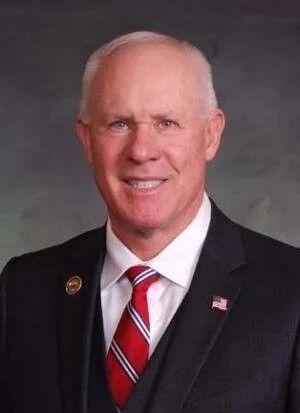
Anthony Hartsook represents District 44 in the Colorado House of Representatives. He serves as the caucus chair while also serving on the legislative council, education and finance committee. Rep. Hartsook served in the U.S. Army for 26 years, he served in combat deployments to Iraq, Afghanistan and the first Gulf War. As a father, husband, businessperson and decorated combat veteran, he serves the Colorado people with honor and dignity.


From moving people to managing them | GUEST COLUMN
Michael Hancock
michael-hancock@coloradopolitics.com
Updated 2 hours ago
Transportation policy used to have a fairly uncomplicated purpose: move people safely, efficiently and reliably. Build roads where people drive. Maintain bridges before they fail. Add capacity where growth overwhelms the system. Provide transit where it makes sense. Infrastructure was...
Disgraced ex-CBI analyst Missy Woods sentenced to prison in DNA scandal
Jenny Deam
jenny.deam@gazette.com
Updated 8 hours ago
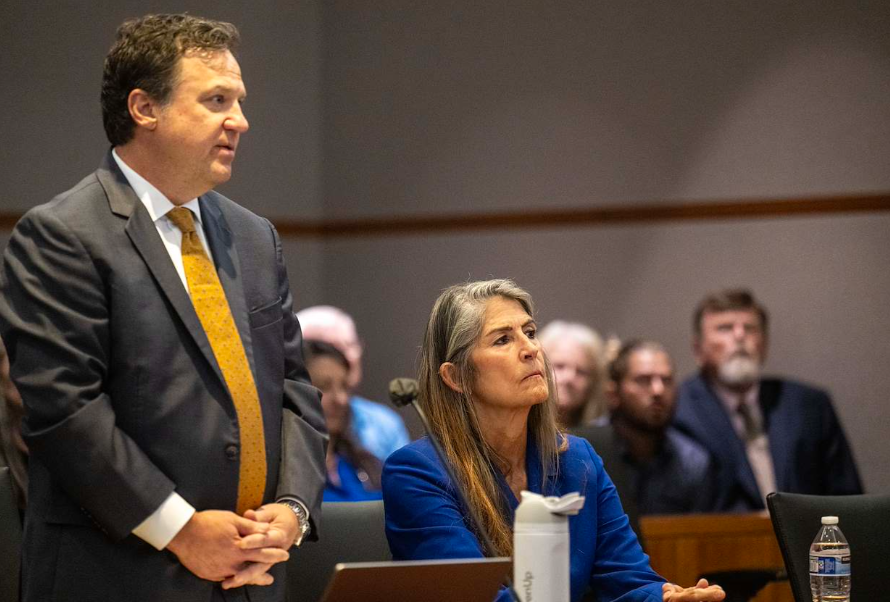
A Jefferson County district court judge on Tuesday sentenced a disgraced former Colorado Bureau of Investigation DNA analyst to a decade in prison for altering and deleting data in scores of criminal cases over several years. Jefferson County District Judge...

Jason Crow endorses Democrats up and down Colorado’s ballot, chips in $100K for campaign efforts
Ernest Luning
ernest.luning@coloradopolitics.com
Updated 8 hours ago
Democratic U.S. Rep. Jason Crow on Tuesday formally endorsed more than 60 Democrats running up and down Colorado’s ballot and said he’s putting $100,000 into statewide and county campaigns and organizing programs to drive turnout in the fall election. Crow,...

Trumpicans thumb their nose at the Constitution | Hal Bidlack
Hal Bidlack
hal-bidlack@coloradopolitics.com
Updated 1 day ago
As is all too often the case, there are again too many interesting things appearing in Colorado Politics for me to comment on all of them. So let me tell you what I won’t be talking about before I get...
CoComandering? | Miller Hudson
Miller Hudson
miller-hudson@coloradopolitics.com
Updated 3 days ago
At 8 a.m., Friday morning, Aug. 28, 70 or 80 mostly bleary-eyed visitors to the Transportation Technology Center outside Pueblo packed a conference room to attend the Front Range Passenger Rail District’s (FRPRD) Board meeting. With the exception of those...

Even Dem court couldn’t abide theft of GOP seats | Dick Wadhams
Dick Wadhams
dick-wadhams@coloradopolitics.com
Updated 2 days ago
Thanks to the Colorado Supreme Court, Colorado voters will be able to reaffirm their support for the Independent Congressional Redistricting Commission after the court struck down the Democratic scheme to steal three Republican congressional seats. Billionaire-funded national Democratic groups from...

Chaotic meeting began with attempt to squelch public comment | Rachel Gabel
Rachel Gabel
rachel-gabel@coloradopolitics.com
Updated 2 days ago
When Attorney General Phil Weiser takes the governor’s office in January, he must immediately address the chaos of the latest round of appointees to the Colorado Parks and Wildlife Commission to assure stakeholders he’s willing to put pressure on the...

Graduated income tax proposal is a flat tax in disguise | Jon Caldara
Jon Caldara
jon-caldara@coloradopolitics.com
Updated 5 days ago
“Youth is wasted on all the wrong people.” That’s one of my favorite lines from “It’s a Wonderful Life.” The older I get, the less it sounds like a joke. Every generation inherits victories it did not win. Young Americans...

AI optimism vs. anxiety — podcasters debate this every night | Tom Cronin
Tom Cronin
tom-cronin@coloradopolitics.com
Updated 3 days ago
President Donald Trump, CNBC’s “Mad Money” host Jim Cramer and entrepreneurial “accelerationists” celebrate the AI revolution and the infrastructure data-center build-out. Cramer recently gushed, “I like data centers so much that I wish I lived in one.” Trump criticized any community...

Colorado House ethics committee issues ‘stern letter’ to Democrat over caucus funds mismanagement
Marianne Goodland
marianne.goodland@coloradopolitics.com
Updated 9 hours ago
The Colorado House ethics committee on Friday voted unanimously to issue a “stern letter” to Rep. Mandy Lindsay, D-Aurora, regarding her mismanagement of House Democratic caucus funds. The committee further voted to request that Lindsay resign as Democratic Caucus co-chair...