

Colorado’s education paradigm déja-vu | Paula Noonan
Déja-vu for 10 years. In 2015-2016, state standardized testing was fully integrated into teacher performance evaluation. The tests comprised 50% of teacher “performance.” The idea was to follow the General Electric “rank-and-yank” human resources model.
At GE, the model went like this: top 20% of employees got raises and bonuses; the middle 70% got to keep their jobs; the bottom 10% were canned. The popular idea at the time was to “fire our way to Finland,” the highest performing country for public education.
Senate Bill 10-191, the legislation that set up the performance evaluation structure, was the baby of now Mayor Michael Johnston of Denver. He and his cosponsors promised Colorado’s academic achievement results would significantly improve based on this human-resources model. The GE industry template didn’t work at GE and doesn’t work here.
Here’s the déja-vu: The top, “distinction” school districts educate majority white, affluent student populations. School districts with the highest percentages of minority, non-English speaking, and free-and-reduced lunch students cluster at the low end of the state’s performance ratings scale. Those facts haven’t budged in a decade.
“Distinction” school districts include Academy 20 with the U.S. Air Force Academy, Boulder Valley with the University of Colorado at the center, Cheyenne Mountain with the Broadmoor in its boundaries, and Aspen, with some of the wealthiest people not just in Colorado but in the whole wide world.
In contrast, Adams 14 has approximately 230 acres of Suncor’s oil-and-gas refinery located in the heart of the district periodically spewing volatile organic chemicals such as benzene, as well as sulfur dioxide, hydrogen dioxide, hydrogen cyanide and numerous other particulates and pollutants into the air. In this case, chemistry defies school reformers’ best-laid plans.
The state’s standardized testing program proves, year after year, income and zip code set the basis for student achievement. It’s now a cliché. Schools in low-income districts are pushing Sisyphus’ boulder up Mount Blue Sky as the income divide reaches more families.
The other “reform” initiative to improve academic achievement is the expansion of charter schools. Their numbers have grown. These schools are supposed to bring innovation to education to change the “traditional” education “industrial” paradigm. Charters benefit from waivers to state laws and union rules that supposedly strait-jacket traditional schools, even though students in traditional schools with their high-income parents thrive just fine in their neighborhood school buildings.
Colorado’s Charter School Institute, with schools free from school district oversight, should be at the very top of high-performing districts. But its overall rating is “improvement.” Its 21,000 students are financed equitably, entirely with state and federal dollars. The schools do not receive local school district support. In at least one case, that’s to the advantage of the charter. The University Prep kindergarten-through-first-grade charter located in the Suncor Boys and Girls Club building in Commerce City received a $619,000 federal grant. It’s too early to tell what result that turbo charge of dollars will have.

Of the two University Prep schools under Denver school district authority, one sits at the low end of “performance,” having lost almost five points between 2025 and 2026 in its rating. The other is in “improvement” status as it has been for several years. They present themselves as the best path to college for low-income, minority students. These schools have 95% and 96% minority student bodies with high free/reduced lunch numbers. Their segregated populations run counter to the hard-fought school integration movement of the 1970s. Their academic results do not bring optimism; charter-school achievement promises meet reality.
Rocky Mountain Prep, another charter organization within Denver Public Schools, has also slipped in its academic and achievement growth ratings. Two schools are rated “performance” at the high end, and one is rated “performance” in the middle range. Five schools lost their 2025 “performance” rating, slipping into “improvement” status. The network received a $4.5 million donation from Mackenzie Scott in 2022, but that was not enough to sustain academic achievement and growth.
KIPP in Denver, or Knowledge Is Power Prep, received $11.5 million in publicly traceable philanthropic support from 2021 to 2025, with a total of $47.4 million including all extra-state and local sources. Total funding has put four KIPP schools at “performance” level and one school in “improvement” status. DSST, the Denver Schools of Science and Technology, is the premier money collector at about $23 million in outside donations and grants since 2021. Among its donors are RootEd at $4.7 million and the Charter School Growth Fund at $3.8 million.
These donors have a high stake in DSST as it’s the premier example of charter school success in the Denver metro area. Still, its success required all that extra money, and the demographics of its highest-performing schools show fewer minority and free-and-reduced lunch numbers than the DPS averages.
The two initiatives designed to transform Colorado’s education paradigm have played out. We are just about where we started a decade ago. Our reforms haven’t resolved the growing force that affects stulted academic achievement: family poverty.
Paula Noonan owns CapitolCommons.ai, the state’s premier legislature-tracking platform.

Gong-Show Griswold’s latest data dump a disaster | George Brauchler
George Brauchler
george-brauchler@gazette.com
Updated 3 hours ago
Last week, Colorado Secretary of State Jena Griswold’s office discovered they exposed for weeks the addresses of more than 130,000 “confidential voters” — including victims of sexual assault, domestic violence — and her political opponent in the attorney general’s race,...
Wildlife commissioner pushes for tougher penalties after hunter accidentally kills Colorado wolf
Marianne Goodland
marianne.goodland@coloradopolitics.com
Updated 7 hours ago
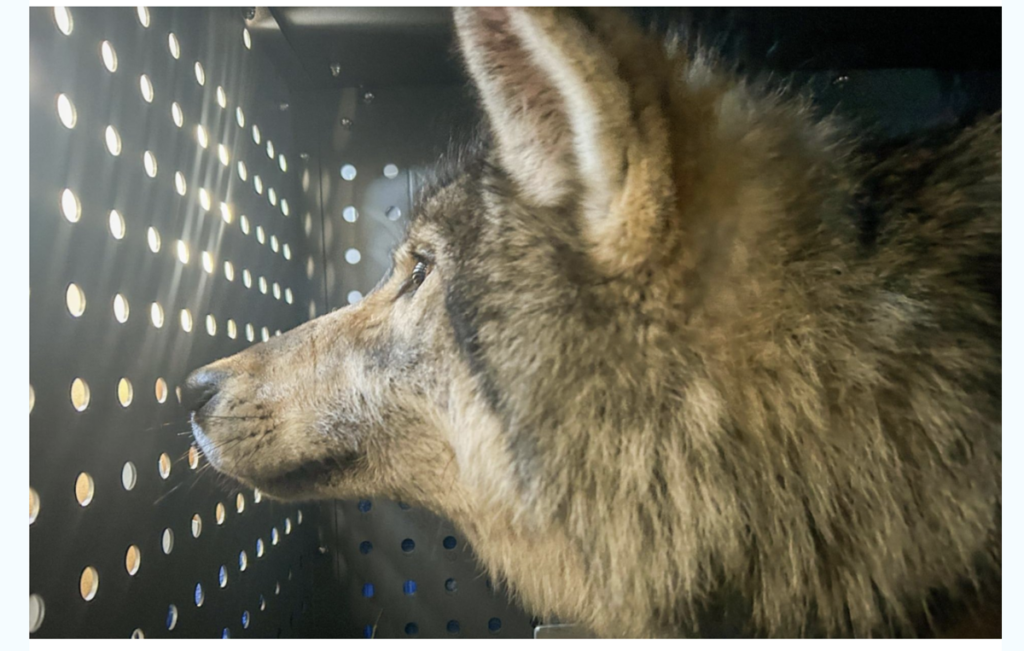
Colorado wildlife officials on Wednesday revisited the agency’s handling of violations involving protected species, prompting renewed debate over whether current penalties are sufficient. Colorado Parks and Wildlife Commissioner Rebecca Niemiec on Wednesday urged the agency to impose stronger penalties —...

Colorado’s Parks and Wildlife chair’s decision to limit public comments sparks backlash from fellow commissioners
Marianne Goodland
marianne.goodland@coloradopolitics.com
Updated 8 hours ago
Last week, the chairman of Colorado’s wildlife commission unilaterally decided to limit public comments, complaining, in particular, that elected officials often “grandstand” at meetings and noting that the election season is well underway. This week, the commission overturned its chair’s...

Colorado enacts new penalties for violent crimes and updates race categories on state forms
Marissa Ventrelli
marissa.ventrelli@coloradopolitics.com
Updated 10 hours ago
A trio of new laws, two regarding increased penalties for violent crimes and one establishing new requirements for government-issued forms, go into effect on Sept. 1. Here’s a breakdown of what they do. The bill: Senate Bill 25-050 What it...
Don’t trade away our TABOR refunds | PODIUM
Barb Kirkmeyer
barb-kirkmeyer@gazette.com
Updated 1 day ago
Here we go again — tax-and-spend politicians going in the wrong direction. Colorado families are being asked to believe a familiar lie: the only way to fund education is to let politicians keep more of your money — forever. Proposition...

House adopts Republican U.S. Rep. Jeff Crank’s resolution condemning socialism, mostly along party lines
Ernest Luning
ernest.luning@coloradopolitics.com
Updated 11 hours ago
The U.S. House on Tuesday approved a resolution sponsored by U.S. Rep. Jeff Crank to condemn socialism in a largely party-line vote that the Colorado Republican characterized as a chance for lawmakers to “stand firm” against an ideology making inroads...
Capped or graduated income tax rate? Colorado voters to decide
Marianne Goodland
marianne.goodland@coloradopolitics.com
Updated 11 hours ago
The proposal to create income tax tiers — which would replace Colorado’s flat rate — has been certified for the November general election ballot, setting the stage for a major showdown between two competing forces seeking to define the parameters of...
The 21 seats Mike Johnson says will decide the House majority
The Washington Examiner
the-washington-examiner@coloradopolitics.com
Updated 1 day ago
Speaker Mike Johnson, R-La., is eyeing 21 seats that will determine the House majority in the November midterm elections, including Colorado’s Congressional District 8. Johnson pointed to the nonpartisan Cook Political Report’s 21 toss-up seats, before rattling off a list...
Trump’s ‘BBB’ casts aside rural Colorado healthcare | Hal Bidlack
Hal Bidlack
hal-bidlack@coloradopolitics.com
Updated 2 days ago
Well, as I often do, let me start by yet again telling you what I am not going to be writing about (Editor: sigh…). I’m not going to talk about President Donald Trump’s most recent (of many, many) attacks on...

DA calls out election opponent over confidential voter breach
Savannah Eller
savannah-eller@coloradopolitics.com
Updated 2 days ago
Fourth Judicial District Attorney Michael Allen said his office was investigating after a software glitch temporarily exposed his own personal information along with the information of more than 130,000 confidential voters in Colorado. “This represents a glaring safety issue,” he...
PREV
PREVIOUS

Wildlife commissioner pushes for tougher penalties after hunter accidentally kills Colorado wolf
Colorado wildlife officials on Wednesday revisited the agency’s handling of violations involving protected species, prompting renewed debate over whether current penalties are sufficient. Colorado Parks and Wildlife Commissioner Rebecca Niemiec on Wednesday urged the agency to impose stronger penalties — including the possibility of criminal charges — against the hunter who admitted accidentally killing a […]

Gong-Show Griswold’s latest data dump a disaster | George Brauchler
Last week, Colorado Secretary of State Jena Griswold’s office discovered they exposed for weeks the addresses of more than 130,000 “confidential voters” — including victims of sexual assault, domestic violence — and her political opponent in the attorney general’s race, District Attorney Michael Allen. The act itself, another in a growing list of acts of […]