

Colorado’s primary proved in this political climate money doesn’t buy electoral happiness | Paula Noonan
To catch you up, campaign committees from this 2026 election cycle already collected and shoveled out a lot of cash: $102.64 million. That’s contributions in all forms — dollars, in kind, loans, etc. — from December 2024 to now. Total expenditures just for advertising amount to $32.94 million. More to come for the general election.
Did you get any money’s worth? There’s nothing like campaign season to make you not like campaigns, and too often, candidates. The most enamoring aspect of this month’s primary results is voters rebelled against most of the candidates who spent most of the money.
If the U.S. Congress and the U.S. Supreme Court won’t deal with Citizen’s United, the ruling that allows any corporation or similar entity to exercise political speech without telling any of us who’s doing the talking, then the remedy is to vote against the candidates who don’t loudly object to that “dark” money. Democrats voted big time against that money.
U.S. Sen. Michael Bennet paid the price. Rocky Mountain Way (RMW) was an independent expenditure committee supporting Bennet for governor. It collected $11.41 million and spent $10.91 million, about 10% of the total collected this cycle. Bennet had no control over how the committee operated or how it advertised his campaign. He can see the names of those people and associations who donated. So, he knows former Mayor Michael Bloomberg of New York pitched $4 million to get him elected, no return favors required.
If he knew the voter mood better on how to win his primary, he would have yelled loud and clear to RMW donors: “Stop pitching money to Rocky Mountain Way. I can raise my own money.” He would have asserted, “I don’t want your money and you don’t represent me.” He could have announced to voters, “Pay no attention to that Rocky Mountain Way committee behind the curtain!”
Instead, the money flowed, including from Bloomberg and lots more from New York City and other eastern states. From the minute the news became public of Bloomberg’s haughty munificence, Bennet lost the election. He was already tagged as the man from do-nothing Washington, DC. Now he was also the watercarrier for wealthy New York City elites pushing nonsense against a candidate in his own party.
U.S. Rep. Diana DeGette landed in the same cruise ship. Bennet and DeGette were establishment candidates playing the Citizen’s United money game when Colorado’s Democrats and D-leaning unaffiliateds want an unadulterated playing field. U.S. Sen. John Hickenlooper is lucky he didn’t get tossed off the ship. He only won because state Sen. Julie Gonzales got in the race too late.
Money was one reason this primary was different from any recent others. Another was proximity to establishment politics. President Donald Trump blew up the establishment with his 2024 win. He’s proudly taken the worst elements of establishment politics and made them worse.
Victor Marx, winner of the Republican gubernatorial primary, will try to do the same in Colorado. He came out of nowhere politically but lives in El Paso County where he had history with Focus on the Family. This experience contrasts with state Sen. Barb Kirkmeyer, florist, dairy farmer, Weld County commissioner, and dog-on-a-bone budget rottweiler on the legislature’s Joint Budget Committee. Kirkmeyer won in Weld County, led in the Front Range, but was trounced by Western Slope voters, especially in Mesa County.
The farther from the Capitol Republican and R-leaning unaffiliated voters lived, the more vehemently they voted against Kirkmeyer. Ironically, Kirkmeyer certainly knows more about Western Slope agriculture problems than Marx and has protected Coloradans as much as she could from excessive state spending. No matter, the Western Slope, along with Marx, wants to explode how politics is done at the Capitol.
For other reasons, everyday Democrats and D-leaning unaffiliateds are done with the establishment. They are tired of the incrementalism that’s left too many Coloradans, especially young people, unable to launch their careers, relationships, hopes and dreams.
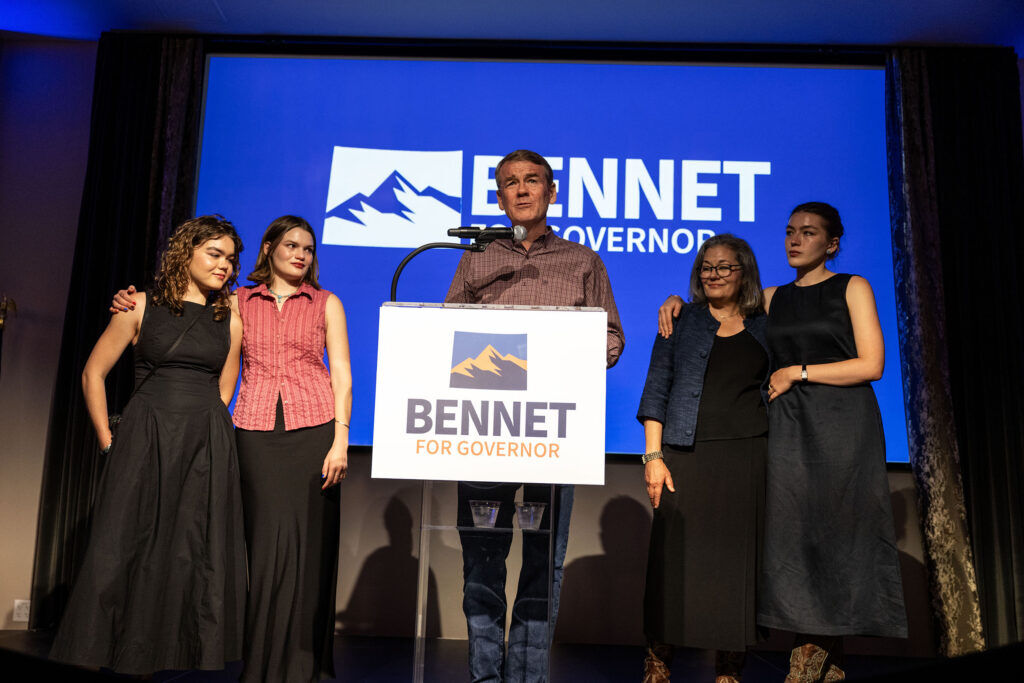
(Stephen Swofford, Denver Gazette)
Denver voters especially disliked Denver hometown establishment candidate Bennet, and his loss there probably compromised DeGette’s run. Bennet went down in every Denver neighborhood except for Central Park, the old Stapleton airport acreage. Why? Here’s some speculation: Young voters don’t like his Washington links and money. But young voters weren’t enough to create the Denver smackdown. Bennet also lost older voters, especially women, who no doubt remembered his time as leader of Denver Public Schools.
The senator reminded voters often he was superintendent of DPS. It was that role that launched him into his Senate seat. But for much of Denver, his time at DPS led to school closings, a breakdown between teachers and administration, the rapid advance of charter schools as education “reform,” and general chaos. Bennet was the business community’s superintendent, an oops today.
The Republican Party, according to Kirkmeyer, is at death’s door. Democrats and D-leaning unaffiliateds, younger and older, seek more change than the party will probably give. Young Ds want affordable health care, housing and decent-paying jobs. They don’t want the environment abused. Older voters, especially D women who voted voluminously, want the same for their adult children and young grandchildren.
In 2028, these voters will hold 2026 office holders to account.
Paula Noonan owns CapitolCommons.ai, the state’s premier legislature tracking platform.

Gaylord — you never check in, but still pay | Jon Caldara
Jon Caldara
jon-caldara@coloradopolitics.com
Updated 3 days ago
I go to a lot of conferences, often in beautiful cities I never actually see. Friends hear where I’ve been and ask depressing questions like, “Did you visit the famous museum?” No. I saw Ballroom C, the lobby bar and...
Reflections on Weiser-Lopez, Crank-Killian debates | Tom Cronin
Tom Cronin
tom-cronin@coloradopolitics.com
Updated 1 day ago
Thursday night, The Gazette and KOAA TV hosted two important candidate debates. The first featured incumbent Republican U.S. Rep. Jeff Crank, who is just completing his first term representing El Paso County in Congress, and Jessica Killian, a Democrat who has...

What courageous citizenship really looks like | Vince Bzdek
Vince Bzdek
vince.bzdek@gazette.com
Updated 19 hours ago
By Vince Bzdek What exactly is courage? Ernest Hemingway famously called it grace under pressure. Mark Twain wrote that “courage is resistance to fear, mastery of fear — not absence of fear.” C.S. Lewis refined that even more: “Courage is...
Colorado measure adding ID checks to mail-in voting qualifies for ballot
Marissa Ventrelli
marissa.ventrelli@coloradopolitics.com
Updated 2 days ago
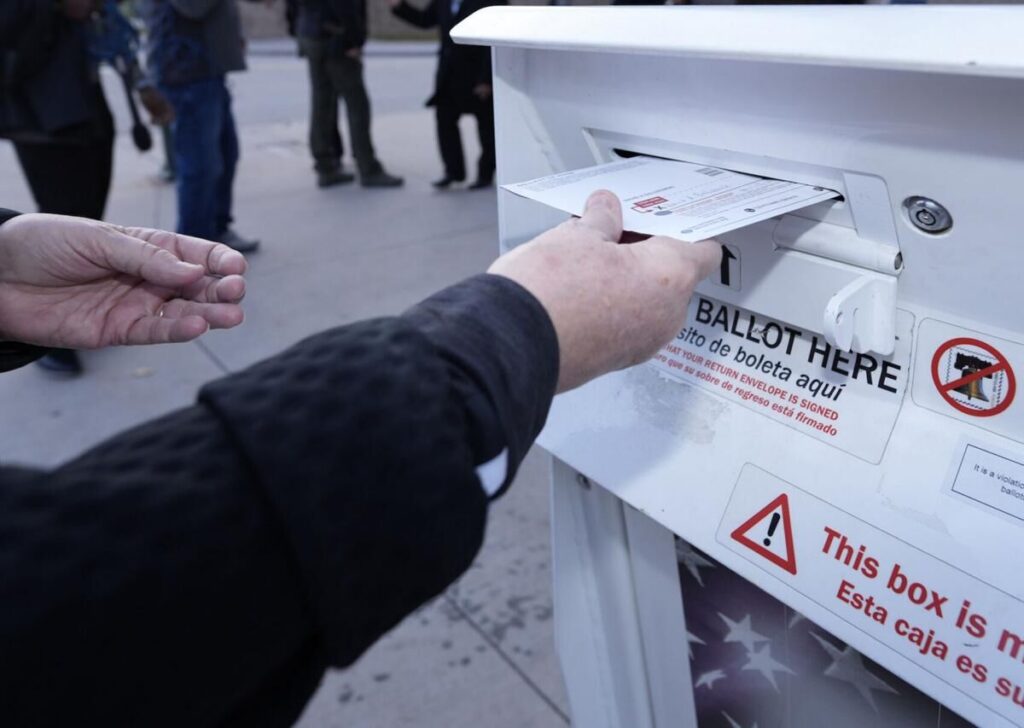
A ballot initiative that would require voters to include additional information on mail-in ballots has qualified for the November election, according to the Secretary of State’s Office. Backed by El Paso County Treasurer Chuck Broerman and former Deputy Secretary of...
Colorado election website error exposes personal data of confidential voters
Marissa Ventrelli
marissa.ventrelli@coloradopolitics.com
Updated 2 days ago
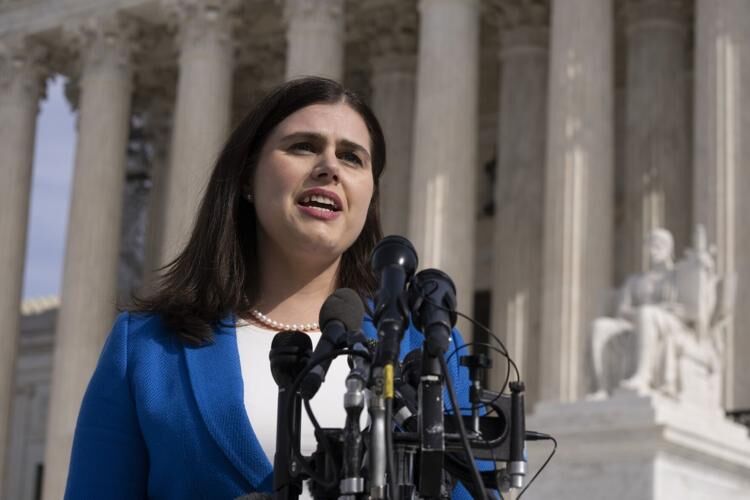
A system update accidentally lifted protections on confidential records in Colorado, exposing dozens of voters’ personal information, according to the Secretary of State’s Office. The limit that normally blocks access to confidential voter profiles was inadvertently disabled during an update...
Colorado’s hunting and fishing traditions rest on science, conservation and a proven heritage | IN RESPONSE
Colorado Politics
colorado-politics@coloradopolitics.com
Updated 2 days ago
By John Howard Eric Washburn’s recent column warns Coloradans the right to hunt and fish amendment is a Trojan horse designed to resurrect “cruel” practices voters have already banned and to elevate killing above every other form of wildlife management....
Why does Colorado limit who can safeguard taxpayer dollars? | GUEST COLUMN
Colorado Politics
colorado-politics@coloradopolitics.com
Updated 2 days ago
By Devin Camacho Recently, PNC Bank announced its purchase of FirstBank Colorado. Not only did Colorado lose a local banking option, but nearly 1,000 people lost jobs, with more job losses coming as the big bank now closes branches too....
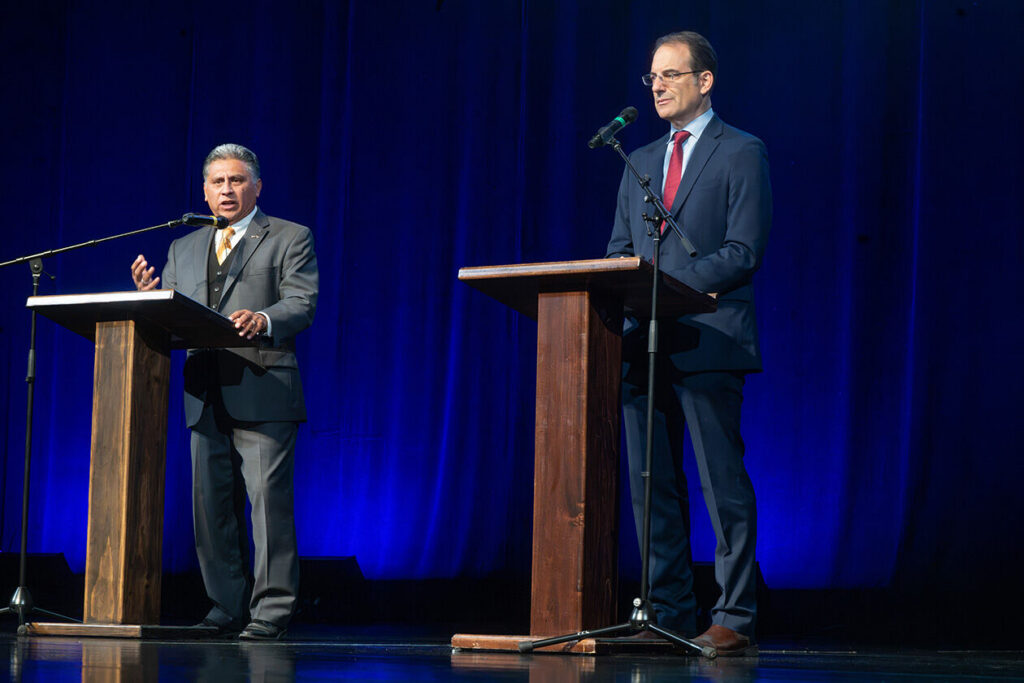
Gubernatorial candidates Phil Weiser, Greg Lopez spar, as Marx skips debate
Deborah Grigsby
deborah.smith@denvergazette.com
Updated 2 days ago
Two of the candidates for Colorado governor squared off in a televised debate on Thursday night, when Attorney General Phil Weiser, the Democratic nominee, and former U.S. Rep. Greg Lopez, an unaffiliated candidate, delved into issues of affordability, data center...
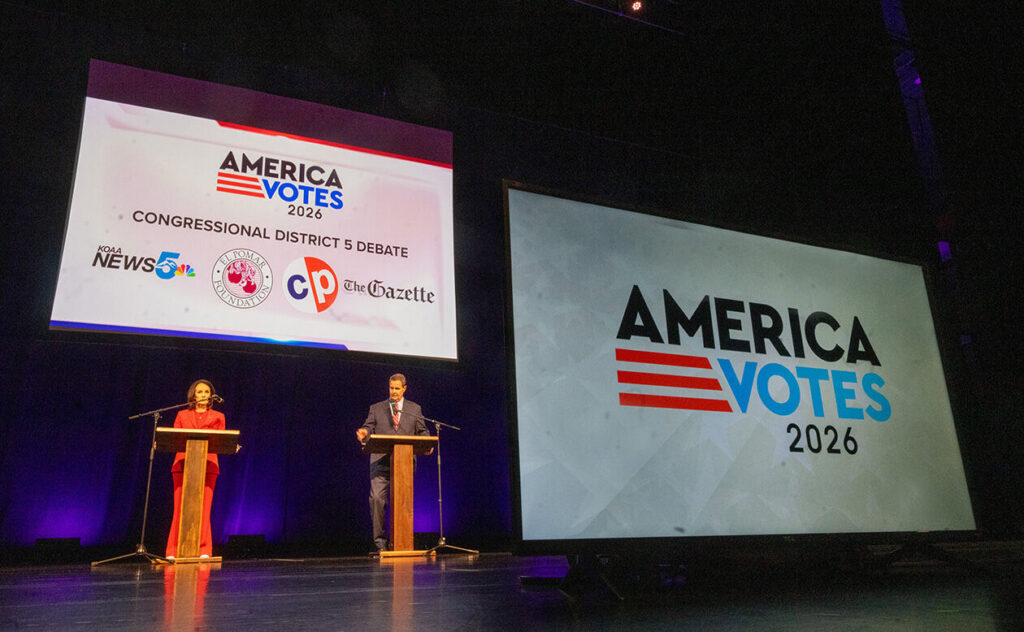
Troops, taxes, war dominate Colorado’s 5th CD debate between Jeff Crank, Jessica Killin
Deborah Grigsby
deborah.smith@denvergazette.com
Updated 2 days ago
Republican U.S. Rep. Jeff Crank and Democratic challenger Jessica Killin on Thursday night clashed over the war in Iran, the federal budget and healthcare when they took the stage in Colorado Springs for a sold-out debate in the race to...

WATCH: Republican US Rep. Jeff Crank, Democratic challenger Jessica Killin debate in Colorado’s 5th CD
Ernest Luning
ernest.luning@coloradopolitics.com
Updated 3 days ago
Republican U.S. Rep. Jeff Crank and Jessica Killin, his Democratic challenger, are scheduled to meet for a televised debate in the race to represent Colorado’s 5th Congressional District on Thursday night. The candidates are set to take the stage at...
PREV
PREVIOUS

Colorado housing laws take effect, expanding tools for affordable and workforce housing
New housing laws taking effect on Aug. 12 in Colorado aim to boost affordability, improve homelessness response and ensure safer water systems for mobile‑home communities. The first bill, Senate Bill 001, allows municipalities to sell county- or town-owned property to affordable housing developers and use certain property tax revenue for housing authorities and workforce housing […]

New wolf pack confirmed in Eagle County, marking 4th Colorado pack with pups this year
A new gray wolf pack has formed in Eagle County, Colorado Parks and Wildlife announced on Wednesday. Known as the Piney Ridge Pack, it is the fourth pack of gray wolves in the state to have produced pups this year. According to CPW, the average litter size for wolves is four to six pups. More […]