

The internet wasn’t built for kids — Colorado is starting to change that | PODIUM

By Joshua Ewing
Picture a teenager, alone in her room at midnight, pouring her heart out to an AI chatbot instead of a parent or a friend. Picture a 10-year-old downloading an app built for adults, with no one — not the app, not the phone, not the store — stopping to ask how old he is. These are not hypotheticals. They are everyday realities for Colorado families, because the online world our kids grow up in was never built with their safety in mind.
That is starting to change.
More young people are regularly using AI chatbots than ever, and 46% of US teens report being almost constantly online. For years, we treated this shift as background noise, not a public health emergency. This year, Colorado lawmakers said: no more.
The legislature passed two bills this year that finally treat kids’ online safety with the seriousness and urgency it deserves. Neither one solves the whole problem. But both move us forward, and in a fast-moving fight like this one, we cannot let the perfect be the enemy of the good. Waiting for a flawless bill means waiting forever, while kids are online right now.
Bill one: Put the responsibility on the platforms, not the parents
Senate Bill 26-051 tackles a problem every parent knows well. You want to make sure your kid isn’t seeing content built for adults. But you don’t want to hand over your child’s personal information to every single app just to prove it.
This bill threads that needle. It requires phone operating systems to collect basic, non-identifying age information once and then share a simple “age signal” to every app downloaded through the app store. Apps can determine whether a user is a kid or an adult without kids having to upload an ID or personal data anywhere. That signal can’t be sold or shared with outside companies. It carries only what’s needed, nothing more.
Bill two: Rein in the harms of AI chatbots
House Bill 26-1263 takes on a newer and scarier threat. AI chatbots have been found to encourage suicidal ideation and ideas for self-harm in young users, and to expose kids to sexual content that has no place in a child’s life.
This bill sets a floor, not a ceiling, for how these chatbots must behave. It requires them to clearly tell users they’re talking to a machine, not a person. It requires safe, responsible messaging protocols when a user brings up suicide or self-harm. It limits harmful content kids can be exposed to, and it bans design tricks meant to hook kids emotionally.
Progress, not the finish line
Both bills passed with bipartisan support, which tells you something important: this isn’t a partisan issue. It’s a parent issue. It’s a kid issue. It’s a public health issue.

None of this would have happened without the lawmakers who carried these bills across the finish line, and without the families, young people and advocates who showed up, session after session, to share what these harms actually look like in real life. Their courage in telling their own stories is why these protections exist today. We owe them our thanks, and we owe them our continued work.
Because make no mistake: these two laws are a strong first step, not a victory lap. Digital technology is developing too rapidly for any legislature to keep up with, and we will need to keep adapting right alongside it. Our next fight is already in view: age-appropriate design code, which would require platforms build their products to be safe for kids from the ground up, instead of bolting on safety after the harm is already done. Because parents shouldn’t have to be cybersecurity and artificial-intelligence experts to keep their children safe online. That’s the next step Colorado needs, and it’s the one we intend to take.
As the leader of Healthier Colorado and as a parent myself, I’m grateful to Gov. Jared Polis for signing both bills into law and to every lawmaker and advocate who made it happen. We spent a decade looking away while social media hurt Colorado’s kids. With these new laws, our state is proving we won’t make that mistake again. Colorado is showing the rest of the country what it looks like to finally put kids first online. Now we keep going.
Joshua Ewing is executive director of Healthier Colorado. He is focused on driving bold, community-centered policy change that improves the health and well-being of people across the state. His work centers on empowering local leaders, engaging stakeholders across the political spectrum, and shaping strategy that turns grassroots insight into action.

Trumpicans thumb their nose at the Constitution | Hal Bidlack
Hal Bidlack
hal-bidlack@coloradopolitics.com
Updated 13 hours ago
As is all too often the case, there are again too many interesting things appearing in Colorado Politics for me to comment on all of them. So let me tell you what I won’t be talking about before I get...

CoComandering? | Miller Hudson
Miller Hudson
miller-hudson@coloradopolitics.com
Updated 2 days ago
At 8 a.m., Friday morning, Aug. 28, 70 or 80 mostly bleary-eyed visitors to the Transportation Technology Center outside Pueblo packed a conference room to attend the Front Range Passenger Rail District’s (FRPRD) Board meeting. With the exception of those...

Even Dem court couldn’t abide theft of GOP seats | Dick Wadhams
Dick Wadhams
dick-wadhams@coloradopolitics.com
Updated 2 days ago
Thanks to the Colorado Supreme Court, Colorado voters will be able to reaffirm their support for the Independent Congressional Redistricting Commission after the court struck down the Democratic scheme to steal three Republican congressional seats. Billionaire-funded national Democratic groups from...

Chaotic meeting began with attempt to squelch public comment | Rachel Gabel
Rachel Gabel
rachel-gabel@coloradopolitics.com
Updated 2 days ago
When Attorney General Phil Weiser takes the governor’s office in January, he must immediately address the chaos of the latest round of appointees to the Colorado Parks and Wildlife Commission to assure stakeholders he’s willing to put pressure on the...

Graduated income tax proposal is a flat tax in disguise | Jon Caldara
Jon Caldara
jon-caldara@coloradopolitics.com
Updated 4 days ago
“Youth is wasted on all the wrong people.” That’s one of my favorite lines from “It’s a Wonderful Life.” The older I get, the less it sounds like a joke. Every generation inherits victories it did not win. Young Americans...

AI optimism vs. anxiety — podcasters debate this every night | Tom Cronin
Tom Cronin
tom-cronin@coloradopolitics.com
Updated 3 days ago
President Donald Trump, CNBC’s “Mad Money” host Jim Cramer and entrepreneurial “accelerationists” celebrate the AI revolution and the infrastructure data-center build-out. Cramer recently gushed, “I like data centers so much that I wish I lived in one.” Trump criticized any community...

Colorado House ethics committee issues ‘stern letter’ to Democrat over caucus funds mismanagement
Marianne Goodland
marianne.goodland@coloradopolitics.com
Updated 2 days ago
The Colorado House ethics committee on Friday voted unanimously to issue a “stern letter” to Rep. Mandy Lindsay, D-Aurora, regarding her mismanagement of House Democratic caucus funds. The committee further voted to request that Lindsay resign as Democratic Caucus co-chair...
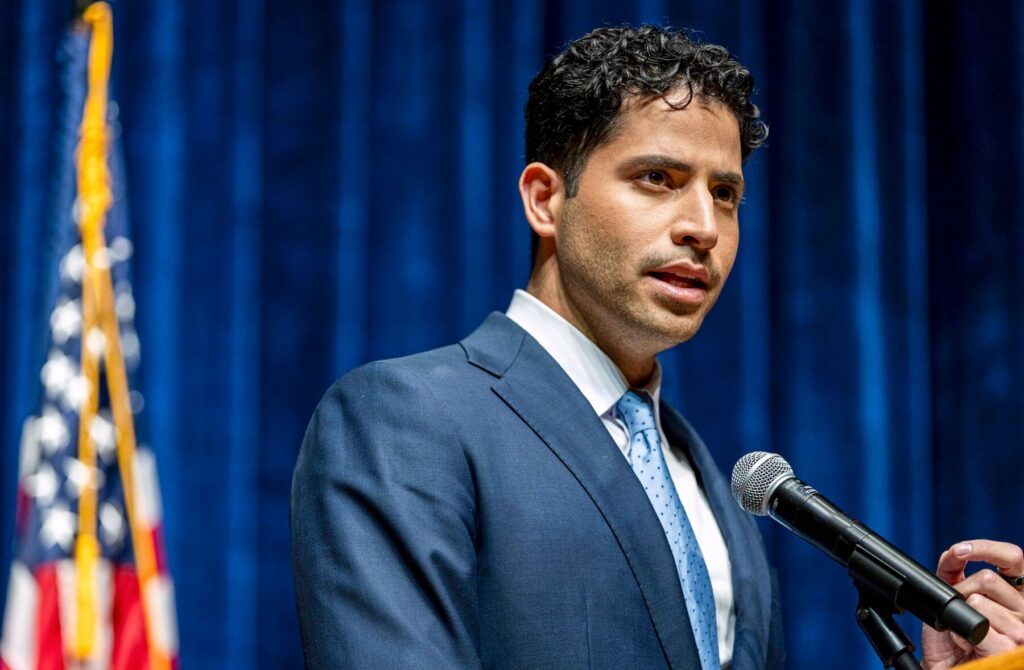
Manny Rutinel resigns from Colorado legislature to focus on congressional race
Marissa Ventrelli
marissa.ventrelli@coloradopolitics.com
Updated 3 days ago
The Democrat running for a key congressional race — whose outcome could decide the balance of power in the U.S. House — on Friday resigned from the Colorado legislature. State Rep. Manny Rutinel is turning his attention to his campaign...

Colorado secures FEMA support for wildfire, flooding and mudslide recovery
Marissa Ventrelli
marissa.ventrelli@coloradopolitics.com
Updated 2 days ago
Federal authorities on Friday approved Colorado’s request for federal public assistance to help communities devastated by the Aspen Acres and Gold Mountain Fires. The Federal Emergency Management Agency did not announce how much the state would receive but confirmed that...
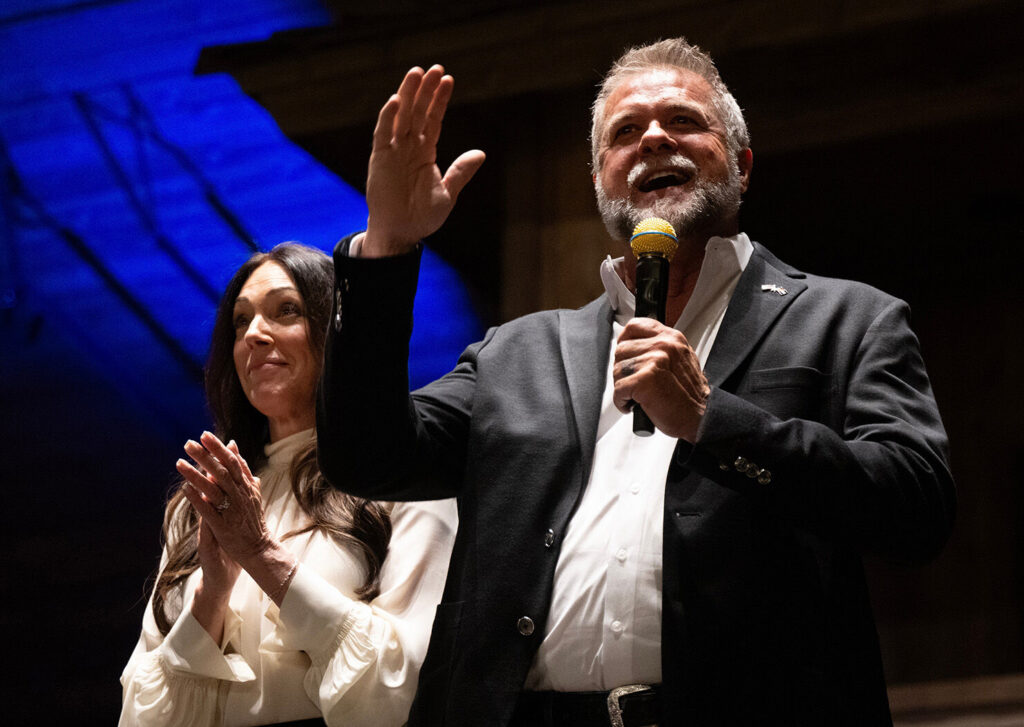
State seeks $50K penalty against GOP candidate Victor Marx over alleged campaign finance violations
Deborah Grigsby
deborah.smith@denvergazette.com
Updated 3 days ago
Republican gubernatorial candidate Victor Marx is looking at more than $50,000 in fines in what the Elections Division of the Office of the Secretary of State calls “unprecedented” campaign finance violations. The state has not imposed that fine yet, and...
PREV
PREVIOUS

Colorado receives $5.8 million in federal weatherization assistance grants
Colorado has received nearly $6 million in federal funds through the Department of Energy’s Weatherization Assistance Program after U.S. senators expressed worries about potential delays. In May, U.S. Sens. Michael Bennet, D-Colo., Jack Reed, D-R.I., and Susan Collins, R-ME, issued a letter urging Energy Secretary Chris Wright to release nearly $360 million in WAP funds […]

Republican candidates pass on signing Colorado gubernatorial nominee Victor Marx’s ‘unity compact’
A spokesperson for Republican gubernatorial nominee Victor Marx said his campaign is “extremely encouraged” by responses to a document the campaign circulated late last week, asking fellow GOP nominees how they want to collaborate in the months ahead before Colorado’s November election. Two of the four other statewide Republican candidates, however, told Colorado Politics that […]