New Mexico governor could seek billions after DEA let fentanyl hit streets | OUT WEST ROUNDUP
NEW MEXICO
Governor rips DEA policy
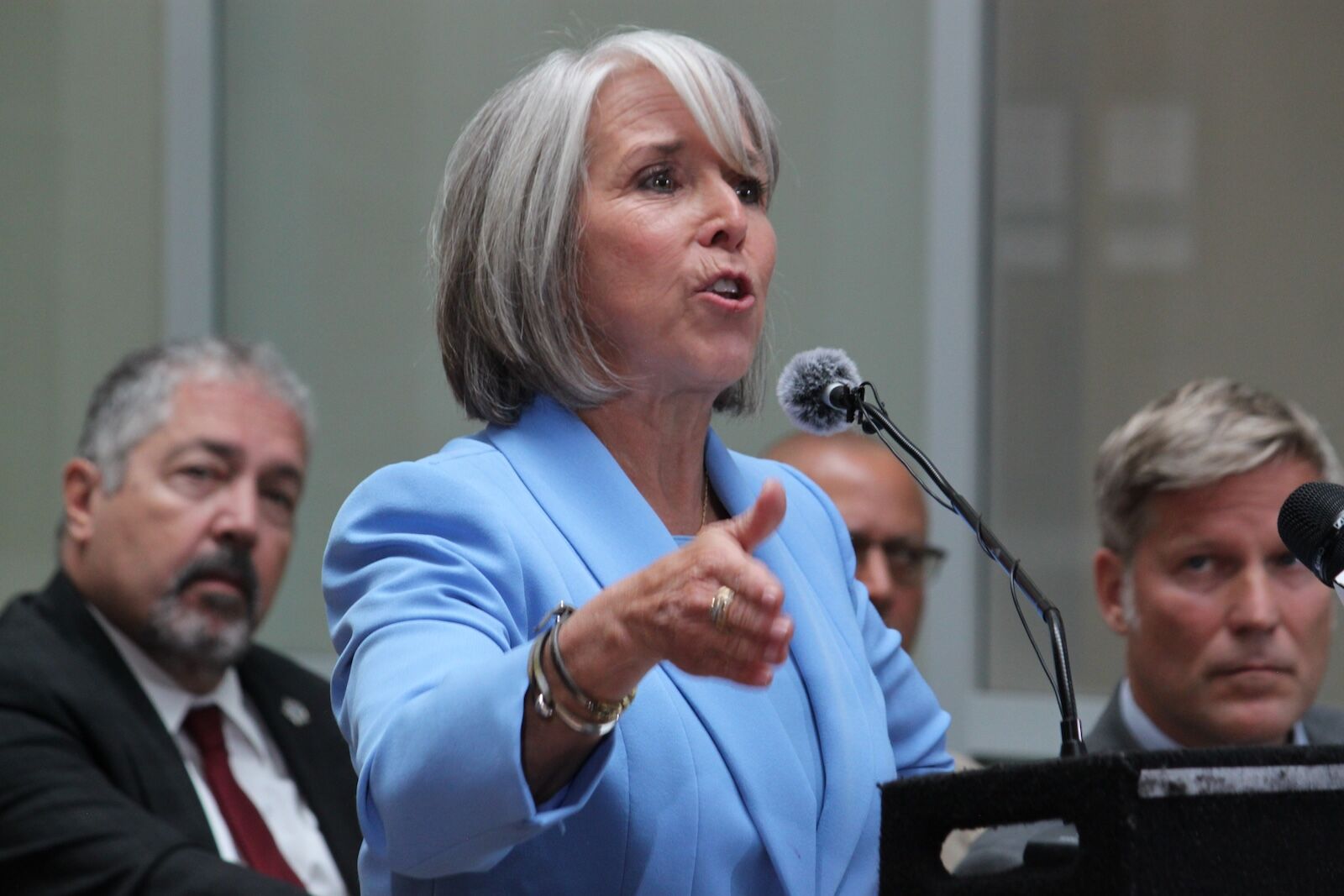
ALBUQUERQUE — New Mexico’s governor said on June 29 that state officials could pursue billions of dollars in civil damages after revelations that U.S. Drug Enforcement Administration agents repeatedly allowed shipments of fentanyl to flow into drug-plagued communities as investigators sought to build bigger cases.
Democratic Gov. Michelle Lujan Grisham vowed to take her outrage “right to the White House and Congress” to seek assurances the DEA is no longer using the risky law enforcement strategy in New Mexico — and that it is not being replicated elsewhere. Overdoses have surged in New Mexico, even as fentanyl deaths declined in other states.
“This is a stunning failure by the federal government,” the governor told reporters at a news conference in the state medical examiner’s office in Albuquerque.
The DEA did not immediately respond to a request for comment.
White House spokesperson Abigail Jackson noted that President Donald Trump has classified fentanyl a “weapon of mass destruction” and signed into law legislation cracking down on the synthetic opioid.
“Sadly, the United States is still recovering from Biden’s border crisis and the damage it caused,” Jackson wrote in an email to The Associated Press. “President Trump has totally secured the border and has taken bold actions to combat the scourge of fentanyl in American society.”
Lujan Grisham’s remarks came a week after AP reported that DEA agents repeatedly monitored — but did not seize — shipments of fentanyl as part of an effort to build bigger criminal cases between 2023 and 2025.
Current and former DEA agents, including whistleblower David Howell, told AP the strategy amounted to a gamble with public safety and may have violated U.S. Justice Department rules intended to safeguard the public.
The DEA initially denied Howell’s allegations in a statement to AP. But the agency later called upon the Justice Department’s independent watchdog to conduct its own investigation.
UTAH
State marks year of measles
Utah has spent the past year fighting measles outbreaks — a grim milestone that could affect whether the United States can keep its measles-free designation.
More than 680 people have gotten sick since the state’s first outbreak began on June 20, 2025.
Unlike measles outbreaks in Texas, South Carolina and Arizona, the spread in Utah has been tough to contain to one region — infecting undervaccinated communities in nearly every county.
Measles popped up in healthcare settings, big-box stores and restaurants, and youth sporting events. In February, an exposure at a state high school wrestling championship sparked at least 46 cases among attendees.
Measles is one of the most contagious diseases known to medicine. It causes a tell-tale rash, high fevers, strong cough, ear infections and diarrhea.
While most recover, some — including young babies, pregnant people and those with weak immune systems — are at higher risk of developing dangerous complications like pneumonia, brain swelling, blindness or even dying.
The measles vaccine is safe and 97% protective after two doses.
Though Utah’s spread has slowed in recent weeks, state epidemiologist Leisha Nolen sees little opportunity to rest. She’s worried the start of school and arrival of colder weather in the fall will cause measles to surge again.
Statewide, 12.8% were missing their measles vaccine during the last school year, putting the state far short of the 95% vaccination rate needed to prevent measles outbreaks.
ARIZONA
Sect leader convicted
PHOENIX — A polygamous sect leader already serving a 50-year federal prison sentence for orchestrating sex involving children was convicted on June 26 on state child abuse charges after girls were found in an unventilated trailer he was hauling through Arizona.
Someone alerted authorities about the trailer in August 2022 after seeing small fingers reaching through gaps in the doors. Police stopped Samuel Bateman’s vehicle as he was driving through Flagstaff and found three girls inside, who were ages 11 to 14 at the time. The trailer was enclosed with a makeshift toilet, a sofa and camping chairs.
In the federal case, Bateman was convicted of coercing girls as young as 9 to submit to sex acts with him and other young adults, and for scheming to kidnap girls from protective custody, the story of which is the focus of a Netflix series, “Trust Me: The False Prophet.”
Bateman previously claimed to have more than 20 “spiritual wives,” including 10 girls under the age of 18. He testified in his own defense in the state case, telling jurors he would never harm the people he loves. He acknowledged during cross-examination that he knew the girls were in a hot trailer for hours and the ventilation wasn’t good, but downplayed the conditions.
The jury convicted him on all three counts of child abuse. Each count carries a mandatory sentence, between four and eight years. The judge has discretion to run the counts consecutively or concurrently. A sentencing hearing is scheduled Aug. 25.
WYOMING
Family food subsidy OK’d
Wyoming families received enrollment notifications for a summer food subsidy program at the end of June.
The program only came to fruition this year after Gov. Mark Gordon issued an executive order in April and allotted the necessary funds. The Summer Electronic Benefits Transfer program, also known as SUN Bucks, provides funds to eligible families with school-aged children to help pay for food during the summer months.
Each eligible family will receive $40 per month per child for the summer months. The SUN Bucks benefit card will be preloaded with the full $120.
The Wyoming legislature did not approve funding to administer SUN Bucks during this year’s budget session. Although the benefits are federally funded, states must cover half of the program’s administrative costs, according to Wyoming’s implementation plan.
“This is an essential program to give a little boost for children in our state who may not otherwise have access to healthy food, Gordon said.
In his executive order, Gordon directed the Department of Family Services to develop a system for distributing benefits and determining eligibility.
More than 37,000 children were set to be auto-enrolled, with benefit cards mailed at the beginning of July.


Half of Americans don’t know what the 250th anniversary celebrates | Vince Bzdek
Vince Bzdek
vince.bzdek@gazette.com
Updated 19 hours ago
Do you want the good news or the bad news, America? Let’s start with the bad: Nearly half of all Americans don’t know what America’s 250th anniversary commemorates (namely, the adoption of the Declaration of Independence), according to a new...
Lamm explains to Coloradans they already had enough tax relief; RMGO defies Owens and Tancredo | A LOOK BACK
Rachael Wright, Special to Colorado Politics
rachael.wright@coloradopolitics.com
Updated 4 days ago
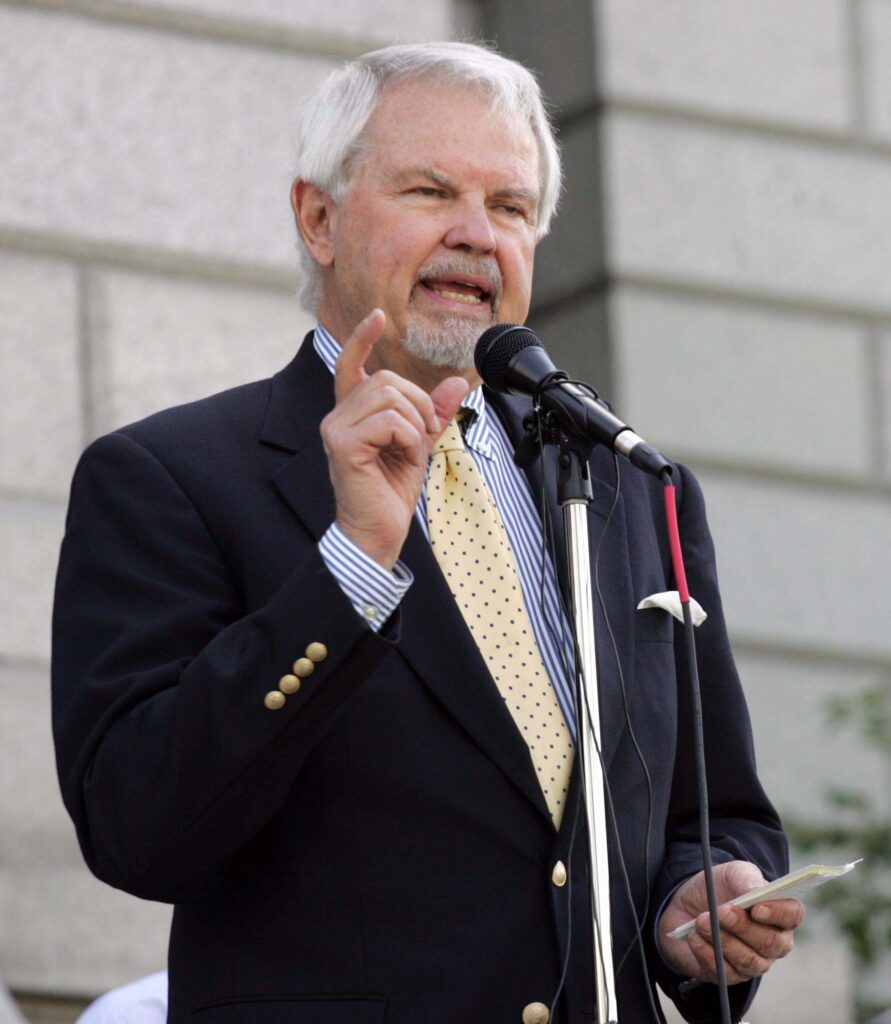
Forty-five years ago this week: “Voting against tax relief is politically sensitive,” wrote Gov. Dick Lamm in a column in The Colorado Statesman. “But my conscience and my responsibility for Colorado’s fiscal health required a veto.” Lamm decided to personally...

Colorado Politics Calendar July 13-19
Rachael Wright, Special to Colorado Politics
rachael.wright@coloradopolitics.com
Updated 4 days ago
CoPo’s weekly political calendar helps you find political and public policy events throughout Colorado. It includes candidate and issue campaign events, public policy meetings, court hearings, state and local party conventions, assemblies, debates, rallies, parades, speaking engagements, traveling dignitary appearances,...

Phil Weiser’s sudden need to find the brake pedal | SONDERMANN
Eric Sondermann
eric-sondermann@coloradopolitics.com
Updated 3 days ago
Indulge me with a personal story at the outset. Trust me, it relates. Years ago, when our kids were young, we briefly had a small jalopy for a babysitter’s use. One morning, I discovered that the battery on this poor...

Aspen Acres fire destroys 850 structures, including 254 homes in Pueblo County
Mary Shinn
mary-shinn@coloradopolitics.com
Updated 1 day ago
The Aspen Acres fire has destroyed about 850 structures, making it among the most destructive in state history, fire officials said Friday. Firefighters count all structures lost in a fire, including barns and sheds, while county officials have focused on...

Turnout surges and winning margins stretch as final returns post in Colorado’s 2026 primary
Ernest Luning
ernest.luning@coloradopolitics.com
Updated 11 hours ago
County clerks finished posting unofficial results in Colorado’s primary election on Friday, drawing a line under a series of nominating contests that witnessed upsets, surprises and outright shockers by the time the votes were tallied. While the outcome changed in...

Routt County DA’s office faces multiple investigations after it drops high-profile rape case
Jenny Deam
jenny.deam@gazette.com
Updated 15 hours ago
Routt County’s district attorney and deputy district attorney are now under increasing scrutiny on multiple fronts for their handling of the alleged drugging, rape and near-strangulation of a nationally ranked cross-country skier. The fallout from their decision not to prosecute...

Colorado hospitals poised to receive $455 million Medicaid funding boost
Nico Brambila
nico.brambila@denvergazette.com
Updated 15 hours ago
After years of losing out on the federal dollars, Colorado has been approved to tap a well-known Medicaid financing tool that is expected to bring more than $450 million to hospitals. Colorado did not pursue the financing tool until more...

Aurora sees ‘incredible compliance’ on water restrictions from residential users, less from commercial users
Kyla Pearce
kyla.pearce@gazette.com
Updated 2 days ago
Aurora Water has issued more than 1,750 warnings in three months In the three months since the Aurora City Council passed a Stage 1 drought declaration and watering restrictions, Aurora Water is seeing “incredible compliance” from residential properties. But the...

Colorado partners with tech organization to simplify tax filing process
Marissa Ventrelli
marissa.ventrelli@coloradopolitics.com
Updated 2 days ago
Colorado is partnering with the tech nonprofit Code For America to make its free tax-filing program for low-income residents more accessible, Gov. Jared Polis announced this week. According to Polis, the partnership will make the SimpleFile tool, which helps taxpayers...