

Understanding Trump’s remarkable political comeback in 2024 | Cronin and Loevy
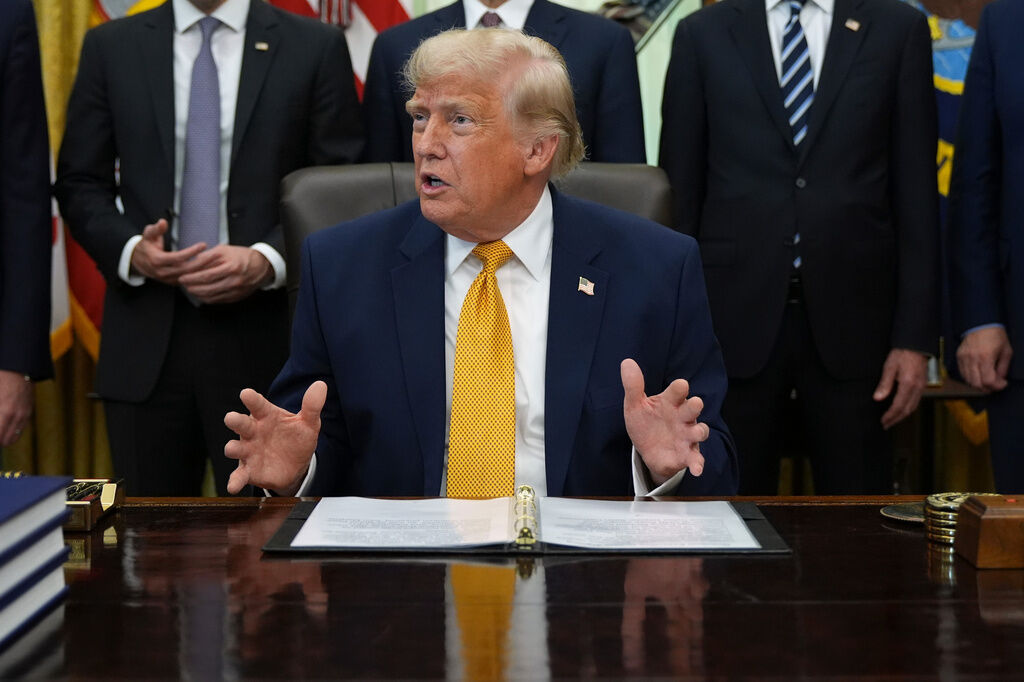
President Donald Trump lost the 2020 presidential election. He inspired a riot at the U.S. Capitol to try to overthrow the results of that election. He was impeached by the U.S. House of Representatives and later was indicted for several alleged crimes.
And yet — he overcame all that in 2024 and won his way back into the White House for a second four years as president.
The COVID-19 pandemic and resulting lockdowns obviously played a role in Trump’s defeat for reelection as president in 2020.
And Trump’s win in the 2024 presidential election can be understood in part because of President Joe Biden’s aging problems, the sharp rise in the rate of inflation, failed border security efforts, and the hastily arranged and untraditional nomination of Kamala Harris to be the 2024 Democratic presidential nominee.
Still, what is puzzling, is how the impeached, indicted and unpopular (according to Gallup polls) Trump won the Republican nomination in 2024.
University of Denver political scientist Seth Masket offers us a sophisticated and scholarly analysis of that 2024 Trump comeback in his just-published and valuable book “The Elephants in the Room” (Cambridge University Press, 2026).
Masket devotes special attention to the role that Republican county chairs play in presidential nomination politics.
Historically, local party chairs function both as insiders and delegates. They play a leadership role in shaping the party’s nominations and platforms.
Masket discovers this was less true in 2023 and 2024. A good many Republican local leaders were, at best, cool to a third Trump GOP nomination. Perhaps as many as half of them believed Trump had too much “baggage” and that the party would benefit from a new face and a new leader.
Also, Masket observes, Trump was rarely the favorite of major party campaign donors.
But the alternatives to Donald Trump — Ron DeSantis, Nikki Haley, and Vivek Ramaswamy — did not catch on except as “Stop Trump” possibilities.
Masket’s central finding is that Republican county leaders “saw no way to steer party voters away from Trump. No alternative seemed to resonate, and no candidate could make a serious dent in Trump’s support.”
The county chairs who favored Trump were typically less educated, less wealthy, more likely to be evangelical Christians, and more rural than their counterpart Trump skeptics.
Former South Carolina governor Haley emerged as Trump’s chief challenger throughout 2023 and 2024.
Here is what several Republican county chairs said of Haley: “She seems to be level-headed.” “Polls show she could easily beat Biden.” “She’s stable, conservative, and can govern without chaos.” “She’s not a clown.”
As for Trump, the view was this: “Trump has too much baggage. Nothing will get accomplished because of his ongoing and upcoming legal battles.”
Trump had a dismal 34% approval rating at the end of his first term. That was low, especially compared to Obama’s 59% favorable rating at the end of his presidency.
The pandemic, and the Trump administration’s handling of it and mixed messaging about it, were big factors in Trump’s declining support.
His two impeachments obviously hurt him. Trump’s refusal to concede electoral defeat, and his urging insurrectionists to halt Congress certifying the 2020 election results, further polarized the nation.
Trump’s confrontational rhetoric and his penchant for insulting opponents alienated moderate voters, including many who liked his tax cuts, border security and judicial nominees.
Noteworthy, however, was that 85% or so of Republicans still supported him, believing that the media had unfairly and unduly harassed him.
These Republicans were remarkably forgiving of him, despite his lavish, sometimes roguish lifestyle. Moderates may have been concerned about Trump’s “electability,” yet rank-and-file MAGA Republicans yearned for the Trump “electricity.”
And it was these hard-core MAGA Trump fans that counted far more than the views of Republican county chairs. These county chairs were insiders who had mostly shown up in the previous Ronald Reagan-George Bush-Mitt Romney era.
Trump was different from them in many ways.
South Carolina Sen. Lindsey Graham understood the complexity, the pluses, as well as the risks of Trump. Graham said in early 2021:
“There is something about Trump. There’s a dark side, and there is some magic there, and what I’m trying to do is just harness the magic. To me, Donald Trump is sort of a cross between Jesse Helms, Ronald Reagan and P.T. Barnum. It’s just this bigger-than-life deal. He could make the Republican Party something that nobody else I know can make it. He can make it bigger, he can make it stronger, he can make it more diverse, and he also could destroy it.”
Trump had been an NBC primetime television celebrity for 14 years or more. He loved the limelight. But he also learned the arts of stagecraft. He learned how to improvise and connect with audiences. And he had become a household name.
He discovered, also, there were large numbers of Americans who were anti-government, anti-elites, anti-intellectual and nativistic in their social and political beliefs.
Nativism and “America First” had a long tradition in American politics. The American Party, often called the “Know Nothing” party, had flourished in the 1850s. The movement began as a secret society and its members initially, when asked about it, would reply that ”I know nothing about it.”
It was anti-immigrant, anti-Catholic, anti-Irish and anti-German. Party members wanted anti-immigrant restrictions and longer wait times for immigrants to be able to win citizenship and the right to vote and hold public office.
The party dissolved over slavery and split between Northern and Southern factions. Most of the Northern faction joined the emerging Republican Party. Many of them, North and South, would later affiliate with the Ku Klux Klan (KKK).
Populist nativists joined the Isolationist Movement and were skeptical about women’s suffrage and civil rights. Even today, there are church groups and right-wing activist groups calling for repeal of the 19th Amendment, which gave women the right to vote.
Arizona Sen. Barry Goldwater cultivated support from the populist-nativist factions in both political parties in the 1960s.
President Richard Nixon speechwriter Patrick Buchanan championed an “America First” crusade organized around resentment toward racial equality, multiculturalism and the illegal invasion of immigration at our southern borders.
Buchanan voiced much of what would become rally highlights of Trump’s later election campaigns.
Alaska Gov. Sarah Palin appealed to populists and nativists. The “tea party” activists fired up anti-Washington groups.
Radio and television talk show personality Rush Limbaugh won a huge national audience with a confrontational version of right-wing Republicanism and skepticism about civil rights initiatives, feminism and climate change activism.
Trump embraced and celebrated Limbaugh and inherited allegiance from Limbaugh’s fervent audiences. Trump thanked Limbaugh with a Presidential Medal of Freedom in the midst of one of his State of the Union addresses to Congress.
Trump was rich and privileged like the Bush family and Romney. Somehow, however, he transcended his New York urbanity and elitism and got adopted by lower-income, White working-class people and evangelical Christians.
They liked his commitments to “drain the swamp,” change the Supreme Court, close the Southern border, and to fight for them.
Republican county chairs may have understandably had their doubts about Trump, but Trump had developed an unusually loyal following.
These supporters feared they were being left behind or being replaced by immigrants here illegally or people of color.
Americans have never had a combative, rogue president. We have had a few maverick governors, like Louisiana’s Huey Long and Alabama’s George Wallace.
We have had Ku Klux Klan governors in a few states, including in Colorado (Gov. Clarence Morley in 1925-1927).
Our popular culture provides countless examples of audiences cheering on unsavory, lawbreaking characters, most of whom are on power trips of some kind.
Think of Marlon Brando’s fictional don in “The Godfather” movies, “24’s” special agent Jack Bauer, Tony Soprano, Ayn Rand’s John Galt and Frank Underwood in the “House of Cards” TV show.
We may have cringed at the tactics of these anti-hero “bad boys,” but we watched them nonetheless.
Trump exhorted his Jan. 6 rioters with the call: “Be there. It will be wild.”
As Senator Graham noted “There’s something about Trump.” He is different. Political scientists like Masket and the rest of us are still trying to understand this norm-breaking maverick president and his appeal. The Masket book helps.
News columnists Tom Cronin and Bob Loevy write about Colorado and national politics.

Three districts that will answer key Colorado political questions | Paula Noonan
Paula Noonan
paula-noonan@coloradopolitics.com
Updated 1 day ago
Colorado’s legislature used to be a place where neither party was dominant. Dozens of seats were competitive and House and Senate majorities switched regularly. From 2010 to 2020, the House was predominantly Democratic with one two-year assembly under Republicans. The...

A right to buy a product? | Hal Bidlack
Hal Bidlack
hal-bidlack@coloradopolitics.com
Updated 3 days ago
A recent story in Colorado Politics caught my eye, as I learned of a “citizen initiative” that has qualified for the November ballot. It seems supporters of Initiative 177 have collected enough signatures, 146,165 legitimate ones out of a total...

A daring and fearless rescuer — is afraid of a debate | Dick Wadhams
Dick Wadhams
dick-wadhams@coloradopolitics.com
Updated 5 days ago
Victor Marx, the Republican nominee for governor who says he can exorcize demons and who claimed he has fearlessly rescued 45,000 women and children during 150 “high-risk” missions around the world, appears to be intimidated by the notion of debating...

Colorado’s ballot-initiative process again a battleground for deep pockets, special interests — not the people | Miller Hudson
Miller Hudson
miller-hudson@coloradopolitics.com
Updated 1 day ago
The Oxford English Dictionary defines a constitution as, “The set of fundamental principles according to which a state is constituted and governed, a body of rules prescribing the major elements of the structure and activities of any organization.” Somewhere in...

Proposed EPA changes could save truckers billions | Rachel Gabel
Rachel Gabel
rachel-gabel@coloradopolitics.com
Updated 5 days ago
Agriculture is in distress across nearly every segment across much of the nation, and certainly to a more dire degree in the western United States. If it were not a historic drought, some pressures could be eased. Others can be...

Colorado Democrats, your time is coming | Jon Caldara
Jon Caldara
jon-caldara@coloradopolitics.com
Updated 5 days ago
Hey, Colorado Democrats! All the fun you’ve had watching Republican dysfunction in Colorado for the last 20 years was just a preview of what is about to happen to you. The Colorado Republican Party no longer exists as a competitive...
The relevance of Watergate more than a half-century later | SONDERMANN
By Eric Sondermann
by-eric-sondermann@coloradopolitics.com
Updated 1 week ago
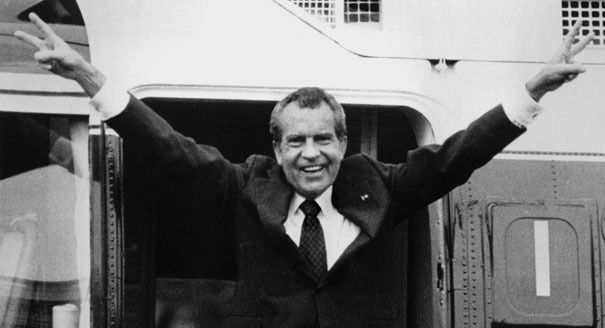
It was the scandal for which all other scandals are now named. In June 1972, a small group of Cuban burglars with high-level connections broke into the headquarters of the Democratic National Committee. Those headquarters were located in the Watergate...
Were the primaries a preview for consequential general election? | Paula Noonan
Paula Noonan
paula-noonan@coloradopolitics.com
Updated 1 week ago
Colorado’s political future will go the way of this election. Historically, the state has not had both chambers controlled by a supermajority. This election may change that. The primaries suggest how the general election may play out. Democrats had solid...
Courageous Colorado bucks Trump’s federal stupidity | Miller Hudson
Miller Hudson
miller-hudson@coloradopolitics.com
Updated 1 week ago
There are several theories regarding the rhythm of American politics. The most frequently cited is the pendulum hypothesis — positing that episodes of liberal dominance are then interrupted by spans of conservative control. Since Ronald Reagan’s presidential election in 1980,...
A historic moment during another major drought | Rachel Gabel
Rachel Gabel
rachel-gabel@coloradopolitics.com
Updated 2 weeks ago
Gustav Sumnick emigrated from Germany, traveled to Oklahoma and decided rather than be a Sooner, he wanted to be a farmer. He moved north to Nebraska and married an Irish immigrant farmer’s daughter. They farmed near Fremont, Nebraska, where the...
PREV
PREVIOUS

Heat, wind and drought conditions spark wildfires across US West | OUT WEST ROUNDUP
Heat, drought spark wildfires Extreme heat and dry, windy conditions fueled several wildfires in the West on June 21, including an uncontained blaze in Utah that forced the evacuation of a small town southwest of Salt Lake City. The Iron Fire in Utah’s Juab County was first detected on June 20 and had blackened 34 […]

Colorado, Utah mourn after 3 firefighters killed in wildfires
Gov. Jared Polis on Sunday mourned the deaths of three firefighters killed while battling a wildfire on the Colorado-Utah border, calling the loss a tragedy for the state and the firefighting community. The firefighters died Saturday while responding to a fire in the Knowles Canyon near the state line, according to initial reports. Two additional […]