

Colorado governor rejects bill to ban individualized pricing, wages based on personal data

Gov. Jared Polis vetoed a Democratic‑backed bill that would have prohibited companies from using personal data to set individualized prices or wages, saying the proposal was overly broad and could unintentionally restrict legitimate consumer discounts.
House Bill 1210 sought to bar companies from using a “price or wage‑setting algorithm,” defined as any technology that uses statistical modeling, data analytics or artificial intelligence to analyze “surveillance data.” The latter is defined as information that is obtained through “observation, inference, or surveillance” of consumers or workers and which is related to personal “characteristics, online behaviors, or biometrics of an individual or group, band, class, or tier to which the individual belongs.“
While the bill included exemptions for loyalty and discount programs, Polis argued that its definition of consumer discounts may not go far enough.
“I find little comfort in the State defining in statute legally acceptable
consumer discounts,” he wrote in his veto letter. “This opens the door to some perfectly acceptable consumer discount, if not appropriately captured by the definitions in this bill, being subject to scrutiny and enforcement
under the Consumer Protection Act.”
“We should be championing, not deterring, opportunities for Coloradans to save money,” he said.
Polis noted that another bill he recently signed into law already addresses some of the issues identified by HB 1210.
In pushing for the bill’s approval, Sen. Iman Jodeh, D‑Aurora, one of the bill’s sponsors, said that as smartphones have become woven into nearly every part of daily life, companies are increasingly mining personal data to decide what to charge people or how much to pay them. She argued that no corporation should be able to increase the price of diapers or medication for a parent simply because data shows she urgently needs it and is likely to pay whatever the price is.
“Coloradans deserve to know they’re paying a fair price and have the opportunity to negotiate for a good wage,” she said. “We all lose when large corporations can set different prices for different people based on sensitive data they’ve collected.”
In his veto letter, Polis noted another legislation in Senate Bill 26-189, saying it would give consumers and workers greater transparency when automated decision‑making tools lead to an unfair price or wage. He added that the bill also makes clear that any use of such technology that violates a person’s rights under the Colorado Anti‑Discrimination Act can result in accountability.
While Polis said he appreciates the intent of HB 1210’s sponsors, he was “troubled” by what called an overly broad approach that could discourage the use of “perfectly acceptable” technology to set prices and wages or to save consumers money.
In a statement, Jodeh described the governor’s veto as “a missed opportunity.”
“Nearly eighty percent of Coloradans support banning the use of their personal data — their browsing history, financial circumstances, or location — to set the prices they pay,” added Mabrey. “This veto ignores the clear will of the vast majority of Coloradans.”
Meanwhile, business organizations celebrated the veto, with the Denver Metro Chamber of Commerce arguing the bill would have “put everyday affordability tools at risk for Colorado families and small businesses.”
“On behalf of the Denver Metro Chamber and the many employers, entrepreneurs, and local businesses we represent, we thank Governor Polis for vetoing HB 26-1210,” said Leslie Oliver, the chamber’s vice president of external affairs. “Colorado consumers are already feeling the pressure of higher everyday costs, and this bill would have made affordability worse — not better — by putting common discounts, promotions and loyalty pricing at legal risk.”
Single-use food serviceware veto
Polis also vetoed Senate Bill 146, which would have prohibited restaurants from providing customers with single-use food serviceware, such as plastic forks, straws, and condiment packets, unless a customer asks for them.

In his veto letter, Polis noted the work his administration has done to strengthen the state’s recycling and waste reduction systems, including the Producer Responsibility Program, which seeks to provide recycling to residents.
“While this bill aims to continue the work our state has done on reducing waste, the state should not play a role in mandating whether single-use serviceware is provided to consumers,” he wrote.
Cities like Denver and Breckenridge already have similar policies in place, Polis noted, arguing that such decisions should be left to localities.
Polis added, “We want to ensure that Colorado is the best place to live and start a business. The restaurant and hospitality industry is an integral part of Colorado. Coloradans go to restaurants to enjoy delicious food, celebrate big events and milestones, and experience the rich cultures all over our state. We want to break down barriers and give restaurants the flexibility they need to continue to grow and thrive.”
“Unfortunately, this bill moves us in the wrong direction,” he added.
Senate Bill 146 was sponsored by Sen. Lisa Cutter, D-Evergreen, and Rep. Meg Froelich, D-Englewood.


Colorado produce not tied to nationwide cyclospora outbreak, agriculture officials say
Marissa Ventrelli
marissa.ventrelli@coloradopolitics.com
Updated 18 hours ago
There is no indication that the recent outbreak of cyclospora, a fecal parasite that has contaminated food and water across nearly every state, can be linked to produce grown in Colorado, according to the state’s Department of Agriculture. “Colorado growers...

Planning Commission rejects resident appeals to stop proposed data center
alex-edwards
alex.edwards@gazette.com
Updated 2 days ago
Editor’s note: This story has been updated to reflect comment from District 11 clarifying that it has not conducted a financial review of Project Taurus. The Colorado Springs Planning Commission rejected appeals Thursday night against a proposed artificial-intelligence data center...

Inspiration for film ‘Safety’ is tourney’s special guest | NONPROFIT REGISTER
Joanne Davidson Special to Colorado Politics
joanne-davidson-special-to-colorado-politics@coloradopolitics.com
Updated 1 day ago
VOLUNTEERS OF AMERICA COLORADO Denver News: Ray McElrathbey, a former Clemson University football player whose story of fighting to keep his brother out of foster care inspired the Disney+ movie “Safety,” will be the special guest when Volunteers of America Colorado hosts...

2026 Legends of Agriculture to be honored at fundraising dinner | NONPROFIT REGISTER
Joanne Davidson
joanne-davidson@coloradopolitics.com
Updated 1 day ago
COLORADO AGRICULTURAL LEADERSHIP FOUNDATION Castle Rock News: Mark and Teri Moore have been selected as the 2026 Legends of Agriculture and will be honored at a Sept. 18 dinner benefiting the Colorado Agricultural Leadership Foundation (CALF). The event begins at 5 p.m. at CALF’s...

Denver approves new downtown pedestrian bridge connecting LoDo, Ball Arena
Deborah Grigsby
deborah.smith@denvergazette.com
Updated 2 days ago
Denver has approved a no-cost intergovernmental agreement with two metropolitan districts for a new pedestrian and bicycle bridge over Speer Boulevard. The Denver City Council resolution, approved Monday, allows Kroenke Sports and Entertainment Metropolitan Districts No. 2 and No. 3...

Colorado housing laws take effect, expanding tools for affordable and workforce housing
Marissa Ventrelli
marissa.ventrelli@coloradopolitics.com
Updated 5 hours ago
New housing laws taking effect on Aug. 12 in Colorado aim to boost affordability, improve homelessness response and ensure safer water systems for mobile‑home communities. The first bill, Senate Bill 001, allows municipalities to sell county- or town-owned property to...

Colorado drivers tap ‘Montana loophole’ to avoid high vehicle registration and tax costs
Marianne Goodland
marianne.goodland@coloradopolitics.com
Updated 3 days ago
Coloradans looking to avoid high vehicle registration fees have turned to what’s known as the “Montana loophole” — a strategy that surfaced recently at a luxury car event near the Cherry Creek Mall. Here’s how it works. A Colorado resident...

Denver mayor promises universal childcare, housing expansion in city address
Deborah Grigsby
deborah.smith@denvergazette.com
Updated 4 days ago
Nearly a year after Denver cut city jobs to close a $250 million budget gap, Mayor Mike Johnston used his third State of the City address to promise universal childcare and 20,000 homes as part of a new redevelopment vision...
Douglas County tables Crowsnest development proposal
Nicholas Fogleman
nicholas.fogleman@denvergazette.com
Updated 4 days ago
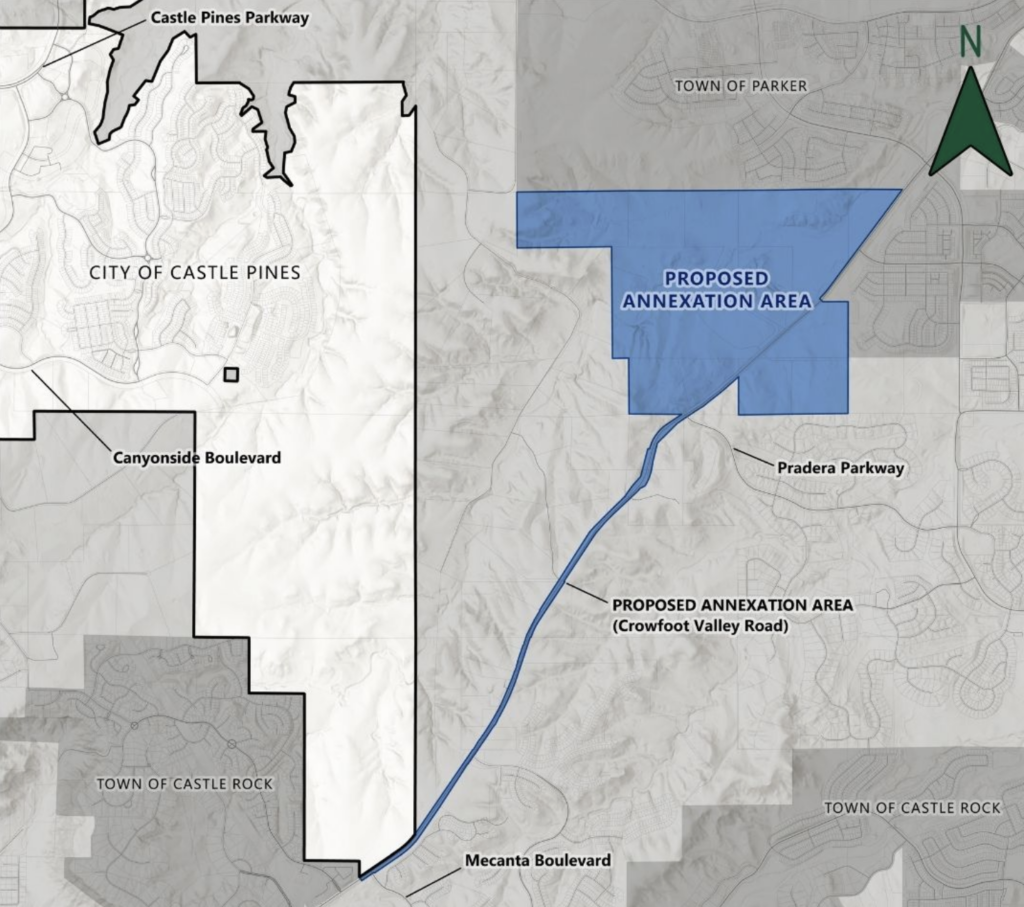
A proposal that could pave the way for future residential development in Douglas County will receive additional review after the Planning Commission voted Monday to table the Crowsnest land-use application following a lengthy public hearing. The application seeks to change...

Survey: Voters in Colorado’s 8th Congressional District back federal AI regulations
Marissa Ventrelli
marissa.ventrelli@coloradopolitics.com
Updated 4 days ago
A majority of both Democrats and Republicans in one of Colorado’s most competitive congressional districts say they support federal regulations on artificial intelligence, according to a recent survey. Members of both major parties residing in the state’s 8th Congressional District...
PREV
PREVIOUS

Trump says Iran agrees to ‘no nuclear,’ and other takeaways from new interview
President Donald Trump claimed Tehran pledged never to obtain a nuclear weapon, among other eye-catching claims, in a Wednesday interview at a crucial junction of the war with Iran. In an interview with the New York Post’s Pod Force One podcast, the president gave updates on negotiations with Iran, its impact on his domestic agenda, […]

Colorado legislature braces for high turnover: 21 Senate seats, 15 House positions
This year’s general election will feature an unusually high number of state Senate races — 21 seats, the most in at least three decades. The surge stems from the number of new senators appointed to fill vacancies during the 2025 and 2026 legislative sessions, which triggered additional seats to go before voters. That group of […]