

180,000 signatures submitted to put Colorado road funding initiative on November ballot
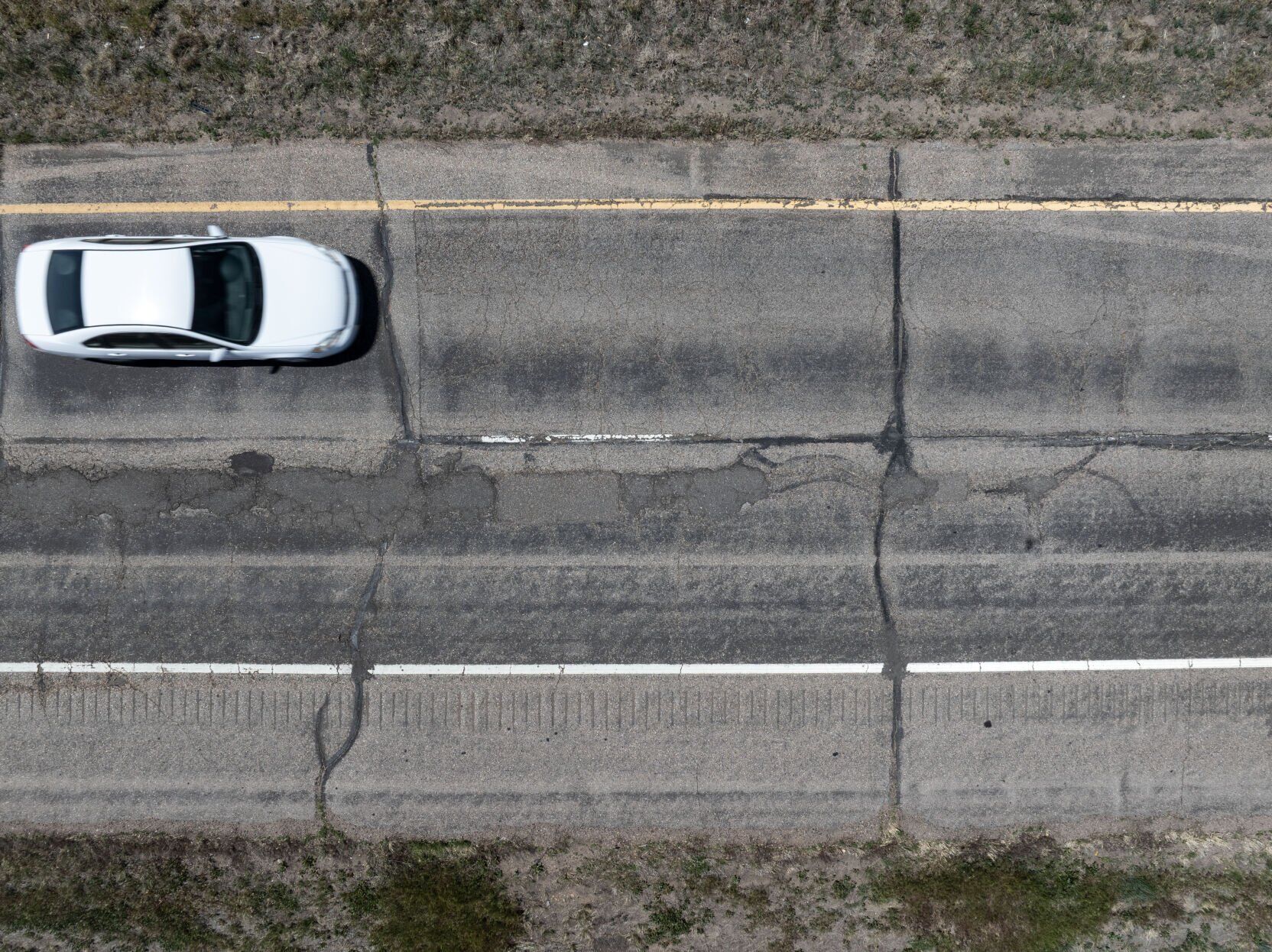
Organizers of a proposal seeking to dedicate hundreds of millions of dollars to road construction and maintenance have submitted signatures to state election officials in their campaign to put the initiative on the ballot this November.
If officials certified the signatures as sufficiently meeting the threshold — organizers need 124,000 to be valid — the battle shifts to persuading voters to embrace or reject the ballot question.
The measure, Initiative No. 175, would require that all transportation-related revenue be used exclusively for building and repairing roads and bridges, improving safety, conducting transportation planning and engineering, and supporting Colorado State Patrol operations.
The battle over road funding has intensified over the last few weeks. At the state Capitol, legislators passed legislation to effectively negate the initiative that supporters say is sorely needed but which critics insist would divert money from other state priorities.
At stake is roughly $700 million in state dollars.
The group behind the ballot measure — Restore Our Roads — said Tuesday that it submitted more than 180,000 signatures to the Secretary of State’s Office for verification.
“This is a huge step forward for all the Coloradans tired of bad roads, endless congestion and politicians who talk about transportation but never deliver a sustainable funding solution,” said Tony Milo, president and CEO of the Colorado Contractors Association, a member of Restore Our Roads.
About 67% of the revenue affected already comes from dollars dedicated to highways under the Highway Users Tax Fund.
Some lawmakers earlier warned that the initiative could jeopardize funding for other essential areas — including health care and education — if it passes.
In response, the Colorado state legislature passed House Bill 1430, which would negate the initiative by reducing excise taxes on fuel, certain registration fees, and road usage fees from 2027 to 2030.
The legislative response also establishes an enterprise, or government-owned business, to hold funds intended for road maintenance. Enterprises are exempt from the Taxpayer’s Bill of Rights revenue limits. It would only apply if voters approved Initiative 175.
In a statement, the initiative’s backers argued that the bill was crafted without input from the road construction industry and would run counter to voters’ will.
“If, in the end, the legislature truly chooses to override the will of the voters, then that will be their decision to explain to the people of Colorado,” Milo said. “Our job is to make sure Coloradans have a clear choice and a real opportunity to be heard.”
House Speaker Pro Tempore Andrew Boesenecker, D-Fort Collins, earlier said the ballot measure’s language does not make it clear that increasing road funding means taking money from elsewhere.
“Nobody would argue that we need to better fund roads in our state,” he told Colorado Politics. “However, if you’re going to propose that the voters are being asked to do this for the price of nothing, of course, the voters are going to say yes.”
“But if you ask, ‘What if it may close the hospital?’ That’s a very big question.”
The bill’s sponsors estimated that Initiative No. 175 would divert more than $700 million in state funds from areas like K-12 and higher education, the Department of Motor Vehicles, and the Peace Officer Standards and Training cash fund. They said it would also divert money away from other critical services, such as health care.
Boesenecker said he and his cosponsors are happy to discuss how to better fund infrastructure improvements in Colorado, but “jeopardizing core services” isn’t the way to do it.
“I would hope we could find a compromise. But absent that, we also need to make sure that folks are protected,” he said.
Backers of HB 1430 additionally argued that the state is making progress on its road conditions, including improvements on more than 2,500 miles of rural roads in the past five years. They said more than 800 lane miles have also been improved through the Colorado Department of Transportation’s 10-Year Plan.
The group behind the initiative suggested that a compromise is possible.
Restore Our Roads said it issued a letter to parties across the state, seeking input on “long-term solutions to the state’s transportation funding challenges.”
The group asked others to provide any feedback by June 15 — the deadline for a “potential compromise” between the coalition and backers of House Bill 1430.
In arguing for Initiative 175, backers said it dedicates just 2% of the state budget to road repairs and maintenance, while not asking the public to raise taxes.
“Nothing in Initiative 175 cuts a single dollar from healthcare or classrooms. All it does is ensure that existing transportation-related revenue is finally used for its intended purpose: fixing and maintaining Colorado’s roads,” the group said in a statement.
The group also claimed that roads have been “at the bottom” of legislators’ priority list, even as Colorado residents fork out $3,060 per vehicle in metro areas for repairs and fuel costs “related to poor road conditions and congestion delays.”
These costs, the group said, affect not just daily motorists but also school transportation, emergency response times and business operations.
Additionally, the group said Colorado’s deteriorating infrastructure was likely a contributing factor in about a third of all fatal traffic crashes from 2013 to 2023, while state leaders “have either sat on their hands or proactively made things worse, raiding transportation dollars for other budgetary needs.”
Just this year, legislators took “another $100 million” from transportation, even as the funding is already $350 million short each year of what the Colorado Department of Transportation needs to maintain existing infrastructure. Of that $350 million, some $200 million is needed for pavement maintenance alone, the group said.
“Anyone who drives our roads knows how bad they are. Potholes and crumbling pavement are costing me and other drivers across the state time and money,” said Michael A. Hancock, a proponent of Initiative 175, in a statement.


What courageous citizenship really looks like | Vince Bzdek
Vince Bzdek
vince.bzdek@gazette.com
Updated 2 days ago
By Vince Bzdek What exactly is courage? Ernest Hemingway famously called it grace under pressure. Mark Twain wrote that “courage is resistance to fear, mastery of fear — not absence of fear.” C.S. Lewis refined that even more: “Courage is...
Colorado measure adding ID checks to mail-in voting qualifies for ballot
Marissa Ventrelli
marissa.ventrelli@coloradopolitics.com
Updated 2 days ago
A ballot initiative that would require voters to include additional information on mail-in ballots has qualified for the November election, according to the Secretary of State’s Office. Backed by El Paso County Treasurer Chuck Broerman and former Deputy Secretary of...
Colorado election website error exposes personal data of confidential voters
Marissa Ventrelli
marissa.ventrelli@coloradopolitics.com
Updated 2 days ago
A system update accidentally lifted protections on confidential records in Colorado, exposing dozens of voters’ personal information, according to the Secretary of State’s Office. The limit that normally blocks access to confidential voter profiles was inadvertently disabled during an update...
PUC adds weekly comment after killing private talks
Scott Weiser
scott.weiser@gazette.com
Updated 2 days ago
The Colorado Public Utilities Commission will take public comment at the start of every commissioner’s weekly meeting beginning Sept. 9 as part of its new transparency mandate, the commission announced, expanding a slot previously limited to the second Wednesday of...

Aurora student journalist cleared of disciplinary charges after ignoring ‘gag order’
Kyla Pearce
kyla.pearce@gazette.com
Updated 2 days ago
A Community College of Aurora student who accused the college of putting an “unconstitutional gag order” on his student-run publication was cleared of disciplinary charges against him. CCA student Andrew Green tried to register his independent student publication, called “FoxTalk,”...
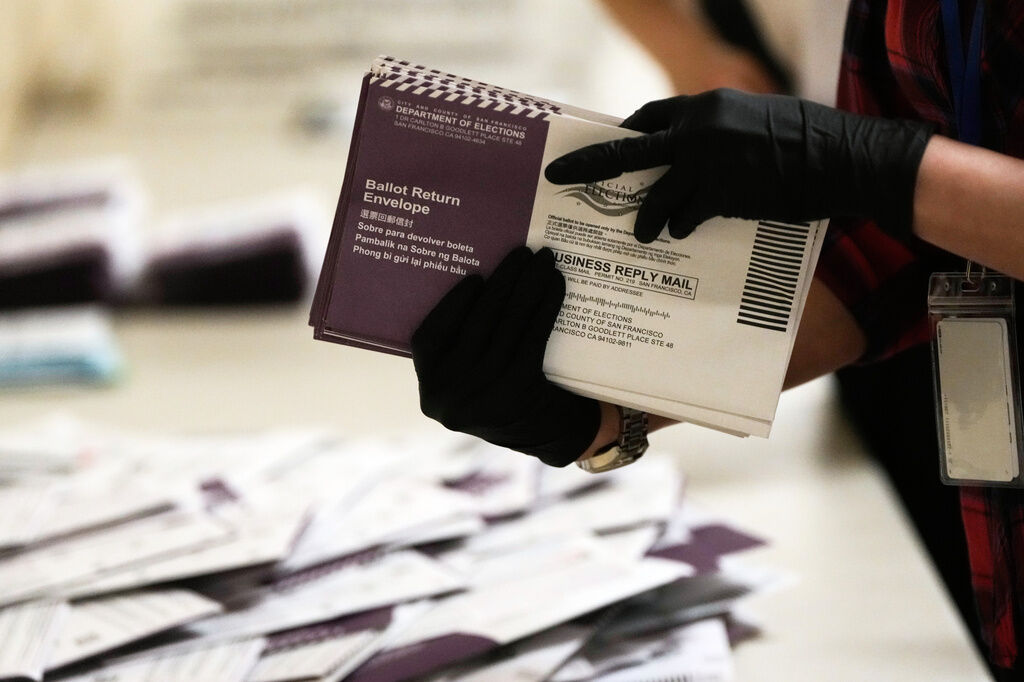
Colorado leaders cheer court decision to block Trump’s mail ballot order in a ruling that’s likely to be swiftly appealed
Thelma Grimes
thelma.grimes@coloradopolitics.com
Updated 2 days ago
A federal judge on Thursday halted — at least for now — attempts to implement President Donald Trump’s executive order that seeks to restrict the mailing of ballots to American citizens on an eligible voters list. The move stalled the...
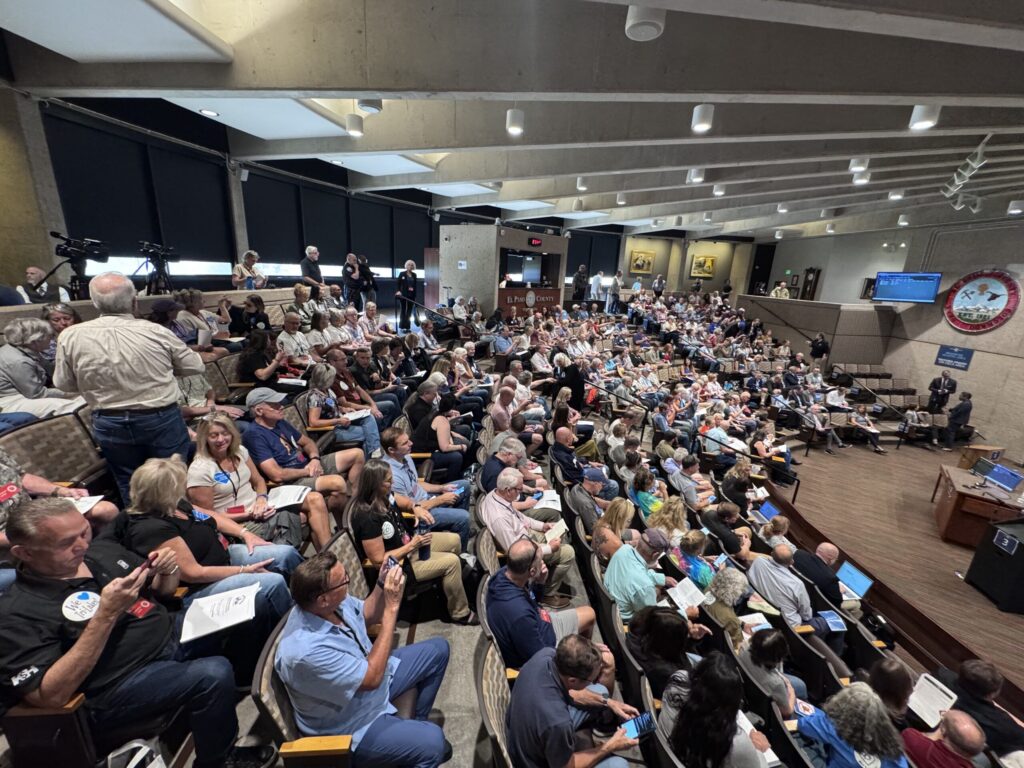
El Paso County upholds Buc-ee’s zoning appeal, clearing way for administrative approval
Savannah Eller
savannah-eller@coloradopolitics.com
Updated 3 days ago
A packed, daylong meeting on Thursday resulted in a win for the Texas travel center chain Buc-ee’s, with El Paso County commissioners voting 4-1 to approve the developer’s zoning appeal. “I think the burden of proof has been met here,”...
Healthcare freefall: UNC’s new medical school aims to tackle Colorado’s rural doctor shortage
Hap Fry, Special to The Gazette
hap-fry@gazette.com
Updated 1 day ago
Editor’s Note: Colorado’s healthcare system is entering a period of accelerating instability — a “tsunami,” as multiple leaders describe it — driven by collapsing hospital finances, shrinking Medicaid reimbursements, disappearing services and a political fight over who is responsible for...

Healthcare freefall: Economic ripple effects grow as Colorado hospitals face financial strain
Thelma Grimes
thelma.grimes@coloradopolitics.com
Updated 1 day ago
Colorado’s hospital systems aren’t just a network of clinics and emergency rooms — they are also one of the state’s largest economic engines. So some 10 hospitals identified at any given time as vulnerable to closure, the alarm extends far...
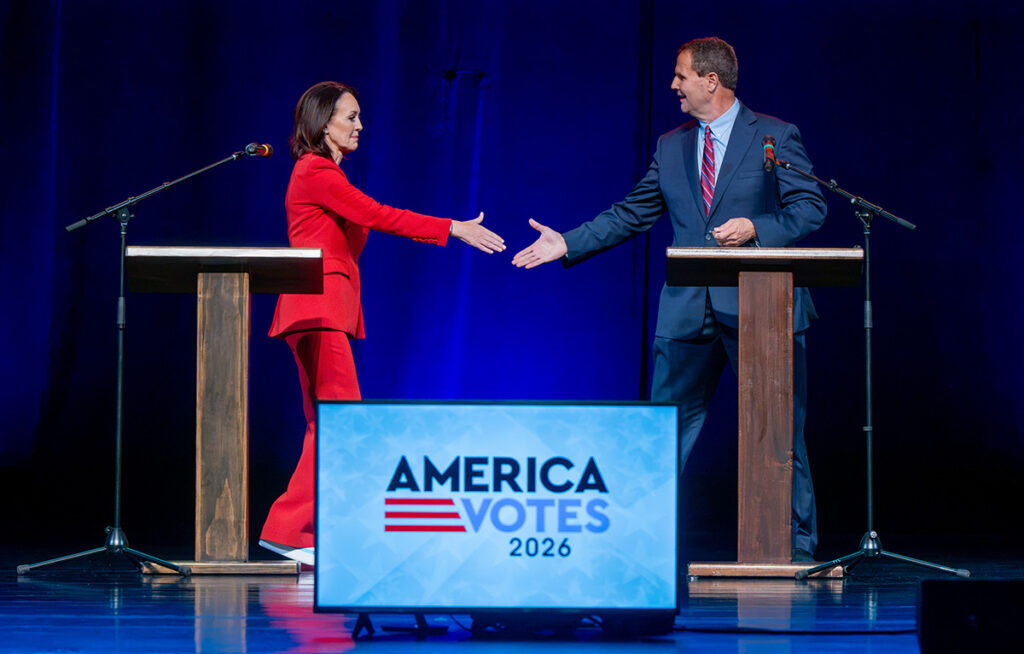
5th Congressional debate watchers hope for civility, truthfulness
Cleo Westin
cleo-westin@coloradopolitics.com
Updated 3 days ago
A few hundred people watched Rep. Jeff Crank and veteran Jessica Killin square off in a debate for the 5th Congressional District at the Pikes Peak Center for the Performing Arts on Thursday evening. Many of them sported campaign insignia...
PREV
PREVIOUS

Michael Fields reviews Colorado's 2026 legislative session | The OpEdge Podcast
Michael Fields, executive director of Advance Colorado, joins OpEdge host and investigative columnist Jimmy Sengenberger to assess the good, the bad and the ugly of the Colorado General Assembly’s 2026 legislative session. Reflecting on the 120 bills passed in 120 days, Fields not only spells out what the budget, transportation and crime ramifications mean for […]
Polis signs RTD overhaul bill aimed at rebuilding transit ridership
Gov. Jared Polis on Tuesday approved an overhaul of the Regional Transportation District, signing legislation that sponsors hope would reverse stagnant ridership by, among other things, reshaping the agency’s leadership. The bill’s sponsors also argued that the changes would help restore public trust in metro Denver’s transit system, which operates bus and light‑rail service across […]