

Tapped: As fire risk climbs, Colorado faces threat to drinking water
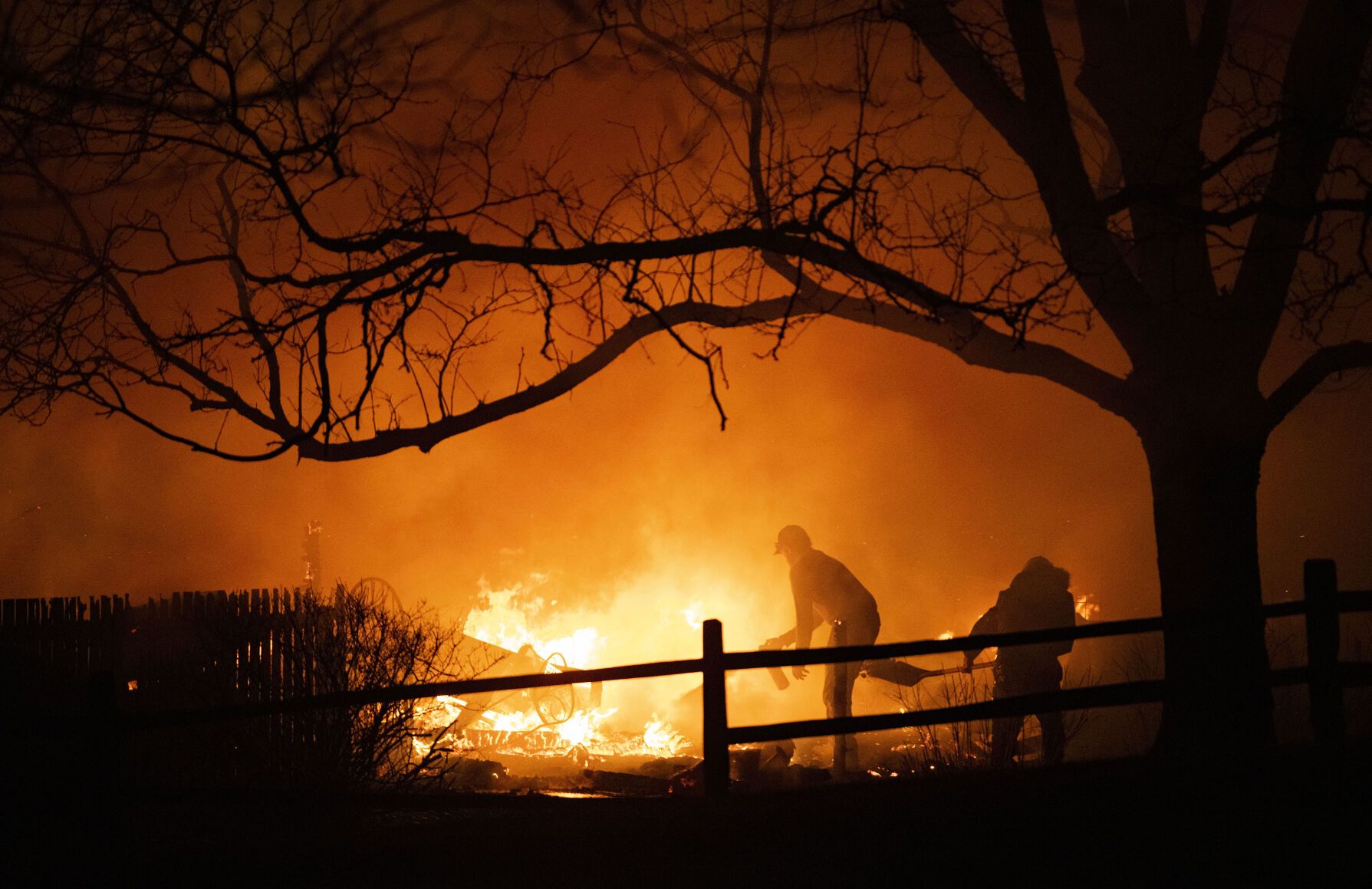

Specialists surveying Colorado’s forests know this year will be challenging.
Snow melted too quickly, strong winds dried out the trees, and the early signs of danger are already settling across the landscape. Wildfire season is no longer confined to a few months — it’s a year‑round reality, they said.
And this year, the risk is even higher.
Snowpack peaked at just 58% of normal — and weeks earlier than usual. An unusually warm March accelerated the melt, and parched soils absorbed much of the runoff before it reached streams and reservoirs, leaving less water to flow downstream.
While much of the public conversation focuses on drought, dry fuels, and wildfire danger, another worry runs deeper — what happens to the state’s water supply if a major fire strikes?
When water turns into ‘chocolate milk‘
With every spark that sends smoke into the sky, experts worry it could grow into something far more destructive — a wildfire that threatens not only forests, homes, and infrastructure, but the drinking water millions depend on.
Every major fire carries the potential for a long‑term impact on Colorado’s water.
For the specialists who monitor these forests, that connection is unmistakable. Protecting water means protecting the land long before flames appear, they said.
A dry year like this one only heightens the urgency because Colorado’s future — its taps, rivers, and recreation economy — is tied to what happens in the mountains.
When a large fire burns, the flames strip hillsides of vegetation, said Weston Toll, a watershed program specialist for the Colorado Forest Service. Once rainstorms arrive, there’s nothing left to hold the soil in place.
“When we have a storm event, all the sediment that is now exposed typically runs downhill and … will fill up reservoirs, which is bad from a water quality and quantity standpoint,” Toll said.
A 2023 report by the U.S. Geological Survey echoes that warning.
The agency found that wildfires pose a significant risk to water supplies by triggering severe flooding, erosion, and the delivery of sediment, nutrients, and metals into rivers, lakes, and reservoirs.
According to the USGS, these changes can degrade water quality, reduce reservoir storage, harm stream habitats, and drive up treatment costs for drinking‑water providers.
The effects can vary widely — from barely noticeable shifts to 100‑fold increases in sediment, nutrients, and other contaminants. In the worst cases, experts said the water can resemble “chocolate milk.”
The damage is also not temporary.
According to a 2025 report by the Cooperative Institute for Research in Environmental Sciences at the University of Colorado Boulder, wildfire damage can threaten water quality for years. The report examined water quality in more than 500 watersheds across the Western U.S., serving as a large-scale assessment of post-wildfire water quality.
“The results showed contaminants like organic carbon, phosphorus, nitrogen, and sediment can degrade water quality for up to eight years after a fire,” the report said.
Toll explained that when this happens, sediment not only reduces reservoir capacity but also carries both natural and human‑made contaminants into drinking‑water systems.
And in a year when every drop of water matters across the Front Range and statewide, Toll said he is working closely with water providers to take precautions.
Adaptive management
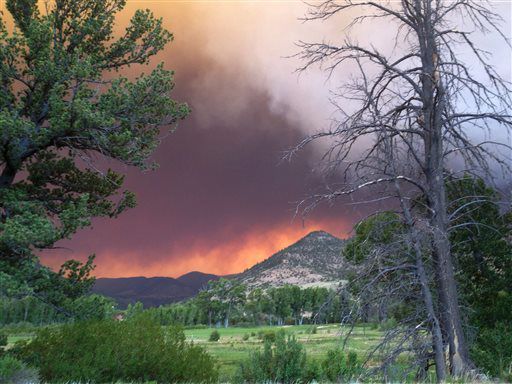
This year’s thin snowpack, low water levels, and dry landscapes have heightened wildfire worries.
Toll said Colorado’s forest managers have spent decades preparing for difficult conditions like these — and for the even harsher ones expected in the future.
“There’s all kinds of research being done about what future conditions might be, and what we can do to manage the forests in a responsible way to meet that challenge,” he said.
Even so, the immediate risk is hard to ignore, he said.
“With the soil moisture low, with snow coming off early … there certainly is a bigger risk of potential bad fire season,” Toll said.
Dry winters have preceded many of Colorado’s worst fire years — including 2002, 2012, and 2021 — and warmer temperatures and more erratic precipitation mean widening the window of danger.
Colorado no longer talks about a “fire season,” Toll said. “Now, we refer to it as a fire year, because we do really have risk year-round.”
The consequences can be devastating.
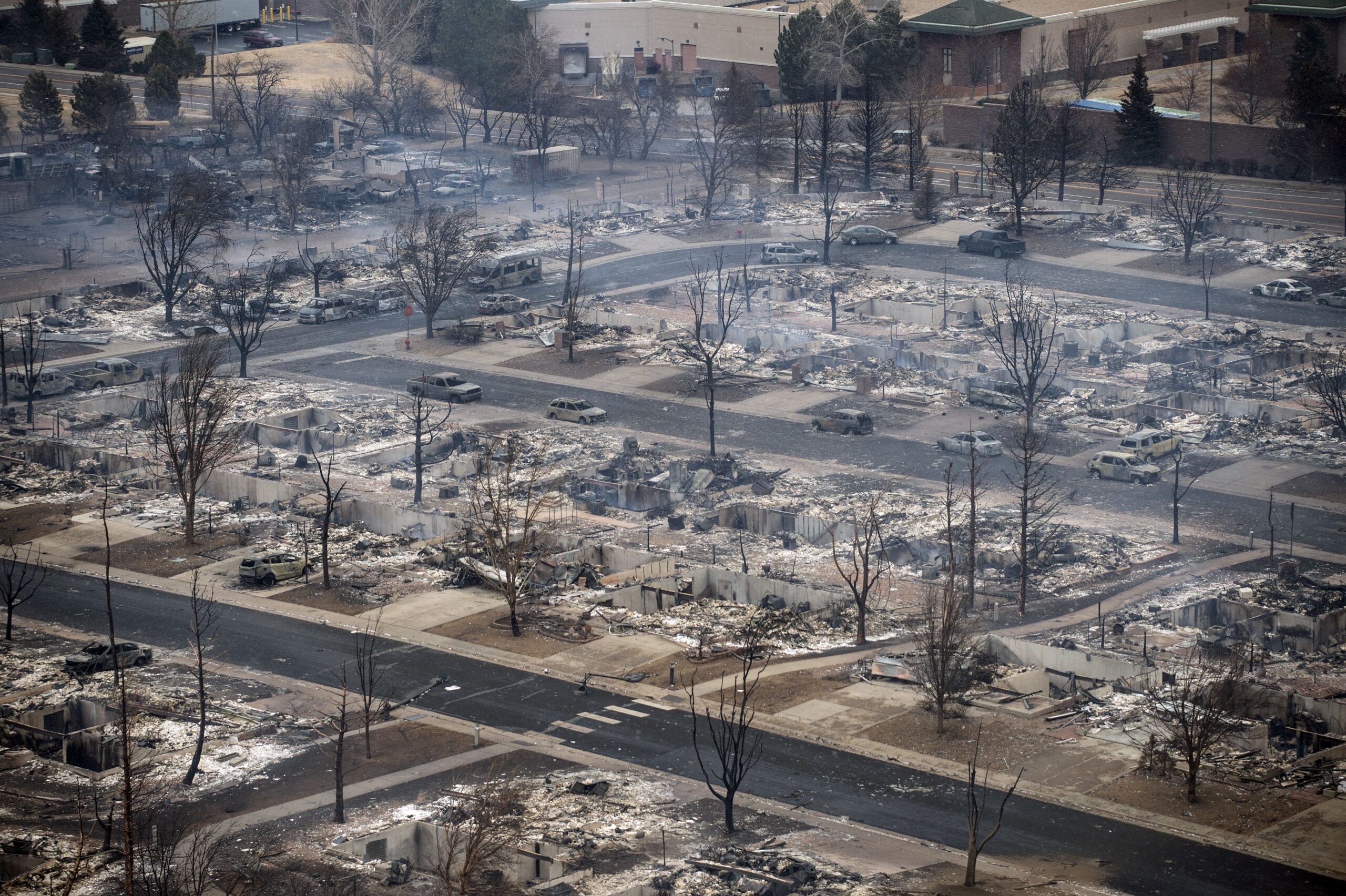
The 2021 Marshall fire, the costliest in Colorado’s history, tore through more than 10,000 homes and businesses and killed two people.
According to the American Water Works Association, the fire also damaged six public drinking-water systems, resulting in power outages, structural failures, depressurization, and backup system failures.
While land managers work to reduce fuels and slow the spread of fires once they ignite, Toll said the public plays a critical role in preventing disasters — both on the land and in the water.
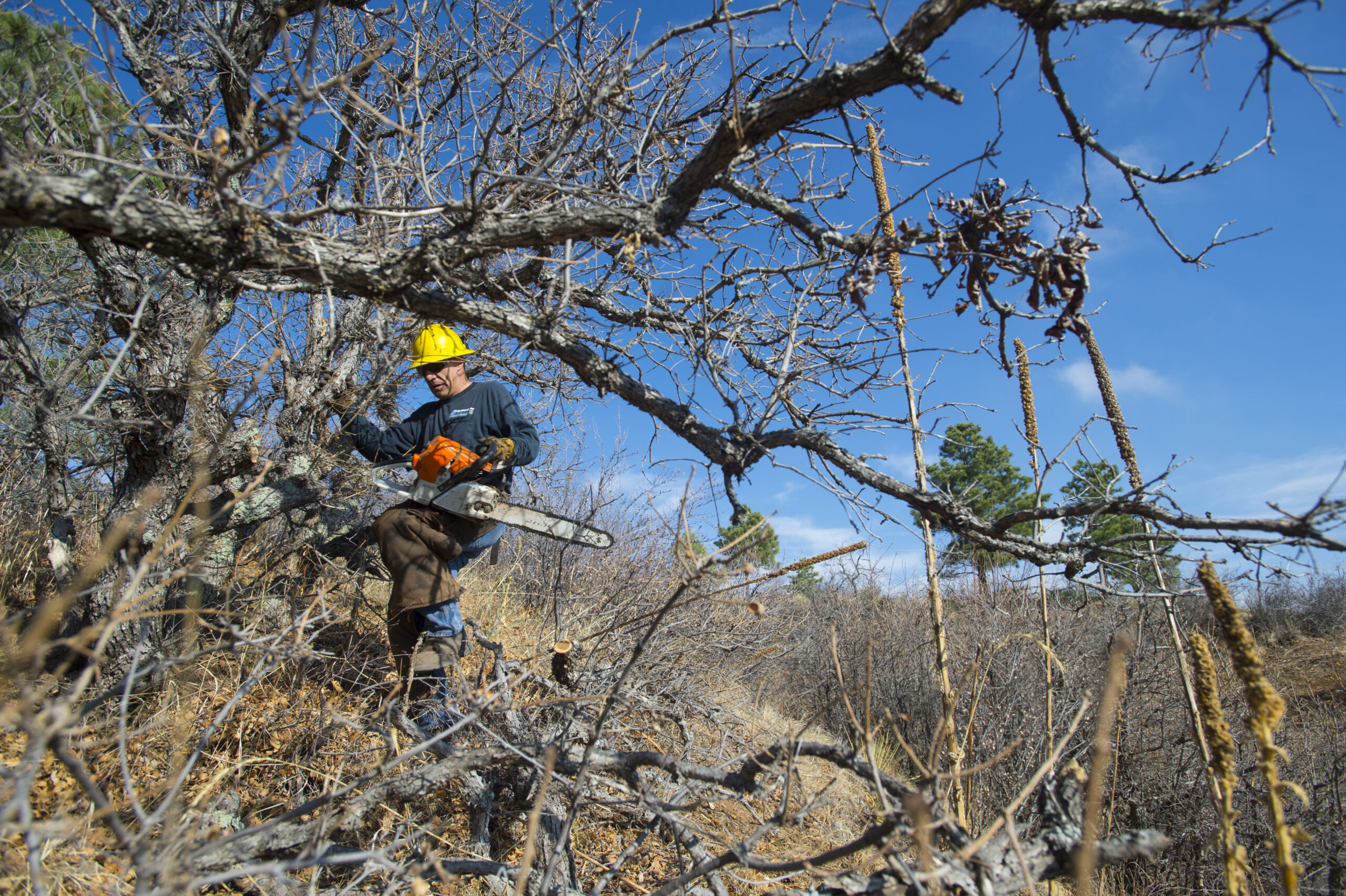
Human activity remains one of the leading causes of wildfire ignitions, making awareness especially important in dry years.
“One of our biggest sources of ignition in this state is people,” Toll said, referring to cases where individuals leave their campfire or inadvertently start a fire.
County-level fire bans, responsible recreation, and community education all help reduce that risk, he said.
Not all ignitions can be prevented.
“Lightning, you can’t do anything about that — that’s going to start fires,” he said, noting that natural ignitions add to the challenge of managing wildfire risk in a dry year.
To combat those unavoidable fires, Toll said forest treatments, such as mechanical thinning, make a major difference. These efforts reduce fuel loads, improve firefighter safety, and enhance suppression outcomes.
“When you remove a lot of that fuel, it makes it safer and more accessible for firefighters to get in and try to suppress the fire too,” he said.
Numerous studies have pointed to the efficacy of forest thinning in managing fires and limiting the damage when it ignites. One study that looked at more than 200 forest treatments between 2015 and 2023 showed that, when compared to areas that were left untreated, forest thinning “reduced average fire severity by 32% and the prevalence of high-severity fire by 88%.”
Toll said fire crews also rely on maps showing where treatments have been completed: “When a team comes in to manage a fire, they’re like, ‘Oh, we know these areas have been treated. We can put people in there and have a greater level of success.’”
Read more from the Tapped series here:
Tapped: As fire risk climbs, Colorado faces threat to drinking water
Tapped: Denver residents face hotter, costlier summer under new drought rules
Tapped: Is water a problem for data centers in Colorado?
Tapped: Aurora cracks down on water use as reservoirs fall, runoff shrinks
Tapped: Douglas County looks to diversify water supply as population grows
Tapped: Colorado River overallocation collides with record drought conditions
Tapped: Golden tightens water rules as Clear Creek snowpack falters
Tapped: As snowpack levels shrink, Jefferson County cities take divergent paths on water
Tapped: Colorado River overallocation collides with record drought conditions


Healthcare Freefall: Longer drives, fewer options for maternity care in Colorado
Thelma Grimes
thelma.grimes@coloradopolitics.com
Updated 21 hours ago
Editor’s Note: Colorado’s healthcare system is entering a period of accelerating instability — a “tsunami,” as multiple leaders describe it — driven by collapsing hospital finances, shrinking Medicaid reimbursements, disappearing services and a political fight over who is responsible for...
Polis requests federal disaster declaration for Colorado wildfires and floods
9News
9news@coloradopolitics.com
Updated 15 hours ago
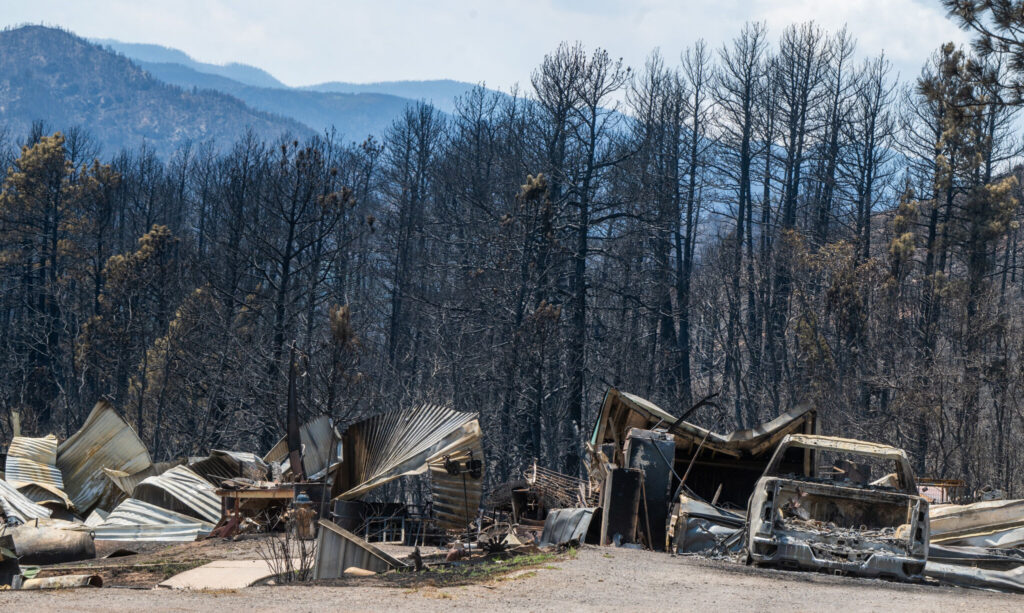
On Sunday, Gov. Jared Polis officially requested a Major Disaster Declaration from President Donald Trump and the Federal Emergency Management Agency to support recovery from two wildfires and the subsequent flooding and debris flows on both burn scars. Polis requested a declaration...

Operation Foster helps ensure troops can return home to their pets
Mary Shinn
mary-shinn@coloradopolitics.com
Updated 22 hours ago
As more troops have been sent overseas, more pets are in need of temporary care while they await their owner’s return home. Operation Foster, a nationwide nonprofit, helps provide some of that care by connecting service members with volunteers willing...
Operation Foster helps ensure troops can return home to their pets
Mary Shinn
mary-shinn@coloradopolitics.com
Updated 22 hours ago
As more troops have been sent overseas, more pets are in need of temporary care while they await their owner’s return home. Operation Foster, a nationwide nonprofit, helps provide some of that care by connecting service members with volunteers willing...
Castle Pines to hear annexation policy following moratorium on new requests
Nicholas Fogleman
nicholas.fogleman@denvergazette.com
Updated 22 hours ago
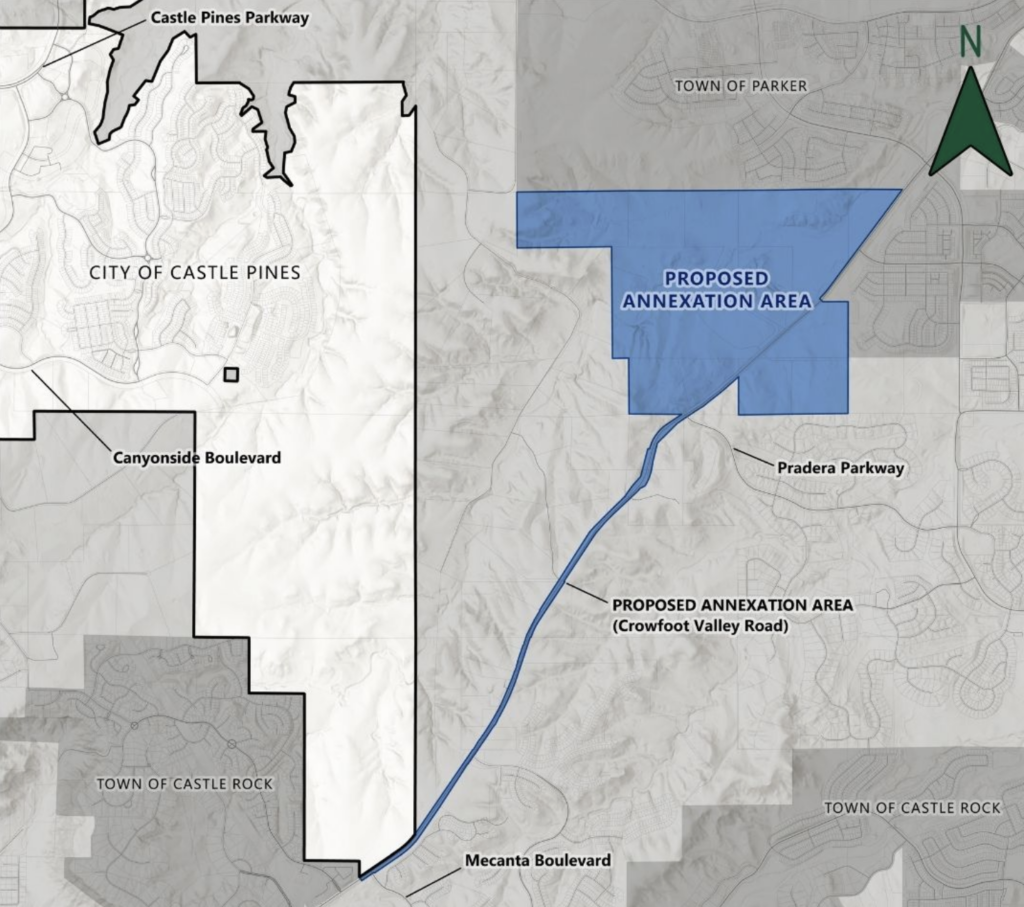
The Castle Pines City Council is set to consider a proposed annexation policy Tuesday that would establish the city’s first formal framework for reviewing future annexation requests. The policy emerged after the Crowsnest annexation proposal prompted significant public debate and...
Aurora lawmakers to discuss first of new data center regulations
Kyla Pearce
kyla.pearce@gazette.com
Updated 22 hours ago
Aurora’s lawmakers will discuss the specifics of data center regulations Monday night, specifically focusing on an evaporative cooling ban and zoning changes. At the last council meeting, council members approved a resolution directing city management to update data center development...

Why local police departments are left to grapple with electric vehicle trends
Nicholas Fogleman
nicholas.fogleman@denvergazette.com
Updated 22 hours ago
Littleton officials are weighing new regulations for electric bicycles as cities and counties across the metro Denver area increasingly grapple with safety concerns involving e-bikes, electric motorcycles and other motorized vehicles that often fall into gray areas of Colorado law....

Colorado schools reopen with measles vaccination rates below protective threshold
Nico Brambila
nico.brambila@denvergazette.com
Updated 22 hours ago
Colorado is entering the new school year without active measles transmission, but health officials remain concerned as kindergarten MMR coverage sits at just 87.8% and most counties fall below the 95% threshold considered protective against outbreaks. “These declining vaccination rates,...
Jeffco Public Schools board votes to put $133M mill levy override before voters
Matt Kyle
matt.kyle@denvergazette.com
Updated 22 hours ago
Voters in Jefferson County will decide this November whether or not to approve a $133 million mill-levy override that Jeffco Public Schools officials say is needed to cover funding shortfalls in the district. The Jeffco Public Schools Board of Education...
Democratic candidate in Colorado’s 4th CD urges long-term water planning
Marianne Goodland
marianne.goodland@coloradopolitics.com
Updated 2 days ago
The Democrat hoping to become the next representative of Colorado’s 4th Congressional District on Thursday made her case on the final day of Colorado Water Congress in Steamboat Springs. Eileen Laubacher, who spent 34 years in the U.S. Navy and...
PREV
PREVIOUS

Memorial Day at Fort Logan honors sacrifice of fallen troops
Hundreds gathered Monday at Fort Logan National Cemetery to honor fallen service members during a Memorial Day ceremony, where speakers emphasized the sacrifice and memory of military personnel and their families. The ceremony took place as the nation approaches the 250th anniversary of the Declaration of Independence, a milestone speakers said underscores generations of service […]

Colorado business groups host gubernatorial forum Thursday
Several business groups are hosting a forum among gubernatorial candidates on Thursday morning. The candidates attending are Democratic Attorney General Phil Weiser and U.S. Sen. Michael Bennet, and Republicans Sen. Barb Kirkmeyer and Victor Marx. The forum will take place from 7 to 9:30 a.m. at the Infinity Park Event Center in Glendale. The organizers […]