

RTD lays off two dozen managers in operations ‘realignment’
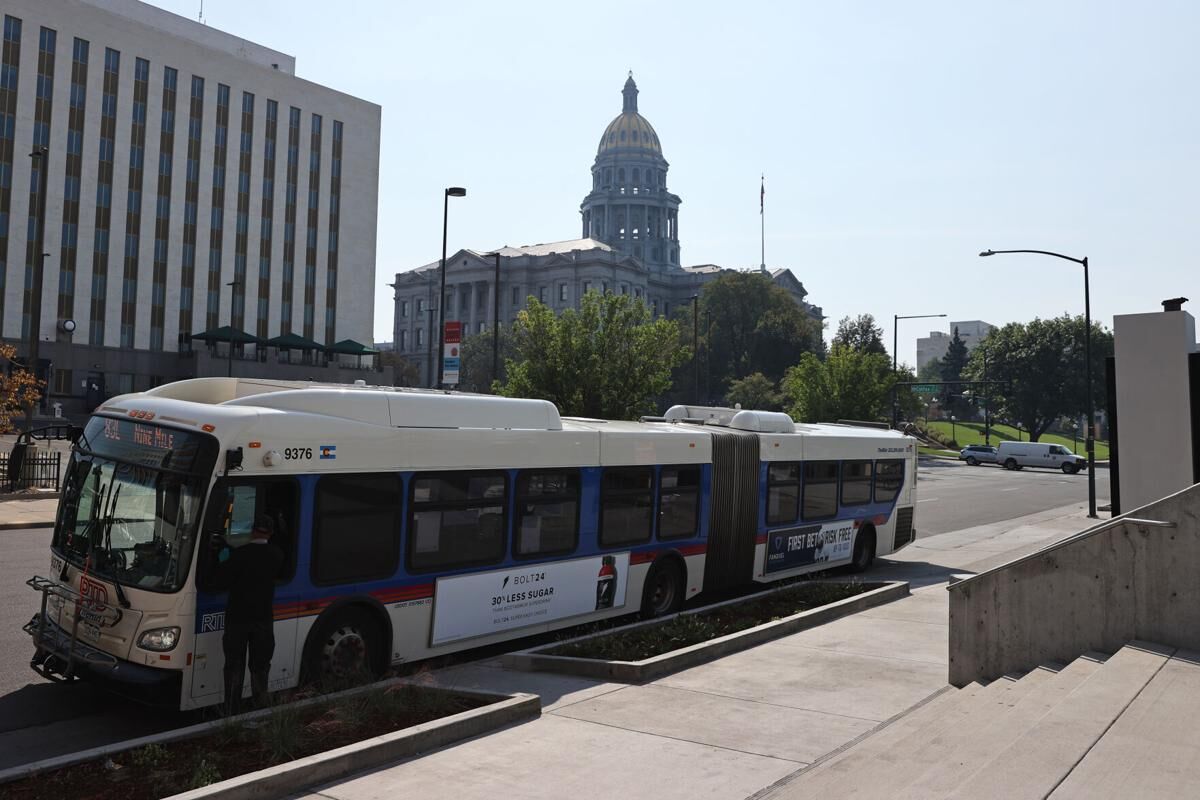
More than two dozen managers at the Regional Transportation District learned in March that their jobs would be eliminated, with their last day of work set for July 2.
That’s according to documents provided to The Denver Gazette by an RTD employee who asked to remain anonymous because they are not authorized to speak to the media.
The layoffs are part of a broader operations realignment that RTD officials have described as years in the making. The first formal notice to staff came in a Feb. 9 email to operations employees.
“As RTD works to develop its Agency Optimization and Sustainability Plan, department heads have been asked to conduct a strategic assessment of their existing organizational structure. The assessment exercise is underway in the operations department, with goals of reducing operating expenses and optimizing efficiencies,” the Feb. 9 memo from Chief Operations Officer Patrick Preusser stated. “Additionally, there hasn’t been an overarching organizational realignment or restructuring in Operations since light rail began service in 1994.”
A memo summarizing the March 18 meetings told affected employees: “Your positions have been eliminated with this realignment,” and that “your last working day with RTD will be July 2, 2026.” Staff were told they could apply for other open positions, but received no guarantee of continued employment.
The Denver Gazette asked RTD exactly how many employees were laid off and what the total employee count is now.
“RTD’s realignment efforts remain underway across the entire agency, including the internal posting and hiring of positions,” spokesperson Pauline Haberman said. “At this point, final numbers are not yet available.”
“RTD continues to proactively explore cost-savings options to address the reality that, while year-over-year revenues continue to increase, operating costs are increasing at a much faster rate,” Haberman added, saying that the restructuring is “a critical step toward scalability and resilience.”
In response to questions from The Denver Gazette, the agency said that the layoffs stem from a report completed in 2024 by the Segal Group and are separate from efforts to close the agency’s $200 million-plus structural budget deficit.
“The departmental realignments were announced earlier this year and stem from an organizational design and workplace assessment that was completed in 2024,” Marta Sipeki, RTD communications specialist, wrote in an April 9 email to The Denver Gazette. “Further, the departmental realignments are separate and distinct from efforts to address the agency’s $200+ million near-term structural budget deficit.”
General Manager and CEO Debra A. Johnson announced April 8 that she will not seek a contract extension beyond May 8, 2027. Sipeki said Johnson’s decision is unrelated to the realignments.
The changes mark the latest chapter in decades of management struggles at RTD, which began as a bus-only agency created by the state in 1969 with an appointed 21-member board. Voters approved a 1980 ballot measure shifting to a 15-member elected board to increase accountability — a structure that remains in place today.
While RTD management is pursuing those internal operational fixes, state lawmakers are advancing a separate bill that would fundamentally overhaul the agency’s governing board.
Senate Bill 26-150, which has passed the Senate Transportation Committee and is headed to the Senate floor, would reduce the elected board from 15 to nine members, with five elected directors and four appointed by the governor.
Former RTD board chairman Jon Caldara, who served in the late 1990s and is president of the Independence Institute, a Denver-based free-market think tank, called current legislative efforts to shrink the elected board a broader pattern of centralized control.
“The idea of reducing the elected seats by two-thirds and then planting crony insider loyalists onto the board is one of the most bald-faced attacks on democracy I have ever seen,” Caldara said. “This is about controlling RTD… to build out rail systems.”
Caldara noted that the elected board was created by voter initiative in 1980 to replace the original appointed structure.

The 2004 FasTracks ballot measure raised the sales tax to 1% to fund $4.7 billion in rail expansion, according to RTD planning documents. RTD spent billions on light-rail and commuter-rail lines, almost all oriented toward downtown Denver, even though less than 10% of regional jobs are now located downtown, said Randall O’Toole, director of the Transportation Policy Center at the Independence Institute.
Post-COVID shifts made the problem worse. Transit’s share of work commutes in the Denver metro area had been stuck at about 4% for decades, according to American Community Survey data, but dropped to 2.1% post-COVID.
Between 2019 and 2024, RTD’s ridership fell sharply while operating expenses rose 39% and administrative overhead jumped 65%, O’Toole said, even as the agency cut service hours and miles by roughly 24% to 30%.
The Segal Group’s Organizational Design and Workplace Assessment, completed in June 2024, documented longstanding issues with silos, overlapping functions, and management layers created more by personality conflicts than operational needs.
At the same time, the report highlighted several strengths the agency could build upon, including employees’ pride in RTD’s mission, strong co-worker relationships within teams, valued career paths, competitive pay and benefits, and the flexibility of hybrid and four-ten schedules for eligible staff.
Transit engineer and advocate Richard Bamber said the agency is confronting a $200 million-plus deficit that will require bold leadership and new revenue sources if RTD is to become the transit provider the region needs.
“RTD desperately needs to find ways to increase its revenue if it is ever to become the transit provider that we all want it to be,” Bamber said.
Bamber credited Johnson with arresting some internal dysfunction, improving the senior management team, and taking steps such as eliminating mandatory overtime.
He said her decision to step down creates an opportunity for a “complete reset of leadership at the top” and fresh thinking to guide the agency through difficult years ahead.
Bamber expressed optimism that a shift toward all-day service, better multimodal connections, and leisure/flexible travel could help drive recovery. He advocated for improved bus links, such as express routes between suburbs like Littleton and Park Meadows, to create a true network rather than isolated downtown-focused lines.
“Separately, to address a $250 million budget deficit, RTD is also reducing vacant positions, eliminating limited-duration and contract roles, limiting expenses, and modifying contracts,” said Haberman in the statement. “At the same time, RTD is also exploring several revenue growth opportunities aimed at ensuring the agency’s long-term fiscal sustainability.”
Denver Gazette City Editor Dennis Huspeni contributed to this report.

Federal biotech commission examines Colorado’s role in critical minerals production
Scott Weiser
scott.weiser@gazette.com
Updated 2 days ago
China’s dominance over critical mineral supplies has left U.S. manufacturers vulnerable. Colorado’s biotech and research community is working to ease that dependence. Leaders from the National Security Commission on Emerging Biotechnology met last week at the Colorado School of Mines...

Douglas County schools to consolidate administrative offices into $29M headquarters to cut costs
Nicholas Fogleman
nicholas.fogleman@denvergazette.com
Updated 2 days ago
The Douglas County School Board is moving forward with a $29 million plan to consolidate district administrative operations into a new headquarters. It’s part of an effort to reduce annual costs as the district faces ongoing budget pressures. In June,...

Veo scooter clutter, sidewalk riders frustrate Denverites
Deborah Grigsby
deborah.smith@denvergazette.com
Updated 2 days ago
Denver resident Mike Miller was on a downtown sidewalk recently when a Veo scooter rider traveling at full speed passed him as the scooter blasted a “do not ride on sidewalks” warning. In a letter to Veo Policy and Partnerships...

Colorado’s 72-hour social media warrant law takes effect Aug. 12
Marissa Ventrelli
marissa.ventrelli@coloradopolitics.com
Updated 3 days ago
A law requiring social media platforms to respond to search warrants within 72 hours goes into effect on Aug. 12. Senate Bill 011 also requires platforms to create a staffed hotline for Colorado law enforcement agencies to contact regarding pending...
El Paso County rejects multi-family zoning request near Monument Academy
Savannah Eller
savannah-eller@coloradopolitics.com
Updated 4 days ago
The El Paso County Board of Commissioners narrowly rejected a developer’s bid to convert land from low- to high-density residential zoning. The request, made by MA Infrastructure, LLC, would have allowed 12 units per acre on half of a 14-acre...

Denver City Council sends Xcel franchise deal to voters
Deborah Grigsby
deborah.smith@denvergazette.com
Updated 5 days ago
This November, Denver voters will decide whether to renew the city’s longstanding franchise agreement with Xcel Energy. Members of the Denver City Council approved on Monday sending a proposed 20-year franchise agreement with Xcel that would deliver more than $180...

Chamber names its Top 25 Most Powerful Women in Business | NONPROFIT REGISTER
Joanne Davidson Special to Colorado Politics
joanne-davidson-special-to-colorado-politics@coloradopolitics.com
Updated 18 hours ago
COLORADO WOMEN’S CHAMBER OF COMMERCE Denver News: Marielena DeSanctis, chancellor of the Colorado Community College System; Terri Jackson, executive director and co-founder of the African American Trade Association and Emily Trujillo, chief operating officer at HCA HealthONE Centennial, are among the 2026 Top 25 Most Powerful Women...

Colorado produce not tied to nationwide cyclospora outbreak, agriculture officials say
Marissa Ventrelli
marissa.ventrelli@coloradopolitics.com
Updated 1 week ago
There is no indication that the recent outbreak of cyclospora, a fecal parasite that has contaminated food and water across nearly every state, can be linked to produce grown in Colorado, according to the state’s Department of Agriculture. “Colorado growers...

Planning Commission rejects resident appeals to stop proposed data center
alex-edwards
alex.edwards@gazette.com
Updated 6 days ago
Editor’s note: This story has been updated to reflect comment from District 11 clarifying that it has not conducted a financial review of Project Taurus. The Colorado Springs Planning Commission rejected appeals Thursday night against a proposed artificial-intelligence data center...

Inspiration for film ‘Safety’ is tourney’s special guest | NONPROFIT REGISTER
Joanne Davidson Special to Colorado Politics
joanne-davidson-special-to-colorado-politics@coloradopolitics.com
Updated 1 week ago
VOLUNTEERS OF AMERICA COLORADO Denver News: Ray McElrathbey, a former Clemson University football player whose story of fighting to keep his brother out of foster care inspired the Disney+ movie “Safety,” will be the special guest when Volunteers of America Colorado hosts...
PREV
PREVIOUS

Colorado Supreme Court concerned about police overreach in interrogations
Some members of the Colorado Supreme Court appeared hesitant on Tuesday to endorse the ability of police to interrogate a suspect after they have obtained a court order authorizing only the collection of physical evidence. Under Colorado’s criminal rules, law enforcement may obtain an order for “nontestimonial identification,” allowing them to pursue a person’s fingerprints, blood specimen, […]

Colorado budget plan seeks to keep $306 million by canceling TABOR refunds
Tucked deep within the hundreds of pages of the proposed $46.8 billion 2026–27 state budget is a line item showing $306.1 million in savings — achieved by canceling Taxpayer’s Bill of Rights refunds. Gov. Jared Polis has recommended withholding TABOR refunds in both 2026–27 and 2027–28. His budget proposal says the state accidentally overpaid $306.1 […]