

Colorado Supreme Court weighs transgender services case involving Children’s Hospital and federal threats
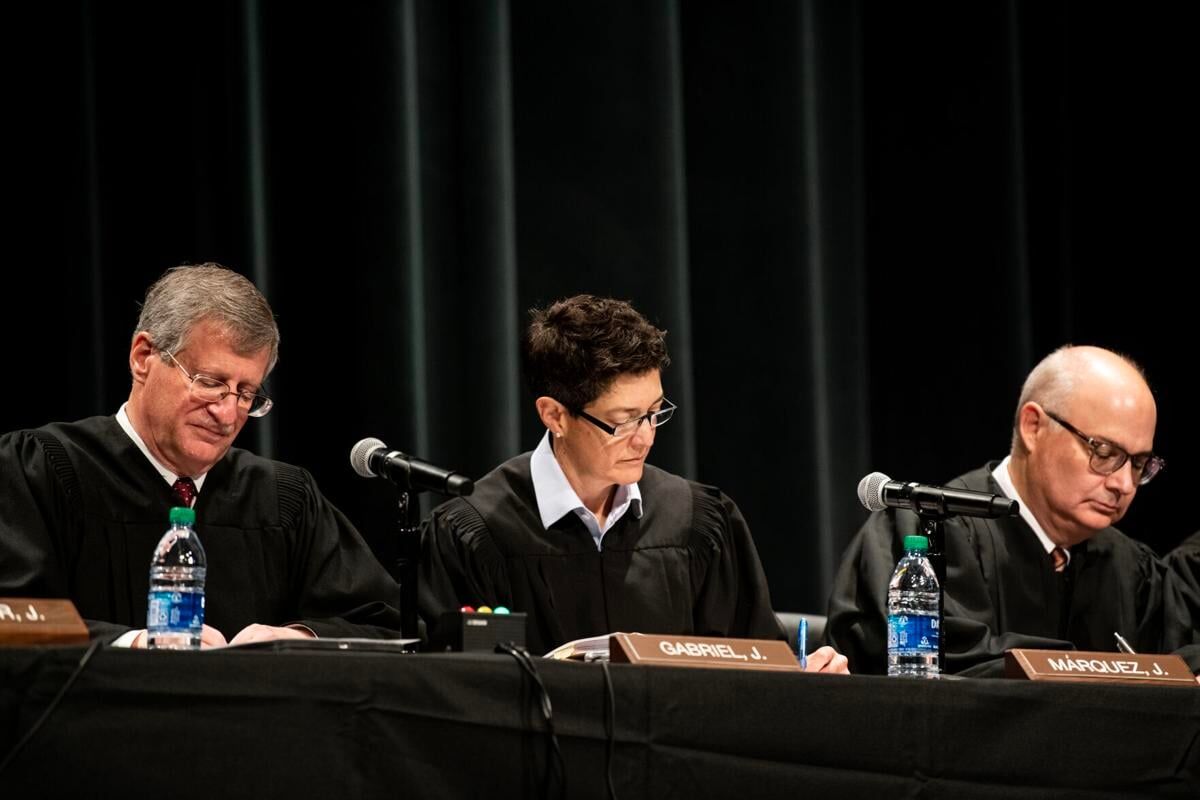
Some members of the Colorado Supreme Court expressed discomfort on April 14 with having to decide whether to order Children’s Hospital Colorado to resume providing certain services to transgender children, which could trigger a “death sentence” if the federal government imposes consequences.
“I’m assuming there’s no middle ground here with the federal administration, in terms of letting the patients who are already in treatment complete their treatment but just not take on any new patients for gender-affirming care?” asked Justice Carlos A. Samour Jr. during oral arguments.
There is not, responded the hospital’s lawyer.
“We believe that the care can be provided safely and effectively,” added attorney Patrick O’Rourke. “But ultimately, we are not the determiners of what the federal government does.”
The unusual appeal before the Supreme Court stemmed from a trial judge’s rejection of a preliminary injunction for four trans plaintiffs who are minors seeking treatment from Children’s Colorado. The plaintiffs alleged the cessation of services based on their status violates the Colorado Anti-Discrimination Act.
While multiple considerations inform whether a judge should grant an injunction, the Supreme Court focused on one particular aspect: Balancing the plaintiffs’ rights under the law with the broader harm to the public if the federal government moves to strip Children’s Colorado of its participation in federally funded programs.
“I understand the position Children’s Hospital is put in here. My concern would be, pick (a) rogue administration down the road,” Justice Richard L. Gabriel said to the hospital’s attorney. “It would seem your argument is they could take any number of absurd positions on saying whatever care could be unsafe. And that may be targeted at a particular identifiable group, and that identifiable group will always have no remedy because the government has all the cards and they control all the money. I’m concerned with that precedent.”

The litigation comes amid a broader national debate about gender issues. Last month, the U.S. Supreme Court determined Colorado’s law banning licensed professionals from engaging in “conversion therapy” on minors is likely unconstitutional to the extent it infringes on practitioners’ speech. Colorado voters will also be asked this fall to determine whether to ban certain gender- or sex-related surgeries for minors.
The sequence of events underlying the Children’s Colorado case began on Dec. 18, when U.S. Secretary of Health and Human Services Robert F. Kennedy Jr. published a statement declaring that “sex-rejecting procedures” for children are “neither safe nor effective” and “fail to meet professionally recognized standards of health care.” Kennedy clarified that, while he has the authority to exclude entities from federal programs such as Medicare and Medicaid, his declaration did not constitute an exclusion. Further, any excluded entities could seek administrative and judicial review of the decision.
Days later, Colorado Attorney General Phil Weiser joined other states in suing to block Kennedy’s declaration in Oregon’s federal court. He noted that Colorado law protects the treatment implicated in Kennedy’s statement.
Then, on Jan. 2, Children’s Colorado announced it was “pausing medical gender affirming care for patients under the age of 18 as we wait for any federal court rulings and assess the rapidly evolving legal landscape.”
Four trans children, through their parents, sued Children’s Colorado, alleging the hospital was violating the Colorado Anti-Discrimination Act. After a hearing in early February, Denver District Court Judge Ericka F.H. Englert declined to issue a preliminary injunction requiring Children’s Colorado to resume its care.
Englert acknowledged that the plaintiffs would likely succeed on their claims that Children’s Colorado was violating their rights on the basis of gender identity or disability. However, she believed it would be too risky to order Children’s Colorado to cross the federal government and potentially trigger an end to its participation in federal programs, which, in turn, could end its relationship with commercial insurers.
“Plaintiffs essentially ask the Court to call the bluff of the federal government and order CHC to take action in violation of federal law,” she wrote. “The Court cannot discount the very real possibility that the federal government will take enforcement action against CHC.”
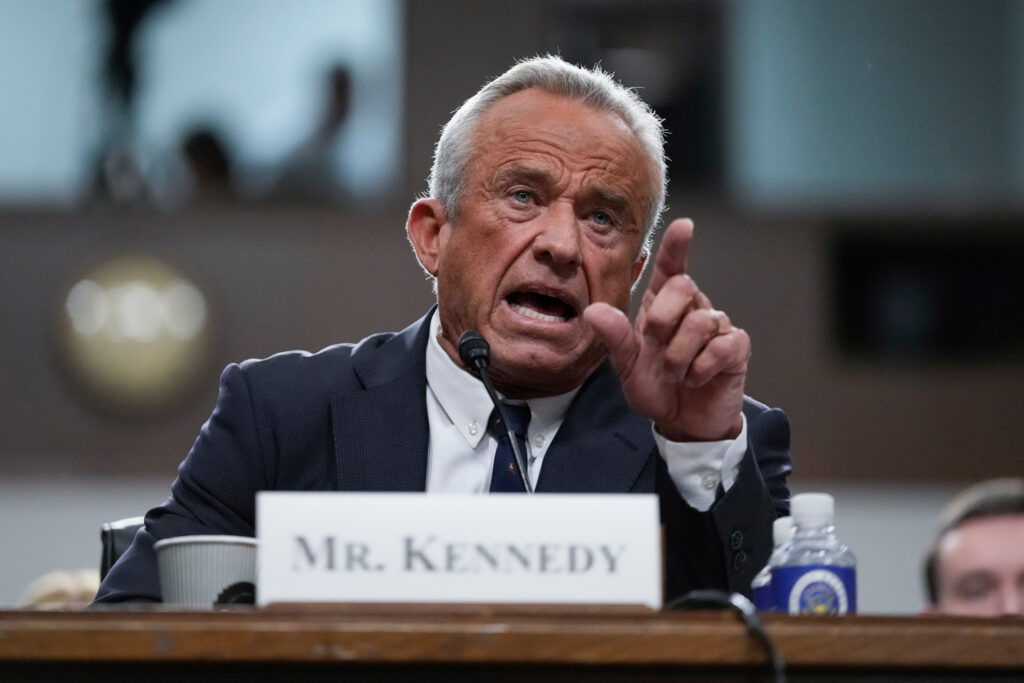
The plaintiffs appealed to the Supreme Court, arguing Englert had essentially found that violations of the Colorado Anti-Discrimination Act were in the public’s broader interest.
Prior to oral arguments, a federal judge in Oregon blocked Kennedy’s declaration. But Children’s Colorado warned that the Health and Human Services Office of the Inspector General could still take action to exclude it from Medicare and Medicaid.
“Federal exclusion is a death sentence,” its attorneys wrote.
During oral arguments, the hospital maintained that it has discretion over which services to provide, and it can make decisions for budgetary, logistical or other reasons.
“The challenge I have here, though, is that it was providing this care. And all of a sudden, it stopped,” said Chief Justice Monica M. Márquez. “And it is providing essentially the same medications, etc. to cisgender children.”
“You’re giving it to one group of children and not to another. How is that not discrimination?” added Justice Susan Blanco.
Attorney Paula Greisen, representing the plaintiffs, argued that Children’s Colorado could seek relief from the federal judiciary and would likely succeed if the government moved to exclude it from federal health programs.
“There are probably 25-40 different types of injunctions right now based on the federal administration’s attempt to take away federal funding,” she said. “What this court has to do is enforce the law.”
“I think we are all in favor of enforcing those laws,” responded Samour. “In this case, it gets really complicated because the hospital is saying, ‘Look, if we’re required to continue to provide treatment, all these horrible, catastrophic things will very well happen.'”
Justice William W. Hood III wondered whether the “catastrophic nature of it makes it politically untenable,” suggesting the federal government may not follow through.
“I think it would be very dangerous,” said O’Rourke, the hospital’s attorney, “to put any actions past this administration in terms of whether or not it believes that something would be politically unfeasible.”
The case is Boe et al. v. Children’s Hospital Colorado.

Federal judge green-lights civil trial against ex-Fort Collins DUI officer
Michael Karlik
michael.karlik@coloradopolitics.com
Updated 2 days ago
A federal judge ruled on Thursday that Fort Collins’ former “DUI officer” will face a civil trial for allegedly investigating a motorist for impaired driving without any reasonable suspicion to do so. In recent years, several people arrested by Officer...

Colorado Supreme Court suspends Mesa County judge pending misconduct investigation
Michael Karlik
michael.karlik@coloradopolitics.com
Updated 1 day ago
The Colorado Supreme Court suspended Mesa County Court Judge Michael J. Grattan on Thursday amid a misconduct investigation. The court’s Sept. 10 order gave Grattan 21 days to explain why his paid suspension should not continue through the end of...
Colorado Supreme Court changes course, dismisses case about special district bonds
Michael Karlik
michael.karlik@coloradopolitics.com
Updated 1 day ago
The Colorado Supreme Court declined on Friday to decide a dispute between a large-scale Commerce City development and the various districts financing it, after initially showing interest in the ongoing case. Colorado has roughly 2,800 special districts, which are local...
10th Circuit tosses GEO Group’s pretrial appeal in human trafficking lawsuit
Michael Karlik
michael.karlik@coloradopolitics.com
Updated 3 days ago
The Denver-based federal appeals court dismissed an attempt by The GEO Group on Wednesday to appeal a trial judge’s non-existent decision two months before the company is scheduled to face a civil trial over alleged trafficking violations at the Aurora...
Denver sues Trump to block armed ICE agents from polling sites
Deborah Grigsby
deborah.smith@denvergazette.com
Updated 3 days ago
The city of Denver, along with several groups, sued the Trump administration Thursday, seeking to block U.S. Immigration and Customs Enforcement officers who are armed from polling sites during the upcoming midterm elections. In fact, there are no official orders...
Federal judge takes no action against ICE in Colorado after hearing about mistakes, not ‘blatant violations’
Michael Karlik
michael.karlik@coloradopolitics.com
Updated 1 day ago
A federal judge declined to take action against U.S. Immigration and Customs Enforcement on Thursday after hearing that a pattern of alleged lawbreaking amounted to mistakes and a misunderstanding of the government’s position in court. For nearly a year, Colorado’s...
Colorado doctors, dentists challenge state law on gender‑transition services in new federal lawsuit
Marissa Ventrelli
marissa.ventrelli@coloradopolitics.com
Updated 1 day ago
A group of Christian doctors and dentists has filed a federal lawsuit challenging a Colorado law they say requires them to provide gender‑transition services that conflict with their religious and ethical beliefs. The lawsuit, filed by the Christian Medical and...
Federal judge directs plaintiff to revise complaint alleging Denver officers’ constitutional violations
Michael Karlik
michael.karlik@coloradopolitics.com
Updated 1 day ago
A federal judge directed a plaintiff to revise his allegations on Wednesday to more precisely state what two Denver officers and the city itself allegedly did to violate his constitutional rights by facilitating his prosecution for murder until prosecutors dropped...

Lawsuit challenges Douglas County commissioners’ ballot actions
Nicholas Fogleman
nicholas.fogleman@denvergazette.com
Updated 3 days ago
A new lawsuit against Douglas County commissioners seeks to invalidate the board’s intervention in efforts to expand the commission from three members to five and restore the original ballot language approved by more than 20,000 petition signers. The suit marks...
Federal judge explores new sanctions against ex-Colorado judicial discipline director
Michael Karlik
michael.karlik@coloradopolitics.com
Updated 1 day ago
A federal judge on Wednesday directed Colorado’s former judicial discipline director, for the third time this year, to explain why she should not sanction him for his latest conduct in his litigation against the state’s judiciary. Christopher S.P. Gregory, who served...
PREV
PREVIOUS

Cherry Creek School District to pay assistant superintendent $190K to retire amid leadership shakeups
Cherry Creek School District taxpayers will pay Assistant Superintendent Anthony Poole more than $190,000 to retire at the end of the school year, according to the school district’s separation agreement. Obtained under the Colorado Open Records Act, the agreement stipulates that the Cherry Creek School District will pay him a lump sum of $187,925 under […]

Douglas County approves AI system for sheriff’s investigations
Douglas County commissioners unanimously approved the purchase of an artificial intelligence system to assist the Sheriff’s Office with investigative analysis. The system is designed to help investigators process large volumes of data more efficiently and turn it into usable investigative leads, officials said. “This system dramatically improves how we process large and complex databases, turning […]