

Colorado House finishes work on 2026-27 state budget, finally
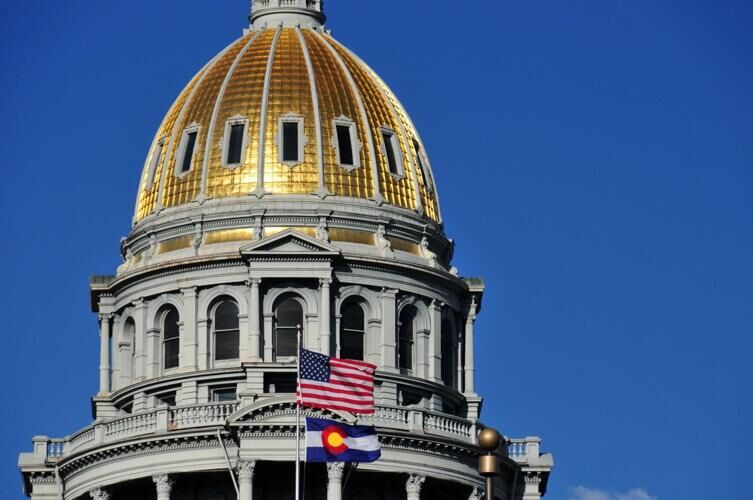
The House on Saturday, after four days of work – it usually takes two – finished up their work and voted on the $46.8 billion 2026-27 state budget, as contained in House Bill 1410 and 64 accompanying measures designed to help balance the budget.
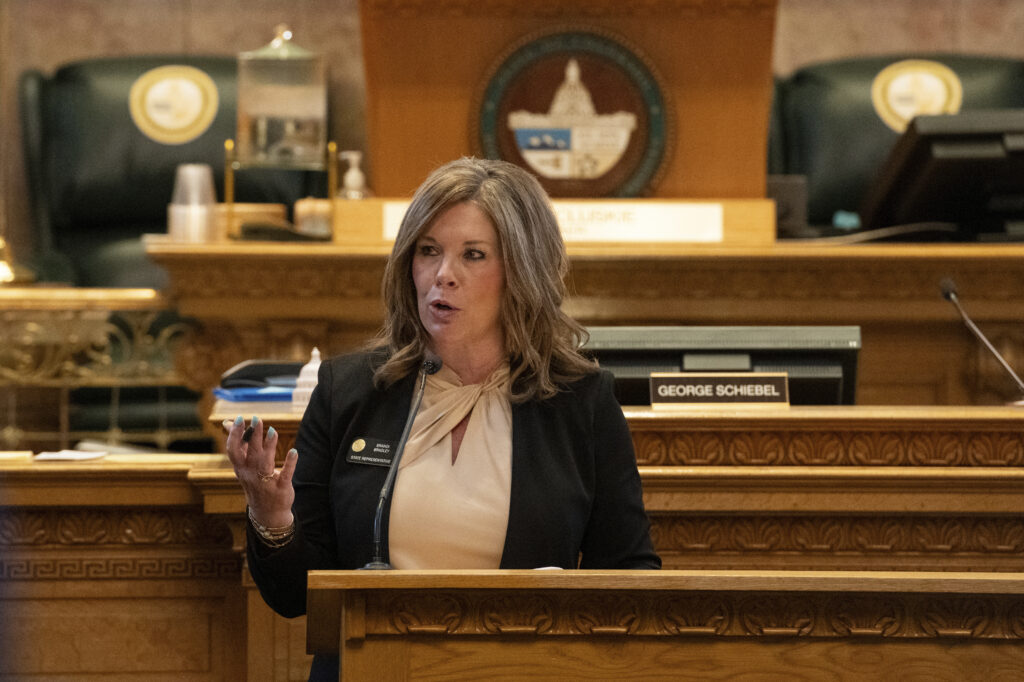
The delay in getting to the finish line was caused by Rep. Brandi Bradley, R-Roxborough Park, who asked for the 661-page budget bill to be read at length, a computer-operated process expected to take up to 15 hours.
That was on Wednesday, the first day the full House worked on the budget. The reading was laid over until late Thursday by House Majority Leader Rep. Monica Duran, D-Wheat Ridge.
The reading didn’t start until after 6:30 p.m., to allow the House to finish work on the rest of the budget package. It resumed on Friday at about 10 a.m. and wrapped up just after 7:30 p.m.
The House completed work on 41 out of 73 proposed amendments on Wednesday, prior to the request to read the bill.
But only two of the remaining amendments made it to the debate Friday night.
Duran limited debate on HB 1410 to one hour, and 45 minutes of that hour was taken up with an amendment to remove the ability of Colorado Parks and Wildlife to use $264,238 in general fund dollars to acquire more wolves for the state’s troubled wolf reintroduction program.
The amendment was offered by Assistant Minority Leader Rep. Ty Winter of Trinidad and Rep. Megan Lukens, D-Steamboat Springs. Ranchers in Lukens’ district have had to deal with wolves killing their livestock in the past year. Winter said wolves are now in his district, east of I-25.
The footnote to the long bill is similar to a 2025-26 restriction placed on CPW’s ability to use general funds for buying wolves that surfaced during last August’s special session.
“I’d like to say to my ranchers that we’re not using their taxpayer dollars to introduce more wolves into their backyards,” she said.
CPW would still retain those funds, but could use them only for wolf program management, including conflict minimization, she said.
Winter called the program a failure, and said that people were lied to about the program. “What more can be done to ranchers?” he asked.
The amendment also drew support from House Speaker Julie McCluskie, D-Dillon, whose district includes Grand County, which has seen the most livestock deaths and financial losses from wolves, first relocated to the county in December 2023.
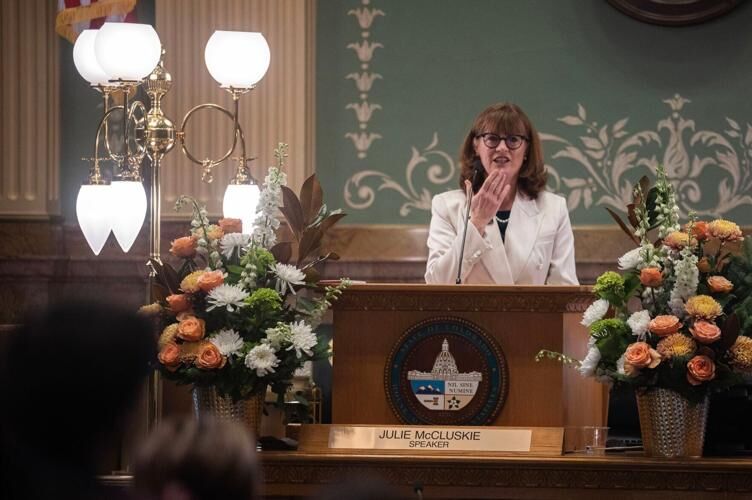
While she said she respected the work of the Joint Budget Committee and the will of the voters (who narrowly passed Proposition 114, almost entirely with majority support from Front Range voters), “the reintroduction has not gone successfully nor without significant cost,” she said.
Rep. Tammy Story, D-Evergreen, defended the program. The state has a financial obligation to fulfill the directives of Proposition 114, which she said could not be carried out without a sustainable funding source.
However, Proposition 114 said only that the state had to reintroduce wolves by the end of 2023, not how many wolves would be brought to Colorado.
The hometown of Rep. Matthew Martinez, D-Monte Vista, hosts an annual sandhill crane migration festival in early March.
He said “a hungry wolf” was seen stalking the cranes during the festival this year. His district didn’t vote for the wolf reintroduction, he said, but they will now have to deal with it, including concerns over wolves affecting the crane’s migratory patterns. “We were assured by CPW that we wouldn’t have wolves down here,” he said.
The amendment passed.
Story was successful on another amendment, to restore $239,506 in cash funds to the Unclaimed Property Trust Fund in the Treasurer’s office, along with 3 full-time employees. That won bipartisan support, with Republicans claiming Saturday that tapping the unclaimed property trust fund to balance the budget was stealing money from Coloradans.
HB 1401 would transfer $72.8 million from the unclaimed property trust fund to the general fund.
The last amendment, offered by Rep. Rebecca Keltie, R-Colorado Springs, to enact an across-the-board 3% general fund cut to all state agency budgets, including Corrections, Public Safety and Health Care Policy and Financing, failed.
Saturday began with 63 out of 65 lawmakers accounted for. Rep. Scott Bottoms, R-Colorado Springs, for a second day, was absent without permission from legislative leaders.
On Friday, Bottoms was in Pueblo, and Friday night, while the House was finishing its second reading debate on the budget, he was at a reception at a local hotel for his gubernatorial campaign.
Rep. Matt Soper of Delta also was absent without permission on Saturday. He was excused on Friday.
Both will be denied per diem for the days in which they are absent, but Duran indicated she does not intend to take the step of having the state patrol bring them to the Capitol, which she is allowed to do under the rules.
Bottoms was in Pueblo Saturday for the state GOP assembly, in which he is seeking a nod for the gubernatorial primary. He must be at the assembly in order to put his name in nomination and to accept the nomination.
Soper is the Republican chair of the third congressional district.
A statement from House Democrats on Friday said that in order to cut $1.2 billion in general funds from the 2026-27 budget, lawmakers reduced Medicaid reimbursement rates and services by $270 million.
Lawmakers also reallocated $570 million previously invested in state programs or services, lowered the state’s general fund reserve by $340 million, and made $150 million in cuts across smaller state departments. Lawmakers found additional savings in state employee compensation and held contractor rates flat to save $120 million, reduced health disparity grants and water quality programs by $4.5 million, and made $9.3 million in caseload-based reductions to the early intervention programs at the Department of Early Childhood.
The general fund budget increased by $212 million over 2025-26, driven by $470 million in additional costs for Medicaid, the statement said.
Saturday, the House approved the 64 bills that accompany HB 1410, with most passing with bipartisan support.
There were a few that didn’t, and among them: the bill on the unclaimed property trust fund; another on HB 1411, Cover All Coloradans, the program that provides undocumented children and pregnant women with medical care; and lowering the state’s general fund reserve from 15% to 13%.
JBC member Rep. Rick Taggart, R-Grand Junction, despite having his name taken off of HB 1411, voted for it.
In contrast to the drama surrounding the budget bill, Saturday’s debate was short. It passed on a 43-19 vote, with Taggart the only Republican to vote in favor.
The budget package now moves to the state Senate.


Colorado marijuana regulators pledge crackdown on intoxicating hemp
Christopher Osher
chris.osher@gazette.com
Updated 14 hours ago
Citing potential tax avoidance, ‘serious risk to public safety,’ Marijuana Enforcement Division warns companies about swapping illegal chemically converted hemp for marijuana This article was produced for ProPublica’s Local Reporting Network in partnership with The Denver Gazette. Colorado regulators announced...
Denver continues to explore moving to a biennial budget
Deborah Grigsby
deborah.smith@denvergazette.com
Updated 17 hours ago
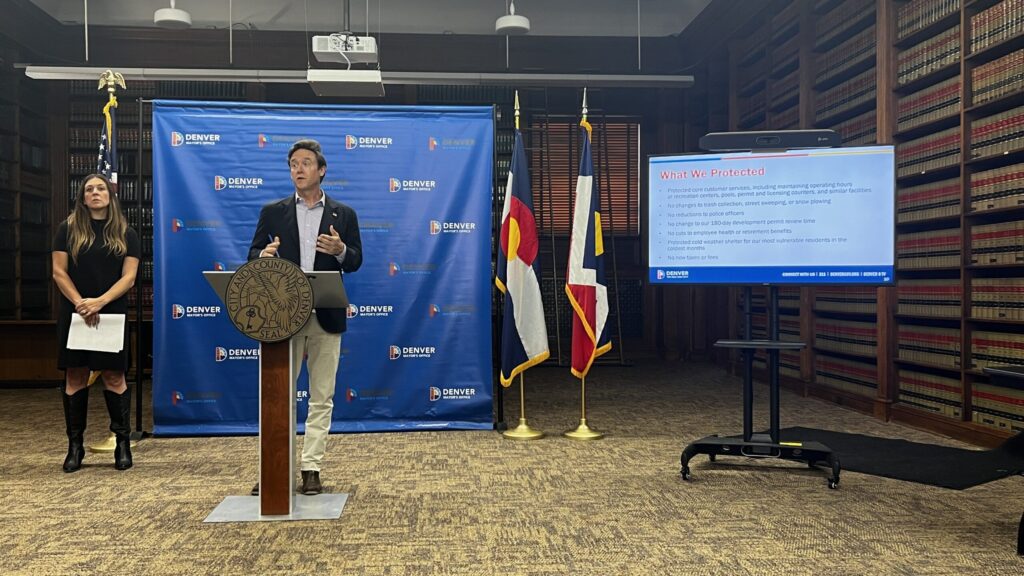
There’s continued momentum to shift the city of Denver to a biennial budget cycle, and if approved by the City Council, the measure would be sent to voters on the November 2026 ballot. The idea, first put forth in December,...

Colorado saw job losses for the first time since pandemic
Bernadette Berdychowski
bernadette.berdychowski@denvergazette.com
Updated 13 hours ago
Colorado’s job market last year appears to have been dimmer than it was originally believed to have been, new state data revisions show. The labor market wasn’t slowly growing, but rather it contracted in 2025. The state saw job losses...

Aurora first responders adopt program to leave Narcan with opioid overdose patients
Kyla Pearce
kyla.pearce@gazette.com
Updated 16 hours ago
Aurora Fire Rescue first responders will now leave Narcan with people who witness or experience opioid overdoses. The new, pilot Narcan leave-behind program is a tool to reduce fatal opioid-related overdoses “in a compassionate and non-judgmental way,” according to an...
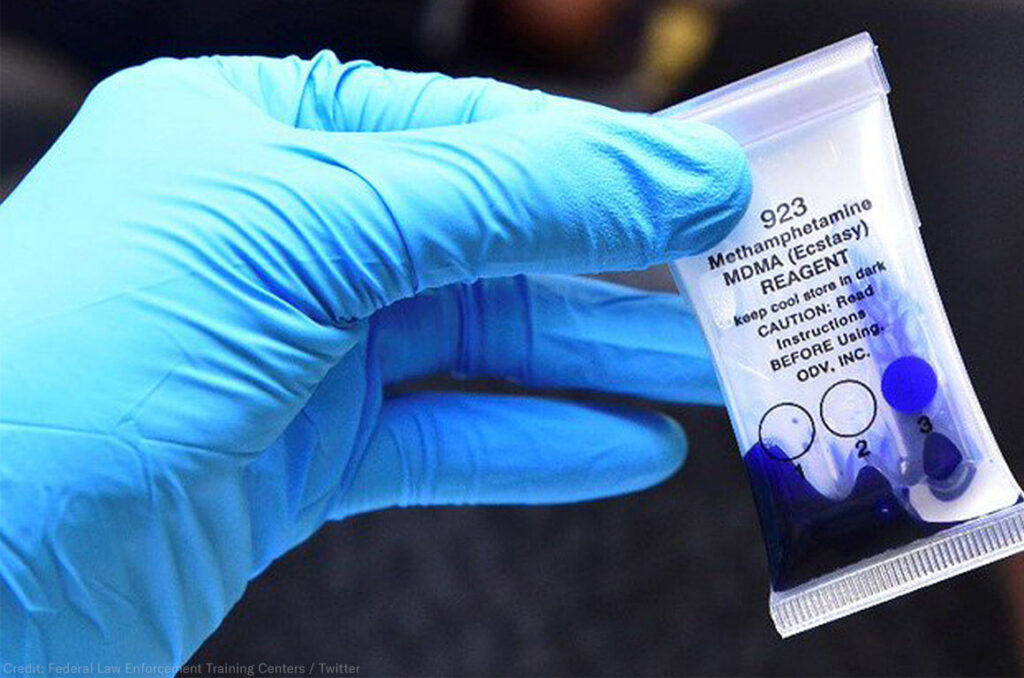
Colorado becomes first state to ban arrests solely based on field drug test results
Marissa Ventrelli
marissa.ventrelli@coloradopolitics.com
Updated 1 day ago
Colorado has become the first state in the nation to prohibit arrests based solely on colorimetric drug tests, also known as field drug tests. Last legislative session, lawmakers passed a bill establishing a working group to make recommendations regarding the use of colorimetric drug...

Colorado Senate takes up $46.8 billion budget
Marissa Ventrelli
marissa.ventrelli@coloradopolitics.com
Updated 1 day ago
The battle over Colorado’s proposed $46.8 billion spending plan for next year shifted to the state Senate, which must decide whether to acquiesce to changes made by the House. The senators could also decide to adopt their own changes, which...

JBS plant employees ratify tentative agreement
Nicholas Fogleman
nicholas.fogleman@denvergazette.com
Updated 2 days ago
Workers at a JBS beef processing plant in Greeley ratified a tentative agreement Sunday, ending months of negotiations over a new contract. The two-year collective bargaining agreement covers nearly 3,800 workers, according to the United Food Commercial Workers Local 7...
Douglas County seeks state Supreme Court review in open meeting case
Nicholas Fogleman
nicholas.fogleman@denvergazette.com
Updated 2 days ago
The Douglas County Board of Commissioners intends to petition the Colorado Supreme Court to review a recent court decision that found the board had violated the Colorado Open Meeting Law. The case stems from 11 “closed, unnoticed” meetings held by...

Bipartisan Colorado bill targeting AI chatbot risks advances
Tricia Stortz
digital@denvergazette.com
Updated 2 days ago
A bipartisan Colorado bill targeting risks posed by AI chatbots advanced out of committee last week with a 10-3 vote in its first hearing. House Bill 26-1263, which would establish new requirements for “conversational AI” services, cleared the House Business...

Republicans Scott Bottoms, Victor Marx win spots in Colorado gubernatorial primary at party assembly
Ernest Luning
ernest.luning@coloradopolitics.com
Updated 2 days ago
Two Christian ministry leaders from Colorado Springs qualified Saturday for the Republican gubernatorial primary ballot at the Colorado GOP’s state assembly in Pueblo in a party meeting that dragged late into the night. State Rep. Scott Bottoms, an Assemblies of...
PREV
PREVIOUS

Home rule has protected Colorado cities for over 125 years | Cronin and Loevy
Colorado is currently gripped by a political struggle between the governor plus the legislature in Denver and populous home-rule city governments, mainly on the Front Range, such as Colorado Springs. In the past few years, the legislature has been passing bills that applied to city government policies, which for many years had been the sole province of mayors and city councils. These new state laws have mainly […]

Republicans Scott Bottoms, Victor Marx win spots in Colorado gubernatorial primary at party assembly
Two Christian ministry leaders from Colorado Springs qualified Saturday for the Republican gubernatorial primary ballot at the Colorado GOP’s state assembly in Pueblo in a party meeting that dragged late into the night. State Rep. Scott Bottoms, an Assemblies of God pastor at Church at Briargate, who is known as one of the legislature’s most […]