

Colorado House Democrats focus on prison costs in budget discussions
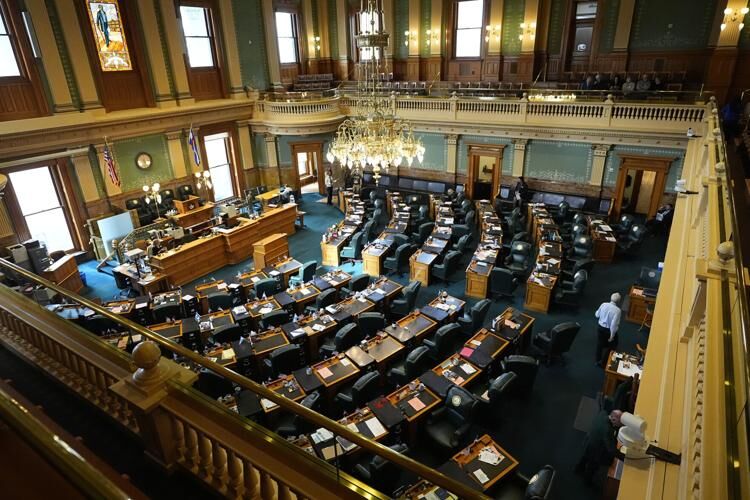
Colorado’s House Democrats pressed budget writers Tuesday over a nearly $70 million increase for the Department of Corrections, questioning why the state plans to add 941 prison beds and explore new prison capacity at a time when, they said, crime rates are falling and hundreds of inmates are eligible for parole.
The majority of the proposed increase is due to medical costs, such as care provided outside corrections facilities and increased prescription drug costs, according to Reps. Emily Sirota of Denver and Kyle Brown of Louisville, who are members of the Joint Budget Committee.
The state also plans to increase the private-prison per diem rate over the next two years and to provide more funding to local jails that house DOC inmates.
Rep. Javier Mabrey of Denver noted a report by the state’s Division of Criminal Justice that found overall crime rates are down statewide. Additionally, Mabrey said, there are a number of individuals within DOC who are eligible for parole but have not yet been released.
“This budget line item funds 941 new prison beds based on population growth,” Mabrey said. “How does that projected growth sync with the decrease in crime and the number of people who are parole-eligible who have not been released?”
Sirota noted that the Joint Budget Committee initially denied the request for more beds but later reversed its decision.
Sirota said, “We have been having the same conversations year after year within the General Assembly about the increased expenditures needed within the Department of Corrections, and now we are seeing that these increased requests are coming at a time when, to your point, crime is down. So, why do we still have so many folks within corrections?”
She added that the committee ultimately decided to grant the request because members felt a number of bills being introduced this legislative session would help address prison overcrowding.
Mabrey also asked Brown and Sirota to justify Gov. Jared Polis’s request for a new prison — or two.
“As you mentioned, we have this conversation every single year about more beds and more money for prisons, when today we’re gonna be talking about a lot of tough cuts,” he said. “What conversations have been had about what this looks like next year or the year after? Do you all believe we’re on a trend to continue this year after year?”
Sirota agreed that it appears lawmakers will be back here for the same conversation next year.
“I think the budget committee, all of us, balked at that request (for a new prison),” she said. “I think members of the General Assembly also were shocked to learn of this request and the timing of the request.”
The governor’s office has said county jails holding inmates awaiting transfer to state prisons already exceed 700 people and are projected to surpass 900 soon, continuing to rise throughout the fiscal year and reaching nearly 1,300 by the end of 2026–27.
The office also said its proposal to acquire a new prison is a “consequential action” that wasn’t raised lightly.
“Growth of prison caseload and the limited immediate effects of potential and already-realized prison population management measures leaves few alternatives that do not imperil the health and safety of inmates, DOC/local jails staff, and the public,” the office said.
The governor’s office has maintained that its budget proposal for next year is balanced, given all the mechanisms it is proposing for the legislature to adopt, such as an infusion of cash from the privatization of Pinnacol Assurance, the state’s workers compensation system of last resort. That move is expected to generate about $400 million for the state.
The state currently pays more per inmate than it does per student, according to Rep. Regina English of Colorado Springs. She wanted to know what changes the state can make to reduce the prison population.
“There are lots of upstream programs that could reduce the need for prison beds,” said Brown. “I don’t disagree with you that we should be investing more in education and health care. Obviously, we are challenged this year because of our budget.”
“But to me,” he added, “making sure that folks have economic opportunities, folks have educational opportunities goes a long way towards making sure that we do not need investments in corrections to the level that we currently have.”
Rep. Chad Clifford of Centennial is skeptical of the Polis administration’s pledge to work with the legislature to fix the corrections crisis.
Brown noted that there are bills outside the budget intended to address some of the prison population issues.
“I think there has been a renewed emphasis on this,” he said, noting conversations that started in January between the JBC and the administration.
“I have doubts it will happen during this administration,” Clifford said.
Sirota said the JBC worked hard to ensure they would not have to cut the state share of K-12 education total funding. House Assistant Majority Leader Rep. Jennifer Bacon of Denver thanked the committee for protecting education funding.


Poll: Colorado voters oppose legalizing prostitution, support suspending wolf reintroduction
Marissa Ventrelli
marissa.ventrelli@coloradopolitics.com
Updated 6 hours ago
A majority of Colorado residents — 61% — oppose legalizing prostitution in the state, an idea that lawmakers floated earlier in the legislative session before pulling their proposal. Just over half of Democratic respondents said they would support legalization, while...
Colorado House opens debate on $46.8B budget already showing strain
Marianne Goodland
marianne.goodland@coloradopolitics.com
Updated 3 hours ago
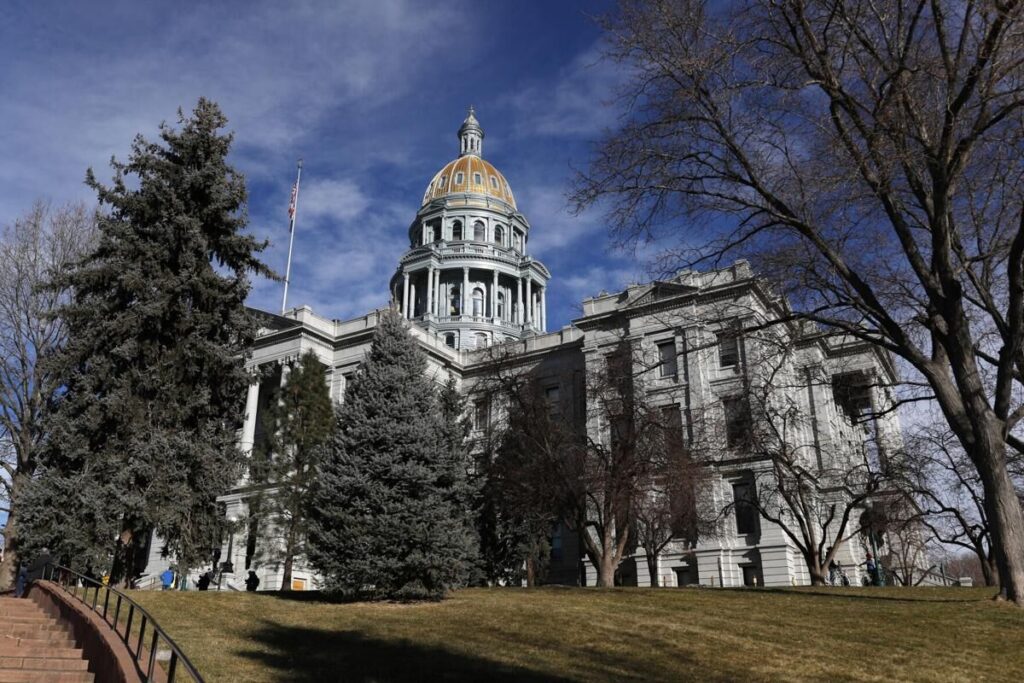
With rising Medicaid costs, no dollars set aside for new legislation and dozens of bills still seeking funding, Colorado lawmakers on Wednesday began debating the proposed $46.8 billion budget that is already proving difficult to keep on track. By the...
Inside the GOP caucus: Colorado legislator explains why a bigger budget still means cuts
Marianne Goodland
marianne.goodland@coloradopolitics.com
Updated 1 day ago
Tasked with explaining a budget driven by rising caseloads, shifting federal dollars and a $1.5 billion shortfall, Joint Budget Committee member Rep. Rick Taggart spent Tuesday’s Republican caucus meeting detailing why the 2026–27 spending plan appears larger on paper, even...
Senate-passed farmworkers overtime bill easily clears Colorado House committee
Marianne Goodland
marianne.goodland@coloradopolitics.com
Updated 1 day ago
A proposal to ease Colorado’s overtime requirements for agricultural employers cleared a key House committee Monday, setting up a broader fight over whether the state should scale back a labor policy adopted just five years ago. The House Agriculture, Water...

Public comment period opens as federal review targets Colorado’s wolf reintroduction program
Marianne Goodland
marianne.goodland@coloradopolitics.com
Updated 1 day ago
Federal wildlife officials have opened a formal review of Colorado’s wolf reintroduction program, launching a public comment period to assess how the state has handled rising conflicts between wolves and livestock. A notice from the U.S. Fish and Wildlife Service...
Aurora lawmakers unanimously pass water shortage declaration, watering restrictions
Kyla Pearce
kyla.pearce@gazette.com
Updated 1 day ago
Aurora City Council members unanimously passed a Stage I Water Shortage declaration in Monday night’s meeting, putting restrictions on outdoor water use starting immediately. The shortage declaration imposes restrictions on outdoor watering for residents and businesses and reduces commercial user...

Colorado legislators propose $46.8 billion budget, driven by Medicaid costs
Marianne Goodland
marianne.goodland@coloradopolitics.com
Updated 2 days ago
The six-member panel of legislators in charge of crafting the state budget has now turned over its plan to the Colorado legislature, proposing to spend $1.5 billion more for the Medicaid program. The increase is driven by Medicaid costs, which...
Appeals Court rules Douglas County violated open meeting laws
Nicholas Fogleman
nicholas.fogleman@denvergazette.com
Updated 1 day ago
The Colorado Court of Appeals ruled that Douglas County Commissioners violated Colorado open meeting laws in a series of closed meetings leading up to the county’s failed home rule special election. The Thursday ruling reversed a trial court’s denial of...

Former Parker police sergeant arrested for unlawful sexual conduct
Jacob Mauk
jacob.mauk@denvergazette.com
Updated 1 day ago
A former Parker Police Department sergeant was arrested Friday after being charged with multiple counts of “unlawful sexual conduct,” according to department officials on Monday. The department placed Sgt. Troy Brienzo, 31, on investigative leave on Jan. 7 after an...
As Colorado passes 6 million residents, housing initiatives take center stage
Marianne Goodland
marianne.goodland@coloradopolitics.com
Updated 2 days ago
New Census data confirming Colorado’s population has topped six million is fueling renewed debate over Gov. Jared Polis’ housing agenda, as he tied the population increases to home construction. The governor said the counties experiencing the largest increases in new...
PREV
PREVIOUS

Federal judge warns of increasingly inadequate immigration bond hearings
A federal judge ordered the immediate release of a man in immigration custody last week and, seemingly for the first time in Colorado, warned that the government is increasingly conducting inadequate bond hearings for detainees. Colorado’s federal trial court is facing a flood of “habeas corpus” petitions from those in immigration detention. The most common allegation […]

Preserving access for vulnerable communities should be a top priority in Congress | OPINION
By Tony Henderson As both a minister and as president of the NAACP Denver, I believe access to high-quality, accessible health care is a right that should be afforded to each and every one of us. To that end, Medicare Advantage has become a critical component of our health system, helping secure access to care […]