

Colorado justices confirm lawyers may ‘borrow’ allegations from elsewhere
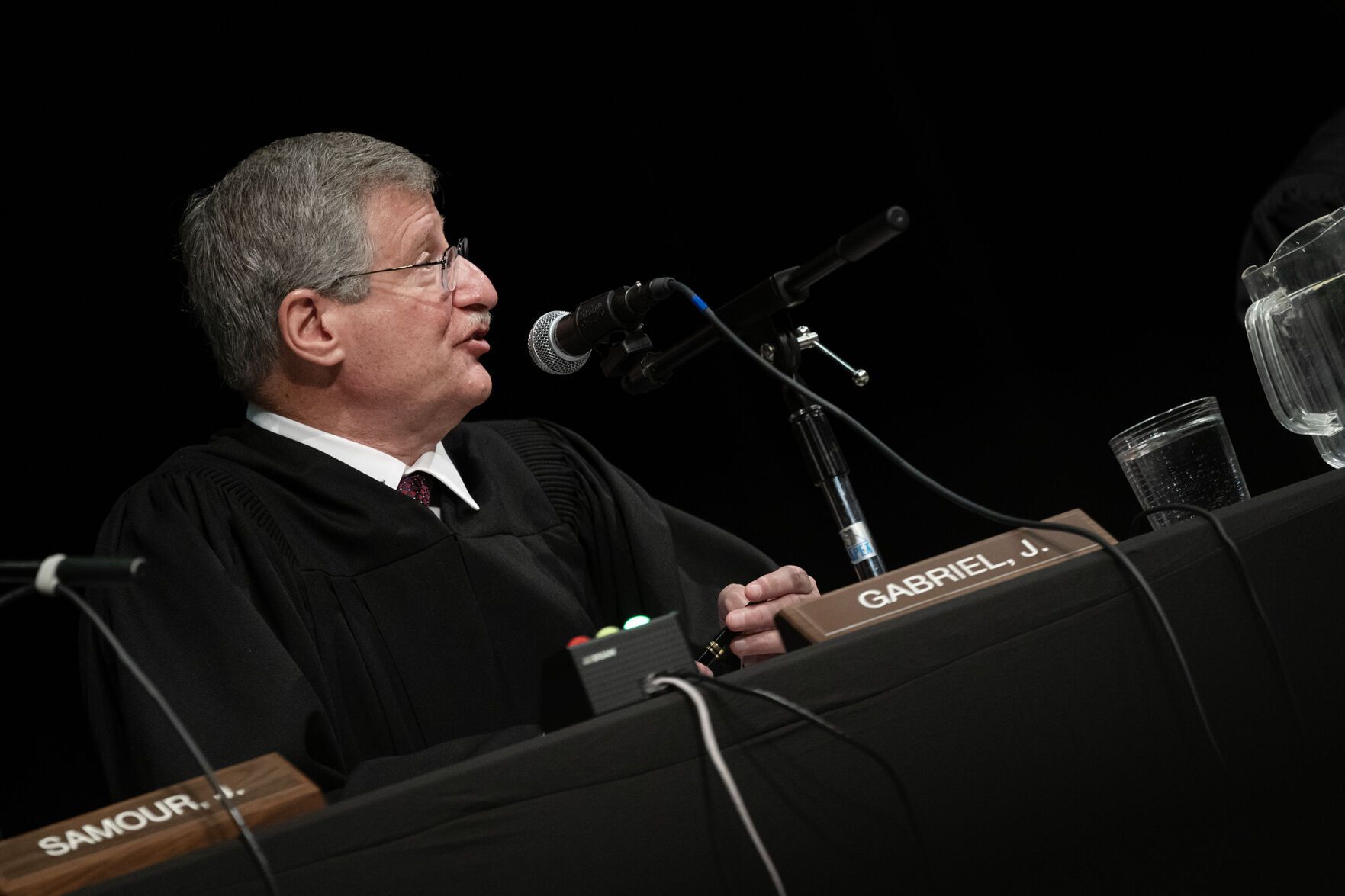
The Colorado Supreme Court ruled on Monday that plaintiffs’ lawyers can use allegations made elsewhere to bolster their own clients’ claims, so long as the attorney first performs some degree of investigation into the “borrowed” assertions.
Under Colorado’s rules for civil cases, attorneys must attest that the complaints they file are well-grounded in fact to the best of their “knowledge, information, and belief formed after reasonable inquiry.” But what if a lawyer can make their case stronger by importing allegations from other legal proceedings involving the same defendant? Do they have to personally speak with witnesses — who may be unnamed or confidential — who made the allegations there?
Not necessarily, concluded the Supreme Court.
By “recognizing that the extent of investigation necessary in a given litigation is highly fact dependent, we decline to adopt a bright-line rule precluding a party from copying allegations in related litigation unless counsel speaks to the witnesses,” wrote Justice Richard L. Gabriel in the April 6 opinion. “It simply may not be possible for counsel to do so. Instead, we conclude that counsel must conduct a sufficient investigation to support the allegations contained in a complaint, at least on information and belief.”
In the underlying case, Dean Houser sued CenturyLink and its directors, alleging that the telecommunications company violated federal securities law by failing to publicly disclose deceptive charging practices at the time of its merger with Level 3 Communications, Inc.
After a trial judge dismissed Houser’s original complaint, the Court of Appeals reinstated it, and Houser amended the lawsuit to include allegations of CenturyLink’s conduct drawn from multiple states’ attorney general investigations and other litigation. Houser’s attorneys attested they had reviewed federal filings, press releases, earnings calls, media reports, and had discussions with lawyers in the other civil proceedings.
After CenturyLink pointed out Houser’s attorneys had imported his allegations from elsewhere, Boulder County District Court Judge Dea M. Lindsey refused to consider those portions of the complaint and she dismissed the lawsuit. But a three-judge Court of Appeals panel decided the practice of “borrowing plausibility” is acceptable so long as some investigation takes place.
The rule mandating that lawyers undertake a reasonable inquiry before making a legal filing “does not require plaintiff’s counsel in such circumstances to speak directly with the confidential witnesses,” wrote Judge Steve Bernard. Instead, the investigative steps taken by Houser’s lawyers were sufficient.
The CenturyLink defendants appealed to the Supreme Court, arguing that the Court of Appeals had cleared the way for Colorado to become a haven for “copycat” lawsuits that “parrot” allegations made in other courts.
“This is beyond untenable — it places defendants at the mercy of lawsuits premised on a glorified game of telephone,” argued the Securities Industry and Financial Markets Association, weighing in to support CenturyLink.
According to the Court of Appeals, “literally, the lawyers in this case can borrow the allegations of lawyers in another case that are not before the court,” Frederick R. Yarger, representing the CenturyLink defendants, told the Supreme Court at oral arguments. “I don’t think it’s ever acceptable to take it on faith from another lawyer.”
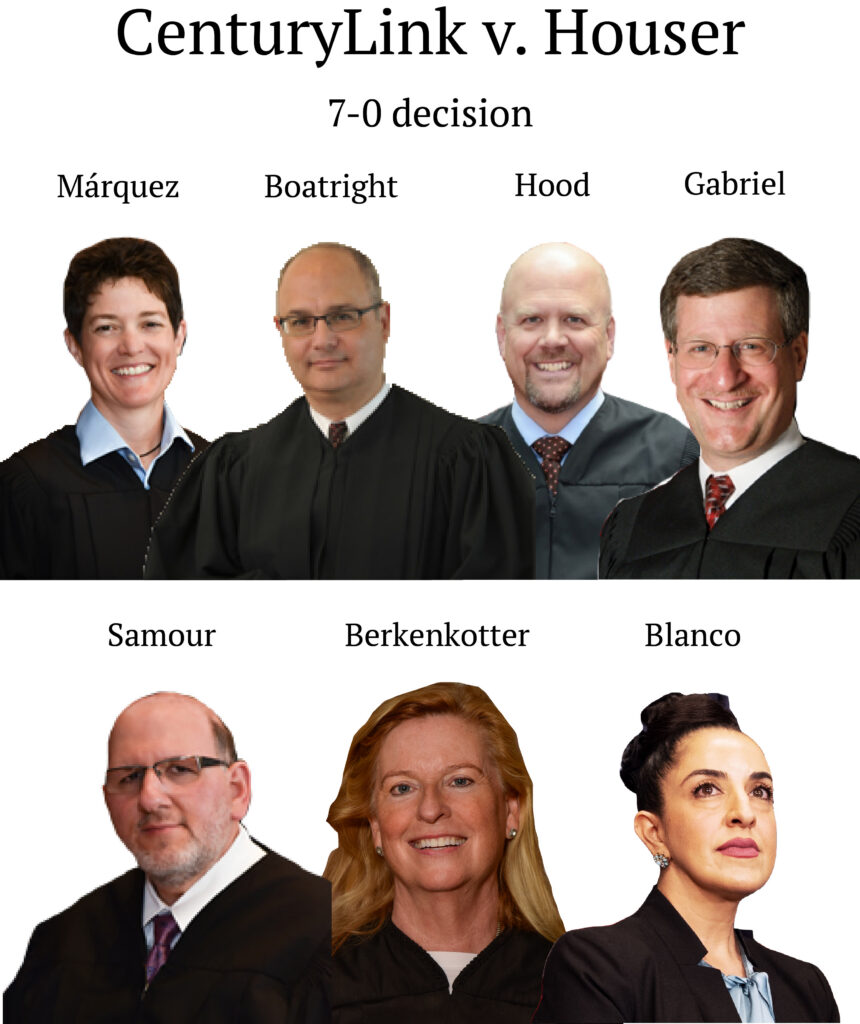
Ultimately, the Supreme Court disagreed that copying allegations is prohibited under any circumstance. Instead, wrote Gabriel, Houser’s lawyers had documented the specific actions they took before including information from other sources. A reasonable investigation, even if it does not include interviewing witnesses directly, can combat the disadvantage plaintiffs may face at the outset of a civil lawsuit.
In “many cases, essential facts are in the hands of civil defendants and may not be available to plaintiffs,” noted Gabriel.
He also disagreed that endorsing the practice of borrowing allegations would lead to an explosion of copycat lawsuits filled with dubious assertions.
“To the contrary, we believe that trial courts in this state and others have served — and we have every confidence will continue to serve — as appropriate gatekeepers to ensure that lawsuits that do not satisfy the requirements to survive motions to dismiss will be resolved properly and expeditiously,” Gabriel wrote.
The case is CenturyLink, Inc. et al. v. Houser.

10th Circuit provides guidance on police searches of cloud-based data
Michael Karlik
michael.karlik@coloradopolitics.com
Updated 2 days ago
The Denver-based federal appeals court provided guidance to law enforcement agencies on Monday for ensuring that searches of cloud-based accounts comply with the Fourth Amendment’s requirements. A three-judge panel of the U.S. Court of Appeals for the 10th Circuit noted...
Federal judge releases man after 2 immigration judges disobey order
Michael Karlik
michael.karlik@coloradopolitics.com
Updated 2 days ago
A federal judge released a man from immigration detention on Thursday after two different immigration judges disobeyed his order in the same case. “At this point, the Court has granted Respondents two bites at the apple to prove detention of...
New rules for private judges in Colorado include discipline oversight, campaign contributions
David Migoya
david.migoya@gazette.com
Updated 1 day ago
The Colorado Supreme Court recently determined the state’s private judges — retired jurists appointed to oversee civil cases that rarely get public scrutiny — can now make political contributions freely and without reserve, overruling a prohibition that had been in...
Appeals court finds Prowers County judge incorrectly analyzed firetruck collision lawsuit
Michael Karlik
michael.karlik@coloradopolitics.com
Updated 3 days ago
Colorado’s second-highest court directed a Prowers County judge last month to take a second look at whether a firetruck operator and the county itself can be held liable for a collision with a motorist. Donald Williamson was driving through a...
Appeals court reverses assault convictions after jury received no definition of ‘harm’
Michael Karlik
michael.karlik@coloradopolitics.com
Updated 3 days ago
Colorado’s second-highest court reversed an Arapahoe County defendant’s assault convictions last week, concluding the trial judge neglected to define a key, ambiguous term for jurors. Police officers arrested David Cristobal Aragon at a house party for allegedly violating a restraining...
Colorado counties cannot challenge state law restricting immigration contracts, appeals court says
Michael Karlik
michael.karlik@coloradopolitics.com
Updated 3 days ago
Colorado’s second-highest court ruled on Thursday that counties lack standing to challenge a 2023 state law that restricts their ability to contract with the federal government or private entities for immigration detention. A three-judge Court of Appeals panel agreed with...
Colorado lawmakers propose changes to family court procedures | Bills in Brief
Marissa Ventrelli
marissa.ventrelli@coloradopolitics.com
Updated 3 days ago
Colorado lawmakers introduce hundreds of bills each year. Bills in brief cuts through the noise by explaining which proposals matter, what’s at stake, and how decisions at the Capitol could affect everyday life across the state. Colorado lawmakers from both parties are...
Federal judge partially allows second World Cup trafficking lawsuit to move forward
Michael Karlik
michael.karlik@coloradopolitics.com
Updated 4 days ago
A federal judge allowed some claims to move forward last month against companies operating out of Colorado that allegedly participated in a human trafficking venture involving Filipino laborers who constructed facilities for the 2022 World Cup in Qatar. There are...
Federal judge dismisses lawsuit seeking to force Colorado secretary of state to screen out scam filings
Michael Karlik
michael.karlik@coloradopolitics.com
Updated 3 days ago
A federal judge dismissed a lawsuit last week that sought to require Colorado’s secretary of state to verify corporate filings in the state’s database to reduce the risk of future fraud. Bernard Butts of Florida, who was 83 when he...
Federal judge finds no constitutional violation by Huerfano County well inspectors
Michael Karlik
michael.karlik@coloradopolitics.com
Updated 3 days ago
A federal judge concluded last month that two Huerfano County employees did not engage in an unconstitutional search when they approached the plaintiffs’ camper within 40 feet to investigate a potential code violation. In July 2021, the county’s building inspector,...
PREV
PREVIOUS
Aurora lawmakers unanimously pass water shortage declaration, watering restrictions
Aurora City Council members unanimously passed a Stage I Water Shortage declaration in Monday night’s meeting, putting restrictions on outdoor water use starting immediately. The shortage declaration imposes restrictions on outdoor watering for residents and businesses and reduces commercial user allocations, such as that for golf courses, by 20%, according to Aurora Water General Manager […]

Denver to mull $6.9M East Colfax BRT extension, police union deal
Denver’s councilmembers will consider several items during Monday’s regular meeting, but the most notable is a resolution to overhaul contract review rules, requiring draft agreements to be shared with the Council before being heard at committee meetings. Council Resolution 26-0329 aims to give council members early access to draft and final agreements and more time […]