

Colorado legislators drove up cost of Medicaid program

Some of Colorado’s spending woes in Medicaid can be traced to lawmakers who had approved new or expanded programs in the last few years, driving up state costs to the tune of tens of millions of dollars.
Just three measures passed in the past five years, for example, would cost the state more than $80 million, though at least one estimate turned out to be incorrect because the new program is actually four times more expensive.
Medicaid today is the state’s single-largest expense, far exceeding any other agency. It is the major driver of a $1.5 billion state deficit.
The state’s Medicaid agency — whose executive director resigned Tuesday under pressure from critics and legislators over allegations of mismanagement, waste and costly errors — had compiled a list of dozens of bills that legislators passed since 2020.
The estimated cost for each legislation ranged from a few hundred thousand dollars, such as reimbursement of equine therapy, to tens of millions, such as the program that provides health coverage to pregnant women and children who are in the country illegally.
The spreadsheet provided by the Department of Health Care Policy and Financing (HCPF) shows each legislation, the estimated cost and whether it added a new full time position.
At least one fiscal estimate turned out to be wrong, quadrupling the cost.
Analysts had estimated that Cover All Coloradans — the health care coverage for immigrants without authorization launched in 2024 — would cost a little over $26 million.
Spending blew past that. The program is expected to cost $112 million in the next fiscal year’s budget. Today, Cover All Coloradans enrolls nearly 30,000 women and children, instead of the 3,600 enrollees assumed by the legislature’s fiscal note.
“The previous forecast included an assumption that this population would be relatively healthier than the traditional Medicaid children population, based on early data from a similar program in Oregon and empirical evidence from academic research that immigrants are a generally healthier population than non-immigrants,” a spokesperson for HCPC had explained in an email. “However, this has not been true in the first calendar year of Colorado’s program.”
It’s not immediately clear if the other cost estimates on the HCPF spreadsheet — and which ones — are accurate or incorrect.
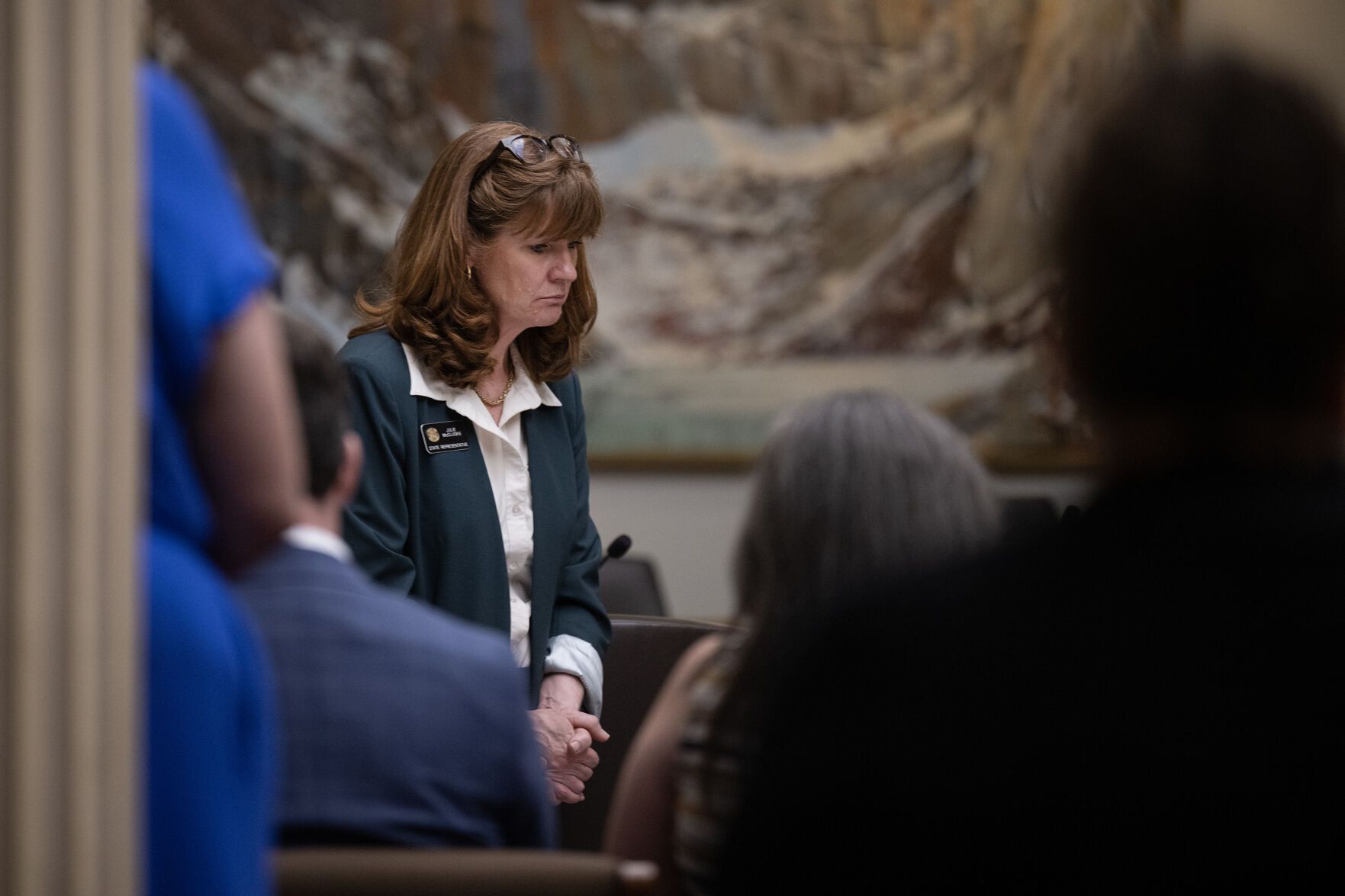
“Clearly, enrollment in Cover All Coloradans has been significantly higher than nonpartisan staff predicted,” said House Speaker Julie McCluskie, D-Dillon, who sponsored the legislation.
Still, McCluskie said she is reluctant to eliminate the program entirely.
“It’s important to note that this covered population is entirely pregnant women, new mothers and young children. I support the steps the JBC has taken to cut spending in this program, but eliminating it entirely would simply shift the cost of providing this care onto consumers, providers and private insurance plans,” she said.
Another new spending bill, passed in 2021, provides “reproductive health” care coverage for people who would not otherwise be eligible for Medicaid because of their citizenship or immigration status. The estimated cost was $3 million.
Another measure — 2023’s Senate Bill 289 — established the Community Choice Option, which allows the state to offer certain in-home and community-based services to Medicaid recipients. Sponsored by Democratic members of the state’s Joint Budget Committee, the bill passed almost unanimously in the Senate and on a 55-10 vote in the House.
The legislation was estimated to cost $39 million.
The price tag for a law passed in 2021 that extended eligibility for postpartum services to a year after giving birth stood at $19 million. The bill passed on a 21-14 vote in the Senate and a 39-23 vote in the House, with Democrats in favor and Republicans opposed.
Other spending included reimbursement of pharmacy services at $4 million; expansion of coverage for family planning services to individuals earning up to 260% of the federal poverty level at $4 million; additional prosthetic device coverage at $3 million; and eliminating requirement for copays for pharmacy and outpatient services at $7 million.
The Medicaid headache
Medicaid costs have exploded in the last several years in Colorado, overtaking K-12 education as the largest line item in the state budget.
Jointly funded by the state and federal government, Medicaid provides health coverage to low-income residents, including children, pregnant women, older individuals and people with disabilities. The program is overseen by the Department of Health Care Policy and Financing.
An analysis from a think tank recently said spending by the Department of Health Care Policy and Financing reached $16 billion in 2025 — a 101% increase from 2015 — while Medicaid enrollment has returned to nearly its 2015 level.
By law, the state must cover that overspending, which state officials have said is tied to higher utilization of health care services by older Coloradans with more expensive health care needs.
Additionally, the Medicaid program has nabbed headlines in recent weeks with allegations of a fraudulent billing ring, improper payments for autism therapy, and exploding costs in the relatively new program meant to provide health care to pregnant women and children illegally staying in the U.S.
The Department of Health Care Policy and Financing has blamed “outrageous behaviors” among providers, while at the same time acknowledging that certain assumptions — such as the health of the immigrant population covered by the new program — have been wrong.
On Monday, Colorado’s top Medicaid official stepped down, just as a bipartisan bloc of state senators prepared to formally urge Gov. Jared Polis to remove her over what they called years of mismanagement, waste and costly errors inside the state’s largest agency.
Kim Bimestefer, executive direct or of the Department of Health Care Policy and Financing, had been under fire from critics, who questioned how health officials have remained in their roles amid what they described as mismanagement at the state Medicaid program.
In her resignation statement released by the governor’s office, Bimestefer said she had the privilege of “advancing systems that help Coloradans — often in the most difficult times in their lives — get the care and support they need to rise and thrive.”
Bimestefer acknowledged the difficult situation the state finds itself in.
“Working alongside HCPF leaders, staff and stakeholders, we have navigated one unprecedented challenge after another for over 8 years to protect the state’s most vulnerable, with this current chapter proving to be incredibly difficult,” she said, adding she is confident her successor will “successfully navigate the challenging terrain ahead.”
Cost creep
Alec Garnett, who is now the vice president of government and regulatory affairs at UCHealth after serving as House speaker in 2021 and 2022 and the governor’s chief of staff from 2023 to late 2024, said the legislature, by passing one bill at a time, “turned the Medicaid benefit program into everything for everyone.”
“So all of a sudden, Medicaid has become the one of the richest benefits in the entire marketplace. So, if we were all on Medicaid, you probably would have a better benefit than you would on commercial insurance,” he said at the CSI forum in February.
He noted that Medicaid today covers equine, music and physical therapy.
“These are areas that are nice to have, and if we had all the money in the world and you didn’t have to constitutionally balance the budget on an annual basis, may make sense. But that is not the world that we live in,” he said.
To Garnett, the HCPF leadership failed in intervening and telling legislators “we cannot afford that here in Colorado,” adding the state Medicaid program should have focused on the “most important things,” notably primary care, while covering as many people as possible.
He said it took him time “outside in the health care space to really dig deep on how Medicaid is flawed.”
The governor’s office — and lawmakers — rely on the leaders at the Department of Health Care Policy and Financing for advice, he said.
“You really do rely on the experts that you surround yourself with,” he said. “And I will say that if I had known what I do now, my leadership in that role would’ve been very different.”
Nico Brambila and Marianne Goodland contributed to this story.


A perfect storm: Pine beetles thriving following warm, dry winter in Colorado
O'Dell Isaac
odell.isaac@gazette.com
Updated 43 minutes ago
The warmest winter in Colorado history could lead to record-breaking proliferation of a tiny insect, about the size of a grain of rice, that has killed millions of acres of trees across the Centennial State and contributed to the rapid...
Newly formed PAC promises a stronger voice for southern Colorado businesses
Breeanna Jent
breeanna-jent@coloradopolitics.com
Updated 2 hours ago
A new political action committee has launched in southern Colorado, aiming to strengthen and elevate the voices of local businesses and their regional influence on state-level policy. Over the last two years, the Colorado Legislature has enacted more than 1,000...

Colorado auto thefts drop 56% from 2021 levels
Scott Weiser
scott.weiser@gazette.com
Updated 2 hours ago
Colorado once ranked as the worst state in the nation for motor vehicle thefts per capita in 2021. The state has since seen a dramatic improvement, with auto thefts dropping 56% from 2021 levels. The state reported 16,291 motor vehicle...

Colorado Gov. Polis signs social media warrant bill after last year’s veto
Marissa Ventrelli
marissa.ventrelli@coloradopolitics.com
Updated 16 hours ago
Colorado law enforcement will soon have faster access to digital evidence after Gov. Jared Polis signed a pared‑down bill requiring social media companies to acknowledge and respond to search warrants on a tight timeline, a shift from a broader proposal...
Under fire from legislators and critics, Colorado’s top Medicaid official resigns
Marianne Goodland
marianne.goodland@coloradopolitics.com
Updated 18 hours ago
Colorado’s top Medicaid official stepped down on Monday, just as a bipartisan bloc of state senators prepared to formally urge Gov. Jared Polis to remove her over what they called years of mismanagement, waste and costly errors inside the state’s...
Power grid shutdowns in Colorado bring protection — and problems
Scott Weiser
scott.weiser@gazette.com
Updated 16 hours ago
A downed power line in Sunshine Canyon in the mountains west of Boulder in December posed an electrocution risk to firefighters and bystanders after Xcel Energy re-energized it without repairing it, despite being notified of the break the day before....

Aurora wildland fire contained at Buckley Space Force Base
Nicholas Fogleman
nicholas.fogleman@denvergazette.com
Updated 1 day ago
A wildland fire burned Sunday morning on the southwest end of Buckley Space Force Base in Aurora, authorities said. The fire no longer posed a threat and crews were clearing the scene as of 10:53 a.m., according to Aurora Fire...

Unsustainable: How Colorado’s Medicaid spending exploded
Nico Brambila
nico.brambila@denvergazette.com
Updated 1 day ago
The state’s Medicaid program — which covers about one in four Coloradans — is poised for its largest single-year jump in at least two decades, with officials proposing a $2.3 billion increase, even as lawmakers face a $1.5 billion budget...

Phil Weiser wins top spot in Colorado’s Democratic gubernatorial primary at party’s state assembly
Ernest Luning
ernest.luning@coloradopolitics.com
Updated 3 days ago
Attorney General Phil Weiser’s name will appear first on Colorado’s Democratic gubernatorial primary ballot after his overwhelming win Saturday at the party’s state assembly in Pueblo. Weiser joins U.S. Sen. Michael Bennet in the June 30 primary for the office...

‘No Kings’ protest draws tens of thousands to Colorado state Capitol
Matt Kyle
matt.kyle@denvergazette.com
Updated 3 days ago
The third round of the national No Kings Day protests hit Denver Saturday, when tens of thousands gathered near the Colorado state Capitol to criticize the Trump administration. Organizers addressing the crowd estimated there were 30,000 present for the Saturday...
PREV
PREVIOUS

Colorado leaders weigh next steps after US Supreme Court rules against state's 'conversion therapy' ban
Colorado leaders and advocacy groups remain divided after the U.S. Supreme Court on Tuesday ruled against the state’s ban on conversion therapy for minors, ruling 8-1 that the 2019 law violates the First Amendment. While it is a victory for the Christian counselor who challenged it, the decision quickly prompted both celebration and alarm, as […]
10th Circuit warns lawyers after finding fake case in filing
The Denver-based federal appeals court warned attorneys to be more careful last month after discovering one lawyer cited a fake case in his arguments. In recent months, federal and state judges in Colorado have begun cautioning lawyers explicitly about the pitfalls of using generative artificial intelligence in legal filings without verifying the output. The Colorado […]