

Supreme Court sounds skeptical of late-arriving ballots, a Trump target
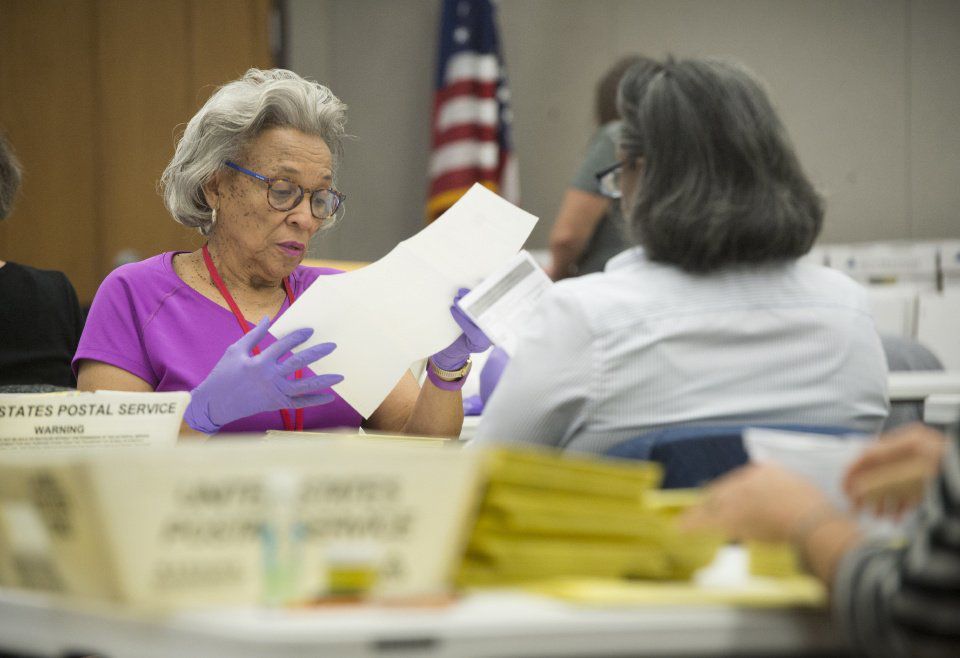
WASHINGTON • The Supreme Court ‘s conservative majority on Monday sounded skeptical of state laws that allow the counting of late-arriving mail ballots.
The court heard arguments in a case from Mississippi that also could affect voters in 13 other states and the District of Columbia, which have grace periods for ballots cast by mail. An additional 15 states that have more forgiving deadlines for ballots from military and overseas voters also could be impacted.
Colorado already requires mail ballots to be received at county clerks’ offices by the time polling locations close on Election Day, although Colorado and the majority of states allow certain military and overseas ballots to be accepted after polls close.
A ruling is expected by late June, early enough to govern the counting of ballots in the 2026 midterm congressional elections.
The court challenge is part of President Donald Trump’s broader criticism of most mail balloting, which he has said breeds fraud. Officials from states with mail balloting have insisted that the system is secure.
During the arguments, Justice Samuel Alito wondered about the appearance of fraud in situations where “a big stash of ballots” that arrive late “radically flipped” an election.
Defending the state law, Mississippi Solicitor General Scott Stewart pointed out that the Trump administration and its allies in the case have yet to submit a single case of fraud due to late-arriving mail ballots.
The court’s liberal justices indicated they would uphold state laws with post-Election Day deadlines.
“The people who should decide this issue are not the courts, but Congress, the states and Congress,” Justice Sonia Sotomayor said.
Forcing states to change their practices just a few months before the election risks “confusion and disenfranchisement,” especially in places that have had relaxed deadlines for years, state and city election officials told the court in a written filing.
California, Texas, New York and Illinois are among the states with post-Election Day deadlines. Alaska, with its vast distances and often unpredictable weather, also counts late-arriving ballots.
Lawyers for the Republican and Libertarian parties, as well as Trump’s administration, are asking the justices to affirm an appellate ruling that struck down a Mississippi law allowing ballots to be counted if they arrive within five business days of the election and are postmarked by Election Day.
Justices worried over the slippery-slope problems that could arise no matter who wins the case.
Ballots could be received until the start of the next Congress, two months after the election, Justice Neil Gorsuch suggested.
On the other side, Justice Elena Kagan said the logic of the challenge to late-arriving ballots also would be used to rule out early voting and absentee ballots.
Limits on early-voting also seemed to bother Chief Justice John Roberts, who seems to be the conservative member of the court most likely to side with Mississippi.
The court also grappled with whether state laws allowing for late-arriving ballots from military and overseas ballots could survive.
Last year, Trump signed an executive order on elections that aims to require votes to be “cast and received” by Election Day. The order has been blocked in pending court challenges.
At the same time, four Republican-dominated states — Ohio, Kansas, North Dakota and Utah — eliminated grace periods last year, according to the National Conference of State Legislatures and Voting Rights Lab.
The issue at the Supreme Court is whether federal law sets a single Election Day that requires ballots to be both cast by voters and received by state officials.
In striking down Mississippi’s grace period, Judge Andrew Oldham of the 5th U.S. Circuit Court of Appeals wrote that the state law allowing the late-arriving ballots to be counted violated federal law.
Oldham and the other two judges who joined the unanimous ruling, James Ho and Stuart Kyle Duncan, all were appointed by Trump during his first term.
Colorado lawmakers are currently considering a bill that would require clerks to mail ballots to voters one week sooner. Supporters said they are concerned that Trump may seek to purposefully affect postal service delivery times during the upcoming election.

Colorado joins 2 lawsuits against Trump administration over TANF, tariffs authority
Marissa Ventrelli
marissa.ventrelli@coloradopolitics.com
Updated 10 hours ago
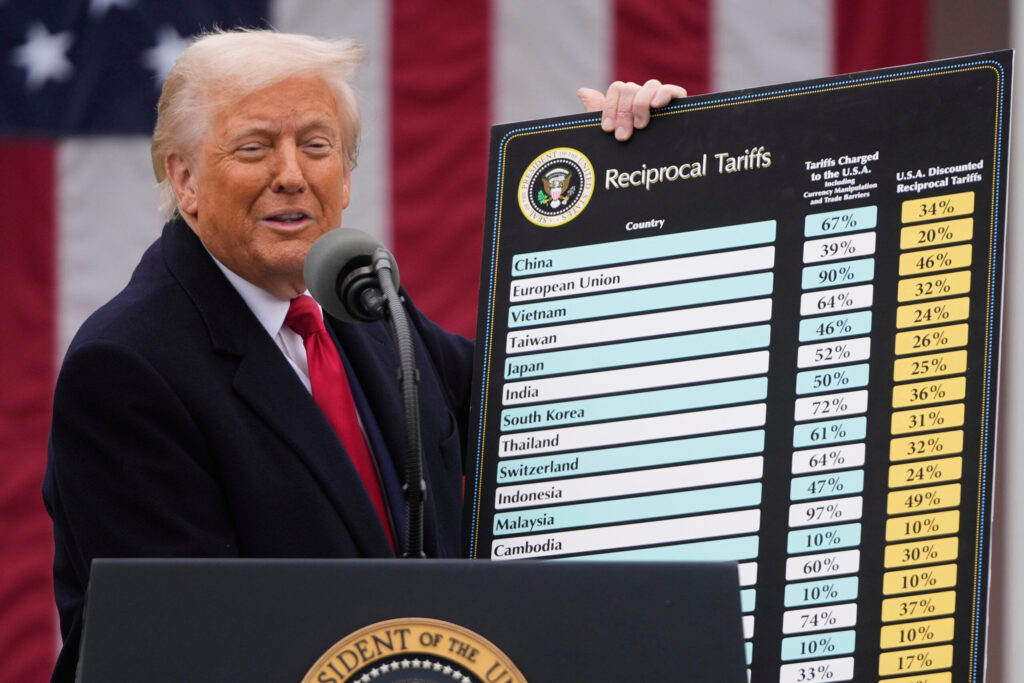
Colorado has joined a coalition of states in filing two new lawsuits against the Trump administration. The first lawsuit alleges the Trump administration’s move to expand the U.S. health department’s oversight of the Temporary Assistance for Needy Families would illegally...

Democratic group maps out path to Colorado House and Senate supermajorities
Marissa Ventrelli
marissa.ventrelli@coloradopolitics.com
Updated 11 hours ago
A national organization that works to elect Democrats to state legislatures has its sights on Colorado, unveiling a road map to establish a supermajority in both the House and Senate. Democrats have held a majority in the House since 2013...
Q&A with Mike Pence | Former vice president says GOP’s populist turn from conservatism isn’t permanent
Ernest Luning
ernest.luning@coloradopolitics.com
Updated 3 days ago
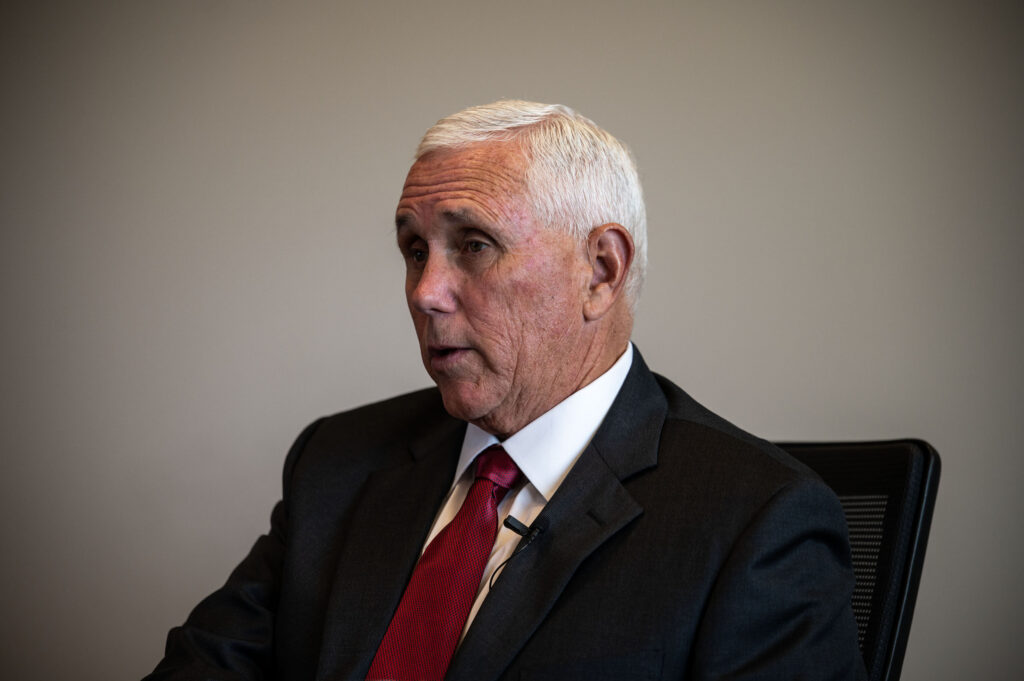
Former Vice President Mike Pence says he’s concerned that the Republican Party has taken a populist turn away from bedrock conservative principles during President Donald Trump’s second term, but he believes the party will return to its roots when Trump...
New federal plan sets short-term rules for Colorado River management
Marianne Goodland
marianne.goodland@coloradopolitics.com
Updated 3 days ago
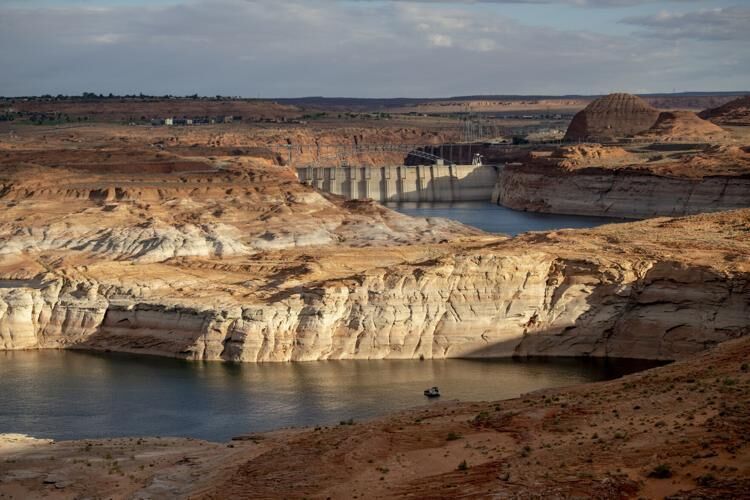
Interior Department’s plan spares Colorado from mandatory cuts for now After years of stalled negotiations among the seven states that rely on the Colorado River, the federal government on Friday released its own plan for managing the drought-strained system. Calling...
Colorado lawmakers start crafting strategy to manage $200 million in federal rural health funds
Marissa Ventrelli
marissa.ventrelli@coloradopolitics.com
Updated 2 days ago
Colorado officials have begun to strategize as the state is set to receive hundreds of millions of dollars from a federal program meant to boost rural health. Cristen Bates, deputy Medicaid director at the Department of Health Care Policy and...

Colorado districts prepare for school year amid mental health worries — will fewer cellphone distractions help?
Marissa Ventrelli
marissa.ventrelli@coloradopolitics.com
Updated 1 day ago
The signs of a new school year are everywhere — buses in the shop, teachers unpacking boxes, families ticking through supply lists — and behind the familiar rituals, Colorado districts are preparing for a year defined less by routine than...

Surprise candidate Shimon Blau cleared to face off against Melat Kiros in November
Ernest Luning
ernest.luning@coloradopolitics.com
Updated 1 week ago
Unaffiliated congressional candidate Shimon Blau, a Denver doctor, has qualified by petition for the general election in Colorado’s 1st District, where Democrat Melat Kiros defeated 15-term U.S. Rep. Diana DeGette in last month’s primary, the Colorado Secretary of State’s Office...
DOJ sues Colorado to overturn in‑state tuition for students living in the country illegally
Marianne Goodland
marianne.goodland@coloradopolitics.com
Updated 1 week ago
The U.S. Department of Justice has sued Colorado to dismantle a decade‑old law that grants in‑state tuition to students living illegally in the United States, setting up a high‑stakes clash over immigration policy. In 2013, after more than six tries...

Survey: Voters in Colorado’s 8th Congressional District back federal AI regulations
Marissa Ventrelli
marissa.ventrelli@coloradopolitics.com
Updated 2 weeks ago
A majority of both Democrats and Republicans in one of Colorado’s most competitive congressional districts say they support federal regulations on artificial intelligence, according to a recent survey. Members of both major parties residing in the state’s 8th Congressional District...
Democrat John Hickenlooper hauls in $1.3 million in 2nd quarter in Colorado’s U.S. Senate race
Ernest Luning
ernest.luning@coloradopolitics.com
Updated 2 weeks ago
U.S. Sen. John Hickenlooper’s reelection campaign raised just over $1.3 million in the year’s second quarter and finished the period with $2 million in the bank, leaving the first-term Democrat with nearly 80 times as much cash on hand as...
PREV
PREVIOUS

With new medical school set to open, Feinstein will step down as UNC president
GREELEY • Dr. Andrew “Andy” Feinstein, the charismatic president of the University of Northern Colorado, has announced that he will step down from his leadership role just on the cusp of what is perhaps his signature accomplishment being realized. He’ll leave office Aug. 1. Colorado’s third medical school — UNC’s College of Osteopathic Medicine — […]

Ethics panel dismisses complaint against Colorado agency chief Dan Gibbs
A state ethics panel has dismissed a complaint against Dan Gibbs, executive director of the Colorado Department of Natural Resources. The complaint, filed in December 2021 by the Republican-affiliated group Defend Colorado, alleged Gibbs awarded the think tank Keystone Policy Center a contract valued at $496,000. The contract was “for services related to public outreach […]