

Aurora lawmakers pass 72-hour notice requirement for homeless camp abatements

After heated debate among Aurora City Council members in Monday night’s meeting, the council passed a resolution requiring a 72-hour notice before homeless encampment abatements.
The resolution, brought forward by councilmember Rob Andrews, was approved to move forward in a recent study session, during which several of the council’s conservative members called it a “slow repeal” of camping laws put in place by the previous council.
In February 2025, Aurora lawmakers got rid of requirements to provide shelter options and a 72-hour notice before sweeps.
The 2025 decision followed a U.S. Supreme Court ruling that the Eighth Amendment’s cruel and unusual punishment clause does not prohibit the enforcement of a rule prohibiting camping on public property, according to the language of the ordinance.
Councilmember Andrews’ resolution would add the notice back. However, the notice is already a practice for homeless abatement officials, City Manager Jason Batchelor said. The resolution would simply inform people of that practice.
If the encampment presents an imminent public health or safety risk or is on CDOT property, the notice is not required, according to the proposed resolution.
Councilmembers Francoise Bergan, Angela Lawson, Curtis Gardner and Stephanie Hancock voted against the resolution Monday.
“It’s like whack-a-mole,” Bergan said. “I hear from residents and businesses all the time that they appreciate the fact that we put in a camping ban and that we do abate those encampments … I think this is going to harm neighborhoods, parks and businesses.”
Hancock echoed that she has heard positive feedback on the camping ban from residents, and said the 72-hour notice requirement goes against what residents want.
“It weakens enforcement, it creates uncertainty and it moves us away from the balanced approach that Aurora has worked hard to implement, one that prioritizes safety, accountability and real pathways to recovery,” Hancock said. “I am not in favor at all of this resolution.”
Councilmember Amy Wiles said the resolution is just “honesty” about how long it takes for homeless officials to clear encampments.
Wiles and Mayor Pro-Tem Alison Coombs said a 72-hour notice is humane, giving people the opportunity to gather their important documents and other personal items.
“That 72 hours gives them time to gather their personal belongings to take with them to the navigation center so they don’t start out at a negative,” Wiles said in a recent study session.
Mayor Pro Tem Alison Coombs agreed and added Monday that not providing a notice to people is “cruel.”
“What it proves when we are laying everything on the line to oppose this 72-hour notice is that the cruelty was always the point, that we want to be able to treat people cruelly and inhumanely,” Coombs said. “That is a problem and I don’t stand behind that.”
Also Monday night in a study session, councilmembers approved a Stage I Water Shortage to move forward to an official vote at a regular council meeting April 6.
With snowpack in the 2025-26 season well below average and temperatures reaching record highs, Aurora Water recommended passing the shortage, which would enact water restrictions starting April 7 if it passes in the meeting.
Enacting the Stage I Water Shortage means the city will implement a mandatory two-day per week watering limitation and a reduction in watering variance allowances for irrigation.
Normal restrictions allow for three days each week of residential outdoor turf irrigation, according to the city’s Water Shortage Response Plan.
Under Stage I, new turf installation and use of water features are not allowed, but water uses such as car washing and new tree installations are allowed. Private pools cannot be filled, but public pools can.
The goal, officials said, is to decrease outdoor water use across the city by 20%.
Marshall Brown, general manager of Aurora Water, called the water supply situation “dire.”
Aurora’s reservoirs are 58% full, which accounts for about one and a half years of usable water, he said, showing councilmembers a photo of Spinney Mountain Reservoir, Aurora’s main water storage asset, at less than half full.
Snowpack for areas where Aurora gets water sits about 49% of the average this year, he said.
“That’s bad,” Brown said. “Staff predict we’ll have about one-third of our typical water supply this year.”
Aurora Water is also cracking down on enforcement, using automated metering infrastructure to tell exactly how much water people are using.
A first violation is a fee-free warning. After the warning, a second violation comes with a $125 fee for single-family customers and a $250 fee for multi-family, commercial and irrigation customers. A third violation comes with a $250 fee for single-family customers and $1,000 for others, and additional violations are a $500 fee for single-family customers and $2,000 fee for others.
“I will note we are already getting letters from some of our customers telling us they heard this is coming and they don’t care what we tell them, they are not going to reduce their watering,” Brown said. “It could be an interesting year for us.”


From pause to progress — a better path on AI policy | OPINION
Colorado Politics
colorado-politics@coloradopolitics.com
Updated 10 hours ago
By Brittany Morris Saunders and Loren Furman Last year, following the Special Legislative Session, we wrote in Colorado Politics that delaying Colorado’s AI Act was not a setback. It was an opportunity. We asked state leaders to pause, bring more...

Cutting Prop 123 would cost Colorado far more than it saves | OPINION
Colorado Politics
colorado-politics@coloradopolitics.com
Updated 1 hour ago
By Luke Teater Colorado’s legislative budget writers are about to receive updated revenue forecasts and begin making final cuts to close a historic budget gap, and Proposition 123’s affordable housing financing tools are on the chopping block. But in their...
Appeals court reinstates Garfield County arson charge
Michael Karlik
michael.karlik@coloradopolitics.com
Updated 17 hours ago
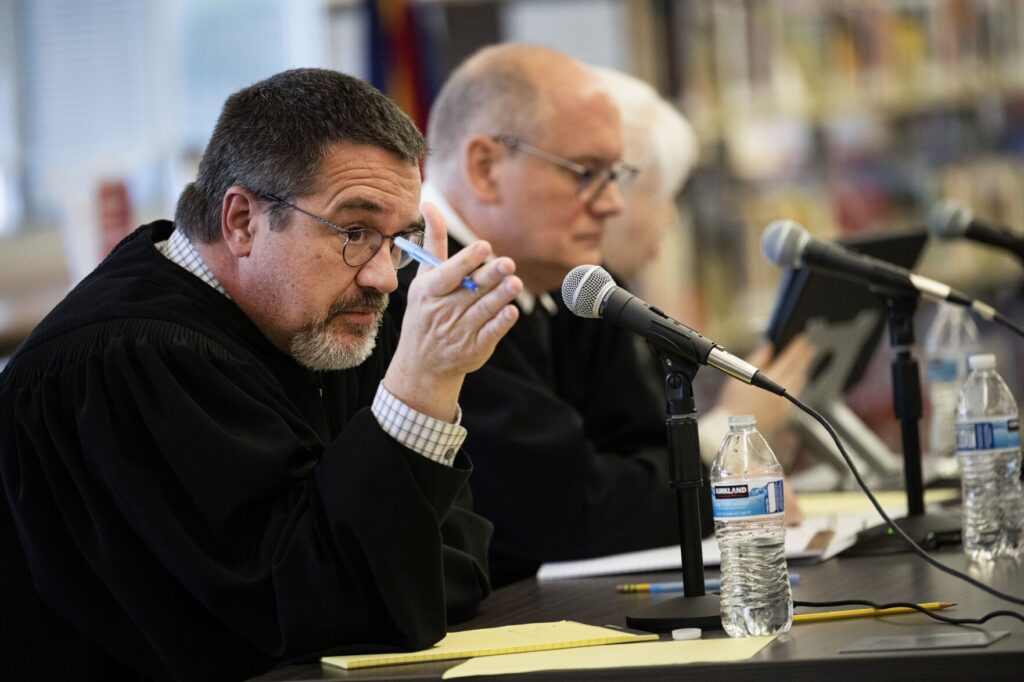
Colorado’s second-highest court reinstated a Garfield County defendant’s arson charge on Thursday, concluding a trial judge improperly credited a witness’s claim that she alone was responsible for starting the fire. A sheriff’s deputy responded to a brush fire near Parachute...

Democratic US Sen. John Hickenlooper qualifies for Colorado primary by petition, will skip assembly
Ernest Luning
ernest.luning@coloradopolitics.com
Updated 16 hours ago
U.S. Sen. John Hickenlooper has qualified for Colorado’s Democratic primary after the first-term incumbent submitted enough valid petition signatures to make the ballot, state officials said. Hickenlooper is facing primary challenges from state Sen. Julie Gonzales, D-Denver, and university professor...
Federal judges rebuke ex-Colorado judicial discipline director for conduct in lawsuit
Michael Karlik
michael.karlik@coloradopolitics.com
Updated 18 hours ago
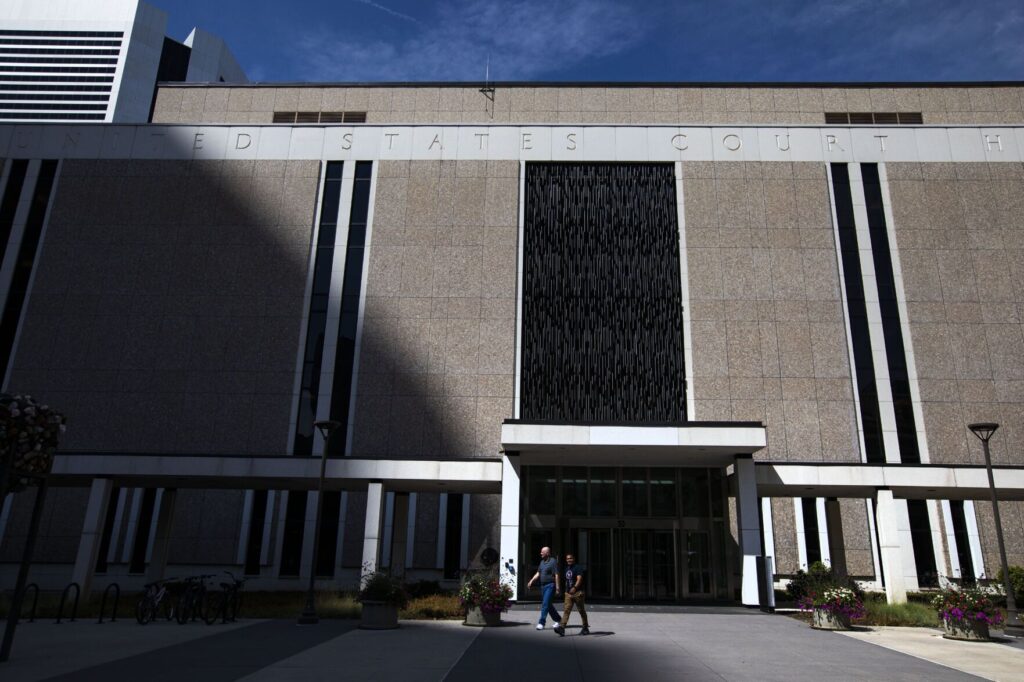
A pair of federal judges expressed a desire on Thursday to break the logjam on a lawsuit by Colorado’s former judicial discipline director against the state Supreme Court and related entities, while simultaneously showing little tolerance for the plaintiff’s scorched-earth...

Democratic bill would let recipients of ‘conversion therapy’ sue Colorado providers with no statute of limitations
Marissa Ventrelli
marissa.ventrelli@coloradopolitics.com
Updated 16 hours ago
Colorado lawmakers have advanced a proposal that would allow people who underwent conversion therapy to sue licensed providers for damages, moving the measure forward on a party-line vote in the House Judiciary Committee. House Bill 1322, proposed by Democratic Reps....
Pinnacol separation bill delayed as Colorado budget remains in flux due to $1.5B deficit
Marianne Goodland
marianne.goodland@coloradopolitics.com
Updated 16 hours ago
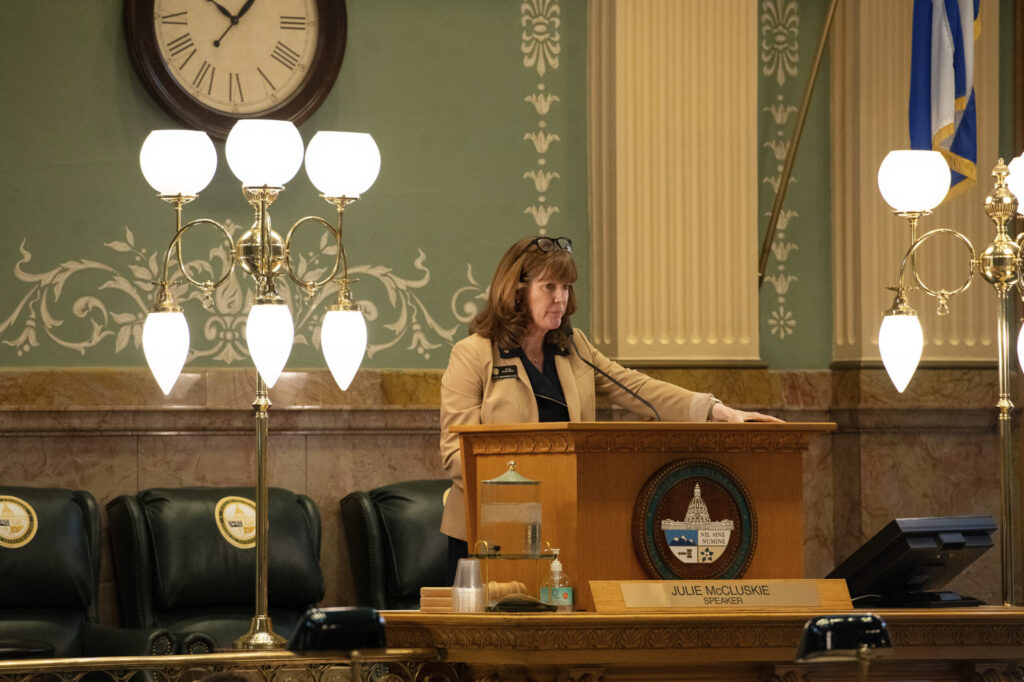
A bill that would allow Pinnacol Assurance to formally sever its remaining ties with the state appears unlikely to emerge anytime soon, as House leaders juggle a massive budget shortfall, unresolved negotiations with key stakeholders, and growing doubts about whether...

100 days until America250: Five host cities unveiled for July 4 celebrations
Emily Hallas, Washington Examiner
emily.hallas.washington.examiner@gazetteedit.wpenginepowered.com
Updated 22 hours ago
America250, the entity tasked by Congress with marking the United States’ semiquincentennial, on Thursday revealed further details about its sweeping plans to celebrate the milestone. America250 chairwoman Rosie Rios launched the official 100-day countdown to July 4, and said the...

Comedy showcase to feature new and established talent | NONPROFIT REGISTER
Joanne Davidson Special to Colorado Politics
joanne-davidson-special-to-colorado-politics@coloradopolitics.com
Updated 23 hours ago
MIZEL ARTS AND CULTURE CENTER Denver News: A host of emerging comedians will perform along with Denver native and nationally recognized comic Noah Gardenswartz when the Mizel Arts and Culture Center hosts The Tight Five: Standup Comedy Showcase. The up-and-comers take the stage...

Iran and the US harden their positions as Tehran tightens its grip on the Strait of Hormuz
Jon Gambrell
jon.gambrell@associatedpress.com
Updated 23 hours ago
DUBAI, United Arab Emirates (AP) — Iran and the United States appeared at an impasse Thursday, with each side hardening its position over talks and setting the stage for another potential escalation in the Middle East war. Thousands more U.S....