

From pause to progress — a better path on AI policy | OPINION
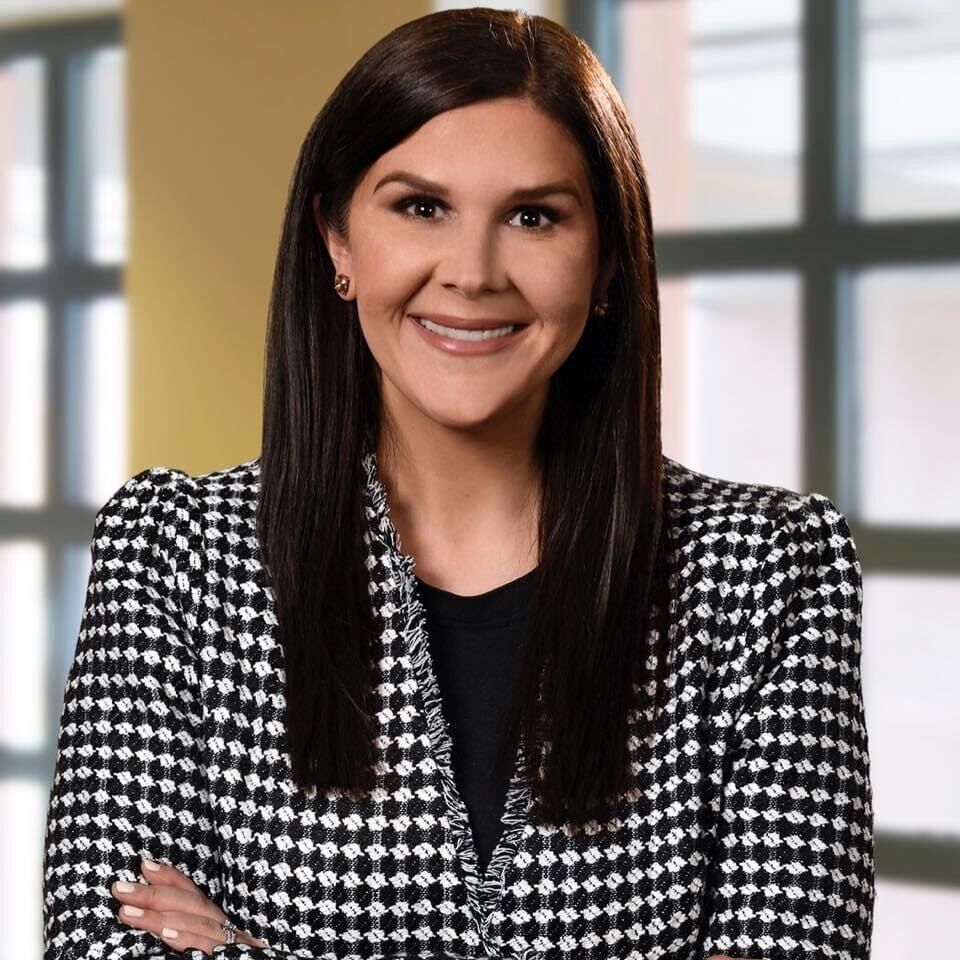

By Brittany Morris Saunders and Loren Furman
Last year, following the Special Legislative Session, we wrote in Colorado Politics that delaying Colorado’s AI Act was not a setback. It was an opportunity.
We asked state leaders to pause, bring more voices to the table and take the time to get this right. That is exactly what happened.
For more than two years, stakeholders across Colorado have been grappling with how to approach AI policy. For the past five months, the structured process we called for has brought that work into focus.
Through the Governor’s AI Policy Working Group, consumer advocates, labor leaders, technology developers, employers, health care providers, education leaders, and business and tech associations like ours have spent hundreds, if not thousands, of hours working through one of the most complex policy challenges of our time.
The group was tasked with a clear but challenging goal: develop a policy framework that protects consumers while allowing Colorado’s culture of innovation to thrive. That meant balancing strong safeguards with clear, workable rules and ensuring the state remains competitive.
The result is a revised framework that reflects the group’s painstaking work and a clear path forward. The framework received unanimous support, with members voting to support it either as written or with targeted changes, as we did.
That progress did not happen on its own. It was made possible by a structured, facilitated process led by Berrick Abramson, who brought stakeholders together, ensured every voice was heard, and helped navigate difficult tradeoffs. In a conversation this complex, that kind of facilitation was essential.
This outcome represents a meaningful shift from Senate Bill 205, the Colorado AI Act.
While well intentioned, SB 205 needed greater clarity in key areas. It applied broad requirements without clearly distinguishing between those who build and those who use AI systems, and risked sweeping in low-risk applications that do not affect people’s access to essential services.
The revised framework takes a fundamentally different approach.
It more clearly distinguishes between developers and deployers, aligning responsibility with how these systems are built and used. It focuses on consequential decisions where the stakes are highest, rather than regulating low-risk uses.
It also delivers practical consumer protections. People will know when AI is used in consequential decisions, receive understandable explanations when outcomes are adverse and have the ability to request human review.
And it creates a more workable enforcement structure, with oversight led by the Attorney General and a clear rulemaking path to address issues. Strong protections and clear rules should go hand in hand.
Just as important as the policy itself is how it came together.
Consumer and labor advocates pushed to ensure protections are effective and strong. Employers and deployers brought forward how AI is used in practice. Developers contributed both technical expertise and real-world insight into how these systems are built, deployed and improved. Business and technology associations like ours represented the voice of economic drivers across Colorado, from the smallest entrepreneurs to large employers. The facilitator helped bring those perspectives together into a framework that can actually work.
This kind of progress requires bringing people together and working through difficult issues with discipline and transparency. That is exactly what this process delivered.
The result is not perfect. As drafting moves forward, continued collaboration will be important to ensure the framework works in practice. But it reflects meaningful progress and a more balanced, practical approach.
Brittany Morris Saunders is president and chief executive of the Colorado Technology Association. Loren Furman is president and chief executive of the Colorado Chamber of Commerce.

Ain’t Polis’ Peters commutation a pity? | Hal Bidlack
Hal Bidlack
hal-bidlack@coloradopolitics.com
Updated 17 hours ago
I am hoping that, yet again, my long-suffering and very forgiving editor will pardon my rambling thoughts today, as there are too many open tabs on my computer that deal with issues I want to talk about (Ed: pretty used...

Colorado House Democrats’ caucus finances under scrutiny as ethics case against leader advances
Marianne Goodland
marianne.goodland@coloradopolitics.com
Updated 22 hours ago
Democratic lawmakers told a legislative ethics panel that a leader’s management of caucus finances left them with unanswered questions, disputed reimbursements and a breakdown in communication that ultimately triggered a formal complaint. The House Ethics Committee is examining a complaint...

Colorado River crisis: Lake Mead, Lake Powell inch closer to ‘dead pool’
Marianne Goodland
marianne.goodland@coloradopolitics.com
Updated 21 hours ago
In the past 10 days, both Lake Mead on the Arizona-Nevada border and Lake Powell roughly 300 miles northeast on the Utah-Arizona line have recorded their lowest water levels since the reservoirs were first filled. Lake Mead, the nation’s largest...

Colorado lieutenant governor candidate Markert says early discipline and key mentors set his course
Marianne Goodland
marianne.goodland@coloradopolitics.com
Updated 1 day ago
Editor’s note: This is the first installment in a three-part series examining Colorado’s candidates for lieutenant governor. In this piece, Colorado Politics speaks with George Markert, the Republican running mate to gubernatorial candidate Victor Marx. Marx is competing against Democrat...

Colorado, like America, past due for generational change in politics | Miller Hudson
Miller Hudson
miller-hudson@coloradopolitics.com
Updated 2 days ago
I was 27 before I ever voted for president. At 19, in 1964, the Constitution had not yet been amended establishing 18-year-old voting eligibility. In 1968, I was serving overseas with the U.S. Navy at a time when there was...

Farmers and ranchers win on NIETC cancellation | Rachel Gabel
Rachel Gabel
rachel-gabel@coloradopolitics.com
Updated 2 days ago
The Department of Energy rolled into Lamar last week and Office of Electricity Assistant Secretary Katie Jereza stood in her neat, green suit in front of a room filled with farmers, ranchers and landowners. The crowd was filled with straw...

Going after the wrong butts | Jon Caldara
Jon Caldara
jon-caldara@coloradopolitics.com
Updated 5 days ago
Mayor Mike Johnston proclaimed, “It is past time Big Tobacco cleaned up the big mess it’s created.” Yep. Denver is suing tobacco companies for the cigarette butts littering the city. Because Denver’s Big Mess couldn’t possibly be the fault of...

Jeff Crank, Jessica Killin set to face off in 2 debates in Colorado’s 5th Congressional District
Ernest Luning
ernest.luning@coloradopolitics.com
Updated 4 days ago
Republican U.S. Rep. Jeff Crank and Jessica Killin, his Democratic challenger, have agreed to debate twice in the weeks leading up to the general election in Colorado’s 5th Congressional District, their campaigns have said. Crank is seeking a second term...

CSI study reviews impacts of Colorado’s mandatory sex‑trafficking sentencing measure
Marissa Ventrelli
marissa.ventrelli@coloradopolitics.com
Updated 22 hours ago
A new report by the think-tank Common Sense Institute examines what could happen if Colorado voters approve Initiative No. 108, which establishes mandatory life sentences for offenders convicted of sexual trafficking of a minor. The measure is backed by Protect...
Three districts that will answer key Colorado political questions | Paula Noonan
Paula Noonan
paula-noonan@coloradopolitics.com
Updated 6 days ago
Colorado’s legislature used to be a place where neither party was dominant. Dozens of seats were competitive and House and Senate majorities switched regularly. From 2010 to 2020, the House was predominantly Democratic with one two-year assembly under Republicans. The...
PREV
PREVIOUS

Cutting Prop 123 would cost Colorado far more than it saves | OPINION
By Luke Teater Colorado’s legislative budget writers are about to receive updated revenue forecasts and begin making final cuts to close a historic budget gap, and Proposition 123’s affordable housing financing tools are on the chopping block. But in their urgency to close one deficit, legislators risk deepening another. As a Deputy Director at the […]

Planned Parenthood, groups launch campaign against transgender ballot measures in Colorado
Planned Parenthood and other groups have launched a coalition to oppose two ballot measures that would ban transgender surgeries among children and require student athletes to only join sports teams that correspond to their biological sex. The two measures will appear in this year’s November ballot, setting the stage for a statewide debate over sports, […]