

Want to talk to the Colorado legislature? Be nice | Hal Bidlack
As I peruse Colorado Politics each week, in search of a topic upon which I can wax philosophic, I sometimes come across stories that seem, frankly, to be quite dull or even unimportant upon first glance. But when I dig a bit deeper, sometimes things appear more significant than at first glance.
Such is the case with the CoPo story, “10th Circuit dismisses challenge to Colorado legislature’s decorum rules.” This case raises the question of whether a state legislature can compel civility, or at least what the majority party believes to be civility. Ruling on an appeal, the federal appellate court ruled yes, decorum rules can be created, and you can’t sue because you believe that civility rules stifle your free speech.
Let me say right off, I’m a believer in civility. I find little to admire in those who spew their words with the invective of excoriation. I frankly don’t respect those who can’t keep a civil tongue, and I don’t believe I’ve ever been swayed in an opinion by being yelled at regarding my position by any such uncivil person.
That is why I think this case is rather interesting, and perhaps more important historically, than it might initially appear. A federal appeals court, based in Denver, ruled Colorado lawmakers cannot be sued because they created and then enforced rules of decorum in the operation of their legislative body. Their legislative immunity, the court found, extends to such actions.
Now, I know what you are thinking: how often are people actually being uncivil in hearings and other governmental interactions? I’m thinking, not too often. But it has occurred, and in ways that thoughtful people can disagree on, as to whether the comments were truly uncivil.
The case that apparently raised these concerns was in regard to House Bill 1071, is a case that frankly I can’t understand why there would be any opposition in the first place. This bill, now Colorado law, allows convicted felons the ability to legally change their names to align with their own gender identity. Non-felons can apparently make this change, and when one thinks about what felons should be denied, after finishing the debt to society, I confess forbidding name changes doesn’t seem to be to be something to add to the burden of being a felon.
In a hearing of the House Judiciary Committee, then chair Mike Weissman (whom I know a tiny little bit) called a recess during one witness’s testimony due to that witness repeatedly referred to trans women, and said “gender is nothing,” which generated boos from the audience. A similar event took place in another hearing, and the folks in charge said such testimony violated decorum rules for the legislature. I’m not an expert in Colorado legislative deportment, but I accept the premise some behaviors are at least of concern.
Others disagreed, and sued, and a judge dismissed the case, basically upholding the idea legislative immunity extended to decorum rules. As one judge wrote, “Under the circumstances of this case, the Court finds that Defendants’ alleged acts were related to Defendants’ legislative function of overseeing public testimony on pending legislation and gathering relevant information and input from the public. These are ‘integral steps in the legislative process.’”
Ok, I get that. I get legislators must feel free to express their opinions, and a civil exchange of ideas must also include some basic, well, civility.
The plaintiffs in the case had argued allowing such decorum rules was essentially controlling free speech and therefore put the legislature above the First Amendment. I admit that argument kind of rings true with me. I consider myself a Hugo Black absolutist on free speech. As an associate justice of the U.S. Supreme Court years ago, Black considered the First Amendment’s restrictions on Congress were “clear, unequivocal, and absolute.”
Yet the Supreme Court precedent the Colorado appeals court cited from a 1951 case, Tenney v. Brandhove, ruled, basically, members of legislative bodies must be able to operate freely, without worry they might get sued all the time for saying controversial things. Interestingly, then Justice Black agreed with the majority.
I suspect that were I in the state legislature and there was a witness or two who continuously tried to disrupt a hearing, I’d get pretty tired of that type of childish behavior and might well want to invoke a decorum rule or two.
But that absolutist streak in me still causes me concern. I often told my students at the Air Force Academy the really important court cases were rarely clearcut and obvious. Often, the issue is rights in conflict, and courts must often decide which right is the most grievously injured or which is more vital to our national character.
So, as is so often the case in these missives of mine, after several hundred words pondering an important principle, my necessary response must be “I don’t know, it depends on the circumstances.” A very unsatisfactory answer, to be sure.
How about you? Is decorum worth something in this political age? I think so, but around the edges, it gets tricky.
Hal Bidlack is a retired professor of political science and a retired Air Force lieutenant colonel who taught more than 17 years at the U.S. Air Force Academy in Colorado Springs.

The outrages mount | Hal Bidlack
Hal Bidlack
hal-bidlack@coloradopolitics.com
Updated 10 hours ago
My kindly and forgiving editors understand that, from time to time, I can’t help myself from leaping atop my rickety soapbox to vent. And, like many other political commentators have already done, I could easily fill this entire missive with...

Rural Colorado deserves a tax holiday | GUEST COLUMN
Eric Mulder
jstooksberry@gmail.com
Updated 10 hours ago
Spend enough time in Colorado’s Eastern Plains, the San Luis Valley, or the Western Slope, and you’ll see boarded-up storefronts, schools consolidating classrooms, and small rural communities stretching every dollar to keep basic services afloat. Once the backbone of Colorado’s...
Colorado board permits state to appeal injunction against arthritis drug price cap
Marissa Ventrelli
marissa.ventrelli@coloradopolitics.com
Updated 14 hours ago
A Colorado board voted Friday to allow the Attorney General’s Office to fight an injunction against a price cap on a drug that treats arthritis. A U.S. district court judge had granted the company Amgen a preliminary injunction, temporarily blocking...

Colorado schools receive $24 million for free meals program
Marissa Ventrelli
marissa.ventrelli@coloradopolitics.com
Updated 14 hours ago
The Colorado Department of Education is providing Colorado schools with nearly $24 million in grant funding to implement a free lunch program. Approved by voters in 2022, the Healthy School Meals for All provides free breakfast and lunch to all...
‘Be prepared to march in the streets’ | Miller Hudson
Miller Hudson
miller-hudson@coloradopolitics.com
Updated 3 days ago
It was early in 1974 when I first met Tim Wirth as he announced his candidacy for Congress, challenging Republican incumbent Don Brotzman. Although I had only resided in Colorado two years, I was drafted to serve as a Democratic...

Colorado districts prepare for school year amid mental health cuts. But will less cellphone distractions help?
Marissa Ventrelli
marissa.ventrelli@coloradopolitics.com
Updated 4 days ago
The signs of a new school year are everywhere — buses in the shop, teachers unpacking boxes, families ticking through supply lists — but behind the familiar rituals, Colorado districts are preparing for a year defined less by routine than...
Surprise candidate Shimon Blau cleared to face off against Melat Kiros in November
Ernest Luning
ernest.luning@coloradopolitics.com
Updated 4 days ago
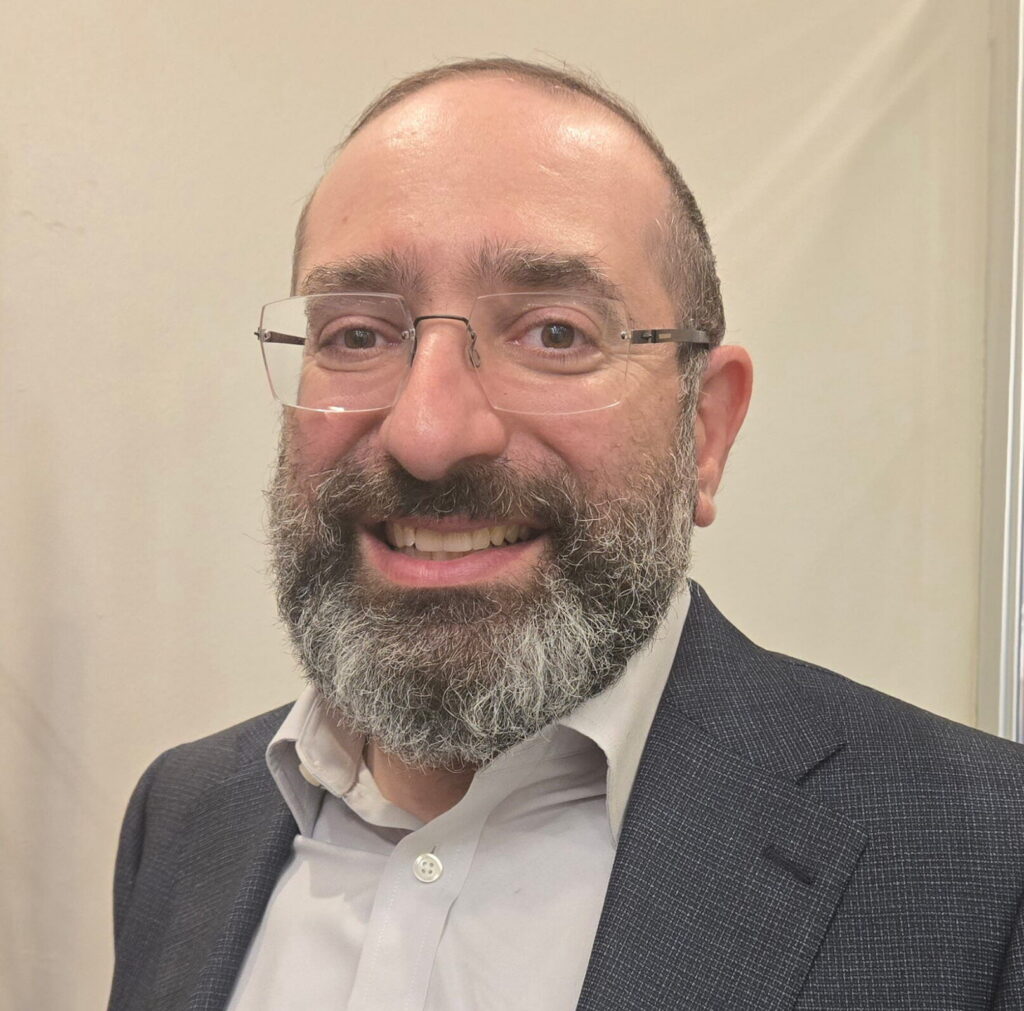
Unaffiliated congressional candidate Shimon Blau, a Denver doctor, has qualified by petition for the general election in Colorado’s 1st District, where Democrat Melat Kiros defeated 15-term U.S. Rep. Diana DeGette in last month’s primary, the Colorado Secretary of State’s Office...

UNC opens College of Osteopathic Medicine
Marissa Ventrelli
marissa.ventrelli@coloradopolitics.com
Updated 4 days ago
The University of Northern Colorado held a grand opening for its new College of Osteopathic Medicine on Friday, with Gov. Jared Polis in attendance to celebrate the culmination of a two-year, $127.5 million project. The project was funded through legislation...
Victor Marx, GOP candidate for governor, faces 100-plus campaign finance complaints
Marianne Goodland
marianne.goodland@coloradopolitics.com
Updated 13 hours ago
Victor Marx’s gubernatorial campaign has been hit with more than 140 campaign finance complaints, although most have been consolidated by the state’s election office because they follow similar alleged violations. Marx faces Attorney General Phil Weiser, who won the Democratic...
Primary voters rejected big money in politics | Paula Noonan
Paula Noonan
paula-noonan@coloradopolitics.com
Updated 3 days ago
While we’re in an election campaign lull between now and Labor Day, we have time to consider the impact of $102 million in campaign contributions in the primary. In the general election, more money will fill candidate campaign coffers, and...
PREV
PREVIOUS

Constituents still message DC — but are our reps even listening? | Miller Hudson
Each time I visit the nation’s capital, it feels a bit like a homecoming — not that I would ever wish to return as a resident. Yet, I did grow up outside the city in Montgomery County, Maryland from 1956 to 1972. Though I visited regularly during the 1980s and 1990s on business, I’ve only […]
Colorado ethics panel tells legislator to attend sexual harassment training
Colorado’s House ethics panel admonished a Republican legislator over allegations he used a master key to access areas of the Capitol that he was not permitted to enter and that he had made sexually harassing comments to several female lawmakers. In addition to sending a letter to Rep. Ron Weinberg, R-Loveland, the House Ethics Committee […]