

Wolf depredation payouts in Colorado top $700,000 in 2025
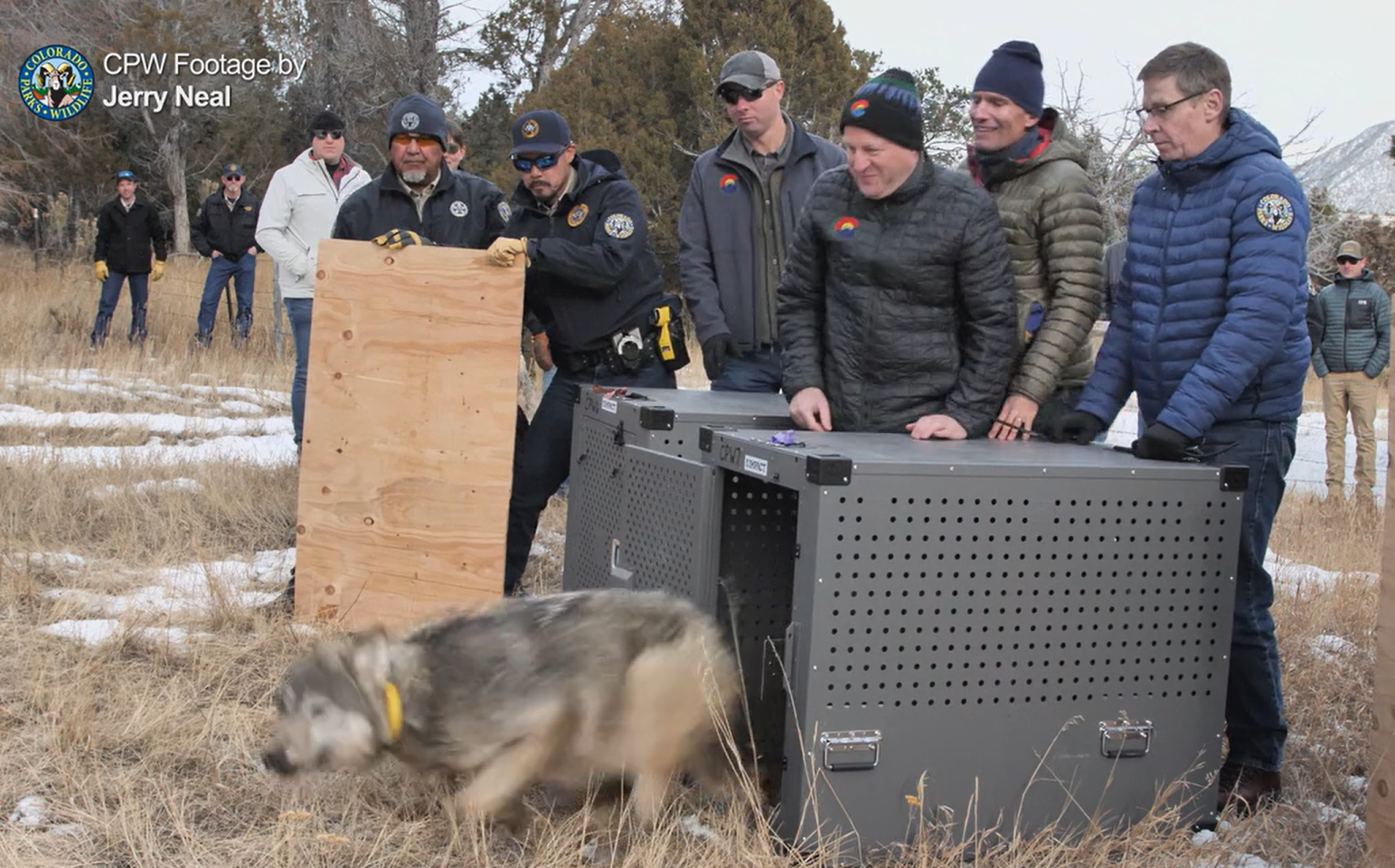
The Colorado Parks and Wildlife Commission approved more than $706,000 in wolf depredation claims for 2025 during its March meeting last week, an amount that exceeds the state’s annual wolf compensation fund by more than double.
The commission rejected another $53,611 in claims.
But more are expected, based on comments from Colorado Parks and Wildlife staff in January.
Of the claims approved last week, $615,000 was listed on the commission’s consent agenda; another claim for $125,265 was split, with $91,170 approved for payment and the rest denied. There were several other claims recommended for denial by the wildlife staff, which the commission affirmed.
A Colorado Parks and Wildlife official told a joint meeting of the House and Senate agriculture committees in January that the division received more than $1 million in claims for the 2025 year.
The agency’s database shows 32 depredation events in 2025, with more than three dozen dead cows, calves, lambs and ewes, yearling heifers and dogs. Those kills happened in Jackson, Routt, Gunnison, Pitkin, Grand, Eagle, Rio Blanco and Montrose counties.
The state’s wolf compensation fund receives $350,000 in general fund dollars per year, but the state is required by the wolf reintroduction program adopted primarily by Front Range voters in 2020 to cover all claims, regardless of amount.
In 2024, the agency paid out more than $600,000 in claims and had to rely on other agency funds, including federal dollars and non-license fees, to cover the balance.
The agency has now paid out more than $1.3 million in claims in just two years.
The 2024 claims came primarily from Grand and Jackson counties.
In January 2025, Colorado Parks and Wildlife released 15 wolves from British Columbia into Pitkin and Eagle counties. In addition, the agency also released the Copper Creek pack in Pitkin County, which had been responsible for numerous attacks on livestock and dogs in Grand County the previous year.
Pitkin County saw the highest number of wolf kills in 2025, with 10 separate events that led to the deaths of 11 cows and calves.
What drives the high dollar claims is not the direct costs of replacing livestock, which are capped at $15,000 per animal. Rather, it’s the indirect costs, which include lost livestock and the impact of wolves on reproduction and market weights.
And that’s the basis for a petition submitted to Colorado Parks and Wildlife in February by a host of local and national animal rights groups, including ColoradoWild, which previously included John Emerick, now a CPW commission-nominee, on its board. His partner, Delia Malone, is the founder of ColoradoWild, which is focused on wolf restoration efforts.
The petition claims modifying payment for indirect losses will be a “great benefit” to livestock producers and that it will “strengthen the bonds” between ranchers and wildlife managers.
Compensation should be limited to actual losses of animals to comply with state law and to ensure the long-term viability of the compensation program, the petition states.
In addition, compensation should be paid, with proof of the livestock producers’ prior efforts to minimize the conflict.
Current rules state that the basis for claiming indirect losses is decreased weights for calves and yearlings, and decreased conception rates for cows and sheep. The producer must submit data on conception and market weights for the three years preceding the first depredation event.
Under the petition, ranchers must prove, with a preponderance of evidence, that the indirect losses were caused by the gray wolves. Current rules require the rancher to show only a correlation between wolves and indirect losses.
“Current guidelines for indirect losses are grossly insufficient to prove that wolves were a contributing cause, let alone a primary cause, of loss,” the petition states.
“To remedy this insufficiency, Petitioners request that the Commission adopt the proposed regulation above and develop specific guidelines regarding the documentation and proof to meet the evidentiary requirements in the proposed new regulation.”
The petition states that the lack of proof for indirect losses tied to wolves “opens the door to widespread abuse and misuse of taxpayer funds.” The letter cites other causes it claims are more responsible for indirect losses, such as climate change, poisonous plants, disease, illness, and other predators, even in areas where wolves are present.
The petition also acknowledges there is little peer-reviewed research on the indirect effects of wolves, making it difficult to estimate the extent of indirect losses.
Coloradans for Responsible Wildlife Management claimed in a Facebook post this week that the petition comes from the same advocacy groups “that championed the compensation program during the Proposition 114 stakeholder process, and are now filing coordinated citizen petitions to gut it.”
No date has been set for the commission to review the petition.


Democratic candidate in Colorado’s 4th CD urges long-term water planning
Marianne Goodland
marianne.goodland@coloradopolitics.com
Updated 17 hours ago
The Democrat hoping to become the next representative of Colorado’s 4th Congressional District on Thursday made her case on the final day of Colorado Water Congress in Steamboat Springs. Eileen Laubacher, who spent 34 years in the U.S. Navy and...

Castle Rock council declines to censure member accused of misconduct
Nicholas Fogleman
nicholas.fogleman@denvergazette.com
Updated 2 days ago
A Castle Rock Town Council meeting Tuesday became consumed by allegations that a councilmember attempted to trade a town policy decision for the withdrawal of a recall effort against him. The allegations against Councilmember Mark Davis surfaced during public comment...

Proposal to cap Colorado income tax rate qualifies for November ballot
Thelma Grimes
thelma.grimes@coloradopolitics.com
Updated 5 hours ago
Election officials on Thursday confirmed that the proposal to cap the state’s income tax at the current rate submitted signatures and voters will consequently decide its fate this November. The fight over tax rates is part of the tug and...

Healthcare Freefall: Telluride mother’s roadside birth underscores shrinking access to OB care in Colorado
Rachael Wright, Special to Colorado Politics
rachael.wright@coloradopolitics.com
Updated 1 day ago
Editor’s Note: Colorado’s healthcare system is entering a period of accelerating instability — a “tsunami,” as multiple leaders describe it — driven by collapsing hospital finances, shrinking Medicaid reimbursements, disappearing services and a political fight over who is responsible for...

Healthcare Freefall: Longer drives, fewer options for maternity care in Colorado
Thelma Grimes
thelma.grimes@coloradopolitics.com
Updated 6 hours ago
Editor’s Note: Colorado’s healthcare system is entering a period of accelerating instability — a “tsunami,” as multiple leaders describe it — driven by collapsing hospital finances, shrinking Medicaid reimbursements, disappearing services and a political fight over who is responsible for...

Healthcare freefall: Breast cancer survivor shares strain of rural treatment travel
Hap Fry, Special to The Gazette
hap-fry@gazette.com
Updated 1 day ago
Editor’s Note: Colorado’s healthcare system is entering a period of accelerating instability — a “tsunami,” as multiple leaders describe it — driven by collapsing hospital finances, shrinking Medicaid reimbursements, disappearing services and a political fight over who is responsible for...

Judge grants partial injunction to GEO in fight against state health inspection law
Kyla Pearce
kyla.pearce@gazette.com
Updated 3 days ago
A judge ruled Thursday that The GEO Group does not have to follow parts of a new state law requiring more frequent health and safety inspections at the U.S. Immigration and Customs Enforcement processing center in Aurora. Under the order...

Parker man faces 20 years to life for serial sexual assaults
Nicholas Fogleman
nicholas.fogleman@denvergazette.com
Updated 3 days ago
A 25-year-old Parker man who sexually assaulted three women in 2025 pleaded guilty Wednesday and will serve 20 years to life in prison. Javier Rodriguez-Andrade pleaded guilty to charges stemming from three sexual assaults involving women ages 19 to 24. ...
Douglas County moves to Stage 1 fire restrictions following recent rain
Nicholas Fogleman
nicholas.fogleman@denvergazette.com
Updated 3 days ago
Douglas County has downgraded its fire restrictions from Stage 2 to Stage 1 on Thursday following recent rainfall and moderate fire conditions, according to the Douglas County Sheriff’s Office. The change applies to unincorporated Douglas County, as well as the...

Democratic gubernatorial candidate Phil Weiser promises to appoint rural outreach director, water adviser
Marianne Goodland
marianne.goodland@coloradopolitics.com
Updated 2 days ago
Democratic gubernatorial candidate and current Attorney General Phil Weiser told the Colorado Water Congress Thursday he intends to appoint a rural outreach director and a water policy adviser should he win the election in November. Weiser’s speech at the Steamboat...
PREV
PREVIOUS

U.S. intelligence report suggests Iranian regime is not at risk of imminent collapse
Washington Examiner Recent U.S. intelligence reports have assessed that after nearly two weeks of Operation Epic Fury, Iran’s government leadership is not in danger of imminent collapse. The evaluation comes after 12 days of regular military strikes by United States and Israeli forces, which led to the deaths of Iran’s Ayatollah Ali Khamenei, his wife, […]

Federal judge: Government violated order shielding man from deportation in 'one-off mistake'
A federal judge acknowledged on Thursday that the government violated his order by deporting a man in immigration detention during his pending court case, but it “serves nobody’s interests” to require the government to return him. On Feb. 18, Tesfami Chael filed a habeas corpus petition in Colorado’s U.S. District Court to challenge his immigration […]