Firefighters’ deaths prompt debate over 100% suppression wildfire strategy
On July 22, 2026, the chief of the U.S. Forest Service testified before a House Agriculture subcommittee that his agency pursues a “full suppression” strategy to contain all fires while they are still small, rather than allowing them to burn for ecological benefits.
The testimony from Tom Schultz, the fire chief, came just two days before Nathan Matthews, 42, died as the result of injuries sustained in the Snyder Fire that had already claimed the lives of three other firefighters — Emily Barker, Nick Hutcherson and Sydney Watson — and severely injured a fifth one.
The five firefighters were attached to a Rifle Helitack crew that had been deployed to a remote area to suppress what were then small fires. Gusting winds and red flag conditions had contributed to a burnover event and although a helicopter was dispatched to rescue the trapped firefighters, heavy smoke meant landing was impossible.
Full suppression
The deaths of Barker, Hutcherson, Matthews and Watson prompted a new debate over whether the “100% Suppression” strategy needs to be revisited, as firefighters across the U.S. sound the alarm on staffing shortages and drier temperatures drastically alter how fires behave.
The full suppression strategy is built on the argument that rapid action prevents fires from becoming catastrophic events that endanger lives, property and infrastructure and that leaving fires to burn carries inherent containment risks and degrades air quality.
Proponents of full suppression point to the fact that not only do populations close to major wildfires suffer from toxic smoke but fires also enhance stream flow because they burn away vegetation that draws water from the soil, streams and rivers. According to a UCLA-led study published in the Proceedings of the National Academy of Sciences, large-scale fires could increase the risk for catastrophic flooding and landslides in and around burn areas.
Others countered that, with federal agencies facing both staff and financial stress, as well as with high fuel loads and higher temperatures, full fire suppression may not be a viable long-term solution.
Back in 1935, the U.S. Forest Service had established its “10 a.m. Policy,” which stated that any new wildfire must be controlled and extinguished the morning after it was first reported. This policy was not abandoned until 1978. By that time, it had become financially unsustainable. Meanwhile, five decades of suppression had left forest floors thick with dead wood and dense undergrowth. This fuel buildup contributed to hotter, faster and longer fires.
Fast forward to April, when U.S. Agriculture Secretary Brooke Rollins reiterated the department’s 100% suppression strategy, sending instructions to agency leaders to “accelerate initial attack and use a full suppression strategy, in coordination with our interagency partners, across all land jurisdictions to suppress fires early and limit growth.”
The Rifle Helitack crew
The Rifle Helitack crew — to which Barker, Hutcherson, Matthews and Watson were attached — is among the specialized teams that get transported by helicopter to suppress fires in remote or rugged terrain. On the ground, often carrying up to 120 pounds of equipment, the crews build firelines, as well as tree-falling and firing operations.
The crews often remain overnight in remote locations, according to the USFS.
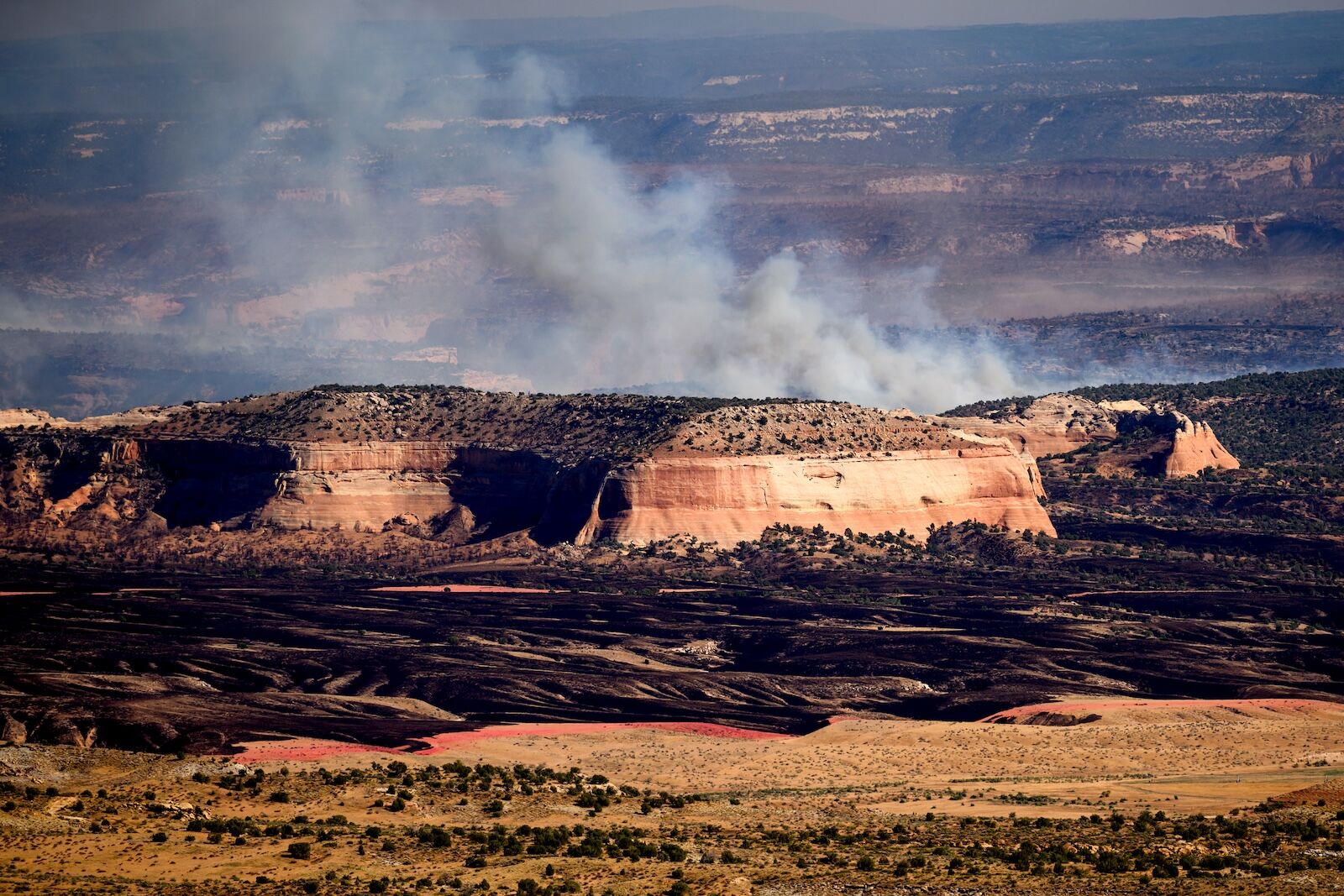
For 21 days — from June 27 to July 17 — the Snyder Fire near Fruita, Colorado, raged, leaving 28,264 acres of land blackened.
The Moab Valley Fire Department said the three fires that would merge to become the Snyder Fire — Snyder, Jones, Knowles — had started in the early morning hours of June 27. That day, winds were recorded at 30 to 50-plus mph — atop low fuel moistures and temperatures nearing 100 degrees.
An initial report issued by Department of the Interior said the crew had begun initial attack operations on the Knowles Fire, soon to merge with the Snyder and Jones fires, at 9:30 a.m. By 12:30 p.m., a new fire threatened the crew’s location and, around 3 p.m., a helicopter extraction was requested.
But low-lying smoke made landing impossible and before another rescue could be attempted, the fire burned over the area where the crew had deployed emergency fire shelters.
The Helitack crew’s primary mission is responding to new fires quickly, suppressing fires and using the helicopter to support fire line operations, according to the National Interagency Fire Center.
At a news conference, Brian Hennessy, director of the U.S. Wildland Fire Service, said, “The fact that they were there was, I’m 100% sure, based on good decision making.”
The U.S. Wildland Fire Service was formed in January 2026, unifying fire management across the Bureau of Indian Affairs, Bureau of Land Management, National Park Service, U.S. Fish and Wildlife and the Department of the Interior to build “a more efficient, effective wildfire response system that is better equipped to protect lives, communities, and ecosystems.”
“A full suppression strategy means using firefighting resources and tactics to contain and extinguish a wildfire quickly, while keeping firefighter and public safety as the top priority,” the agency had said. ”For the Snyder Fire, this included firefighters on the ground and aircraft.”
Should authorities rethink the strategy?
Some quarters have strongly suggested rethinking the 100% fire suppression strategy.
Two years ago, in an article published in Nature Communications, Mark Kreider, a researcher working with the Forest Service Pacific Southwest Research Station, argued that by “removing less-extreme wildfires … remaining wildfires burn under more extreme conditions.”
“The modeled impacts of the suppression suggest that suppression may exert a significant and underappreciated influence on patterns of fire globally,” he wrote.
At the same time, others have pointed to the logistical challenges of not having enough firefighters.
Seth McKinney, a Boulder County Sheriff’s Office fire management officer who worked for the USFS for 12 years, recently returned to working summers for the federal agency because the latter, he said, could not fill leadership positions. He said the current workforce is a shadow of what it once was.
“It shouldn’t really surprise anybody that we’re in the situation that we are in because we haven’t invested in our federal firefighters,” McKinney said.
Memos from the National Multi-Agency Coordinating Group confirmed the logistical difficulties. An Aug. 14 memo told fire managers that it cannot “provide all requested resources for every fire.” Another memo, dated Aug. 11, warned that “no immediate relief anticipated.”
Over the past decade, the United States has averaged about 64,000 wildfires and more than 4.3 million acres burned on a 30-year average. As of Aug. 18, wildfires have burned 7.3 million acres, the highest number since tracking started in 1994.

Nearly half of the world’s worst wildfire disasters have occurred in the last 10 years, according to research from UC Merced’s Fire Resilience Center.
“A majority of global fire disasters occurred with hellacious fire weather that overwhelmed fire suppression efforts,” said co-author John Abatzaglou. “Moreover, such extreme fire weather conditions are becoming more likely, increasing the odds of disastrous fires.”
The aftermath
The firefighting conditions can vary from ground to ground.
And in the case of the Snyder Fire, one officer pointed to an invasive species as a major factor.
Kevin Hyatt, a hydrologist with the Bureau of Land Management, said vegetation was the largest issue across the Snyder Fire.
“The fire itself was driven by and consumed the finer fuels on the ground, cheatgrass, which is an invasive species. There was some loss of piñon juniper stands,” Hyatt said. “Vegetation helps stabilize soils, but cheatgrass is less effective at stabilizing soil than native perennial grass.”
Cheatgrass grows rapidly and in high numbers, and, according to the United States Geological Survey, it disrupts the fire cycle in sage habitat across the Western United States, leading to more frequent and intense burns.
Hyatt said one goal is to help ensure that fire areas don’t come back as cheatgrass and native grasses are restored.
Hyatt couldn’t comment on what exactly the Burned Area Emergency Response (BAER) would recommend, but other government organizations have limited the spread of the invasive grasses after fires by applying herbicides and by seeding with native grasses.
Hyatt said there aren’t large issues regarding watershed treatments or hydrologic concerns.
“Everyone is concerned with the post-fire hydrological response,” Hyatt said. “The water will flush into the Colorado River. The channels will adapt and adjust to new sediment loads. Early in my career, we prescribed hillslope stabilization and large-scale watershed treatments to stop erosion, but the biggest thing we learned is that those aren’t very successful.”
Instead, BAER teams now advise letting burned fuels come off the slopes on their own after rainstorms and then going in and seeding. The federal government sends in BAER teams to identify the issues and manage the values at risk on the landscape. The teams have 21 days from the date of containment to complete a field assessment and file a report. Then they have one year and 21 days to implement emergency stabilization recommendations and five years for Burned Area Rehabilitation (BAR).
“The recreation component for this area is also important, and we want the public to be informed on the new hazards,” Hyatt said. “The area is a little less stable, it’s susceptible to falling rocks. Now it’s going to have more potential for that hazard. People are going to have to be aware.”


A summertime all-you-can-eat political buffet | SONDERMANN
Eric Sondermann
eric-sondermann@coloradopolitics.com
Updated 4 days ago
We find ourselves in the doldrums of August with a complete dearth of political news. Yeah, right. These days, that train never stops moving. It is a 24/7/365 express amplified by 24/7/365 media. Let me respond with one of my...

GOP worker pleads guilty to campaign funds embezzlement scheme | A LOOK BACK
Rachael Wright, Special to Colorado Politics
rachael.wright@coloradopolitics.com
Updated 4 days ago
Forty-five Years ago this week: After pleading not guilty to a Denver federal grand jury indictment of five counts of bank embezzlement, Eve Lynn Lincoln, a Colorado Republican Party employee, decided to plead guilty to one count: using bank credit...
Schoolchildren’s presence at child sex-related trial did not harm Arapahoe County defendant, appeals court says
Michael Karlik
michael.karlik@coloradopolitics.com
Updated 19 hours ago
Colorado’s second-highest court decided on Thursday that the presence of a group of schoolchildren on the first day of a child sexual exploitation trial did not violate an Arapahoe County defendant’s constitutional right to a fair trial. Prosecutors charged Jerry...
Appeals court cites week-old Colorado law to reinstate child neglect case at child, father’s request
Michael Karlik
michael.karlik@coloradopolitics.com
Updated 15 hours ago
Colorado’s second-highest court invoked a new state law for the first time on Thursday and reinstated a child neglect case that both the child and her father wished to reopen. House Bill 1227 took effect on Aug. 12, reversing a...
Democratic candidate in Colorado’s 4th CD urges long-term water planning
Marianne Goodland
marianne.goodland@coloradopolitics.com
Updated 15 hours ago
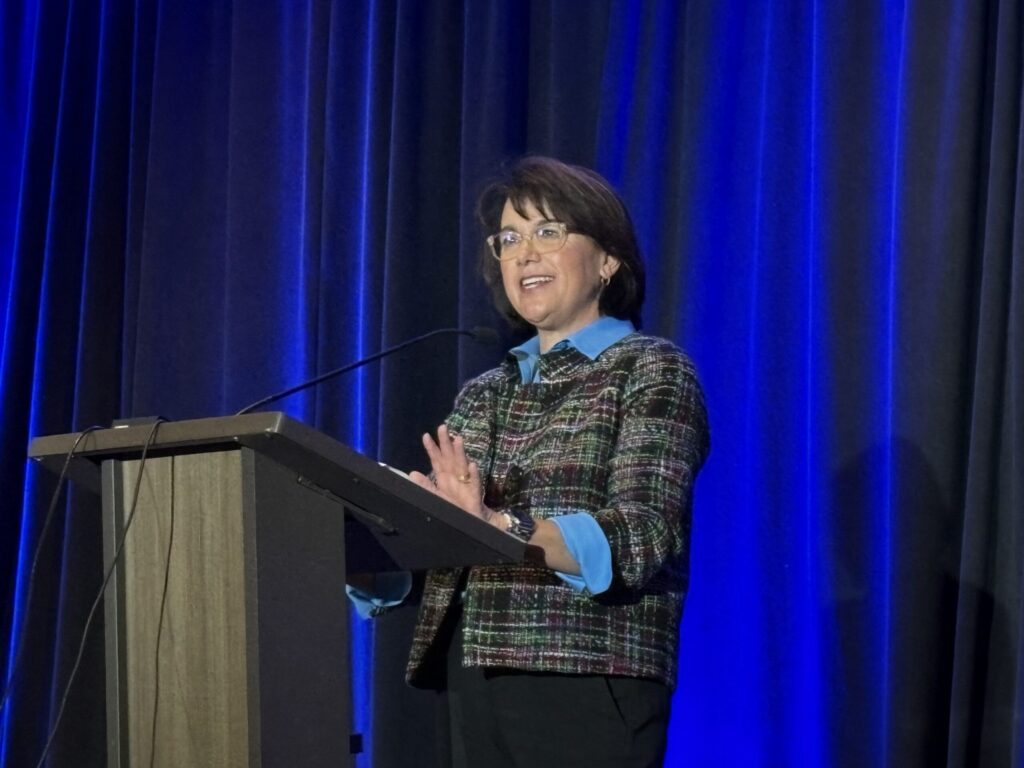
The Democrat hoping to become the next representative of Colorado’s 4th Congressional District on Thursday made her case on the final day of Colorado Water Congress in Steamboat Springs. Eileen Laubacher, who spent 34 years in the U.S. Navy and...

Castle Rock council declines to censure member accused of misconduct
Nicholas Fogleman
nicholas.fogleman@denvergazette.com
Updated 2 days ago
A Castle Rock Town Council meeting Tuesday became consumed by allegations that a councilmember attempted to trade a town policy decision for the withdrawal of a recall effort against him. The allegations against Councilmember Mark Davis surfaced during public comment...

Proposal to cap Colorado income tax rate qualifies for November ballot
Thelma Grimes
thelma.grimes@coloradopolitics.com
Updated 2 hours ago
Election officials on Thursday confirmed that the proposal to cap the state’s income tax at the current rate submitted signatures and voters will consequently decide its fate this November. The fight over tax rates is part of the tug and...

Trump reaches deal to halt tariffs on beef for 90 days in bid to lower prices
Rena Rowe
rena.rowe@washingtonexaminer.com
Updated 2 days ago
President Donald Trump announced Friday that he had reached a deal to temporarily ease tariffs on beef imports, saying the move would help lower prices for families as the United States faces a severe cattle shortage and record-high beef prices....
Budget red ink threatens to spike inflation and unemployment
Zach Halaschak
zach-halaschak@coloradopolitics.com
Updated 2 days ago
The ticking time bomb that is the national debt just crossed the $40 trillion mark and could spark a fiscal crisis that could throw the economy into disarray, spiking unemployment and exploding inflation. Republicans and some centrist Democrats have long...
Colorado Supreme Court names William Hood as next chief justice
Michael Karlik
michael.karlik@coloradopolitics.com
Updated 2 days ago
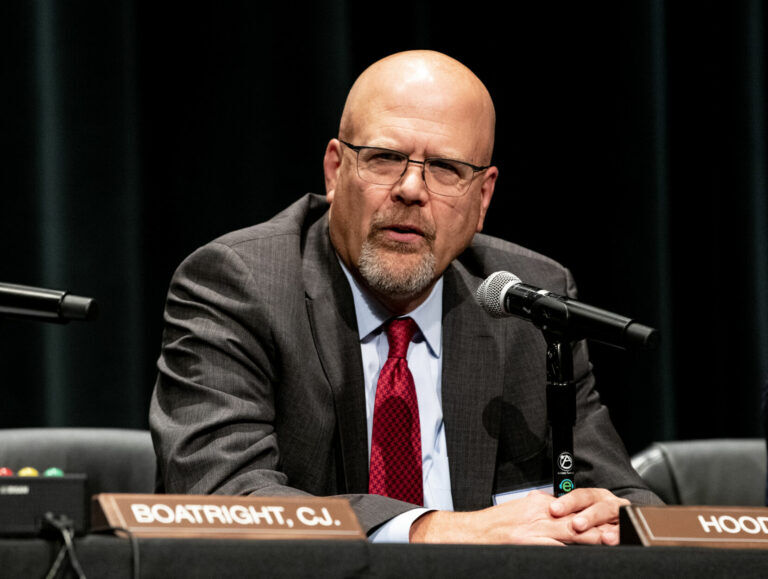
The Colorado Supreme Court has selected Justice William W. Hood III to be the next chief justice, the judicial branch announced on Friday. Hood will succeed Chief Justice Monica M. Márquez, who took over the role in July 2024. “I...