

Proposed changes to wildfire code would add protections to eastern edge of Colorado Springs
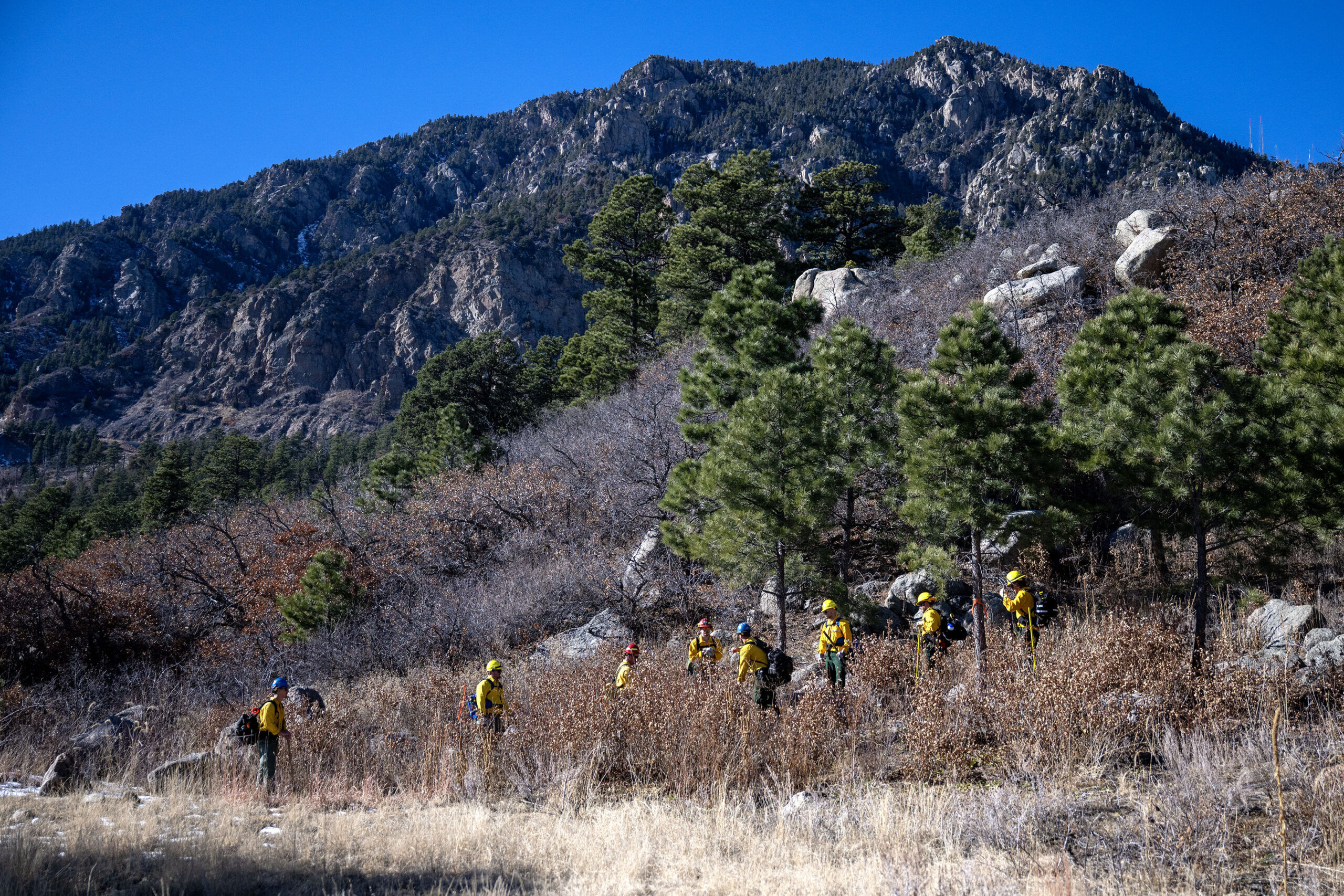
New construction rules may be coming to the higher-risk wildfire areas around Colorado Springs, including the grassland on the city’s eastern side.
Colorado Springs Fire Marshal Kris Cooper presented an early draft of the proposed changes to the city’s wildfire resiliency code to the Colorado Springs City Council during a recent work session.
Cooper said the city needed new rules in response to a 2023 bill, which established the Colorado Wildfire Resiliency Code Board to create consistent building standards for communities at risk of wildfires. The Code Board established a statewide wildlife code in July 2025 and required cities to adopt the protections by this summer.
Colorado Springs has placed restrictions on the wildland-urban interface (WUI) on the city’s west side for years. The amended code would keep the boundaries and most restrictions the same, though the area would be officially called a Class 2 fire risk.
A new category of Class 1 fire risk would be enacted for the eastern edge of the city to add similar restrictions in areas with grass-fire risk. According to a draft map, the classification would affect the areas between Marksheffel Road and the city limits, a few miles to the east.
“While traditionally, we think of wildfires in forested areas, the fact of the matter is we’re seeing a lot more fires in grassy areas these days,” Cooper said Feb. 23. “Under high wind conditions, those fires proceed very quickly and we’re seeing more homes lost.”
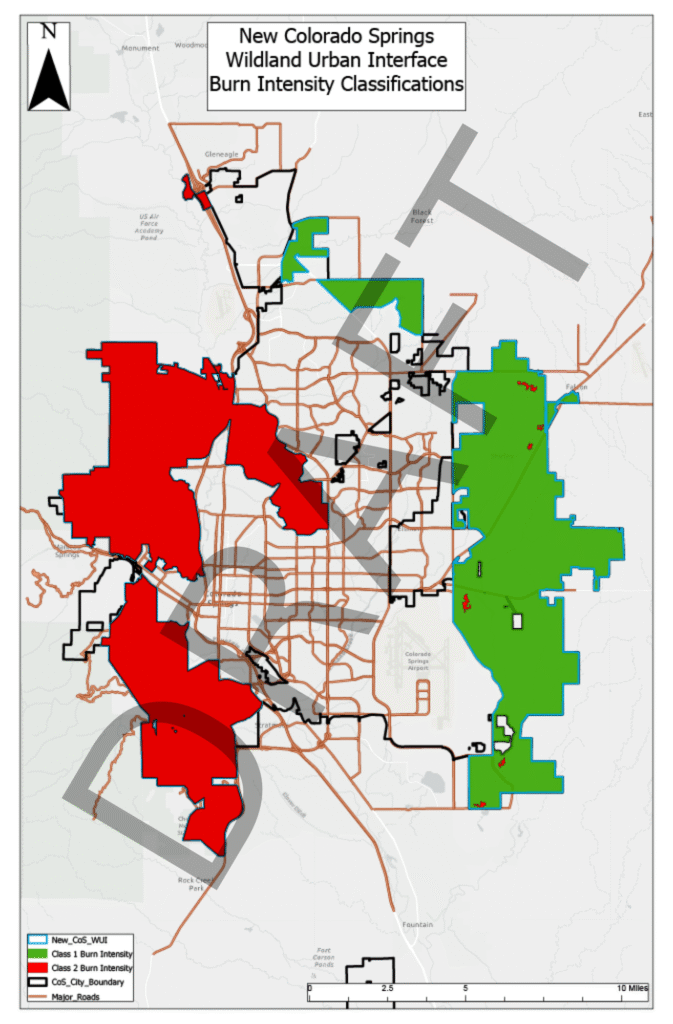
The updated fire code would place restrictions on the eastern side for roof materials, landscaping within 5 feet of a house and growing plants that are harder to burn. The WUI would have the same restrictions plus additional rules about building materials and removing hazardous trees.
The Fire Department created its own risk map for Colorado Springs that was different from the one used for the state model. Cooper said the city was waiting for the Wildfire Resiliency Code Board to approve the local map before the code would be voted on by the City Council.
The other biggest change in the code will affect fencing. In both higher-risk fire areas of the city, homes would be required to use non-combustible fencing at least 8 feet away from any structure.
“As we saw within the Waldo Canyon fire … those fences are essentially a collection point for embers. During a firestorm, embers collect at the base of the fence and burn, and that fence then becomes a wick,” Cooper said.
Fence dissent?
Westside Watch has been one of the most outspoken groups about the risks of Colorado Springs continuing to build in the wildland-urban interface. While the group has primarily petitioned the City Council about the western side of the city, it has raised concerns about the similar risk for grassfires on the east side of the city.
Westside Watch organizer Dana Duggan said that aligning with the state code on the new restrictions was a good step, but the bigger concerns were the amount of new construction in those areas and residents’ ability to evacuate during emergencies.
“The core issue is not just the vegetation type but the pattern of development. When dense development is built with limited evacuation routes, whether in forests or prairie, it creates a dangerous situation during fast-moving fire events,” Duggan said.
The state government enacted the wildfire codes as a matter of statewide concern, meaning they overruled municipalities’ home-rule land rights.
Councilmember Brian Risley, who has argued against the state overreach on other city land use issues, said he had similar issues with the reason for the fire code change. Risley added that the new rules could end up being a benefit for the community.

Another TABOR fight: Democrats plan to redirect refunds to Colorado residents
Marianne Goodland
marianne.goodland@coloradopolitics.com
Updated 2 hours ago
Colorado voters could decide this fall whether billions of dollars that would otherwise be returned as refunds under the Taxpayer’s Bill of Rights should instead go to public schools under a ballot measure unveiled Thursday by Democrats. Supporters say the...
Analysis: Colorado legislators introduce 18 energy bills amid debate over emissions goals
Scott Weiser
scott.weiser@gazette.com
Updated 8 hours ago
Colorado legislators have introduced 18 energy-related bills so far in the 2026 session, with Democrats sponsoring 14 and Republicans four, highlighting the sharp partisan split over how aggressively the state should pursue its greenhouse gas reduction goals while protecting affordability...
U.S. House probes reports of fraud, waste in Colorado’s Medicaid program
Marianne Goodland
marianne.goodland@coloradopolitics.com
Updated 1 day ago
A congressional committee is probing reports of waste, fraud and abuse in Colorado’s Medicaid program, citing recent stories outlining over-billing in transportation spending and alleged improper payments in autism services. The U.S. House Committee on Energy and Commerce has sent...
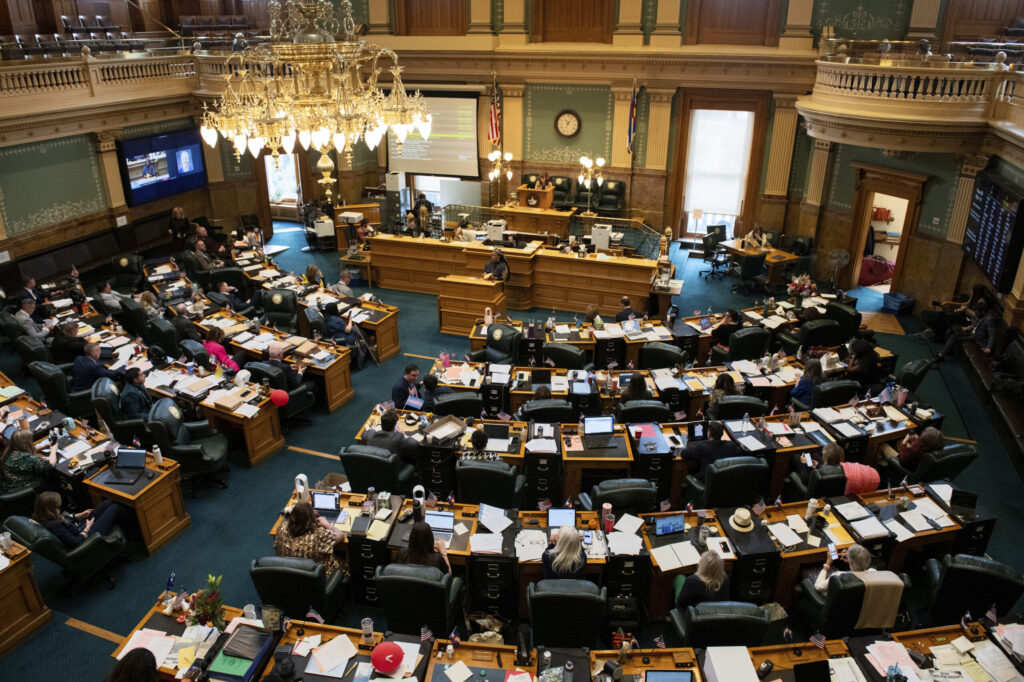
Colorado lawmakers’ speeches on immigration, Iran draw worries about decorum, grandstanding
Marianne Goodland
marianne.goodland@coloradopolitics.com
Updated 1 day ago
Several speeches from Colorado legislators this week have raised new worries about decorum and grandstanding in the state House after two members talked about immigration and Iran using what’s called a “point of personal privilege.” Under the rules of the...

Colorado legislators eye changes to credit card ‘swipe fees’
Marianne Goodland
marianne.goodland@coloradopolitics.com
Updated 1 day ago
Colorado legislators are proposing to eliminate “swipe fees” on sales taxes, a move that proponents say would save businesses tens of thousands of dollars a year but which will likely revive counter-arguments that those fees help create a stable and...

Denver police chief on mask ban, mayor’s orders: ‘What enforcement looks like, I’m not exactly sure’
Deborah Grigsby
deborah.smith@denvergazette.com
Updated 12 hours ago
As Denver takes steps to restrict federal agents conducting immigration enforcement in the Mile High City, its police chief said he is unclear as to how two new measures would be enforced. “I don’t know, to be honest with you....
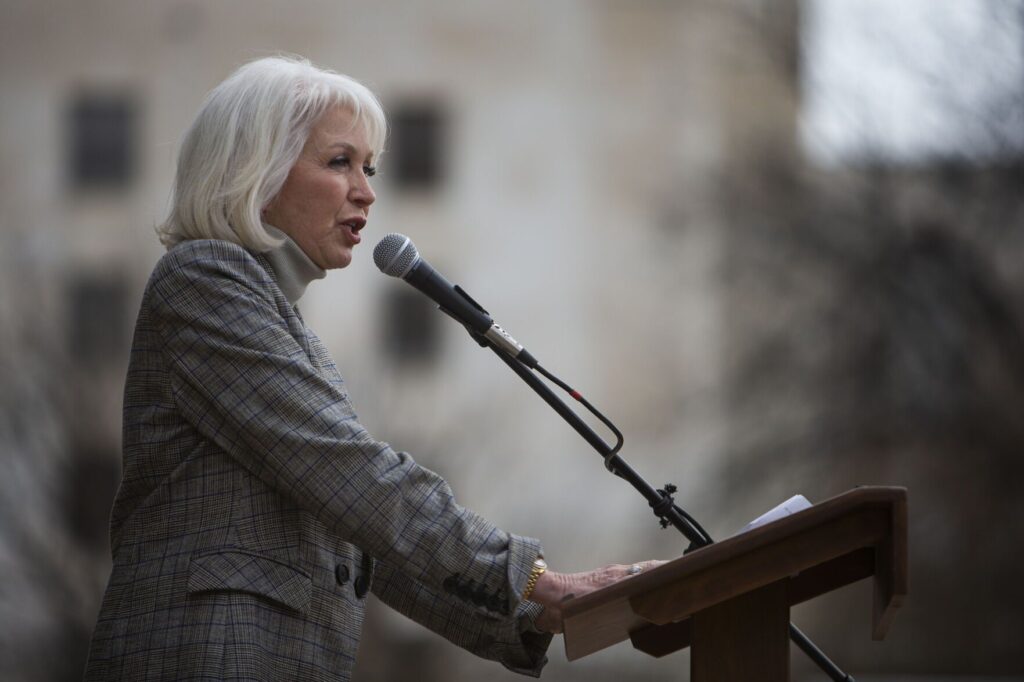
Colorado Gov. Jared Polis ignites fierce debate after raising clemency questions in Tina Peters case
Marianne Goodland
marianne.goodland@coloradopolitics.com
Updated 2 days ago
Gov. Jared Polis ignited a political firestorm Tuesday night after weighing in on the prison sentences of two former Colorado officials — a Democrat and a Republican — convicted of attempting to influence a public servant. The comments quickly fueled...
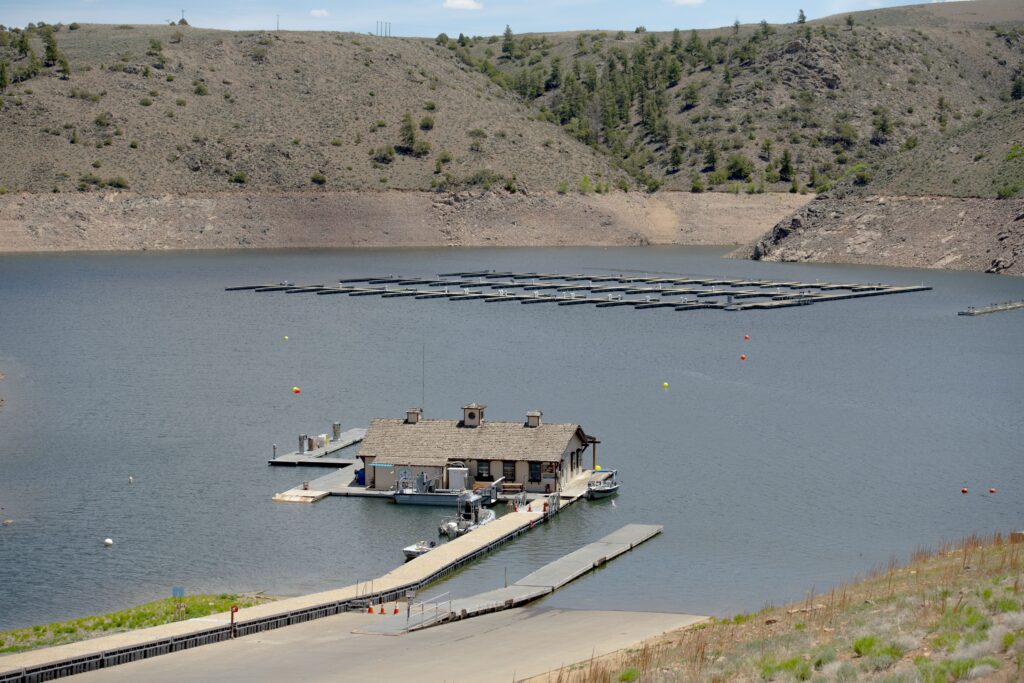
Gov. Jared Polis, Upper Basin states criticize federal draft plan for managing the Colorado River
Marianne Goodland
marianne.goodland@coloradopolitics.com
Updated 2 hours ago
With no agreement among the seven Colorado River states, which missed multiple federal deadlines, the Upper Colorado River Commission on Monday sharply criticized the U.S. Department of the Interior’s draft plan for managing the river after the current guidelines expire...
Colorado lawmakers tackle legislation on sexual assault
Jenny Deam
jenny-deam@coloradopolitics.com
Updated 2 hours ago
A panel of Colorado lawmakers on Monday unanimously approved a bill that supporters say will offer protections and support to victims of domestic violence, stalking, sex trafficking and sexual assault, including mandatory training for law enforcement on trauma. The measure,...
Denver adopts face mask ban for law enforcement
Deborah Grigsby
deborah.smith@denvergazette.com
Updated 4 days ago
Members of the Denver City Council unanimously approved an ordinance Monday that prohibits law enforcement officers, including federal immigration agents, from wearing a mask or face covering while interrogating, detaining, or arresting an individual within Denver, including in city-owned buildings....
PREV
PREVIOUS

U.S. House probes reports of fraud, waste in Colorado's Medicaid program
A congressional committee is probing reports of waste, fraud and abuse in Colorado’s Medicaid program, citing recent stories outlining over-billing in transportation spending and alleged improper payments in autism services. The U.S. House Committee on Energy and Commerce has sent a letter to Gov. Jared Polis and the Colorado Department of Health Care Policy and […]

Democrat Dwayne Romero jumps in primary to challenge Republican Jeff Hurd in Colorado’s 3rd CD
The Democrat who has been running for nearly a year to unseat Republican U.S. Rep. Jeff Hurd in Colorado’s 3rd Congressional District got some company in the primary this week. Dwayne Romero, a Snowmass Village business owner and decorated Army combat veteran, announced his candidacy on Tuesday, the same day precinct caucuses kicked off the […]