

Colorado lawmakers’ speeches on immigration, Iran draw worries about decorum, grandstanding
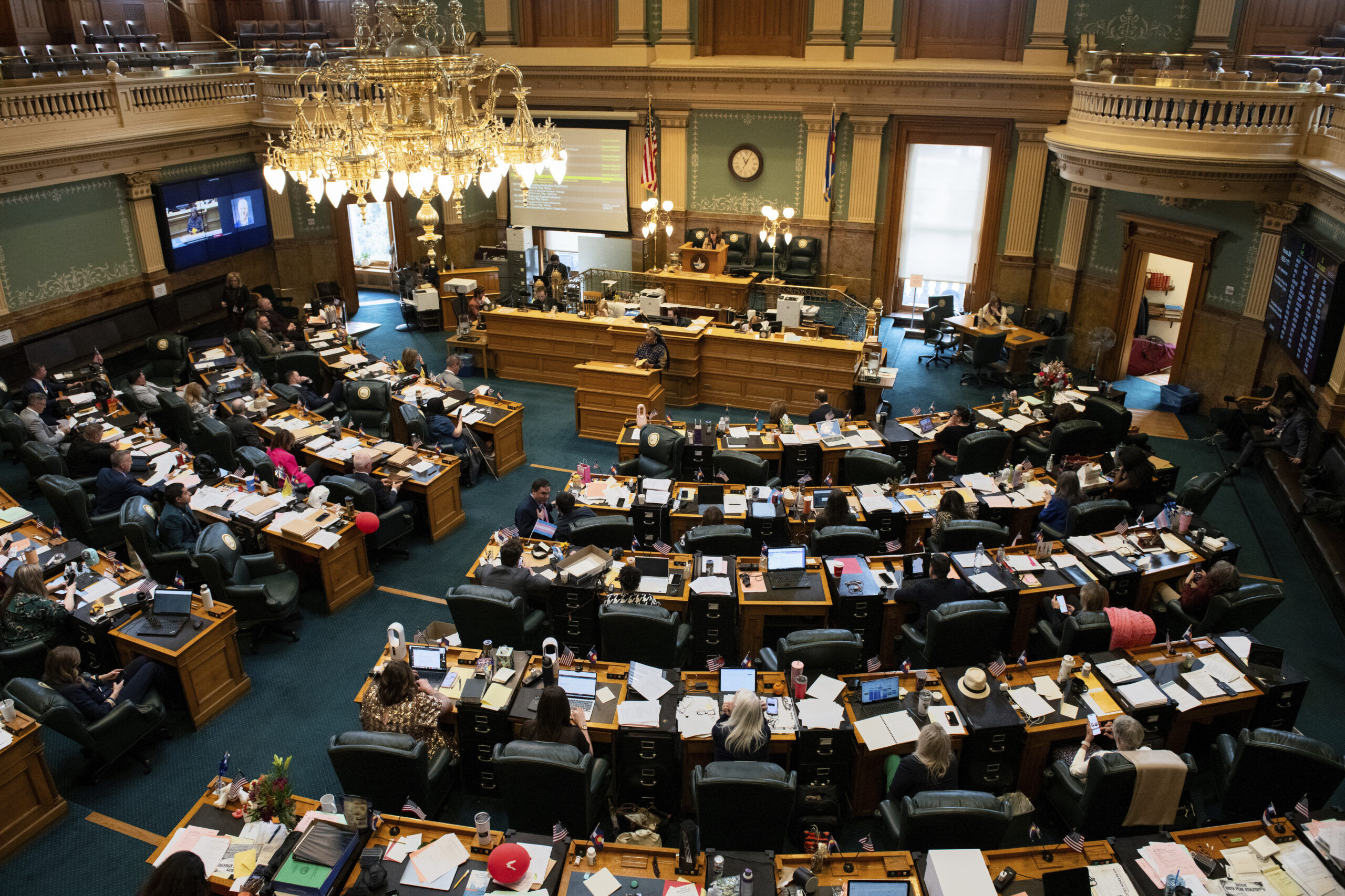
Several speeches from Colorado legislators this week have raised new worries about decorum and grandstanding in the state House after two members talked about immigration and Iran using what’s called a “point of personal privilege.”
Under the rules of the chamber, moments of personal privilege are allowed for a member to speak for up to five minutes on matters that “may collectively affect the House, its rights, its dignity, and the integrity of its proceedings, or the rights, reputation, and conduct of its individual members in their respective capacities only.”
In the last few days, two legislators talked about immigration and the war in the Middle East, prompting a Republican leader to caution the chamber about not venturing outside of what’s permissible under the rules.
“The institution is important and these rules exist to protect it,” House Minority Leader Jarvis Caldwell, a Republican from Monument, said. “The rules are clear a point of personal privilege is not meant to grandstand policy or advance a political agenda.”
Caldwell noted there have been three recent instances, in which personal privilege was used to advance policy arguments.
On Monday, Rep. Elizabeth Velasco, D-Glenwood Springs, used her personal privilege to criticize the Garfield County Sheriff, who had shared a photo of Velasco at a “No Kings” protest in an email thread.
“Our district 57 state representative… aren’t you proud of her? What a POS,” Velasco quoted the email as saying.
The email had gone to a task force of local law enforcement and federal officers and some responded with insensitive comments, the Democrat said.
Velasco then began criticizing the federal government, specifically U.S. Immigration and Customs Enforcement. She claimed that the Garfield County Sheriff’s Office isn’t complying with state laws that ban local law enforcement from cooperating with ICE. She also also talked at length about the 2025 immigration law, as well as the governor’s decision to cooperate with Homeland Security on an administrative warrant seeking personally identifiable information on immigrants.
That case had revolved an administrative subpoena demanding that the Colorado Department of Labor and Employment produce personal information on dozens of immigrants. The subpoena claimed it needed that information to determine if “unaccompanied alien children” in the custody of those individuals to decide whether they were safe and not being used for human trafficking or other forms of exploitation.
The second incident occurred Tuesday, when Rep. Yara Zokaie, D-Fort Collins, spoke first about her Iranian heritage and family and then criticized the U.S. government for attacking Iran.
“The past weekend brought a complicated range of emotions for me,” she began.
Iranian leaders have the blood of tens of thousands of their own people on their hands and they have oppressed women, and that’s why her family left Iran, she said.
“American imperialism has never resulted in successful regime change, and the U.S. invasion of the Middle East” has led to high death tolls and instability, she said, leaving the region “with less humanitarian rights.”
“We bombed a school that left more than 100 little girls dead,” she added. “We are glossing over the humanity of Iranians.”
She called for and to the war with Iran and asked her fellow House members to do the same.
“This is a difficult and complicated time for my community,” she said.
Caldwell, who spoke on Wednesday, said legislators are setting the wrong precedent.
“The credibility of this institution relies on traditions precedence and following the very rules we vote on ourselves. The precedent we’re setting in the first 50 days of the 2026 session is that Points of Personal Privilege are a substitute for personal grievances intertwined with political messaging,” Caldwell told the silent House.
It’s not the first time that the legislature has had to grapple with the boundaries of speech on the floor.
In a memo sent to all House members at the beginning of the 2025 session, House Speaker Julie McCluskie, D-Dillon, wrote that her responsibility is to maintain decorum. Members, she said, would have to submit a 24 hours’ notice to request personal privilege.
The memo also stated that if the member “deviates from the topic of the initial request or violates decorum during their remarks, the Speaker maintains the authority to direct the member to stay within the House’s guidelines of decorum.”
McCluskie did not stop or otherwise address Zokaie or Velasco during their comments this week.
On Wednesday, Caldwell, took to the podium for his own moment of personal privilege, in which he said he did not intend to debunk or offer different perspectives on the recent comments.
Caldwell suggested he, too, could make his own politically-charged comments, such as criticizing the House for regulation that forced a small business in his district to close, or blame the chamber for someone being harmed in a crime while waiting for a three-day background check.
Expressing political opinions can be done through social media, opinion pieces, news releases or a town hall, Caldwell said. Or someone could run a resolution that would allow for opposing views and differing opinions, he suggested.
But not, he emphasized, during a personal privilege.
In the last two months, he said, the legislature is setting up the wrong precedent.
“The credibility of this institution relies on traditions precedence and following the very rules we vote on ourselves. The precedent we’re setting in the first 50 days of the 2026 session is that points of personal privilege are a substitute for personal grievances intertwined with political messaging,” Caldwell told the House.
“As a body we have all made a commitment to decorum in this chamber and if we want this institution to retain credibility then we must enforce and respect the rules voted on by us that govern it,” Caldwell concluded.
In a 2006 white paper, the National Conference on State Legislatures said decorum is essential to policymaking, since it creates an appropriately formal atmosphere, encourages order and places focus on the issues, rather than the person speaking.
The white paper also noted that legislators’ cooperation is crucial in preserving decorum: “Their actions, awareness of their rights and duties, and knowledge and observance of procedure and rules are perhaps the most critical way to maintain decorum.”

Colorado Springs mother Deborah Nicholls’ murder conviction overturned
Nick Smith
nick-smith@coloradopolitics.com
Updated 5 hours ago
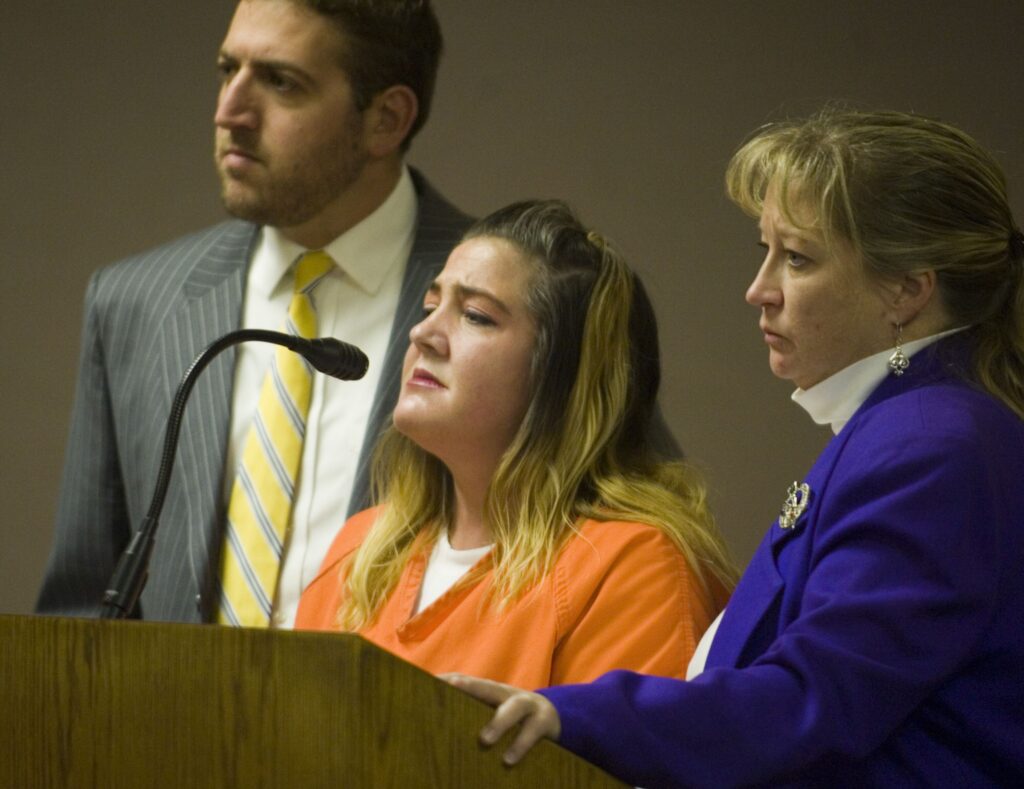
A Colorado Springs mother convicted in 2008 of murdering her three children in a house fire might get a new trial after a judge ruled that prosecutors withheld key evidence that could have impacted the jury’s verdict. Deborah Nicholls, whose...

Right-to-natural-gas proposal in Colorado qualifies for ballot
Marissa Ventrelli
marissa.ventrelli@coloradopolitics.com
Updated 7 hours ago
A citizen initiative that seeks to enshrine the right to natural gas has qualified for the November ballot, Colorado’s election office confirmed on Thursday. Petitions containing signatures for Initiative No. 177 were turned in to the Secretary of State’s Office for review...

Emerald ash borer confirmed in Colorado Springs, ‘pest is here to stay’
Brennen Kauffman
brennen-kauffman@coloradopolitics.com
Updated 16 hours ago
Colorado Springs is asking residents to be on the lookout for an invasive beetle species that has jumped down the Front Range and into local ash trees. City officials said Wednesday that a confirmed emerald ash borer infestation had been...
Former Parker police sergeant pleads guilty to unlawful sexual conduct, misconduct charge
Nicholas Fogleman
nicholas.fogleman@denvergazette.com
Updated 17 hours ago
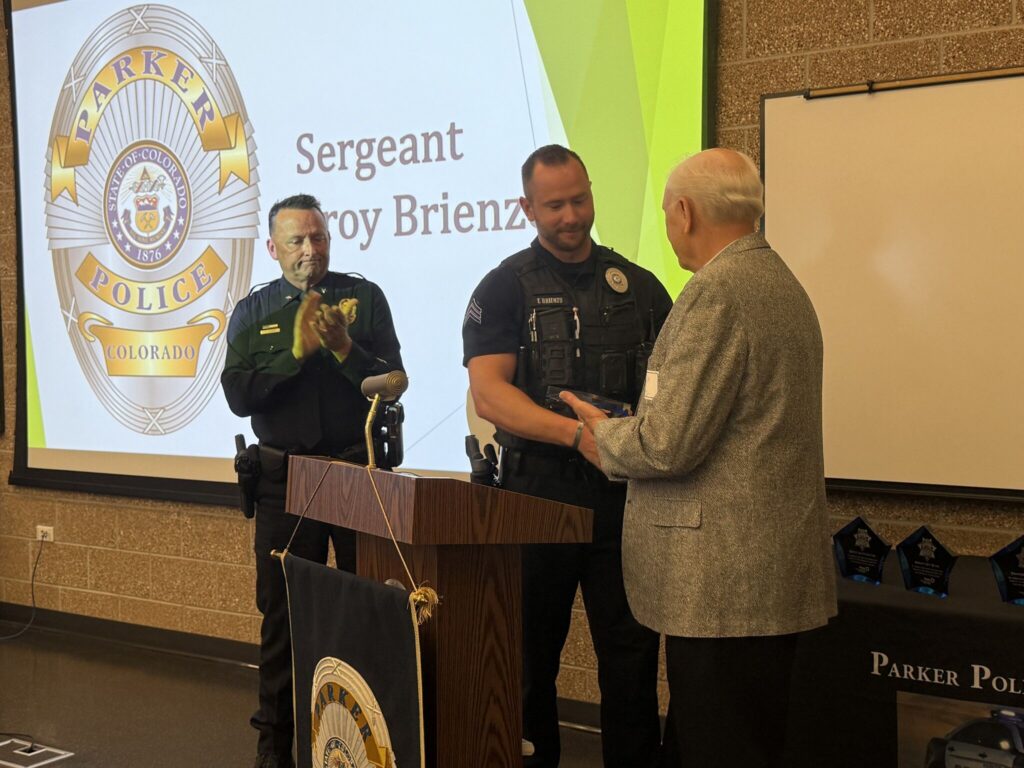
Former Parker Police Department Sgt. Troy Brienzo pleaded guilty Monday to a felony charge of unlawful sexual conduct by a police officer and first-degree official misconduct in Douglas County District Court. Brienzo entered the guilty pleas before Judge Ryan Stuart,...

Annual survey documents emerging threat to Pikes Peak’s bighorn sheep
Savannah Eller
savannah-eller@coloradopolitics.com
Updated 13 hours ago
After a brief pre-dawn gathering, over 40 volunteers and Colorado Parks and Wildlife staff split into teams Wednesday morning and headed off into the high alpine. They were on an annual mission to count and catalog the bighorn sheep population...
What happens if voters pass Colorado’s two competing income tax measures?
Marianne Goodland
marianne.goodland@coloradopolitics.com
Updated 15 hours ago
The battle between two competing ballot measures — one seeking to cap Colorado’s income tax rate, the other pushing for a tiered system depending on income levels — might come down to whichever ballot proposal gets one more vote. The...

Northglenn city manager resigns immediately after 8 years
Kyla Pearce
kyla.pearce@gazette.com
Updated 17 hours ago
Northglenn will have a new city manager after the current one resigned effective immediately after eight years with the city. City Manager Heather Geyer was appointed in July 2018 and was the first woman to hold the role in the...
Major Colorado cannabis chain cuts 141 jobs at plant after selling its dispensaries
Bernadette Berdychowski
bernadette.berdychowski@denvergazette.com
Updated 1 day ago
Native Roots, one of the longest-running and most well known marijuana chains in Colorado, is shuttering its plant facility in Denver and has sold its retail locations to an investor. The plant closure at 4990 Dahlia St. will affect 141...
Major Colorado cannabis chain cuts 141 jobs at plant after selling its dispensaries
Bernadette Berdychowski
bernadette.berdychowski@denvergazette.com
Updated 1 day ago
Native Roots, one of the longest-running and most well-known marijuana chains in Colorado, is shuttering its plant facility in Denver and has sold its retail locations to an investor. The plant closure at 4990 Dahlia St. will affect 141 workers,...
Major Colorado cannabis chain cuts 141 jobs at plant after selling its dispensaries
Bernadette Berdychowski
bernadette.berdychowski@denvergazette.com
Updated 1 day ago
Native Roots, one of the longest-running and most well-known marijuana chains in Colorado, is shuttering its plant facility in Denver and has sold its retail locations to an investor. The plant closure at 4990 Dahlia St. will affect 141 workers,...
PREV
PREVIOUS

Trump fires Homeland Security Secretary Noem after building criticism over immigration enforcement
WASHINGTON (AP) — President Donald Trump on Thursday fired his embattled Homeland Security Secretary Kristi Noem and said he will nominate in her place Oklahoma Republican Sen. Markwayne Mullin. Trump made the announcement on social media on Thursday, two days after Noem faced a grilling on Capitol Hill from GOP members as well as Democrats. […]

Appeals court overturns Douglas County vehicular homicide conviction due to faulty jury instructions
Colorado’s second-highest court overturned a defendant’s vehicular homicide conviction and 12-year prison sentence on Thursday after determining a Douglas County judge omitted key language from the jury instructions that could have resulted in a different outcome. James Paul McDonald was driving in excess of 100 mph on Interstate 25 when he left the road and […]