

Gov. Jared Polis, Upper Basin states criticize federal draft plan for managing the Colorado River
With no agreement among the seven Colorado River states, which missed multiple federal deadlines, the Upper Colorado River Commission on Monday sharply criticized the U.S. Department of the Interior’s draft plan for managing the river after the current guidelines expire this year.
The critics accused federal officials of exceeding their authority and of relying on flawed modeling.
The Interior Department released a draft environmental impact statement in January with a public comment period that ended Monday.
That draft EIS contained five operational alternatives for managing the river. The bureau did not decide on a preferred alternative, hoping for a “potential collective agreement” among the seven states.
That agreement never came. The seven states missed two deadlines, including one on Feb. 14, to reach a consensus on river operations.
The divisions between the upper and lower basin states center on how much each will contribute during a drought. At issue are water cuts into the foreseeable future, the result of a 25-year drought that has reduced the river’s flow by millions of acre-feet annually.
The river, once projected to provide more than 16 million acre-feet per year, now averages around 12 million, far less than the 15 million required annually under the 1922 Colorado River compact and subsequent agreements, with 7.5 million on average apportioned each to the upper and lower basin states.
Currently, the upper basin states use only 4.3 million acre-feet — more than 3 million acre-feet less than the compact apportionment.
That “lack of available water means that Colorado water users face mandatory, uncompensated cuts to their water supplies, averaging 600,000 acre-feet of shortages per year and 1.2 million acre-feet across the Upper Basin,” the river commission’s statement said.
Monday’s public comment to the Interior Department from the Upper Colorado River Commission criticized the environmental impact statement, stating the Interior Department is exceeding its authority, is using flawed modeling assumptions — including the injection of fictional water,” omitting consumptive use and loss data from the lower basin states — and is inconsistent in how it treats upper and lower basin operations.
The commission also said some of the alternatives “rely heavily on upstream actions and ‘Mexico-dependent assumptions’ that are outside the scope of the environmental impact statement (EIS).
The EIS “models extensive operational changes above Lake Powell,” which are outside its scope, but then omits upper basin operations from its impacts analysis, the commission said.
The commission also pointed to what it described as either inaccurate or infeasible assumptions in each of the five alternatives contained in the EIS.
The commission zeroed in on the lack of consumptive use and loss data from the lower basin states, pointing out that between 2006 and 2024, the lower basin states — California, Arizona and Nevada — used on average 11 million acre-feet of water from the Colorado, well in excess of the 7.5 million acre-feet on average the lower basin states are entitled to.
Of that 11 million acre feet, about 1.3 million per year is attributable to transit or evaporation losses, the statement pointed out.
A statement Tuesday afternoon from Gov. Jared Polis’ office said the upper basin states self-regulate water usage when there isn’t enough available.
The data on consumptive use and loss are not consistent with what’s included in the draft environmental impact statement, the commission’s statement also said, raising questions about the “adequacy of the alternatives and impact analyses” in the draft statement.
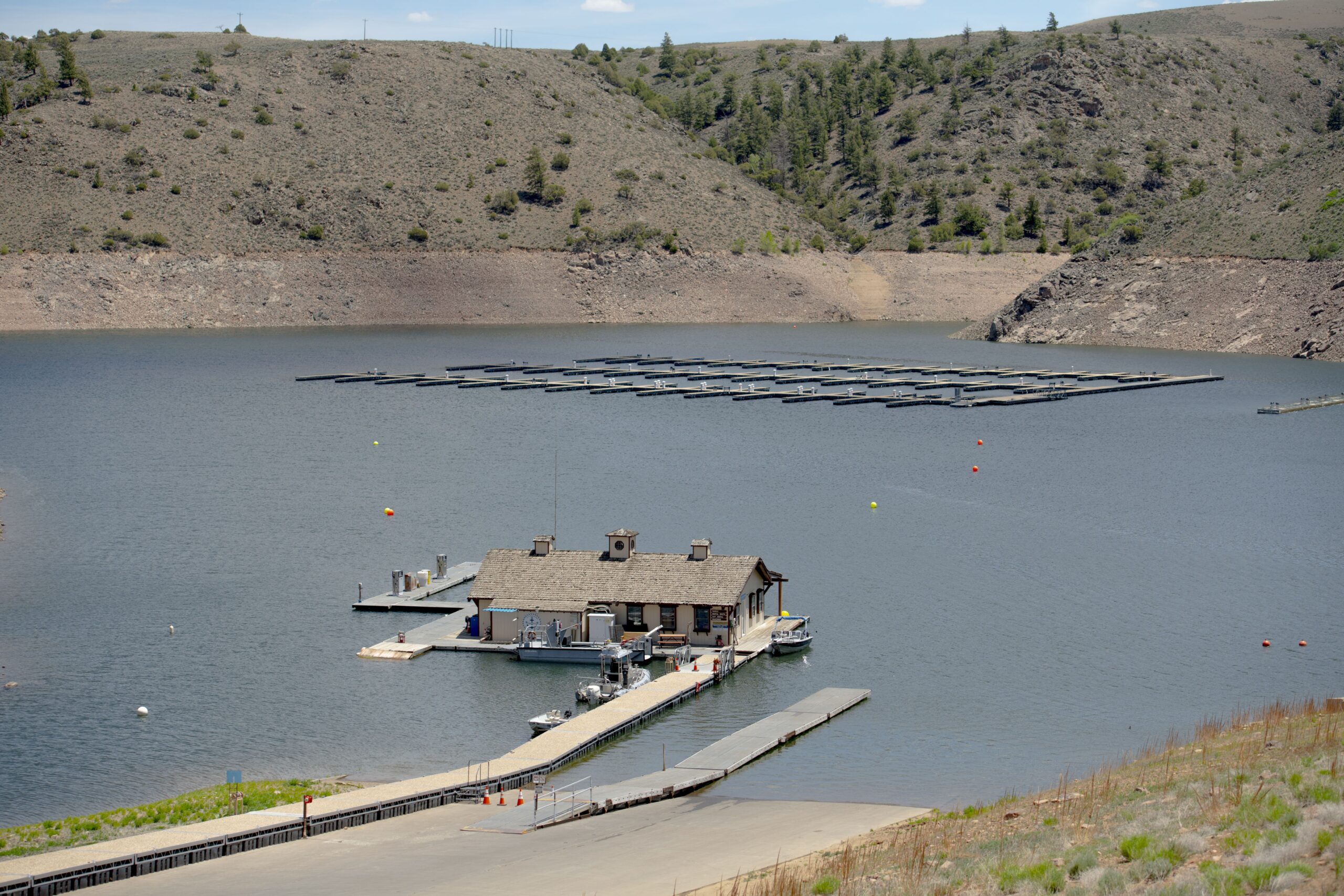
More specifically, in Colorado, the draft statement does not consider risk to Colorado’s two largest reservoirs: Blue Mesa, in Gunnison County; and Navajo, which straddles the Colorado-New Mexico border near Arboles in Archuleta County.
An initial news release from the commission said it is preparing to take steps to stabilize the system, including working with the U.S. Bureau of Reclamation on releases from Utah’s Flaming Gorge, Navajo, and Blue Mesa that would support Lake Powell.
Most notably, the news release said the Upper River Commission was considering a project to implement new Upper Basin contribution and conservation projects in 2026 to store water in Lake Powell, Flaming Gorge, Blue Mesa and Navajo, as well as work with ” willing partners ” for consensus on the operations of Lake Powell and Lake Mead.
In a subsequent “corrected” news release, all information about Blue Mesa, Gunnison, and Flaming Gorge was removed without any explanation.
In a statement Tuesday afternoon, Colorado’s representative on the upper river commission, Becky Mitchell, said, “The current rules have not done enough to protect Lake Powell and Lake Mead, and it’s clear that a future management framework must better respond to today’s reality. Colorado’s comments provide constructive, legally grounded recommendations to bring the system into balance.”


U.S. Rep. Lauren Boebert stresses storage, forest health and Upper Basin rights at Colorado Water Congress
Marianne Goodland
marianne.goodland@coloradopolitics.com
Updated 5 days ago
Republican U.S. Rep. Lauren Boebert used her brief Wednesday appearance at Colorado Water Congress to tout her record on delivering water projects for the state and her district. Boebert, who is running for her second term representing the 4th Congressional...
Jeff Crank, Jessica Killin set to face off in 2 debates in Colorado’s 5th Congressional District
Ernest Luning
ernest.luning@coloradopolitics.com
Updated 2 weeks ago
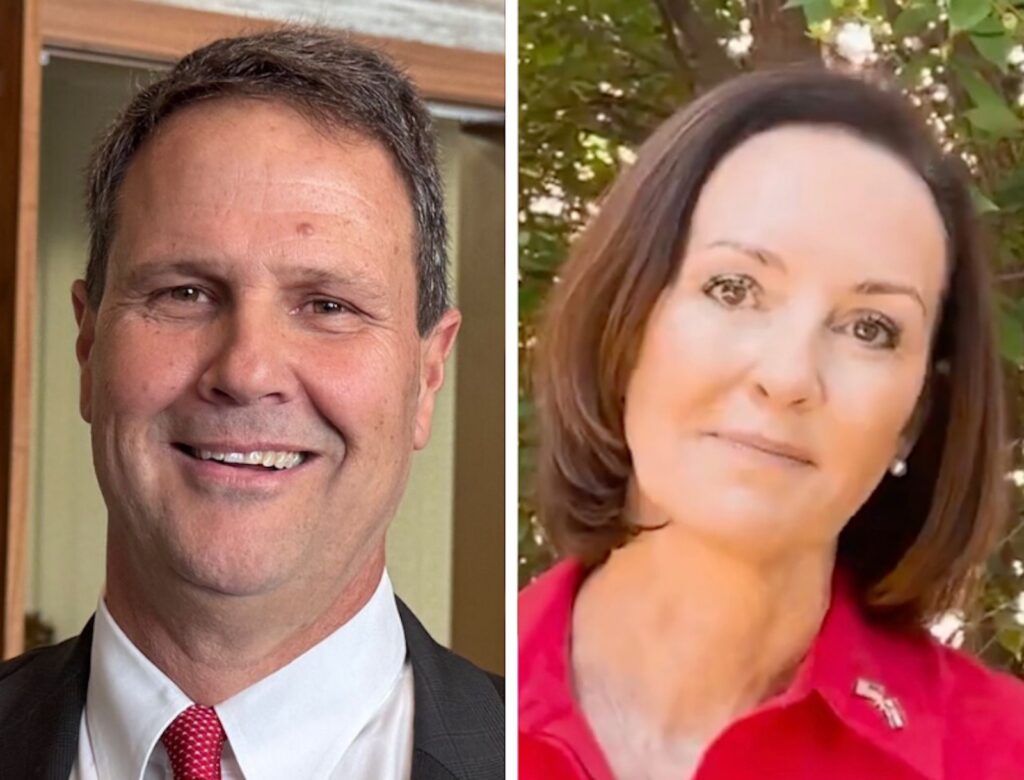
Republican U.S. Rep. Jeff Crank and Jessica Killin, his Democratic challenger, have agreed to debate twice in the weeks leading up to the general election in Colorado’s 5th Congressional District, their campaigns have said. Crank is seeking a second term...
‘Ticked off’: Third-party U.S. Senate candidate in Colorado launches $1.3 million TV ad campaign
Ernest Luning
ernest.luning@coloradopolitics.com
Updated 2 weeks ago
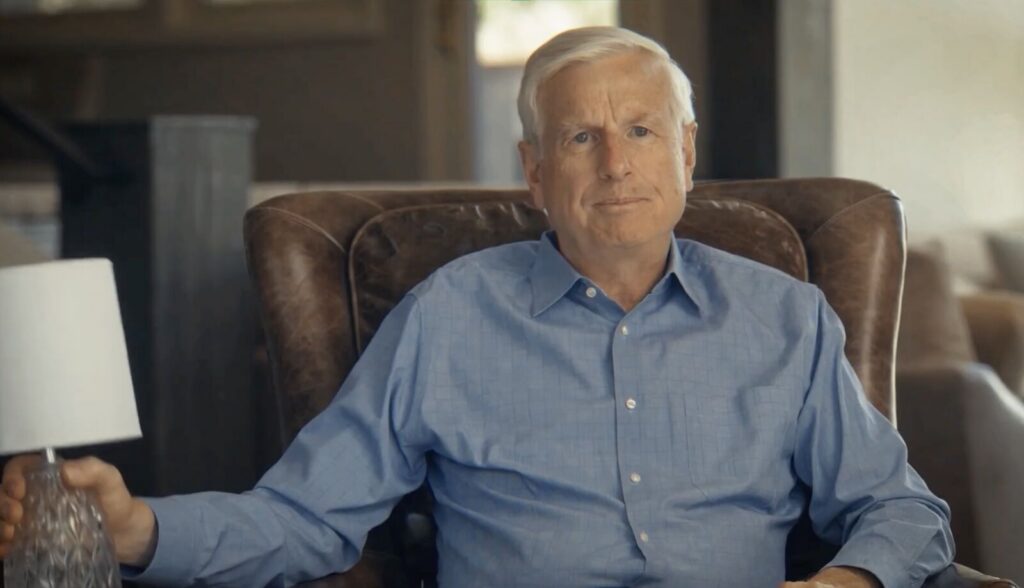
Bob Chew, the Forward Party nominee for U.S. Senate in Colorado, sends household objects flying in a TV ad set to run statewide through September, backed by $1.3 million in ad reservations across multiple platforms, his campaign told Colorado Politics....

U.S. Rep. Lauren Boebert’s son arrested, faces charges of sexual exploitation of minor
Matt Kyle
matt.kyle@denvergazette.com
Updated 2 weeks ago
U.S. Rep. Lauren Boebert’s son Tyler Jay Boebert has been arrested and accused of recording and sharing a video depicting himself having intercourse with a minor, according to court records. The case originated in Garfield County in Western Colorado and...

Democratic group aims Spanish-language TV ad at Gabe Evans in Colorado’s battleground 8th CD
Ernest Luning
ernest.luning@coloradopolitics.com
Updated 2 weeks ago
A national group tied to House Democratic leadership launched a six-figure Spanish-language TV ad in Colorado this week targeting Republican U.S. Rep. Gabe Evans and the GOP’s signature budget legislation. The 30-second spot is part of $15 million in new...

National House Democrats add Colorado seats held by Lauren Boebert, Jeff Hurd to target list
Ernest Luning
ernest.luning@coloradopolitics.com
Updated 2 weeks ago
The national House Democrats’ campaign arm on Wednesday added the Colorado congressional district held by Republican U.S. Reps. Jeff Hurd and Lauren Boebert to the list of targeted seats the party believes are vulnerable in this year’s midterms. The Democratic...
Q&A with Mike Pence | Former vice president says GOP’s populist turn from conservatism isn’t permanent
Ernest Luning
ernest.luning@coloradopolitics.com
Updated 3 weeks ago
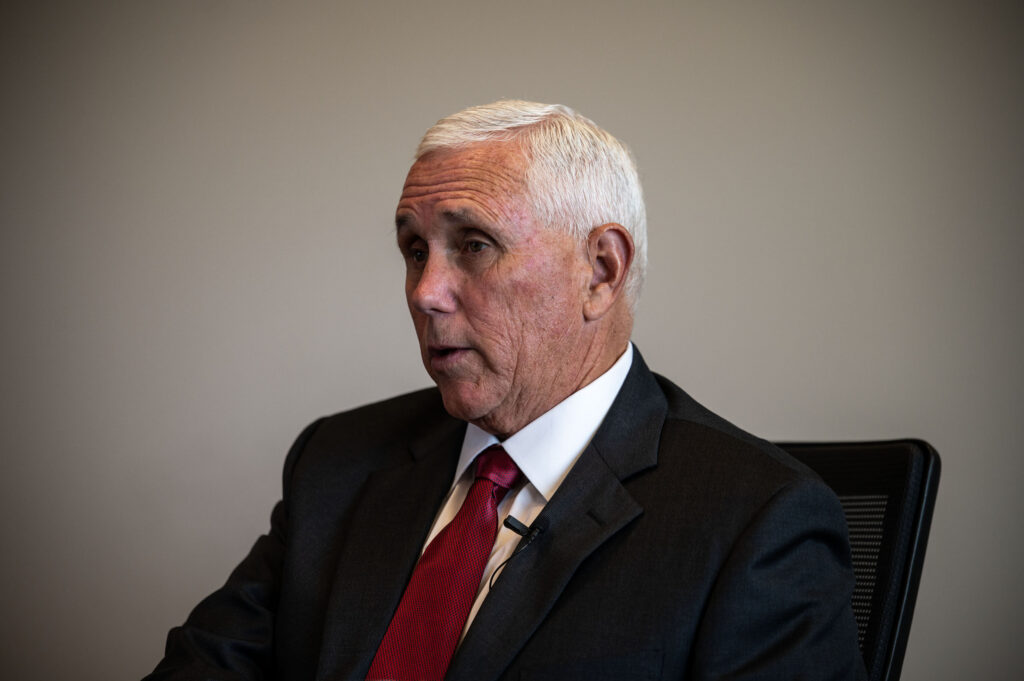
Former Vice President Mike Pence says he’s concerned that the Republican Party has taken a populist turn away from bedrock conservative principles during President Donald Trump’s second term, but he believes the party will return to its roots when Trump...
Democrat Jessica Killin’s internal poll shows dead heat with U.S. Rep. Jeff Crank in Colorado’s 5th CD
Ernest Luning
ernest.luning@coloradopolitics.com
Updated 4 weeks ago
Jessica Killin, the Democratic nominee in Colorado’s 5th Congressional District, is in a statistical tie with Republican U.S. Rep. Jeff Crank, according to an internal poll released this week by Killin’s campaign. The poll of likely general election voters, conducted...

Surprise candidate Shimon Blau cleared to face off against Melat Kiros in November
Ernest Luning
ernest.luning@coloradopolitics.com
Updated 1 month ago
Unaffiliated congressional candidate Shimon Blau, a Denver doctor, has qualified by petition for the general election in Colorado’s 1st District, where Democrat Melat Kiros defeated 15-term U.S. Rep. Diana DeGette in last month’s primary, the Colorado Secretary of State’s Office...
Democrat John Hickenlooper hauls in $1.3 million in 2nd quarter in Colorado’s U.S. Senate race
Ernest Luning
ernest.luning@coloradopolitics.com
Updated 1 month ago
U.S. Sen. John Hickenlooper’s reelection campaign raised just over $1.3 million in the year’s second quarter and finished the period with $2 million in the bank, leaving the first-term Democrat with nearly 80 times as much cash on hand as...
PREV
PREVIOUS

Bills on ballot access, dual office ban move swiftly through Colorado legislature
With an eye on the 2026 election cycle and mounting tensions with the Trump administration, Colorado lawmakers are fast-tracking a pair of election bills they say will protect the state’s mail ballot system and tighten rules for elected officials. The measures, one that expands ballot access timelines and another that bars lawmakers from holding multiple […]

Judge nixes latest policy requiring 7 days' notice for Congress members to visit ICE facilities
WASHINGTON (AP) — A federal judge agreed on Monday to temporarily suspend the latest version of a Trump administration policy that requires members of Congress to provide a week’s notice before they can visit immigration detention facilities. U.S. District Judge Jia Cobb in Washington ruled that a group of Democratic lawmakers is likely to succeed […]