

Colorado Attorney General, environmental groups challenge EPA rejection of state’s haze plan
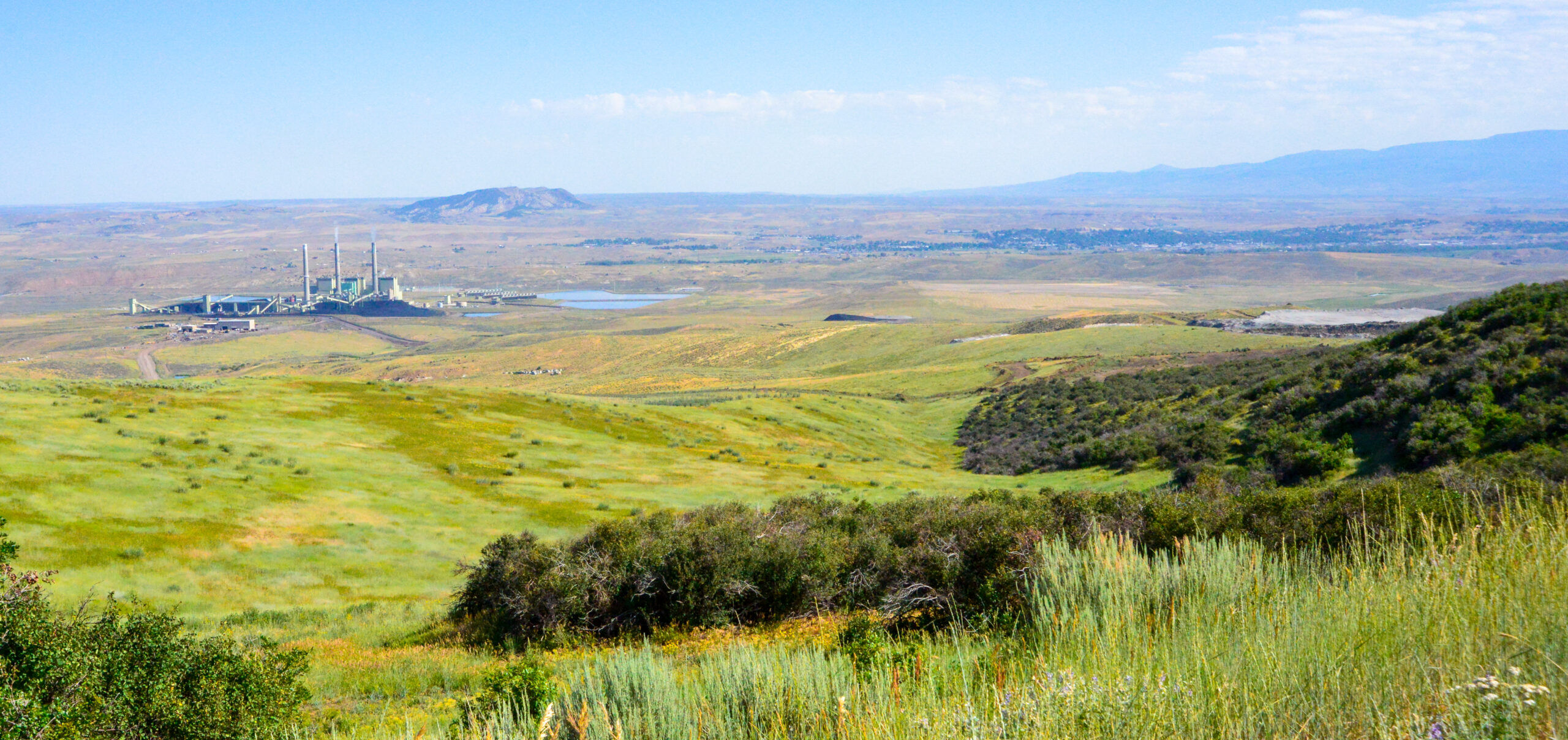
Colorado Attorney General Phil Weiser and several environmental organizations have filed separate petitions in the U.S. Court of Appeals for the Tenth Circuit, challenging the U.S. Environmental Protection Agency’s decision to reject Colorado’s regional haze plan.
The plan included proposals to retire coal plants and impose emission limits on industrial sources to improve visibility in national parks, including Rocky Mountain National Park.
Weiser filed a petition on March 4 contesting the EPA’s Jan. 26 rejection of the 2022 state implementation plan. On the same day, the National Parks Conservation Association and the Sierra Club, represented by Earthjustice, filed their own challenge, describing the EPA action as an illegal effort to prop up coal.
The plan, adopted by the Colorado Air Quality Control Commission, included utilities’ proposed deadlines for retiring certain coal-fired units by 2029 and set emission limits on dozens of other major sources, such as the Suncor oil refinery and cement plants. State officials said the plan would deliver significant reductions in statewide emissions.
Colorado has met its reasonable progress obligations under the federal Regional Haze Rule since 2018 and it continues to satisfy visibility protection requirements, independent of the disputed state implementation plan (SIP) elements, according to the EPA.
“EPA’s decision to disapprove Colorado’s regional haze state implementation plan is based on policy objections to closing coal plants, and it is another example of the Trump administration intruding on state authority without any basis in law,” Weiser said in a release. “Colorado included the closure of several coal-fired power plants in its plan based on utilities’ independent decisions to close them. Those decisions in turn were based on the utilities’ judgment that closure was the best and most cost-effective way to comply with a range of state and federal laws.”
The agency objected to including specific coal-closure dates, arguing that the state improperly sought to mandate early shutdowns using the haze program, despite the state’s ongoing compliance.
“Colorado chose clean air. The EPA chose pollution,” said Tracy Coppola, Colorado senior program manager for the National Parks Conservation Association. “We’re taking legal action to protect Rocky Mountain National Park, and all Coloradans, from the EPA’s reckless decision.”
The EPA rejected the plan, ruling it lacked “necessary assurances” of enforceability under the Clean Air Act.
The agency raised concerns about potential uncompensated takings —government action that deprives private property owners (in this case, utilities) of economic value or use without just compensation, as prohibited by the Fifth Amendment.
“Reliable baseload energy sources are essential to powering the Great American Comeback and ensuring families have cost-effective energy,” EPA Administrator Lee Zeldin said in a release. “The Trump EPA has repeatedly demonstrated that we can achieve our statutory obligations, support baseload power, and improve visibility within our national parks.”
Sarah Tresedder, senior climate and energy organizer at Colorado Sierra Club, said, “This can’t be seen any other way; it’s a handout to the coal industry and a disservice to Coloradan communities and our environment.”
The Colorado Mining Association supported the EPA’s decision.
“Today’s decision by EPA is prudent given the state’s failure to sufficiently or reasonably consider the energy impacts of its plan to require the retirement of the coal fleet and the negative effects for grid reliability,” said Adam Eckman, president and CEO of the Colorado Mining Association.
Environmental attorney Paul Seby noted that most current haze impairment comes from wildfires and international sources, not power plants.
“There is a standalone SIP for visibility,” Seby said. “The majority of the impairment now is coming from forest fires, from the management of public lands or international emissions … (including) Africa and China.”
Grid reliability worries prompted a U.S. Department of Energy order in December to keep Craig Station Unit 1 available through March 2026 amid regional energy shortfalls.
The full disapproval obligates the EPA to issue a federal implementation plan unless Colorado submits an approvable revision or the court overturns the decision.


Colorado AG urges Supreme Court to let Boulder climate lawsuit proceed
Marissa Ventrelli
marissa.ventrelli@coloradopolitics.com
Updated 4 hours ago
Colorado Attorney General Phil Weiser has filed a court brief with the U.S. Supreme Court in a lawsuit brought by Boulder city officials seeking to hold oil companies liable for their environmental impact. The case began in 2018, when the...
Major Colorado cannabis chain cuts 141 jobs at plant after selling its dispensaries
Bernadette Berdychowski
bernadette.berdychowski@denvergazette.com
Updated 21 hours ago
Native Roots, one of the longest-running and most well known marijuana chains in Colorado, is shuttering its plant facility in Denver and has sold its retail locations to an investor. The plant closure at 4990 Dahlia St. will affect 141...
Major Colorado cannabis chain cuts 141 jobs at plant after selling its dispensaries
Bernadette Berdychowski
bernadette.berdychowski@denvergazette.com
Updated 21 hours ago
Native Roots, one of the longest-running and most well-known marijuana chains in Colorado, is shuttering its plant facility in Denver and has sold its retail locations to an investor. The plant closure at 4990 Dahlia St. will affect 141 workers,...
Major Colorado cannabis chain cuts 141 jobs at plant after selling its dispensaries
Bernadette Berdychowski
bernadette.berdychowski@denvergazette.com
Updated 21 hours ago
Native Roots, one of the longest-running and most well-known marijuana chains in Colorado, is shuttering its plant facility in Denver and has sold its retail locations to an investor. The plant closure at 4990 Dahlia St. will affect 141 workers,...
Major Colorado cannabis chain cuts 141 jobs at plant after selling its dispensaries
Bernadette Berdychowski
bernadette.berdychowski@denvergazette.com
Updated 21 hours ago
Native Roots, one of the longest-running and most well-known marijuana chains in Colorado, is shuttering its plant facility in Denver and has sold its retail locations to an investor. The plant closure at 4990 Dahlia St. will affect 141 workers,...

New Colorado laws going into effect cover AI disclosures, medical marijuana access and gambling limits
Marissa Ventrelli
marissa.ventrelli@coloradopolitics.com
Updated 4 hours ago
More than 100 new Colorado laws take effect Aug. 12, bringing changes to chatbot safety rules, psychedelic research, campus wellness checks and sports betting restrictions. Here is a look at some of those laws set to take effect. The law:...

Denver aerospace company Voyager sees rapid growth in latest earnings
Bernadette Berdychowski
bernadette.berdychowski@denvergazette.com
Updated 3 hours ago
A fast-growing aerospace and defense company based in Denver saw record revenues and record bookings in the latest quarter. Voyager Technologies announced it generated $52.7 million in the second quarter, according to its latest earnings report released Monday. Revenues are...

Early bird pricing ends soon for Fill a Plate for Hunger fundraiser | NONPROFIT REGISTER
Joanne Davidson Special to Colorado Politics
joanne-davidson-special-to-colorado-politics@coloradopolitics.com
Updated 2 days ago
WE DON’T WASTE Denver News: Early bird pricing for Fill a Plate for Hunger, the signature fundraiser for We Don’t Waste, ends on Aug. 10 when the Foodie-level tickets jump in price from their current $225. The 15th edition of this popular event takes place Sept. 10...

Pickleball, anyone? It’s for a good cause | NONPROFIT REGISTER
Joanne Davidson Special to Colorado Politics
joanne-davidson-special-to-colorado-politics@coloradopolitics.com
Updated 2 days ago
ROCKY MOUNTAIN CHILDREN’S HEALTH FOUNDATION Arvada News: Pickleball is still quite the rage, and to capitalize on its popularity, the Rocky Mountain Children’s Health Foundation will host its first fundraising tournament on Aug. 23. It will be from 2-5 p.m. at Chicken & Pickle, 14225...

Colorado joins 2 lawsuits against Trump administration over TANF, tariffs authority
Marissa Ventrelli
marissa.ventrelli@coloradopolitics.com
Updated 3 days ago
Colorado has joined a coalition of states in filing two new lawsuits against the Trump administration. The first lawsuit alleges the Trump administration’s move to expand the U.S. health department’s oversight of the Temporary Assistance for Needy Families would illegally...
PREV
PREVIOUS

Colorado's outdoor economy slowing down
The post-pandemic boom in the outdoor recreation world appears to have slowed, according to new federal data. The industry is still growing nationwide, but it’s been slower than in past years. The trend is evident in Colorado, as well, though a new report shows the state went from outperforming the nation to falling behind. Colorado’s […]

U.S. House probes reports of fraud, waste in Colorado's Medicaid program
A congressional committee is probing reports of waste, fraud and abuse in Colorado’s Medicaid program, citing recent stories outlining over-billing in transportation spending and alleged improper payments in autism services. The U.S. House Committee on Energy and Commerce has sent a letter to Gov. Jared Polis and the Colorado Department of Health Care Policy and […]