

Judge declines to block potential Boebert challenger from going through assembly process in Colorado’s 4th CD

Congressional candidate Eileen Laubacher, one of the Democrats seeking to challenge Republican U.S. Rep. Lauren Boebert, can participate in the party’s caucuses and assemblies pending a court hearing later this month, a Denver judge ruled Tuesday in response to a request filed by another Democrat running in Colorado’s 4th Congressional District.
Denver District Court Judge Mark T. Bailey declined to issue a temporary restraining order that would have blocked Laubacher from pursuing the Democratic nomination through the assembly process, which kicked off with precinct caucuses in some counties less than 20 minutes after the judge issued his decision.
Trisha Calvarese, one of Laubacher’s primary rivals, filed a lawsuit and asked for the restraining order late Monday, arguing that recent changes in party rules left Laubacher ineligible to aim for a spot on the June primary ballot by courting delegates to the Democrats’ congressional district assembly later this month.
The lawsuit alleges that Laubacher registered as a Democrat one day too late to meet new party restrictions added last fall that require candidates going through the assembly process to have been registered with the party for “twelve consecutive months.”
Calvarese and her co-plaintiff, Lisa Chollet, who has temporarily stepped down as the Democratic chair of the congressional district, argue that Colorado Democratic Party chair Shad Murib violated state statute when he “unilaterally” moved upcoming district assemblies back one day, from March 26 to March 27, in an effort to ensure that Laubacher met the requirements.
In an email to party officials over the weekend, Murib said his decision to push certain assemblies one day later was “an elegant solution” that made sure an “arbitrary” decision to schedule the Democrats’ 4th CD meeting one day earlier didn’t inadvertently disqualify a candidate from the process.
At issue is whether Murib has the ability to change district assembly dates or, as Calvarese and Chollet argue, that authority rests solely with the district chair.
Laubacher, a retired rear admiral and former top National Security Council staffer, changed her registration from unaffiliated to Democratic on March 27, 2025, shortly before declaring her candidacy in the heavily Republican district.
Calvarese, who ran unsuccessfully against Boebert two years ago, is seeking a rematch in a primary field that also includes John Padora and Jenna Preston.
Gauged by fundraising totals, Laubacher and Calvarese are the frontrunners in the primary. Laubacher reported raising $6.5 million in 2025 — more than twice as much as any of Colorado’s other congressional candidates and almost four times the $1.7 million raised by Calvarese.
Following an emergency hearing Tuesday afternoon, Bailey ruled that Calvarese and Chollet didn’t make a strong enough showing that “immediate and irreparable harm” would occur if he didn’t issue the order.
Noting that delegates headed to the district assembly aren’t bound to a particular candidate, the judge added that Calvarese could suffer if she comes in under the threshold required to get delegates at various stages of the process but “will maintain the ability to persuade all delegates notwithstanding the results of any county assembly.”
Andrew Nicla, a spokesman for the state Democratic Party, said in a statement that the judge “made the right decision today.”
“We look forward to a full hearing on the merits of this case, and we remain committed to a fair caucus and assembly process and open access to the ballot,” he said.
The case is scheduled to be heard in Bailey’s courtroom on March 16.
A spokeswoman for Calvarese told Colorado Politics that the state party was giving Laubacher “special treatment” by moving the district’s assembly date, noting that other congressional candidates have been barred from the assembly process under the party rule.
We believe in the integrity of elections and the rule of law,” said Fiona Boomer, Calvarese’s campaign manager, in a written statement. “Moving the assembly is admission that Laubacher was not previously eligible and now, to accommodate a lifelong Republican, the party is manipulating voter participation in assembly by changing the date to March 27th, the night before the state assembly. This lawsuit is about ensuring every Democratic voter has the opportunity to lend their voice to congressional candidate selection.”
In Colorado, major party candidates can qualify for the primary by getting the support of at least 30% of delegates to their party’s assembly, by submitting a sufficient number of valid petition signatures, or by taking both routes. Candidates who qualify by petition need only clear 10% delegate support at assembly, if they’re seeking the ballot by both methods.
In the 4th CD, Laubacher and Preston are circulating petitions and face a March 18 deadline to turn them in to the Colorado Secretary of State’s Office. It takes 1,500 signatures from members of the candidate’s party for congressional candidates to make the ballot.
In the email he sent to party officials, Murib argued that the party’s rules “are meant to enable participation, not restrict it.” He added, “A candidate who registered within the timeframe allowed by our rules shouldn’t be retroactively disqualified because of a logistical decision we made months later to hold the assembly on March 26 — especially when the DSP allows us to hold assemblies up to April 11, 2026.”
Calvarese said in a release announcing the lawsuit that Laubacher’s background as a registered Republican — before she disaffiliated and later became a Democrat — endangers her party’s chances of unseating Boebert.
“We will not win this district with an establishment-backed lifelong Republican,” Calvarese said. “We win by taking on the DC corruption, middlemen and monopolies driving up costs for families and buying politicians like Lauren Boebert. It’s critical that state party leaders enforce rules consistently, follow the law, and end the misguided favoritism toward establishment candidates.”
The 4th CD encompasses Douglas County and the Eastern Plains, as well as parts of Weld and Larimer counties on the Front Range. It’s the most solidly Republican congressional district in the state.


National House Democrats add Colorado seats held by Lauren Boebert, Jeff Hurd to target list
Ernest Luning
ernest.luning@coloradopolitics.com
Updated 1 day ago
The national House Democrats’ campaign arm on Wednesday added the Colorado congressional district held by Republican U.S. Reps. Jeff Hurd and Lauren Boebert to the list of targeted seats the party believes are vulnerable in this year’s midterms. The Democratic...
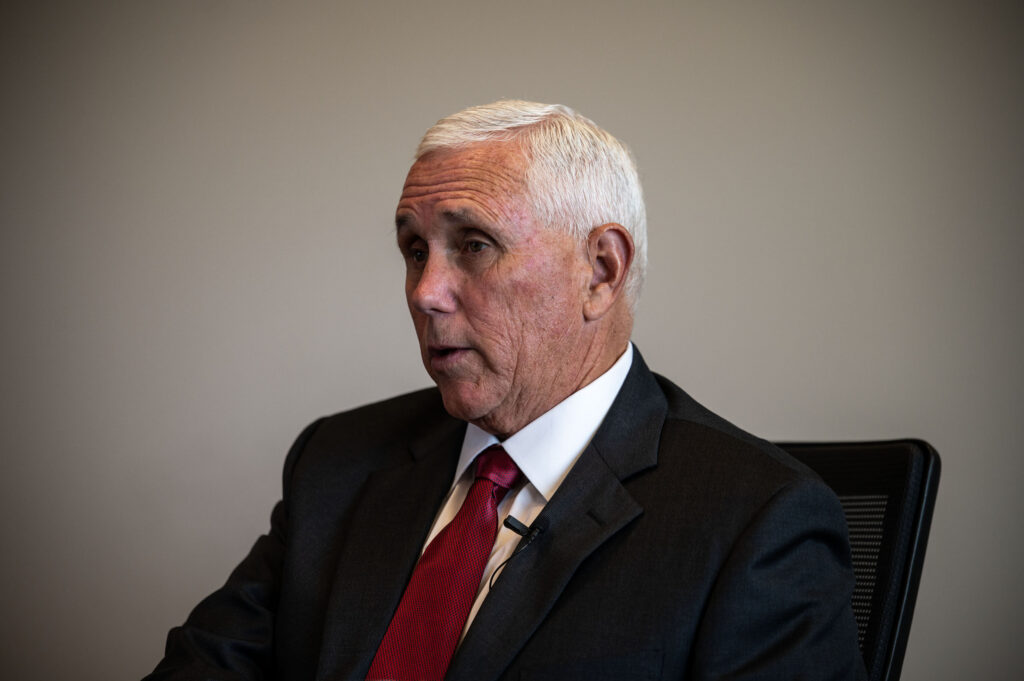
Q&A with Mike Pence | Former vice president says GOP’s populist turn from conservatism isn’t permanent
Ernest Luning
ernest.luning@coloradopolitics.com
Updated 5 days ago
Former Vice President Mike Pence says he’s concerned that the Republican Party has taken a populist turn away from bedrock conservative principles during President Donald Trump’s second term, but he believes the party will return to its roots when Trump...

Democrat Jessica Killin’s internal poll shows dead heat with U.S. Rep. Jeff Crank in Colorado’s 5th CD
Ernest Luning
ernest.luning@coloradopolitics.com
Updated 1 week ago
Jessica Killin, the Democratic nominee in Colorado’s 5th Congressional District, is in a statistical tie with Republican U.S. Rep. Jeff Crank, according to an internal poll released this week by Killin’s campaign. The poll of likely general election voters, conducted...

Surprise candidate Shimon Blau cleared to face off against Melat Kiros in November
Ernest Luning
ernest.luning@coloradopolitics.com
Updated 2 weeks ago
Unaffiliated congressional candidate Shimon Blau, a Denver doctor, has qualified by petition for the general election in Colorado’s 1st District, where Democrat Melat Kiros defeated 15-term U.S. Rep. Diana DeGette in last month’s primary, the Colorado Secretary of State’s Office...

Democrat John Hickenlooper hauls in $1.3 million in 2nd quarter in Colorado’s U.S. Senate race
Ernest Luning
ernest.luning@coloradopolitics.com
Updated 3 weeks ago
U.S. Sen. John Hickenlooper’s reelection campaign raised just over $1.3 million in the year’s second quarter and finished the period with $2 million in the bank, leaving the first-term Democrat with nearly 80 times as much cash on hand as...

Forward Party nominee for Colorado’s U.S. Senate seat puts $1.1 million into his campaign
Ernest Luning
ernest.luning@coloradopolitics.com
Updated 3 weeks ago
Bob Chew, the Colorado Forward Party nominee for the seat held by Democratic U.S. Sen. John Hickenlooper, plans to report donating $1.1 million to his campaign and raising an additional $20,000 in the most recent quarter, his campaign told Colorado...

Turnout surges and winning margins stretch as final returns post in Colorado’s 2026 primary
Ernest Luning
ernest.luning@coloradopolitics.com
Updated 4 weeks ago
County clerks finished posting unofficial results in Colorado’s primary election on Friday, drawing a line under a series of nominating contests that witnessed upsets, surprises and outright shockers by the time the votes were tallied. While the outcome changed in...
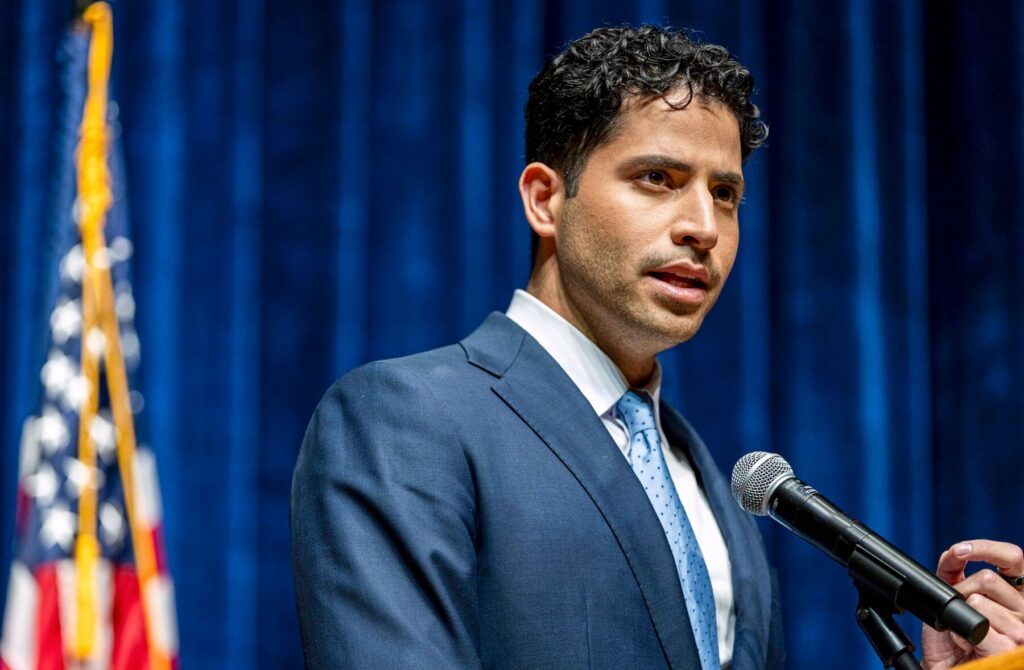
Gabe Evans challenger Manny Rutinel makes House Democrats’ ‘Red to Blue’ program in Colorado’s 8th CD
Ernest Luning
ernest.luning@coloradopolitics.com
Updated 3 weeks ago
The House Democrats’ main campaign arm on July 9 added state Rep. Manny Rutinel to its “Red to Blue” program, saying the party’s freshly minted nominee in Colorado’s battleground 8th Congressional District is primed to flip the seat held by...

How Melat Kiros pulled Democratic Party left in upset win over Diana DeGette
Ernest Luning
ernest.luning@coloradopolitics.com
Updated 1 month ago
“It’s time for change,” Democratic congressional candidate Melat Kiros, a political newcomer and self-described democratic socialist, said in her campaign’s TV ad. On Tuesday night, primary voters in Denver agreed, giving the nomination to the 29-year-old, while at the same...

Melat Kiros shocks 15-term incumbent Diana DeGette, winning Colorado’s 1st CD Democratic primary
Ernest Luning
ernest.luning@coloradopolitics.com
Updated 1 month ago
In the equivalent of a political earthquake, 29-year-old Democratic socialist Melat Kiros defeated 15-term U.S. Rep. Diana DeGette in Colorado’s Denver-based 1st Congressional District primary, according to unofficial election results Tuesday night. The Associated Press called the race at 10:03...
PREV
PREVIOUS

Sanctuary cities declined 17,864 requests to hold illegal immigrants for ICE in 2025: Noem
Sanctuary cities and counties declined to turn over 17,864 illegal immigrants in police custody to Immigration and Customs Enforcement in 2025, according to the Department of Homeland Security. Homeland Security Secretary Kristi Noem testified before the House Judiciary Committee on Wednesday that those jurisdictions rejected thousands of requests by the federal agency for local jails […]

As parents claim some AI chatbots encourage teen suicide, Colorado legislators eye regulation
Last September, the parents of two teen boys appeared before the U.S. Senate Judiciary Subcommittee on Crime and Terrorism to tell their stories. Megan Garcia, the mother of 14-year-old Sewell Setzer, said her son took his own life in 2024. After his death, she found out he had been having sexually explicit conversations with a […]