

Big-box retailers push credit-card legislation undermining local economies | OPINION

By Brett Wyss
Having spent more than two decades in community banking, including guiding a local institution through the Great Recession, I’ve seen firsthand how fragile financial confidence can be and how essential community trust is to a healthy economy.
Stable, secure financial systems matter to families and business owners alike. In Colorado, small businesses are not just part of the economy, they are its backbone. They employ nearly half of the state’s workforce and keep wealth circulating in local communities.
Last year, lawmakers considered legislation (HB25-1282) that would have changed how credit and debit cards are processed in our state. So-called “swipe fee reform” aims to reduce interchange fees, which are the fees businesses pay to card-issuing banks whenever a customer uses a card. In short, revenue from interchange fees helps make electronic payments both convenient and trustworthy: it funds consumer services such as fraud monitoring, cybersecurity, dispute resolution and the infrastructure that allows transactions to clear instantly and securely. Interchange fees support free and low-cost checking accounts, debit cards and credit access that millions of Americans rely on.
These protections are largely invisible to consumers. People tap or swipe without worrying whether their payment will go through, whether their data will be stolen, or whether fraudulent charges will be reimbursed. This peace of mind encourages spending and keeps our modern economy moving. Interchange fees are the cost for that security.
When interchange fees are reduced by law, such as what was proposed in Colorado last year with HB25-1282, who carries the risk? Another question to ask is: who is really behind these reform efforts, and why?
Proponents of these bills often portray swipe fee reform such as HB25-1282 as grassroots campaigns driven by neighborhood restaurants and small businesses looking to cut costs. In reality, though, nearly identical bills have surfaced in no fewer than 31 states, backed repeatedly by some of the largest retailers in the country.
Lobbying disclosures in states that require transparency (including in Colorado) show companies such as Walmart, Target and Home Depot lobbying for these measures, alongside national trade groups representing major chains.
That’s because big-box retailers process the highest transaction volumes and therefore would receive the greatest savings from such policy changes. But there is no requirement those savings be passed on to consumers. Research on similar policies in the recent past shows they typically never see it. In fact, many true small businesses gain little from these proposals. Small businesses rely heavily on fraud protection and reliable payment processing, and lack the negotiating power and transaction volume of their big-box competitors. Weakening the system that supports those services risks harming the very businesses these bills claim to help.
Colorado’s proposal was rejected last year, and for good reason. I write today because I am concerned these efforts (and lobbyists) will try it again.
As the leader of an employee-owned community bank that’s deeply rooted in southern Colorado, I see our role as far more than processing transactions. We finance startups, sponsor local nonprofits, advise families and stand beside customers during both prosperity and hardship. Our success is tied directly to the success of the communities we serve. Policies that weaken community banking ultimately weaken local economies.
When nearly identical bills appear across dozens of states, backed by the same national interests and big-box retailers, lawmakers need to ask tough questions about who benefits and who carries the risk.
Local businesses and consumers are best served by policies that strengthen trust, security and access, not by measures that shift billions of dollars to the largest retailers while putting the stability of our payment system at risk. Colorado leaders were right to reject HB25-1282 last year. If similar proposals resurface, they deserve the same scrutiny.
Brett Wyss is president and chief executive of Integrity Bank & Trust, an employee-owned community bank in Colorado Springs, and serves as chair of the Colorado Bankers Association.


Colorado single-payer study lacks transparency | OPINION
By Lisa Frizell
by-lisa-frizell@coloradopolitics.com
Updated 6 hours ago
Coloradans have a right to expect transparency, accountability and fiscal responsibility from public institutions. Unfortunately, the ongoing single-payer health care study commissioned last year under SB25-45 is raising more questions than answers. Despite repeated warnings from voters and prior analyses,...

When fear replaces facts — what Gabel leaves out about rodenticide bill | IN RESPONSE
Colorado Politics
colorado-politics@coloradopolitics.com
Updated 5 hours ago
Rachel Gabel claims SB26-062 “prioritizes rodents over people” and “strips tools away” from professionals. That framing is rhetorically sharp — but misstates the bill and the toxicology. The column follows a familiar pattern: deploy a vivid public-health anecdote, inflate disease...

Colorado district attorneys oppose bipartisan bill limiting government access to bought data
Marissa Ventrelli
marissa.ventrelli@coloradopolitics.com
Updated 15 hours ago
A bipartisan coalition of Colorado lawmakers is advancing a bill that would prohibit police from purchasing personal consumer data without a warrant, setting up a clash with prosecutors who warn the measure could hamper criminal investigations. House Bill 1037, sponsored...

Lawmakers propose raising excise taxes on alcohol, marijuana to fund mental health spending
Marissa Ventrelli
marissa.ventrelli@coloradopolitics.com
Updated 15 hours ago
Colorado lawmakers hope to refer a measure to the November ballot that would increase excise taxes on alcohol and marijuana, with the revenue going toward mental health and civil commitment facilities around the state. House Bill 1301, sponsored by Rep....

Boulder’s bleak oil-and-gas legal entanglements | Paula Noonan
Paula Noonan
paula-noonan@coloradopolitics.com
Updated 14 hours ago
Good neighbor policy in the fossil-fuel-energy industry stops at Boulder’s door. If any other county or municipality decides to rumble with Exxon Mobil and Suncor Energy over their legal exposure to climate lawsuits, those entities will no doubt face “Bleak...

How a mobile STEM lab showed lawmakers the power of online schools | OPINION
Erika Taylor
erika-taylor@gazette.com
Updated 1 day ago
If you want lawmakers to get online school, don’t hand them a brochure. Put them next to a student who can show real work and explain why it matters. That’s the smart lesson from the Colorado Coalition of Cyberschool Families’...
Rural communities built Colorado, data centers can help build what comes next | OPINION
Colorado Politics
colorado-politics@coloradopolitics.com
Updated 1 day ago
By Duane Nava Rural Colorado has always known how to build things that last. Our towns powered this state for generations. We built the power plants, the grid and the communities that kept Colorado moving. That same skill and work...

The beaver solution to Colorado’s water woes | OPINION
Colorado Politics
colorado-politics@coloradopolitics.com
Updated 15 hours ago
By Eric Washburn This winter was a grim reminder of the ongoing aridification of the western U.S., including Colorado. Snowpack is down dramatically, which will lead to extreme fire danger this summer and likely water rationing. The lower basin states with...
House Ethics Committee dismisses some claims, advances others against Rep. Ron Weinberg
Marianne Goodland
marianne.goodland@coloradopolitics.com
Updated 9 hours ago
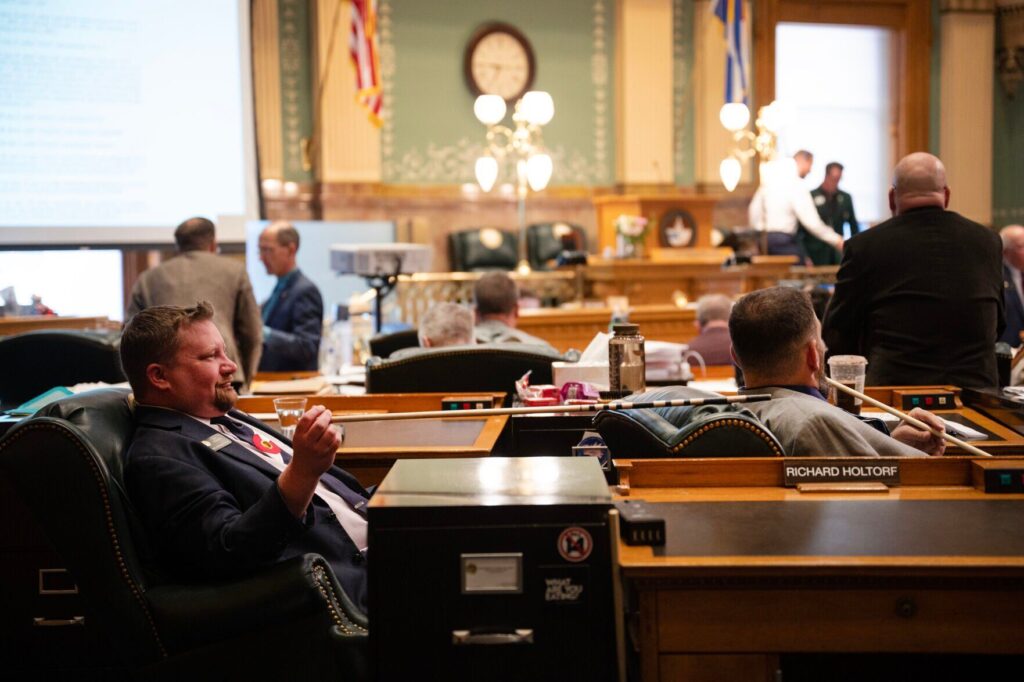
The House Ethics Committee voted on Wednesday to accept three allegations filed against Rep. Ron Weinberg, R-Loveland, but combined two into one subject area. The two issues deal with claims of inappropriate comments made to female lawmakers in two separate...

Bipartisan opposition sinks eviction bill in Colorado
Marissa Ventrelli
marissa.ventrelli@coloradopolitics.com
Updated 1 day ago
Two Democrats sided with Republicans on a legislative panel to reject a proposal that would have made several changes to eviction filings and proceedings, including requiring judges to suppress court records. Sponsored by Rep. Junie Joseph, D-Boulder, House Bill 1047...
PREV
PREVIOUS

When fear replaces facts — what Gabel leaves out about rodenticide bill | IN RESPONSE
Rachel Gabel claims SB26-062 “prioritizes rodents over people” and “strips tools away” from professionals. That framing is rhetorically sharp — but misstates the bill and the toxicology. The column follows a familiar pattern: deploy a vivid public-health anecdote, inflate disease fear, caricature the bill as a “ban,” and then discount contamination evidence by attacking affiliations […]

Colorado single-payer study lacks transparency | OPINION
Coloradans have a right to expect transparency, accountability and fiscal responsibility from public institutions. Unfortunately, the ongoing single-payer health care study commissioned last year under SB25-45 is raising more questions than answers. Despite repeated warnings from voters and prior analyses, the Colorado School of Public Health is moving forward with a new single-payer study that […]