

Rural communities built Colorado, data centers can help build what comes next | OPINION
By Duane Nava
Rural Colorado has always known how to build things that last. Our towns powered this state for generations. We built the power plants, the grid and the communities that kept Colorado moving. That same skill and work ethic puts us in a strong position for the next major opportunity coming our way: data centers.
A data center is a building full of computer equipment that keeps modern life online. When a student opens a laptop, when a rancher checks weather data, when a patient logs on to a telehealth appointment, when a business runs payroll, or when someone turns to AI for help, it all runs through a data center. Demand is rising fast. The U.S. is projected to need more than triple today’s data center capacity by 2030.
Rural Colorado has the land, the transmission lines, the workforce, and the know-how to win these projects. Many of our communities are also still preparing for and grappling with the loss of the major power generation and mining industries that economically drove our cities and towns. These major closures from Pueblo to Craig leave our hardworking residents without jobs, without opportunity, and without hope we can continue to raise our families in the towns we love and we have resided in for generations.
Data centers offer rural Colorado communities a new opportunity for economic growth and revitalization — and we are ready. That’s why we support House Bill 1030.
Each new data center supports real people in real ways. A single project creates about 1,500 construction jobs, often paying around $140,000 a year—– jobs for electricians, welders, heavy-equipment operators, and tradespeople who already live close by. Once a center opens, it can support up to 100 long-term jobs in maintenance, energy systems and operations.
And anyone who has lived in a rural community knows what happens when a new industry or big construction project comes to town. Restaurants fill up. Hotels book out. Hardware stores stay busy. Local contractors get steady work. The money stays in the county, moving from worker to small business to family and strengthening the whole community.
If Colorado attracts just six new data centers statewide, workers could earn more than $2.57 billion in total wages. That money pays mortgages, keeps main street businesses open, helps parents save for college, and lets people build a life here instead of leaving for work somewhere else.
These projects also bring major tax revenue. In 2023, data centers generated $1.37 billion in state and local taxes in Colorado. For rural communities, that means stronger schools, more stable budgets, safer roads and the resources to keep teachers and first responders in our communities. Many school districts have already had to adjust. Pueblo, for example, has had to make hard budget choices as costs rise and revenue falls. A project on the scale of a major data center would help ease those pressures and create opportunities that keep people rooted in their hometowns.
People in rural Colorado care deeply about water, and for good reason. We understand how scarce it can be. Modern data centers, however, are more efficient than many realize. Many use closed-loop cooling systems that recycle the same water repeatedly. In many cases, a data center uses less water than a grocery store and far less than agriculture or manufacturing.
Energy questions matter too. Rural Coloradans feel rate changes first. But data centers pay the full cost of their electricity; they do not get special deals. Research shows states with low load growth see higher electric rates because fixed grid costs are divided among fewer customers. Large, steady customers like data centers help shoulder those costs, easing pressure on families and small businesses. Several utilities nationwide have documented this effect.
Data centers also support Colorado’s clean-energy goals. Our state aims for 100% clean electricity by 2050. Data centers are some of the biggest buyers of wind, solar and storage. Their long-term contracts help bring new renewable projects online, especially in rural counties.
Still, none of this should happen without local control. Communities must decide what fits — through clear siting rules, community benefits agreements, and projects that support local priorities. Rural Colorado deserves development that works with us, not around us, and House Bill 1030 provides those protections.
Our communities built Colorado’s power grid once already. We know how to turn big challenges into opportunities. Data centers are the next chance to bring good jobs, strong schools, and long-term stability to the places we call home.
Rural Colorado is ready to build again. Let’s support House Bill 1030.
Duane Nava is president and chief executive of the Greater Pueblo Chamber of Commerce.

Road-funding initiative in Colorado qualifies for November ballot
Marissa Ventrelli
marissa.ventrelli@coloradopolitics.com
Updated 12 hours ago
A measure that would dedicate all transportation-related revenue to Colorado’s roads and bridges has officially qualified for the November ballot after it cleared the state’s signature threshold, according to election officials. Backed by the coalition Restore Our Roads, Initiative No....

Judge blocks Colorado’s proposed ban on using SNAP benefits for soda
Marissa Ventrelli
marissa.ventrelli@coloradopolitics.com
Updated 12 hours ago
A federal judge has temporarily blocked Colorado and several other states from enforcing a proposed “Healthy Choice Waiver” that would have barred Supplemental Nutrition Assistance Program (SNAP) recipients from using their benefits to buy soda and other sugary drinks. Under...

Colorado has a playbook for youth mental health — our next governor must use it | GUEST COLUMN
Colorado Politics
colorado-politics@coloradopolitics.com
Updated 1 day ago
By Karen Ron-Li Liaw From the rural communities on the western slope to the eastern plains, to the major urban regions on the Front Range, Colorado families are navigating an all-too-familiar crisis: kids are struggling, and Colorado’s mental health system...
Colorado chamber: 2026 legislative session marked ‘significant progress’ for business
Marissa Ventrelli
marissa.ventrelli@coloradopolitics.com
Updated 20 hours ago
This year’s legislative session produced some big wins for the state’s business environment, according to the Colorado Chamber of Commerce’s annual report. The report measured the progress in the chamber’s legislative agenda across policy areas like labor and employment, technology...

Colorado House ethics committee delays hearing to allow Rep. Lindsay to seek legal counsel
Marianne Goodland
marianne.goodland@coloradopolitics.com
Updated 2 days ago
The Colorado House ethics committee voted Monday to pause the ethics complaint against Rep. Mandy Lindsay while she seeks legal counsel. The hearing was scheduled to begin with two days of testimony, during which Lindsay could present evidence and call...
‘Peaking at the right time’: Barbara Kirkmeyer is confident as ballots go out
Thelma Grimes
thelma.grimes@coloradopolitics.com
Updated 1 day ago
Calling 2026 an “interesting” year, Sen. Barbara Kirkmeyer said the race for the Republican nomination has taken her from a “bizarre debate” to a broader effort to maintain the party’s integrity, while making the case that she’s ready to lead...

Rural frustration, parental rights shape Scott Bottoms’ pitch ahead of Colorado’s gubernatorial primaries
Thelma Grimes
thelma.grimes@coloradopolitics.com
Updated 14 hours ago
With just weeks before Colorado’s June primary, Republican gubernatorial candidate state Rep. Scott Bottoms is spending nearly all his time on the road — literally crisscrossing the Western Slope and Eastern Plains — in a final push to connect with...

Registered voters on the eve of the 2026 primaries | Cronin & Loevy
Tom Cronin Bob Loevy
tom-cronin-bob-loevy@coloradopolitics.com
Updated 4 days ago
The Colorado Secretary of State’s Office has published the latest voter registration figures for the state and its counties as of June. Colorado ranks among the highest states for independent, or unaffiliated, voters. Only Alaska and Massachusetts have more. New Hampshire, New Jersey, Maine and Oregon also rank highly. So here...

A room for Sundance, a reality check for big-government Boulder | Jon Caldara
Jon Caldara
jon-caldara@coloradopolitics.com
Updated 6 days ago
There are few things more satisfying to watch than socialists getting mugged by reality. The Sundance Film Festival is invading my hometown of Boulder early next year. Sundance drew 85,000 attendees last year in Park City, Utah. Boulder’s hotel room...
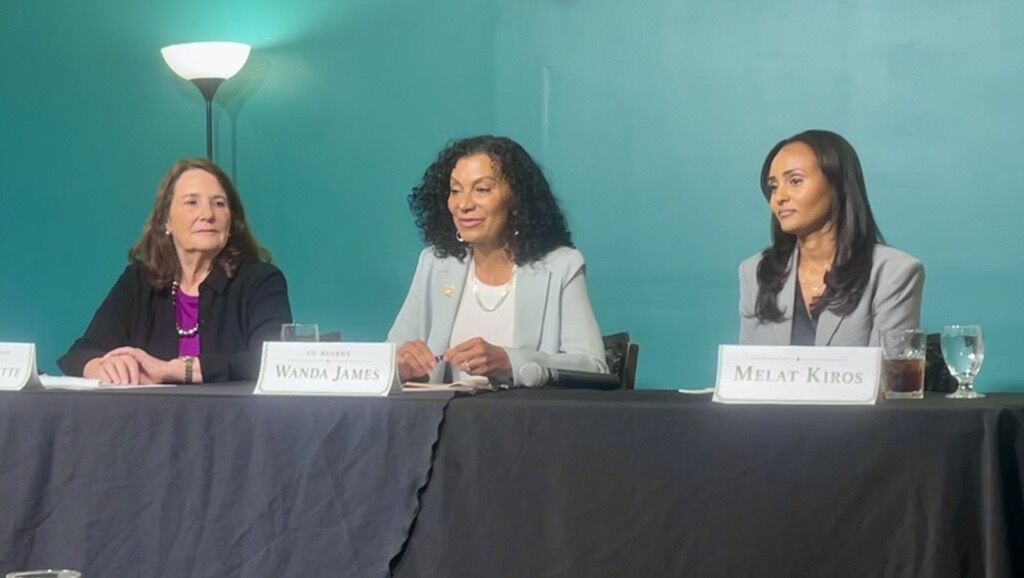
Democratic candidates DeGette, Kiros and James clash in CD1 forum
Marissa Ventrelli
marissa.ventrelli@coloradopolitics.com
Updated 2 days ago
The three Democratic candidates for Colorado’s 1st Congressional District clashed on Friday night over a host of issues, even as they expressed frustration with their party. The candidates — U.S. Rep. Diana DeGette, doctoral student Melat Kiros and university regent...
PREV
PREVIOUS

The beaver solution to Colorado's water woes | OPINION
By Eric Washburn This winter was a grim reminder of the ongoing aridification of the western U.S., including Colorado. Snowpack is down dramatically, which will lead to extreme fire danger this summer and likely water rationing. The lower basin states with whom Colorado and the upper basin states are battling over the allocation of water in […]

How a mobile STEM lab showed lawmakers the power of online schools | OPINION
If you want lawmakers to get online school, don’t hand them a brochure. Put them next to a student who can show real work and explain why it matters. That’s the smart lesson from the Colorado Coalition of Cyberschool Families’ (CCCF) 2026 Day at the Capitol. This year, on Feb. 12, CCCF built the morning […]