

Denver ends contract with license plate camera vendor Flock
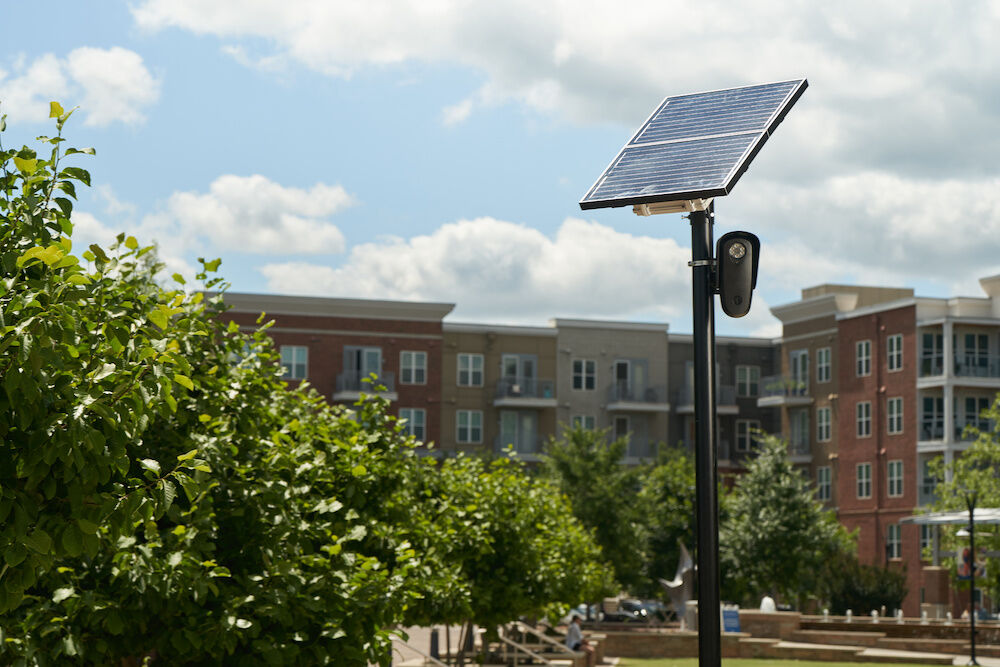
After months of tension between Mayor Mike Johnston and the City Council, Denver is ending its relationship with license plate-reading camera vendor Flock Safety, awarding the contract to Axon.
“We’ve heard the community loud and clear, and it is time to make a change,” Johnston said in a news release. “Axon is among our most reliable partners and will collaborate with us on strong safeguards that protect immigrants, women seeking reproductive healthcare, and the constitutional rights of Denverites.”
Johnston added: “I’m grateful to Council for helping us build a data system that is accountable to our residents and that will set the standard for how cities balance the needs for both privacy and safety.”
The city’s contract with Flock expires at the end of March. Unlike the two previous contract extensions, which Johnston executed unilaterally, bypassing the City Council, the mayor’s office indicated the new contract will require council approval.
The breakdown between Denver and Flock followed months of pressure from critics of the camera system as well as councilmembers. The critics have suggested that information captured by the company is being shared to target immigrants illegally staying in the U.S.
9NEWS reported that Flock placed the city’s tracking data on a national network that is accessible to agencies working in the immigration enforcement arena. 9NEWS also reported that Flock had a secret partnership with the U.S. Border Patrol.
Flock itself has insisted it does not work with immigration authorities and the data its cameras collect is controlled by the client — be it a city, school or a private organization.
The announcement from Johnston’s office on Tuesday came just days after Denver City Auditor Tim O’Brien refused to countersign the contract, citing concerns over “a risk of liability for the city.”
City officials said Denver’s contract with Axon will include several protections to ensure Denver’s data cannot be accessed by federal authorities or used for any purpose other than those set forth by the city.
Under the agreement, regular data reviews would be conducted, an auditing function would be added, and data would be retained for no more than 21 days unless required for an active investigation.
“These license plate readers focus on the plates, not on faces or people,” the mayor said. “There will be no AI training used with this data, and the data is only stored for 21 days.”
The vendor must also agree that Denver retains full and exclusive ownership of all data and opt the city out of any data sharing.
Axon, which does not have a national look-up feature, will not share data with federal agencies or agencies outside Colorado, according to the mayor.
“That means only Denver Police officers have access to the data, no federal agencies, no federal officers, no ICE agents,” Johnston said.
Finally, Axon must agree to abide by Colorado law, including restricting access to the city’s data for civil immigration enforcement, abortion-related investigations, or any purpose not explicitly agreed to.
Johnston touted that Axon would provide “the highest level of security protections for the city’s license plate data.”
Scottsdale-based Axon already partners with the city of Denver, supplying body-worn cameras to every law enforcement officer.
“This is the same level of security protection as you have with your medical information,” explained Johnston.
Axon currently parks Denver’s body-cam footage on a platform called evidence.com, a cloud-based digital evidence management and storage platform, which, according to Johsnton, is “where our license plate reader data will also be stored.”
In December 2025, the City Council approved a request from the Department of Public Safety for a new five-year, $27 million contract with Axon for 2,563 new body cameras and 2,175 Tasers.

The city’s current 10-year, $22 million contract with the company expired Dec. 15. The new contract for the Tasers and body cameras commenced Jan. 1, 2026.
In addition to new hardware, the contract includes camera docking ports, which serve as a secure central hub for uploading evidence and recharging the cameras’ batteries.
The Denver Police Department has long maintained that automated license plate readers have contributed to the city’s decrease in crime, particularly auto theft.
This includes the recovery of more than 400 stolen cars and the removal of more than 60 firearms from the streets, according to city sources.
“License plate readers are among the most critical tools we have to develop investigative leads, solve crimes more quickly, and serve justice more efficiently,” Denver Police Chief Ron Thomas said. “LPRs have helped us track down violent offenders before they hurt anyone else, aided the city in dropping auto theft to levels not seen in years, and solved serious crimes in which there was otherwise little to no evidence that would allow us to identify the offender and make an arrest.”
License plate readers have also been used to catch hit-and-run suspects, and in 2025, were utilized in 16 homicide investigations — more than 40% of all such cases last year — as well as 32 non-fatal shooting investigations.
“I know some of you take a position you want no cameras at all, and I respect that position, but my job is both to protect civil liberties and to protect us from crime,” Johnston said. “License plate readers help us investigate violent crimes. They help us investigate auto theft, and when done well, they can help deter both of those things. That’s why we want a solution that will both protect us from the lawless federal government and protect us from everyday crime.”
A spokesperson for Johnston’s office told The Denver Gazette that a one-year, $150,000 contract with Axon is expected to be introduced before the city’s current contract with Flock ends on March 31.
“I look forward to considering this contract with a fresh and fair assessment as it goes through the Council process,” Councilmember Amanda Sawyer said.
As for the data that has already been collected by Flock, the spokesperson stated that “Denver Police would hold on to any Flock data that they’re using for active investigations, but otherwise it (the data) would expire with the previous 30-day retention policy.”
A Flock representative touted the system’s effectiveness and said the company hopes to work with Denver again.
“We’re proud of the important work we’ve done in partnership with the Denver Police Department over the past two years,” Flock spokesperson Paris Lewbel told The Denver Gazette in a statement Tuesday, adding that the company hopes to work with the city again in the future. “In the meantime, we continue to serve more than a hundred cities across Colorado helping solve crimes and find missing persons. In just the last five months, Flock technology has been instrumental in helping locate six abducted children in Colorado and get them returned safely to their families.”
Lewbel added that the DPD has credited Flock cameras with significant reductions in crime, including an 81% homicide clearance rate, which is “well above the national average.”
Denver Gazette news partner 9NEWS contributed to this story. For more on this story, and others, visit 9NEWS.

Federal judge directs plaintiff to revise complaint alleging Denver officers’ constitutional violations
Michael Karlik
michael.karlik@coloradopolitics.com
Updated 3 hours ago
A federal judge directed a defendant to revise his allegations on Wednesday to more precisely state what two Denver officers and the city itself allegedly did to violate his constitutional rights by facilitating his prosecution for murder until prosecutors dropped...
Federal judge explores new sanctions against ex-Colorado judicial discipline director
Michael Karlik
michael.karlik@coloradopolitics.com
Updated 4 hours ago
A federal judge on Wednesday directed Colorado’s former judicial discipline director, for the third time this year, to explain why she should not sanction him for his latest conduct in his litigation against the state’s judiciary. Christopher S.P. Gregory, who served...
Colorado joins lawsuit challenging changes to Endangered Species Act
Marissa Ventrelli
marissa.ventrelli@coloradopolitics.com
Updated 3 hours ago
Colorado once more joined a coalition of states challenging the Trump administration — this time on proposed rules regarding the Endangered Species Act. The pair of lawsuits challenge new rules made under Interior Secretary Doug Burgum, who earlier said the...

Boebert challenger Eileen Laubacher says she’ll ‘break through the noise’ in Democrat’s 1st TV ad
Ernest Luning
ernest.luning@coloradopolitics.com
Updated 6 minutes ago
Democratic congressional candidate Eileen Laubacher says she’ll take a different approach than her opponent in a campaign ad released Wednesday that opens with a cacophonous series of videos featuring Republican U.S. Rep. Lauren Boebert. “Eileen’s had enough of the noise...

Colorado congressman asks DOJ to investigate violent student ICE walkout
Nico Brambila
nico.brambila@denvergazette.com
Updated 3 hours ago
U.S. Rep. Jeff Crank is asking the Justice Department to investigate violence at last week’s anti-ICE student walkout in Denver, including whether outside organizations helped organize, fund, or influence the demonstration. Crank sent a letter Tuesday requesting the investigation to...
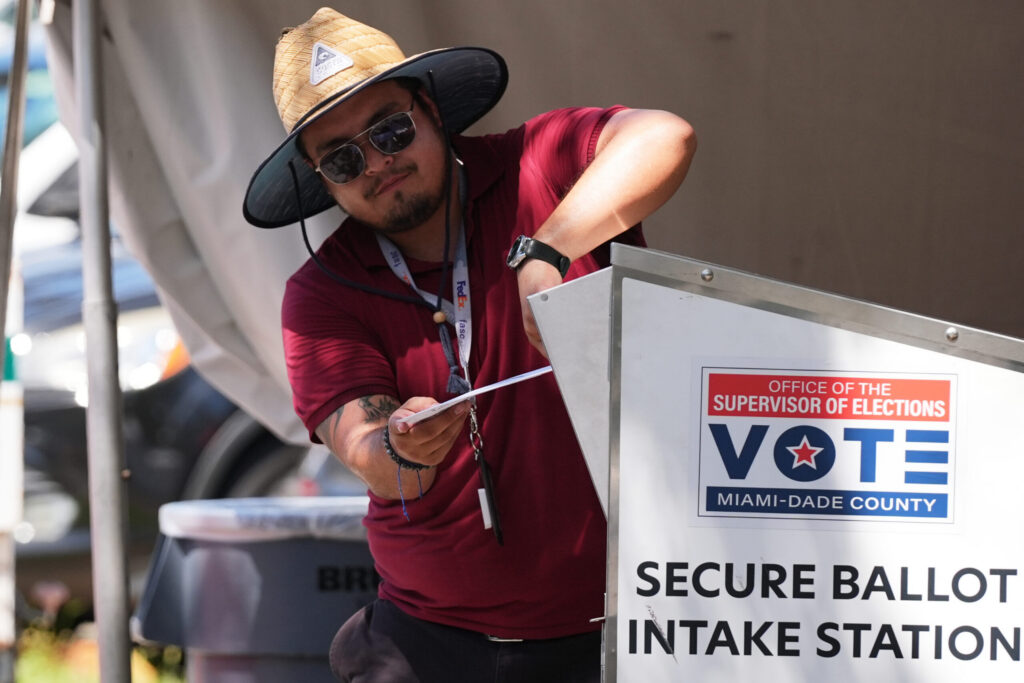
General election season is here. Where does mail-in voting stand?
David Zimmermann
david-zimmermann@coloradopolitics.com
Updated 6 hours ago
As the general election season approaches, the legal question surrounding the new U.S. Postal Service mail-in ballot requirements remains up in the air. With the case playing out in the courts, mail-in voting has not been changed substantially despite President...

Lori Gimelshteyn on 3 ballot measures to ‘let kids be kids’ | The OpEdge Podcast
Tony Olivero
tony.olivero@gazette.com
Updated 7 hours ago
Lori Gimelshteyn — board member of Protect Kids Colorado and executive director of the Colorado Parent Advocacy Network — joins The OpEdge to discuss three measures headed to Colorado voters this November. Gimelshteyn tells host and investigative columnist Jimmy Sengenberger...
10th Circuit orders second look at immunity for Kiowa County deputy over fatal vehicle crash
Michael Karlik
michael.karlik@coloradopolitics.com
Updated 1 hour ago
The Denver-based federal appeals court directed a trial judge on Tuesday to further analyze whether a Kiowa County deputy and the sheriff’s office may be sued for a fatal vehicle collision. The Colorado Governmental Immunity Act generally shields government entities and public...
A path toward justice and public safety | PODIUM
Anthony Hartsook
ahartsockop@gmail.com
Updated 21 hours ago
Strangulation can be one of the most dangerous forms of assault; despite the lack of visible ailments it is accompanied by. Though strangulation leaves no broken bones, bruises or visible wounds, it is one of the strongest predictors of future...

From moving people to managing them | GUEST COLUMN
Michael Hancock
michael-hancock@coloradopolitics.com
Updated 21 hours ago
Transportation policy used to have a fairly uncomplicated purpose: move people safely, efficiently and reliably. Build roads where people drive. Maintain bridges before they fail. Add capacity where growth overwhelms the system. Provide transit where it makes sense. Infrastructure was...