

Colorado farmers fight fires one day, stand in line for ashes the next | Rachel Gabel
Fires on the plains are not the roaring, mosaic burns in the mountains that leap across canyons and leave the skeletons of trees behind as monuments of destruction.
In this country, the first gust of wind hits like a left hook and gets the attention of everyone. The weatherman smiles and talks about precipitation chances and snow chances in percentages calculated via some formula with an understandable margin of error. But when they say the wind will blow, they’re never wrong.
Tractors hitched to giant discs sit parked near farm shops, and pickups with water tanks sit near wells that can pump hundreds of gallons per minute. The wind makes the bases of men’s skulls hurt, and makes broad-shouldered men flinch as dirt and tumbleweeds punish everything outside.
The cows, many this time of year with calf at side or heavy bred, hunker low and curl their big bodies small all while blown dirt drifts at their side. They take cover on the right sides of windbreaks with dirt streaking their great faces making trails from the inside corners of their eyes and their long lashes. Water tanks seem to throb as the wind pulses the water and a thin layer of dirt clings to any remaining chunks of broken ice. It makes for a miserable day on the sagebrush sea.
At the first whiff of smoke, scanners are turned up and neighbors begin calling one another. “Is it south of you?” “Did it get into the stubble?” Different materials smell and look different as they go up in smoke. Hay burns white and smells distinctly different than pasture. There is no amount of water that will extinguish a hay fire. Men in the heavy equipment they expertly pilot rush to move nearby unaffected bales, while others tear open the smoldering 2,000-pound bales to allow them to burn out.
County employees who know every road on the grids that cover the county are sent to close highways made invisible by smoke. Other roads are pummeled with the kind of blowing dust that made pioneers lose their minds nearly 100 years ago that still sifts under doors and into light switches.
People rush toward flames and rush toward their neighbors. They haul water in trailers that are baffled so they don’t slosh, but at highway speeds flying down a gravel road, they’re numb to the slaps and waves from wind and water alike.
Men throw giant tractors into road gear and go. They all know where the green wheat and paved roads are where, if they can rip fire lines and stay on the right side of trouble, they can herd the flames to things that won’t burn. If there are cattle in the path of the fire, fences are cut or gates are tied back to allow cattle to instinctively save themselves. The dust pneumonia and other respiratory wrecks can and will be dealt with later.
Volunteer fire departments stage their attacks while gathered in wide spots in the road. They’ve attended trainings, but most of them learned in grandpa’s pickup cab as he gave orders over a squawking cab radio to avoid a draw or a cedar shelter belt, or where irrigation wells are located and how to fill tender trucks from the fat hose openings. They know who has discs that unfold with hydraulics so strong they could lift the national debt. They know which neighbor moved out to the country looking to find themselves or hide from traffic and truancy officers who have never sprayed a weed and are sitting atop a timber box with nothing but a garden hose.
Men can squint down county roads and tell the farm by the little stand of trees or the leg of a grain bin interrupts the flow of the short grass sea. At morning light, they can see just how close the fire came. In agriculture, people live closer to life and closer to death than most. Sometimes the life is a newborn calf, sometimes the death is the same calf after hours of trying to keep him on this side of breath.
The next night, the same farmers and rancher who had fought fires the day before, stood in line for ashes. They’re told, “Remember that you are dust, and to dust you will return.” They know this to be true, and they know the portion of the verse before this one. “By the sweat of your brow you will have food to eat until you return to the ground from which you were made.”
Rachel Gabel writes about agriculture and rural issues. She is assistant editor of The Fence Post Magazine, the region’s preeminent agriculture publication.


City of Northglenn, state fail to reach agreement on mental health facility amid safety concerns
Marissa Ventrelli
marissa.ventrelli@coloradopolitics.com
Updated 39 seconds ago
The City of Northglenn says it was unable to reach an agreement with the state on a pair of controversial transitional living facilities for individuals with mental health conditions run by the Colorado Department of Human Services. The facilities, located...

Colorado Medicaid director’s resignation long-overdue inflection point for our families, kids | OPINION
Colorado Politics
colorado-politics@coloradopolitics.com
Updated 2 hours ago
By Heidi Baskfield For years, the consequences of a strained and fragmented Medicaid system have fallen on those least able to navigate it — the children with complex needs and the families fighting to care for them. Though policy debates...
Note to Colorado lawmakers — parents protecting kids isn’t abuse, it’s their job | OPINION
Colorado Politics
colorado-politics@coloradopolitics.com
Updated 13 hours ago
By Matt Sharp and Sharon Supp During the last few years, the U.S. Supreme Court has made at least one thing clear: Colorado is consistently overreaching to apply its laws in unconstitutional ways. Colorado treated a cake artist with hostility...

H.R. 1 underscores unfairness in Colorado tax code | OPINION
Colorado Politics
colorado-politics@coloradopolitics.com
Updated 13 hours ago
By Caroline Nutter On July 4, 2025, Colorado’s budget was overturned with the stroke of a pen. When President Donald Trump signed into law H.R. 1, or the One Big Beautiful Bill Act, he didn’t only cut federal funding by...
Colorado lawmakers grapple with spending cuts amid $1 billion-plus deficit
Marianne Goodland
marianne.goodland@coloradopolitics.com
Updated 15 hours ago
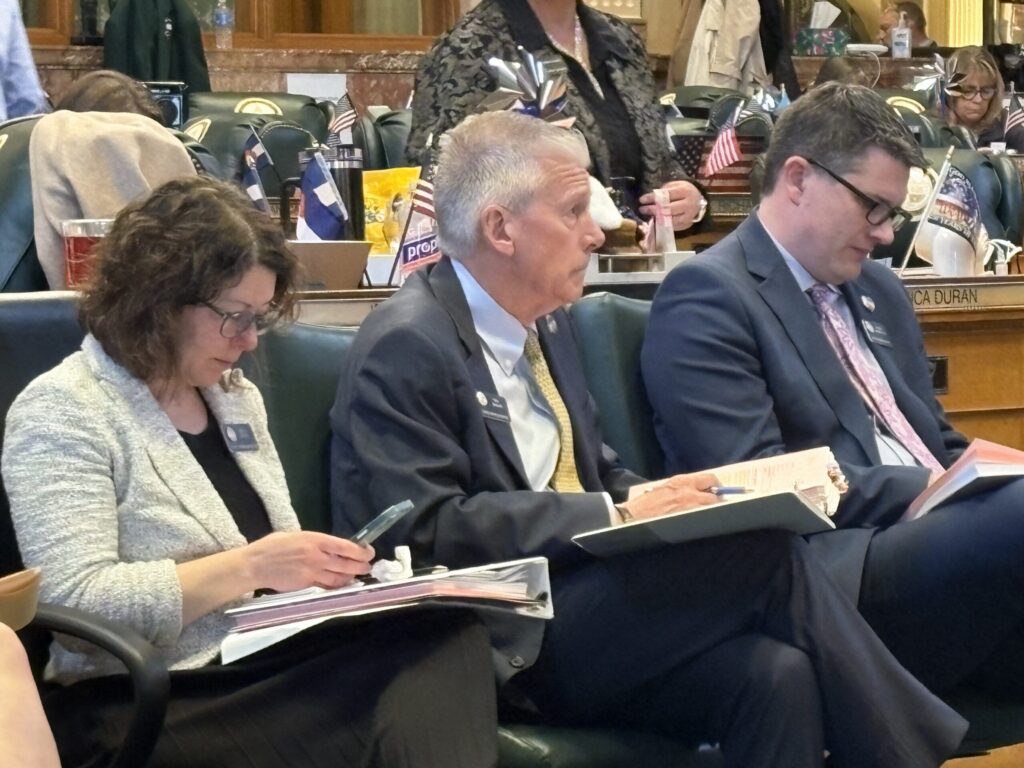
The battle over Colorado’s budget for next year — which stalled in the House over a procedural maneuver — entered a more difficult phase on Thursday, when legislators grappled with hundreds of millions of dollars in proposed reductions to balance...

Colorado bill reshaping RTD board advances
Marissa Ventrelli
marissa.ventrelli@coloradopolitics.com
Updated 18 hours ago
A proposal to reshape the Regional Transportation District’s leadership easily cleared a committee vote Wednesday, advancing the bill sponsors say is needed to revive a transit system still struggling to regain riders and public trust. Critics have countered that, while...

Colorado Democrat John Hickenlooper pulls in nearly $1.4M in 1st quarter, heads into primary with $4M
Ernest Luning
ernest.luning@coloradopolitics.com
Updated 15 hours ago
U.S. Sen. John Hickenlooper’s campaign raised nearly $1.4 million in the first quarter of 2026 and plans to report more than $4 million on hand heading into Colorado’s June primary, the first-term Democrat’s campaign said Thursday. That brings Hickenlooper’s total...
Republican Ron Hanks plans ‘grassroots’ primary challenge to US Rep. Jeff Hurd in Colorado’s 3rd CD
Ernest Luning
ernest.luning@coloradopolitics.com
Updated 19 hours ago
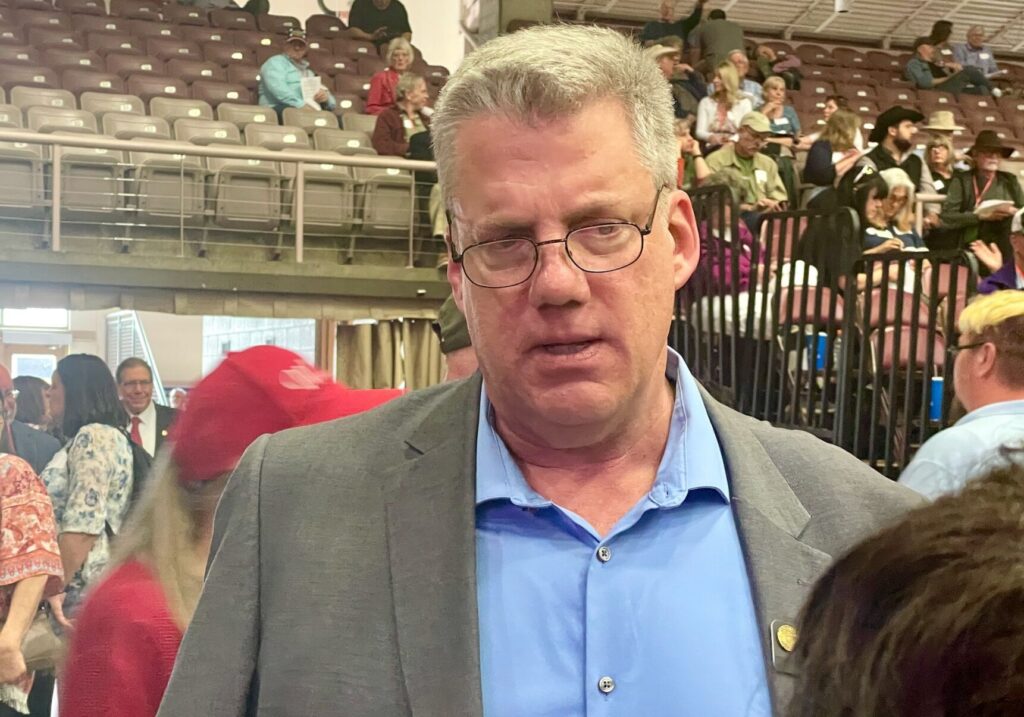
Colorado Republican Ron Hanks, a former state lawmaker, plans to challenge first-term U.S. Rep. Jeff Hurd in the 3rd Congressional District primary by seeking a spot on the June ballot at the GOP’s district assembly in Pueblo on Friday, Colorado...
House GOP stalls Colorado budget debate by forcing full reading of 661-page bill
Marianne Goodland
marianne.goodland@coloradopolitics.com
Updated 19 hours ago
A procedural battle at the Colorado Capitol boiled over on Wednesday night, when a House Republican demanded the 661‑page state budget be read aloud in full — a move that delayed the advance of the proposed $46.8 billion spending plan....

Colorado lawmakers propose changes to family court procedures | Bills in Brief
Marissa Ventrelli
marissa.ventrelli@coloradopolitics.com
Updated 2 days ago
Colorado lawmakers introduce hundreds of bills each year. Bills in brief cuts through the noise by explaining which proposals matter, what’s at stake, and how decisions at the Capitol could affect everyday life across the state. Colorado lawmakers from both parties are...
PREV
PREVIOUS

The First Amendment protects the Second | Jon Caldara
It’s not an attack on the Second Amendment, but the First Amendment. I know this is going to sound crazy but, there was a time when liberals, not conservatives, were the champions of free speech. Today? Now in Colorado it is punishable to “mis-gender” someone. By speaking truthfully, say calling a man, “a man,” when […]

Like Trump nationally, incumbent Colorado Dems lose sight of what matters to everyday people | Miller Hudson
My years as a high-level radioactive waste manager took me in and out of Washington, D.C. frequently during the 1990s. Following Newt Gingrich’s successful 1994 ouster of the Democratic majority in Congress, following their 40-year reign, I was surprised many Democratic lobbyists were willing to acknowledge privately Newt’s win was probably a good thing. There […]