

Colorado policymakers scramble with prisons on track to exceed capacity
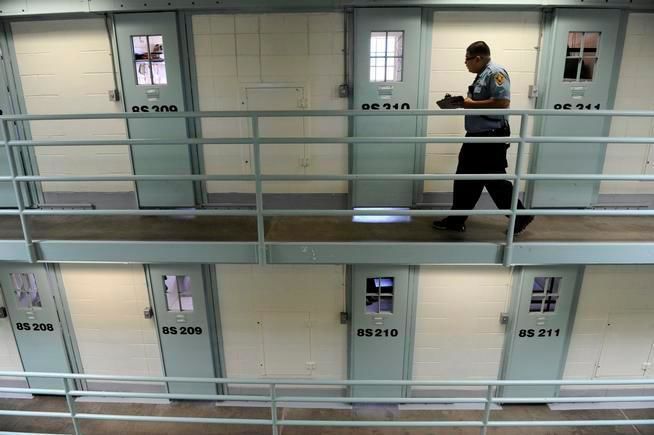
Colorado’s prison system is on track to exceed capacity within the next year, driven by a sharp slowdown in parole releases, staffing shortages and an aging inmate population — all as lawmakers grapple with an $800 million general fund shortfall that limits options for expanding beds or spending in alternative programs.
If projections hold, the inmate population could swell to levels not seen since 2011 — aside from a brief pandemic-era spike in 2020 — pushing the system well past its designed capacity and intensifying pressure on an already strained corrections budget and staff.
With the state facing an $800 million shortfall in general fund revenue, which funds corrections, the money to pay for more beds could mean cuts to other programs valued by lawmakers and advocates, such as early childhood development.
Some have argued that reducing the prison population through parole, community corrections, and an intensive supervision program could lessen the costs — it’s about $57,000 per year to house an inmate — but parole numbers are also at their lowest levels since 2011, according to a briefing document from the Joint Budget Committee.
Meanwhile, the Colorado Department of Corrections said as its navigates the “complex landscape of rising population projections and fiscal constraints, community safety is the lens through which every decision is made.”
Parole bottleneck
While the prison population continues to grow, one way out of prison has crawled to a standstill — the parole system.
That has led to frustration within the system, both for corrections officers and the inmates.
“Our darkest days are not behind us — they’re ahead of us,” said Christie Donner, executive director and founder of the Colorado Criminal Justice Reform Coalition.
The next governor is going to inherit a very big challenge, Donner told Colorado Politics.
Donner’s organization views the criminal justice system as “overused” and regards the last four decades as “over-criminalized.” The group has pushed for spending for reentry programs and “parole reforms that reduced the amount of time someone could go back to prison on a technical parole violation.”
That challenge, advocates have said, is how to get the thousands of inmates approved for discretionary parole what they need to get out of prison — whether that’s housing, skilled nursing care, education, life skills or workforce training.
The other part of the logjam deals with community corrections, the state’s system of halfway houses that works with the Department of Corrections.
Community corrections is under the Division of Criminal Justice within the Department of Public Safety. The office works to “promote productive reintegration of clients back into the community.” Some of the inmates in the program are coming after their release on parole; others are still inmates in the corrections system.
That’s about 3,600 on any given day, according to the Office of Community Corrections.
Discretionary parole — approved by the state’s parole board for inmates who have met their parole eligibility date but have not reached their mandatory parole release date — is now the most common way for inmates to be released.
Capacity triggered
Lawmakers at the state Capitol said they are fed up with the crisis in corrections and parole, and they want a way out.
In 2018, lawmakers unanimously passed House Bill 1410, known as the Prison Population Management Measure.
Under the bill, the corrections department would be required to notify the governor, the Joint Budget Committee, the Parole Board, the elected district attorneys, the chief judge of each judicial district, the State Public Defender, and the Office of Community Corrections when the vacancy rate in the state prison system fell below 3%.
That happened for the first time on Aug. 16, 2025. The rate on that day was 1.92%. It has remained below 3% since then.
In response, the corrections department sought funding for additional beds. That request hasn’t exactly been welcomed by budget writers.
Last month, the Joint Budget Committee, for the first time, voted against approving a supplemental request from the agency for 788 more beds for $2.4 million and 15 full-time positions to supervise those inmates. The budget committee later reversed its decision, saying there were no other options.
While there’s no national standard for an inmate-to-correctional officer ratio, because it can vary by security level, it’s about 15:1 at the federal level. In some states, such as Georgia, it’s about 200:1 due to severe understaffing.
That’s Colorado’s problem, too.
Meanwhile, some advocates pointed to hundreds of available beds in community corrections.
One census estimate on Feb. 10 listed 466 residential beds and 252 non-residential beds, meaning individuals who have completed the residential program can live outside the facility but remain under supervision.
But the big question is whether those beds are funded and staffed. Others noted that those facilities can choose whom they take, and some are choosy.

Budget writers reject, then approve more beds
The Joint Budget Committee (JBC) has been reviewing the situation, including the vacancy trigger, following its December hearing with analyst Justin Brakke.
His analysis said the male prison population and those in community corrections are expected to grow by 951 in 2025-26.
The corrections department, at the time of the briefing, had 914 male prison beds available, but all were unfunded, meaning that while the beds were vacant, there was no staff to supervise the inmates. At least 118 of those beds or facilities require extensive construction, which adds to the problem.
When the department came back in January for adjustments to the current year budget, the JBC voted to approve funding for higher medical costs, one of the big drivers in the corrections budget crisis. But, on a 4-2 vote, the panel denied funding for the beds.
At the same time, Brakke told the committee that, of those seeking parole under their parole eligibility date, almost half of the people eligible (46%) are low to medium risk.
The JBC revisited the issue on Jan. 28 and approved the full funding request.
It didn’t go over well with either Colorado WINS, the state’s employee union, which has a substantial number of members who are corrections employees, or with Donner and her organization.
Voting to fund the beds removed the leverage the JBC had to require “meaningful changes” at the Department of Corrections, Donner said in a joint statement with WINS.
On Feb. 11, the Colorado House reviewed the supplemental budget request, which topped $29 million in a year when the state is facing an annual $1 billion shortfall in the general fund and legislators are fighting to fund their priorities. DOC is 91% funded by the general fund, which is based on individual and corporate income tax and sales and use tax.
JBC Chair Rep. Emily Sirota, D-Denver, told the House the JBC eventually approved the money for beds because “these are costs we have to pay. If people are assigned to the Department of Corrections, it is the state’s obligation to house them … and (hopefully) provide services.”
Meanwhile, JBC member Sen. Judy Amabile, D-Boulder, who is among those calling for Department of Corrections to figure out how to fix the problem, pointed to the hundreds of vacant beds in community corrections and to hundreds of people in DOC approved for parole who, she said, aren’t being released.
They need treatment, a class they can’t get, or somewhere to live, said the legislator.
“If we could fix that, connect more people with what they need to be released and find them placements in the community, we would go a long way to getting rid” of the backlog and the need for more beds, she said.
And while the JBC eventually relented and voted to fund the beds, “I’m not voting for more beds until I see a plan to address these disparities,” she said, adding it should include “a plan to get more people who are not dangerous placed in the community,” and to correct other issues, such as parolees sent back to DOC for technical violations.
“Maybe we are pulling people back in when we don’t need to. I’d like to understand that,” she said.
She said every community corrections facility has a board that decides whom it will take, and the rejection rate is high, with a low admission rate in some locations.
The JBC’s DOC analysis said lawmakers could require a community corrections facility to take someone considered low risk, but that would likely require legislation.
While the JBC is unlikely to run that bill, she’s hoping someone else in the Colorado General Assembly will take up that issue.
This isn’t all DOC’s fault, she said, as the agency doesn’t decide who gets sentenced, how long the sentence is, or when they get parole. But the department should be doing more to get people prepared for release, Amabile said.
One idea percolating is to combine community corrections, probation, and parole into a single entity, so that someone could look at the bigger picture.
Amabile was the sole “no” vote on the JBC’s decision to fund the requested beds.
During the debate on the DOC’s supplemental budget request, fellow JBC Rep. Rick Taggart, R-Grand Junction, also maintained that the crisis is not solely the fault of DOC, which he said has no control over the parole board or community corrections.
The JBC is pressing hard for DOC, the parole board and community corrections to work more collaboratively, Taggart told the House.
Rep. Yara Zokaie, D-Fort Collins, highlighted there are nearly 5,000 inmates who have reached their parole eligibility dates, and at least 500 who have completed everything required for release.
“This situation is avoidable, and I fear that if we keep throwing money at it as the solution, we won’t actually address the underlying problems,” she said.
She was among a number of progressive Democrats who said during the debate they would vote “no” on the bill.
On the other side of the ideological aisle, Rep. Rebecca Keltie, R-Colorado Springs, said putting money toward more prison beds “equals a safer community,” and that’s one of her top priorities.
The final vote for House Bill 1151 on Feb. 12 was 45 to 17.
Graying inmate population strains system
The problem of reducing the prison population isn’t limited to a lack of education, job skills, or acceptance into community corrections, or the “choosiness” of some community corrections boards about who will be accepted.
Another bottleneck is the age of the prison population. Currently, the average age of a male inmate is around 40. But the prison population is aging, a big reason for the higher medical costs. It’s also a problem when people who are aging or medically fragile inmates hit mandatory release.
“There’s simply nowhere for them to go,” Donner said.
Skilled nursing care is needed for the elderly or medically fragile, and, for those beds, DOC competes with patients on Medicaid or Medicare and individuals coming from private hospitals or jails.
Donner is hoping a partnership with a private nursing home company could be part of the solution.
Rändi Moore, chair of the Colorado State Board of Parole, told Colorado Newsline last month that the board reviewed 88 people who met the criteria of the prison population management measures law. Of those reviewed, 29 were released from prison.
Staffing shortages reach critical levels
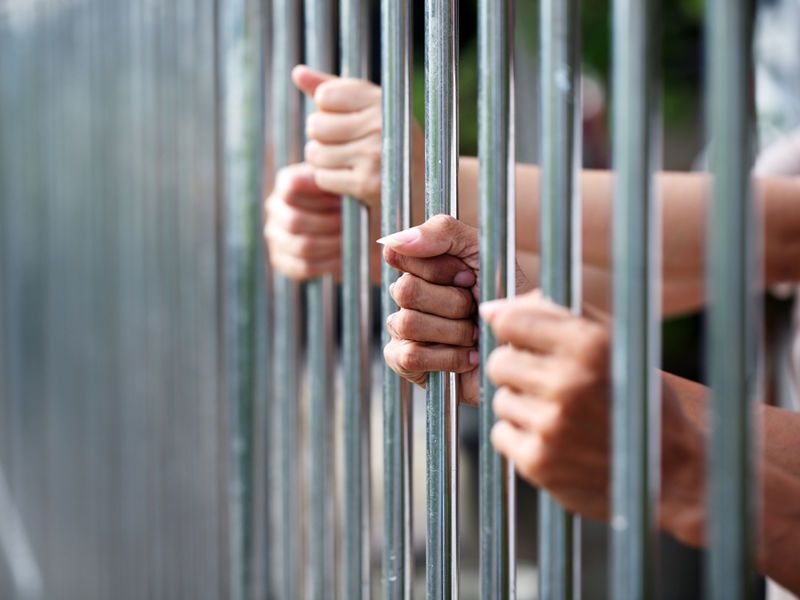
In a Feb. 2 letter to Gov. Jared Polis cosigned by Donner, Colorado WINS, the state employee union, outlined the staffing woes.
They asked the governor to set up a working group to tackle the problem.
Inmates are pleading, too.
In an email to Colorado Politics, Clarke Cayton, 44, who is incarcerated at the Canon City Territorial Correctional Facility, said more beds alone do not make safer prisons.
“The compounded issue that continues to go unreported is the severe staffing crisis DOC is experiencing. As indicated by the fact that facilities are currently so strained that, over the last 6 months, educators, case managers, and auxiliary staff have been pulled from their assigned duties and forced to work security posts to cover the personnel deficit,” he said.
That shift is acknowledged by Brakke and Colorado WINS in their Feb. 2 letter.
This “operational crisis” puts “under-trained, under-qualified, disgruntled workers in potentially hostile situations (and) further prevents inmate access to critical rehabilitative programs and resources necessary for positive transition to community,” Cayton wrote. “There is no position more critical to parole approval than Case Management.”
Cayton said he has been denied parole twice. He’s currently serving a sentence for a conviction in El Paso County for sexual assault on a child by a person in a position of trust.
In a statement, the corrections department said safety is non-negotiable.
“The safety of our staff and those under our care is non-negotiable, which at times requires an ‘all-hands’ approach to facility coverage,” Mark Fairbairn, the director of prison operations, said in a statement.
“While we do ask our case managers and educational staff to support operations, we are doing so strategically to ensure they can still fulfill their primary missions and minimize strain on their facility. We are working every day to provide relief to our teams by bridging the staffing gap, allowing our specialists to focus exclusively on their transformative work,” he said.
JBC to DOC: What’s the plan?
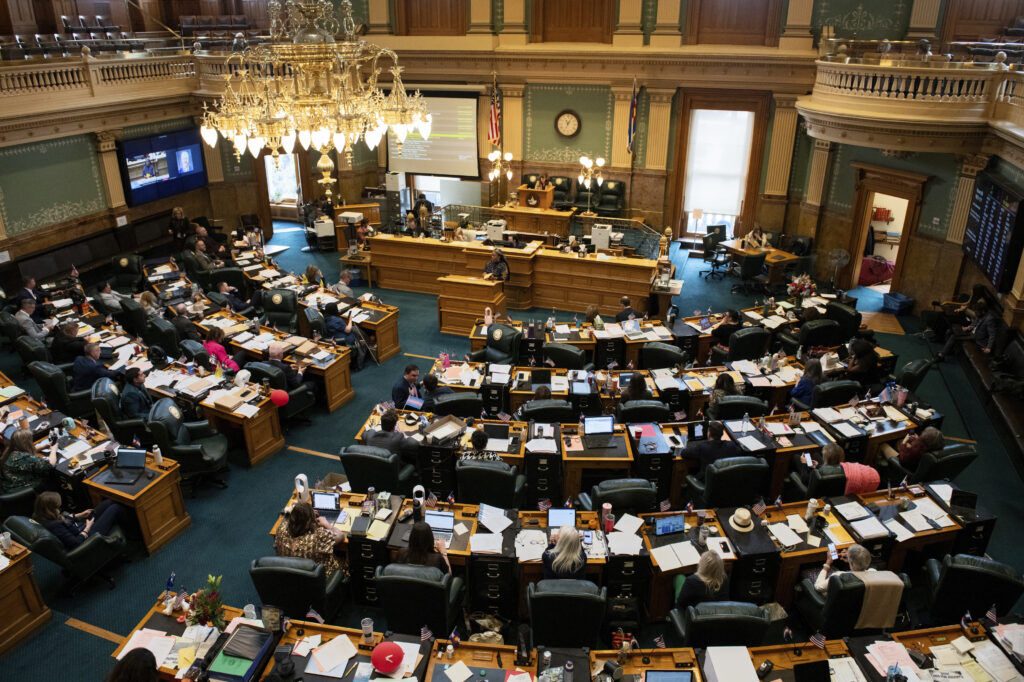
The Joint Budget Committee is requiring DOC to develop a plan to address the problems.
Donner offered her group’s preferred solutions — a plan that, she said, should look at population management, long-term planning and reentry.
On the latter, she pointed to a Colorado program that has a decade under its belt. Called Work and Gain Education & Employment Skills, the community reentry grant program has established partnerships almost everywhere in the state, except the San Luis Valley. Those partnerships are with about 20 community-based organizations that support people rejoining society from incarceration.
The Office of Policy, Research, and Regulatory Reform said the recidivism rate among participants is significantly lower. The office noted that it has had 7,663 participants since its inception and that the recidivism rate, while in the program, was less than 5%. The total recidivism rate in 2022 was roughly 18% per year for those who did not participate in the program.
In fiscal year 2020-21, the program cost about $8.5 million annually.
Another idea lawmakers are considering is fixing the Prison Population Management system set up in the 2018 legislation.
Senate Bill 36, sponsored by Democratic Sens. Julie Gonzales of Denver and Mike Weissman of Aurora, focuses on the system’s backend — getting people out of prison who have already been approved for release.
It would allow inmates on the residential side of community corrections to transition to the non-residential side. It also requires the division of adult parole to let community parole officers know about the shortage of beds, as a way to consider alternatives to technical parole violations.
Inmates who are within 120 days of their mandatory release date could earn 60 days off that time.
Finally, the bill would ask DOC to identify inmates who are past their parole eligibility date and review those applications for parole “on an expedited basis.”
In a statement, a DOC spokesperson said there’s no single solution to the complex problem.
“Ultimately, there is no single solution to these complex infrastructure needs. We are evaluating a multi-pronged approach that maximizes our current facilities to provide operational safety and flexibility,” said spokesperson Alondra Gonzalez. “Regarding staffing, we are taking urgent action to address these challenges in the short and long term. It is important to note that we are not static in our recruitment efforts, though we must navigate the same budgetary realities as all state agencies.”
She added: “We will continue to work in close coordination with our system partners, the General Assembly, and other agencies to ensure that every individual under our care is managed in a way that prioritizes the safety of the public, our staff, and the communities we serve.”


Gov. Lamm challenges Congress to stop ‘decontrol’ of natural gas | A LOOK BACK
Rachael Wright, Special to Colorado Politics
rachael.wright@coloradopolitics.com
Updated 2 days ago
Forty-Five Years Ago This Week: In a memo to Colorado’s congressional delegation, Gov. Dick Lamm urged them to vote against the phased pricing deregulation provisions in the Natural Gas Policy Act, a measure introduced in Congress in 1978 and still...
Colorado justices accept appeals on Netflix taxation, children pursuing neglect cases
Michael Karlik
michael.karlik@coloradopolitics.com
Updated 12 hours ago
The Colorado Supreme Court announced on Monday that it will decide whether Netflix subscriptions are subject to the state’s sales tax as “tangible personal property.” At least three of the court’s seven members must agree to hear an appeal. The...

Proposal outlines $300M deal separating Pinnacol from Colorado state government
Marianne Goodland
marianne.goodland@coloradopolitics.com
Updated 12 hours ago
Colorado lawmakers are weighing a proposal that would allow Pinnacol Assurance to sever its remaining ties to the state in exchange for a $300 million payment, a long‑debated shift that supporters say could stabilize the insurer’s future and help plug...
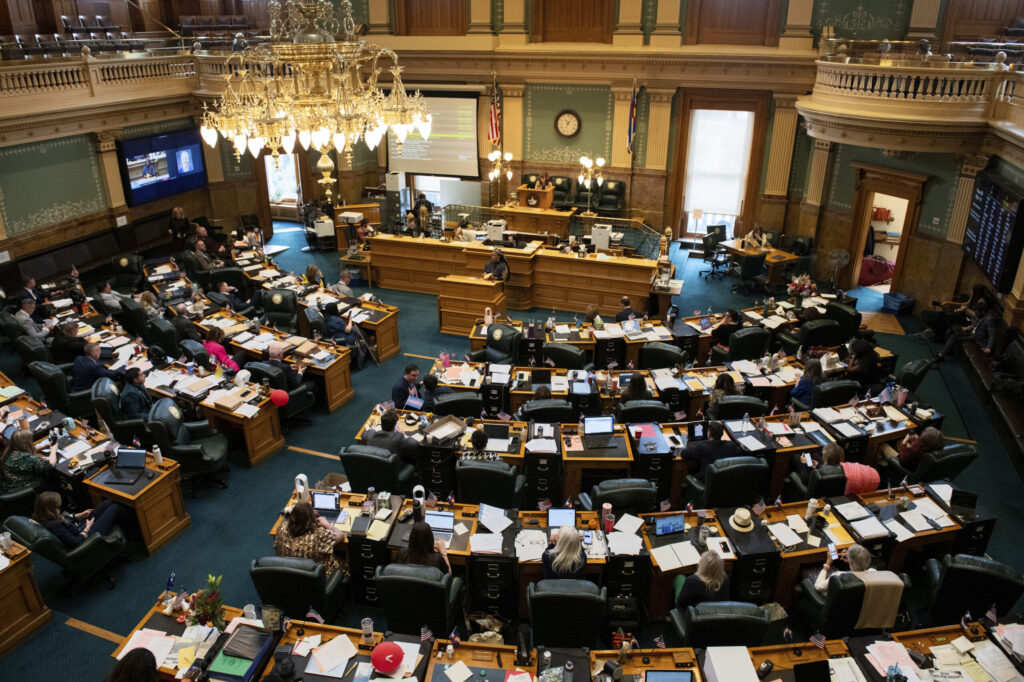
Bill requiring employers to grant unpaid leave to Colorado lawmakers heads to governor’s desk
Marissa Ventrelli
marissa.ventrelli@coloradopolitics.com
Updated 11 hours ago
Colorado lawmakers are one step away from securing guaranteed unpaid leave from their day jobs during the legislative session after the House narrowly approved the proposal Thursday. Senate Bill 087 would require businesses to allow employees who are members of...
Redistricting fight escalates as Colorado Title Board clears competing ballot proposals
Marianne Goodland
marianne.goodland@coloradopolitics.com
Updated 12 hours ago
Colorado’s title board on Wednesday gave final approval to multiple ballot measures related to congressional redistricting, setting up a series of proposals that could alter how the state draws its U.S. House districts for the 2028 and 2030 elections. The...

Colorado lawmakers propose deep cuts to close $1.2B budget gap
Marianne Goodland
marianne.goodland@coloradopolitics.com
Updated 11 hours ago
The panel of Colorado legislators in charge of crafting next year’s budget has finalized the 2026–27 spending plan built on deep cuts and one‑time cash transfers in an attempt to close a shortfall of more than $1.2 billion. The plan...

Denver judge denies Gov. Polis request to dismiss ICE-related records case
Marianne Goodland
marianne.goodland@coloradopolitics.com
Updated 15 hours ago
A year after blocking the release of state records to federal immigration agents, a Denver judge has now denied Gov. Jared Polis’ effort to end the lawsuit at the center of the dispute. The lawsuit filed against the governor in...
Colorado appeals court orders new sentencing for Tina Peters, upholds convictions
Michael Karlik
michael.karlik@coloradopolitics.com
Updated 11 hours ago
Colorado’s second-highest court determined on Thursday that a trial judge improperly sentenced former Mesa County clerk Tina Peters based upon her exercise of protected speech, while at the same time upholding her convictions. The three-judge Court of Appeals panel also...

Denver promised every school funding from $1B bond — but campuses later closed received far less | Analysis
Nico Brambila
nico.brambila@denvergazette.com
Updated 15 hours ago
Denver voters overwhelmingly approved the largest bond measure in Denver Public Schools history on the promise that every school — including charter campuses — would receive something. And they did. But the nearly $1 billion bond was not distributed evenly....

National conservation area growing by 4,000-plus acres in western Colorado
Seth Boster
seth-boster@coloradopolitics.com
Updated 19 hours ago
A formerly private, sweeping swath of western Colorado is growing a public, red rock wonderland. Spanning 4,000-plus acres, Escalante Ranch has been transferred to the Bureau of Land Management and incorporated into Dominguez-Escalante National Conservation Area, The Conservation Fund recently...
PREV
PREVIOUS

Two front pages, one false choice for Colorado lawmakers | OPINION
Every day, the headlines remind us how fragile safety can be. Stories of violence, loss, and families searching for answers are becoming far too common — and they demand serious, thoughtful policymaking. Recent reporting on federal immigration enforcement has been deeply troubling. Aggressive tactics, lack of accountability and the loss of civilian life have created […]

‘There will be costs,’ warns Jason Crow after failed indictments for ‘illegal orders’ video | TRAIL MIX
U.S. Rep. Jason Crow, the Aurora Democrat who represents Colorado’s 6th Congressional District, signaled this week that he’s considering pursuing legal action against members of the Trump administration after a federal grand jury in Washington declined to indict Crow and five other Democratic lawmakers on criminal charges over an online video they released last fall […]