

Colorado justices reject defendant’s claim of race-based murder prosecution
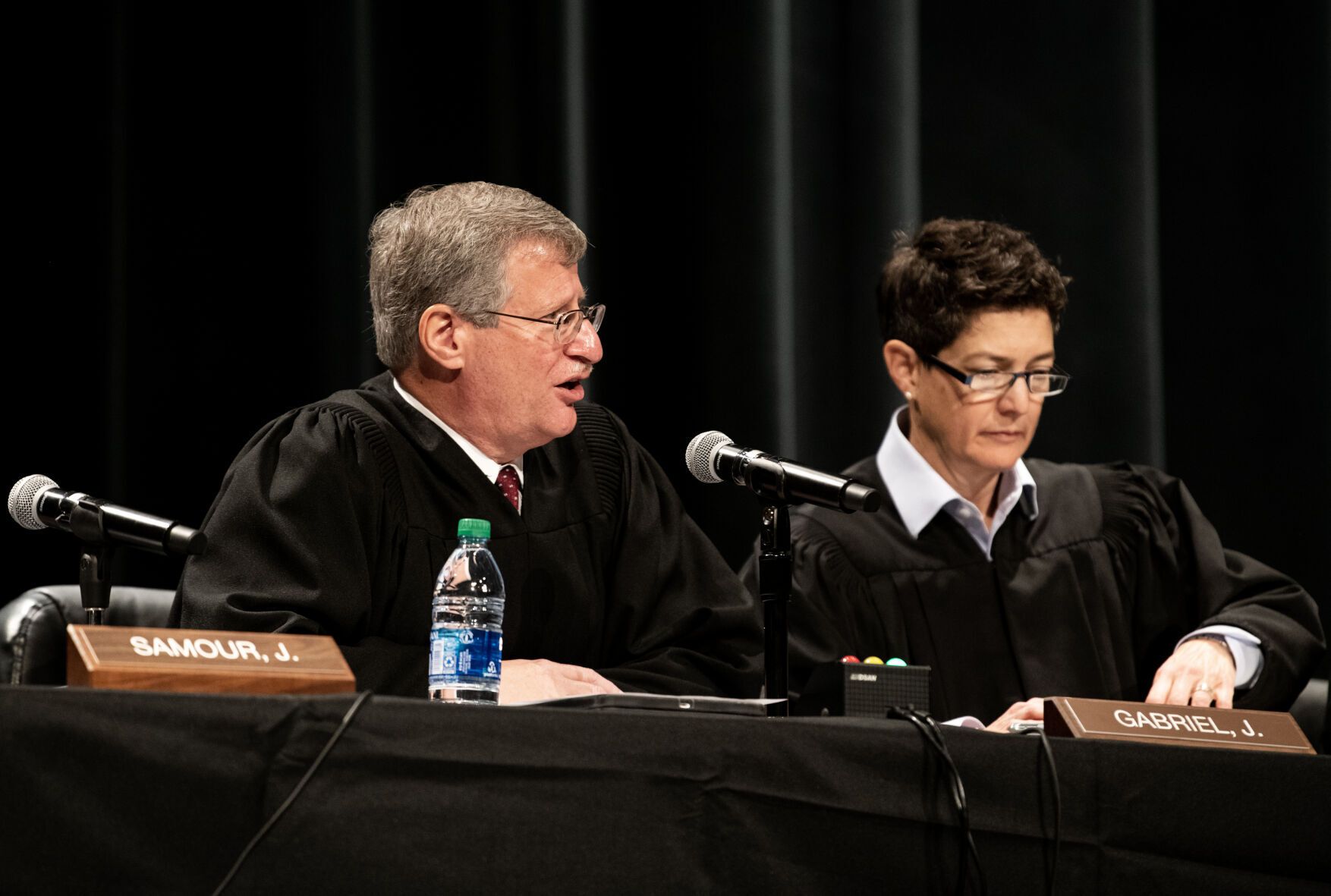
The Colorado Supreme Court rejected a convicted defendant’s argument on Monday that Arapahoe County prosecutors unconstitutionally singled out him and another Black teenager for murder prosecutions as adults, while offering lenient plea deals to their two non-Black co-defendants.
Lloyd Chavez IV, a student at Cherokee Trail High School, died in May 2019 after four teenagers attempted to rob him during a meetup to purchase vaping supplies. Evidence pointed to Demarea Mitchell as the one who fatally shot Chavez, but jurors also convicted Kenneth Alfonso Gallegos of felony murder for his participation in the robbery.
The remaining two defendants cooperated with law enforcement, and Arapahoe County prosecutors refiled their charges in juvenile court. Those co-defendants, who were Hispanic or White, subsequently pleaded guilty and only served two years of juvenile incarceration.
Mitchell and Gallegos, in contrast, both received life sentences.
In a Feb. 2 opinion, the Supreme Court concluded Mitchell failed to show the prosecution’s actions had a discriminatory effect or were fueled by a discriminatory purpose. Specifically, the court observed the case against Mitchell differed in an important way from the cases of his non-Black co-defendants.
“Mitchell escalated the situation by confronting the victim with a loaded gun when the victim was walking away from the vehicle, and when the victim attempted to defend himself, Mitchell shot him in the chest,” wrote Justice Richard L. Gabriel. “In contrast, neither (of the non-Black defendants) did anything to escalate the robbery attempt in a way that resulted in the victim’s death. For this reason alone, Mitchell was not similarly situated to them.”
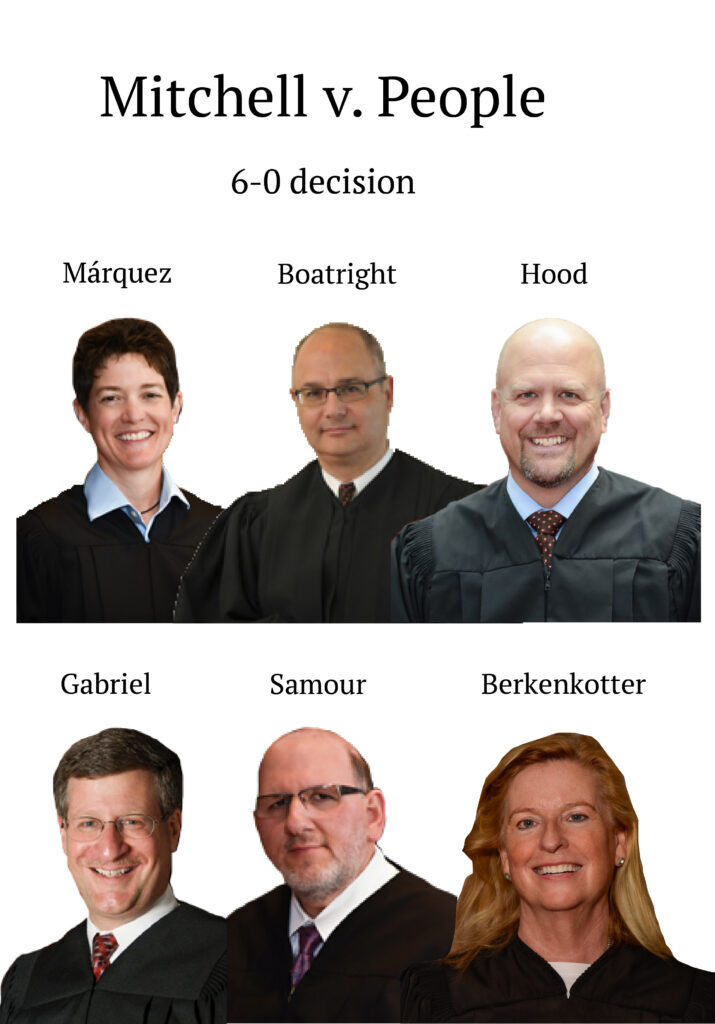
Mitchell originally sought to dismiss the charges on the grounds that prosecutors violated his equal protection rights under the U.S. Constitution. Allegedly, the inability to have his case transferred to juvenile court was based on Mitchell’s race.
District Court Judge Ben L. Leutwyler disagreed, noting Mitchell was not in an identical position as the two non-Black defendants.
“There is evidence that supports a finding that Mr. Mitchell is the participant who actually shot and killed Mr. Chavez,” he wrote at the time. “Consideration of that fact alone is sufficient to find that the defendant is not similarly situated to the individuals who drove to the scene but did not otherwise participate in the robbery and murder of Mr. Chavez.”
A three-judge Court of Appeals panel agreed with Leutwyler’s reasoning that the prosecution’s differential treatment of Mitchell was justified, given his role as the apparent shooter. Moreover, the two non-Black defendants cooperated with prosecutors.
To the Supreme Court, Mitchell argued the co-defendants’ cooperation was actually proof of discrimination.
Prosecutors “provided the non-Black co-defendants plea bargains and they all pointed at my client,” defense attorney Patrick R. Henson told the justices during oral arguments. “And if they never gave him the opportunity and they only gave that opportunity to the non-Black defendants, that is some evidence of discriminatory effect.”
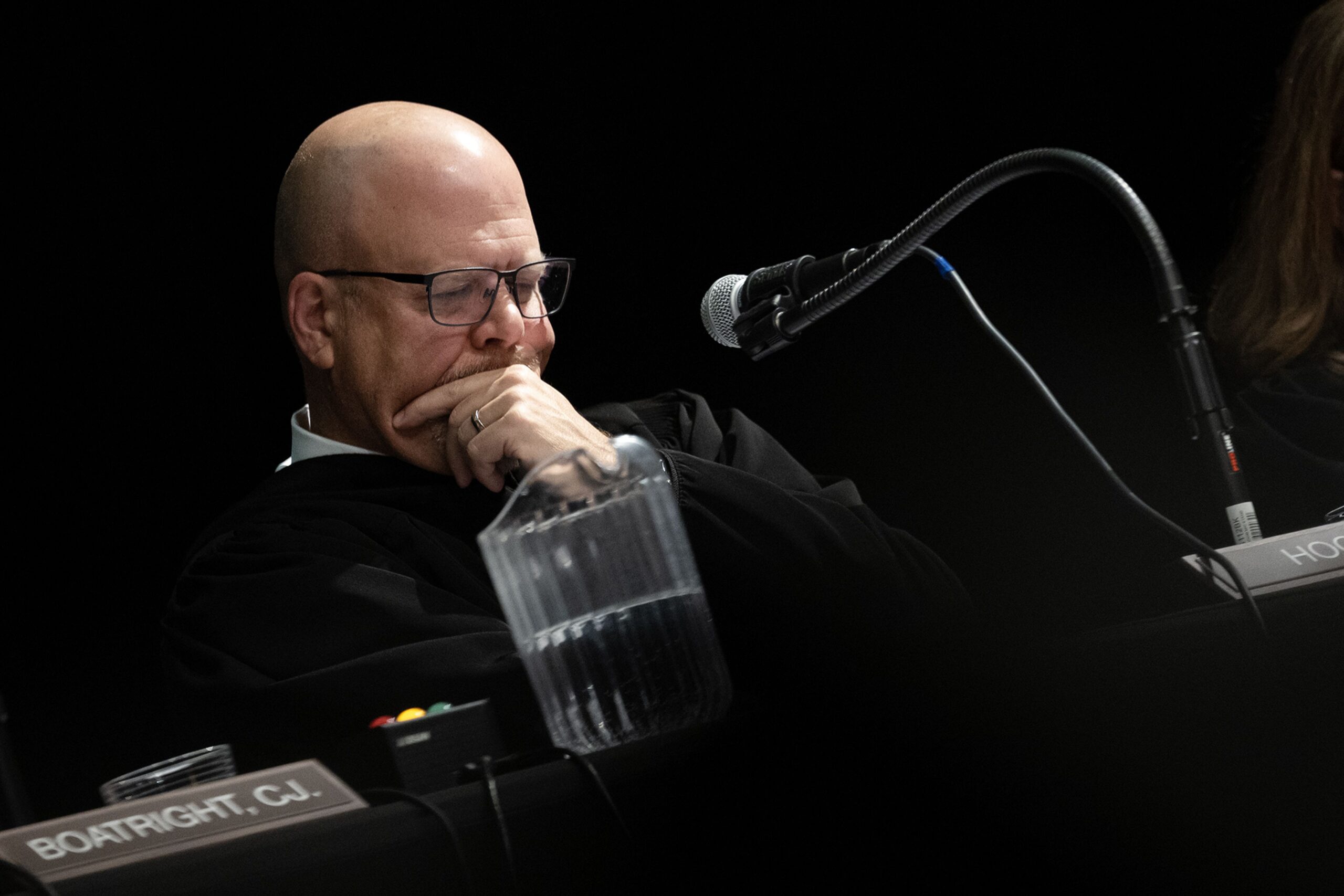
“Can you tell us whether Mr. Mitchell ever sought to cooperate?” asked Justice William W. Hood III.
“I have no record of it,” replied Henson, adding that he imagined any trial attorney would have pursued that option if it were available.
In his written brief, Henson cited statistics from Arapahoe County between 2012-2020 showing Black juveniles were likelier to be prosecuted as adults and likelier to receive prison sentences.
“My concern would be if you look broadly enough,” said Gabriel, “you can certainly look at the United States and find a minority population, the Black population, tends to be overrepresented in prisons. And you probably would see that everywhere.”
In the court’s opinion, Gabriel explained that defendants’ differing conduct and the strength of the evidence against them are factors that inform whether prosecutors are justified in treating cases differently. Mitchell’s role as the shooter, supported by multiple pieces of evidence, suggested the prosecution’s handling of his case was not race-based.
Further, the statistics about Black juvenile defendants were too general to establish discrimination.
“Although Mitchell’s statistical evidence focused on the disparate treatment experienced by Black adults and juveniles generally in courts throughout the United States, in Colorado, and in the Eighteenth Judicial District, the evidence did not include the facts underlying the cases involving non-Black defendants,” wrote Gabriel. “Nor did the evidence indicate the crimes charged in such cases or the result of those prosecutions. Without such information, we cannot determine whether these persons were similarly situated to Mitchell such that their disparate prosecutorial treatment was unjustified.”
The case is Mitchell v. People.

Federal judge green-lights civil trial against ex-Fort Collins DUI officer
Michael Karlik
michael.karlik@coloradopolitics.com
Updated 2 days ago
A federal judge ruled on Thursday that Fort Collins’ former “DUI officer” will face a civil trial for allegedly investigating a motorist for impaired driving without any reasonable suspicion to do so. In recent years, several people arrested by Officer...

Colorado Supreme Court suspends Mesa County judge pending misconduct investigation
Michael Karlik
michael.karlik@coloradopolitics.com
Updated 17 hours ago
The Colorado Supreme Court suspended Mesa County Court Judge Michael J. Grattan on Thursday amid a misconduct investigation. The court’s Sept. 10 order gave Grattan 21 days to explain why his paid suspension should not continue through the end of...
Colorado Supreme Court changes course, dismisses case about special district bonds
Michael Karlik
michael.karlik@coloradopolitics.com
Updated 17 hours ago
The Colorado Supreme Court declined on Friday to decide a dispute between a large-scale Commerce City development and the various districts financing it, after initially showing interest in the ongoing case. Colorado has roughly 2,800 special districts, which are local...
10th Circuit tosses GEO Group’s pretrial appeal in human trafficking lawsuit
Michael Karlik
michael.karlik@coloradopolitics.com
Updated 2 days ago
The Denver-based federal appeals court dismissed an attempt by The GEO Group on Wednesday to appeal a trial judge’s non-existent decision two months before the company is scheduled to face a civil trial over alleged trafficking violations at the Aurora...
Denver sues Trump to block armed ICE agents from polling sites
Deborah Grigsby
deborah.smith@denvergazette.com
Updated 3 days ago
The city of Denver, along with several groups, sued the Trump administration Thursday, seeking to block U.S. Immigration and Customs Enforcement officers who are armed from polling sites during the upcoming midterm elections. In fact, there are no official orders...
Federal judge takes no action against ICE in Colorado after hearing about mistakes, not ‘blatant violations’
Michael Karlik
michael.karlik@coloradopolitics.com
Updated 15 hours ago
A federal judge declined to take action against U.S. Immigration and Customs Enforcement on Thursday after hearing that a pattern of alleged lawbreaking amounted to mistakes and a misunderstanding of the government’s position in court. For nearly a year, Colorado’s...
Colorado doctors, dentists challenge state law on gender‑transition services in new federal lawsuit
Marissa Ventrelli
marissa.ventrelli@coloradopolitics.com
Updated 12 hours ago
A group of Christian doctors and dentists has filed a federal lawsuit challenging a Colorado law they say requires them to provide gender‑transition services that conflict with their religious and ethical beliefs. The lawsuit, filed by the Christian Medical and...
Federal judge directs plaintiff to revise complaint alleging Denver officers’ constitutional violations
Michael Karlik
michael.karlik@coloradopolitics.com
Updated 14 hours ago
A federal judge directed a plaintiff to revise his allegations on Wednesday to more precisely state what two Denver officers and the city itself allegedly did to violate his constitutional rights by facilitating his prosecution for murder until prosecutors dropped...

Lawsuit challenges Douglas County commissioners’ ballot actions
Nicholas Fogleman
nicholas.fogleman@denvergazette.com
Updated 3 days ago
A new lawsuit against Douglas County commissioners seeks to invalidate the board’s intervention in efforts to expand the commission from three members to five and restore the original ballot language approved by more than 20,000 petition signers. The suit marks...
Federal judge explores new sanctions against ex-Colorado judicial discipline director
Michael Karlik
michael.karlik@coloradopolitics.com
Updated 17 hours ago
A federal judge on Wednesday directed Colorado’s former judicial discipline director, for the third time this year, to explain why she should not sanction him for his latest conduct in his litigation against the state’s judiciary. Christopher S.P. Gregory, who served...
PREV
PREVIOUS

Colorado legislators eye giving inmates more earned time to ease prison overcrowding
Colorado lawmakers are proposing several changes to a state law that sponsors say would help ease overcrowding and reduce strain on state facilities. The proposal would mandate data reporting, as well require certain actions, including transitioning inmates from community corrections, considering “alternate sanctions” for technical parole violations, and giving inmates more earned time. In 2018, […]
Colorado justices reject defendant's claim of race-based murder prosecution
The Colorado Supreme Court rejected a convicted defendant’s argument on Monday that Arapahoe County prosecutors unconstitutionally singled out him and another Black teenager for murder prosecutions as adults, while offering lenient plea deals to their two non-Black co-defendants. Lloyd Chavez IV, a student at Cherokee Trail High School, died in May 2019 after four teenagers […]