

Colorado lawmakers hear about increased judicial discipline complaints, fallout from Missy Woods misconduct
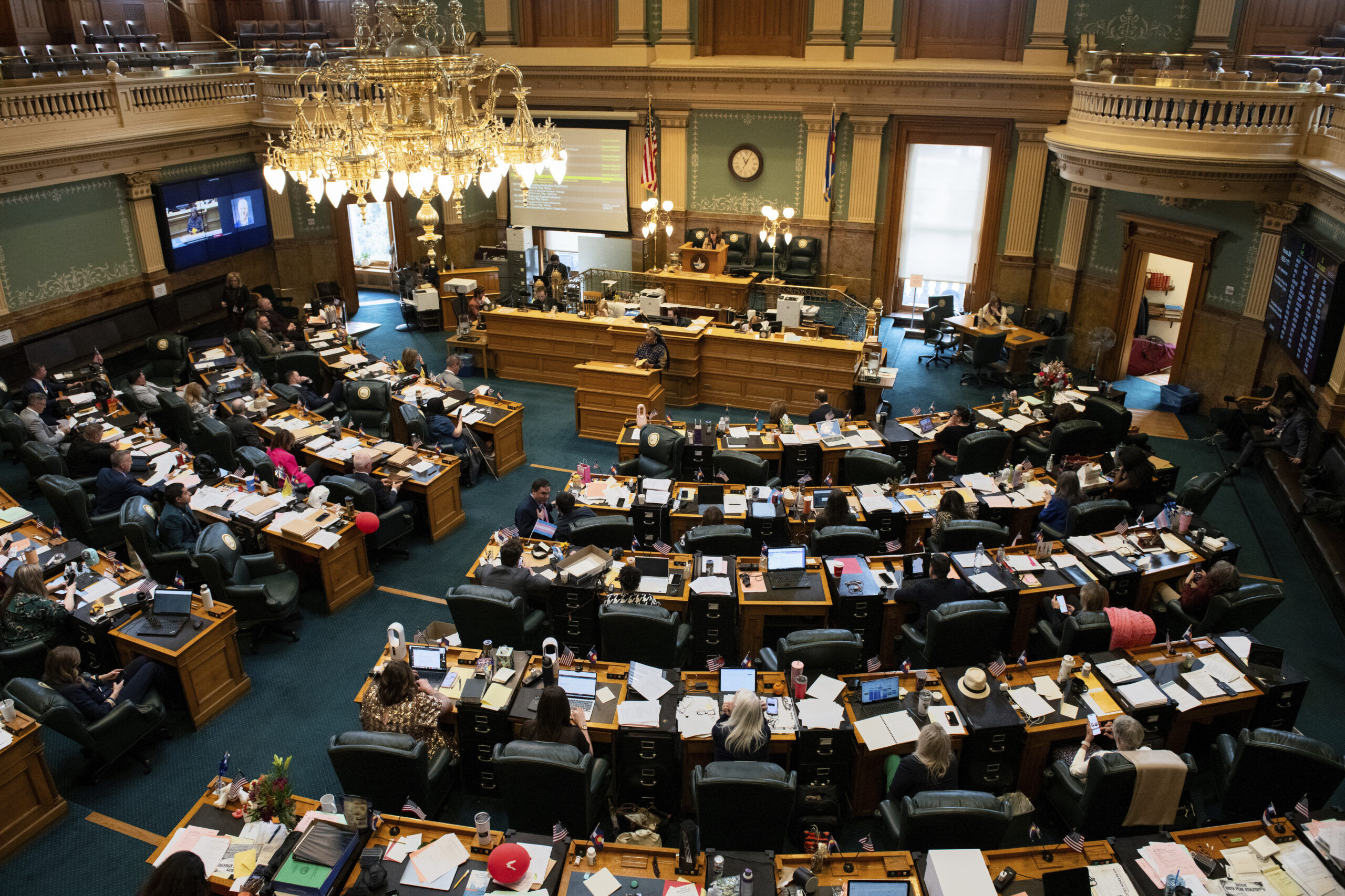
Members of the Colorado legislature’s judiciary committees heard about a large increase in complaints against judges and additional forensic misconduct that has come to light, during three days of oversight hearings last week.
Leaders of several judicial-related agencies appeared between Jan. 20-23 to address their priorities and field questions from legislators. On behalf of the Judicial Department, Chief Justice Monica M. Márquez described a new initiative for evaluating the performance of chief judges within their various jurisdictions.
“Our first piloted cohort of what we have called our ‘guinea chiefs’ is wrapping up this professional development process,” she said. “My goal is to use this experience to actually develop a meaningful feedback process for myself as chief justice and future chiefs who occupy this role.”
Márquez also said the judiciary has launched a system for employees to confidentially report any workplace concerns to a third-party vendor. She further intends to create a first-ever strategic plan, termed “Compass 2030.”
Márquez touched on the same priorities she previously raised to the Joint Budget Committee, including the need to fund the second wave of new trial judgeships established last year, a focus on enhancing safety for judicial branch employees and replacing the 30-year-old case management system.
After the Supreme Court held a hearing last year on a comprehensive package of rules specific to family law cases, Márquez said a rules committee is working to incorporate the public’s feedback. She mentioned the state now has 126 licensed legal paraprofessionals, which is a new category of legal workers who can represent clients to a limited degree in domestic relations cases.
“To our knowledge, this is the largest such program of its kind anywhere in the country,” she said.
State Court Administrator Steven Vasconcellos said the department is in the “reconstruction phase” for the Ralph L. Carr Colorado Judicial Center across from the Capitol. A man broke into the office tower portion in early 2024 and caused extensive damage, displacing several agencies with space there. Vasconcellos expected reconstruction to wrap up by early fall, with insurance money paying for the project.
He added that trial judges are struggling to close cases in most categories within established benchmarks, but that the additional judgeships would help with the backlog.
JUDICIAL DISCIPLINE COMMISSION
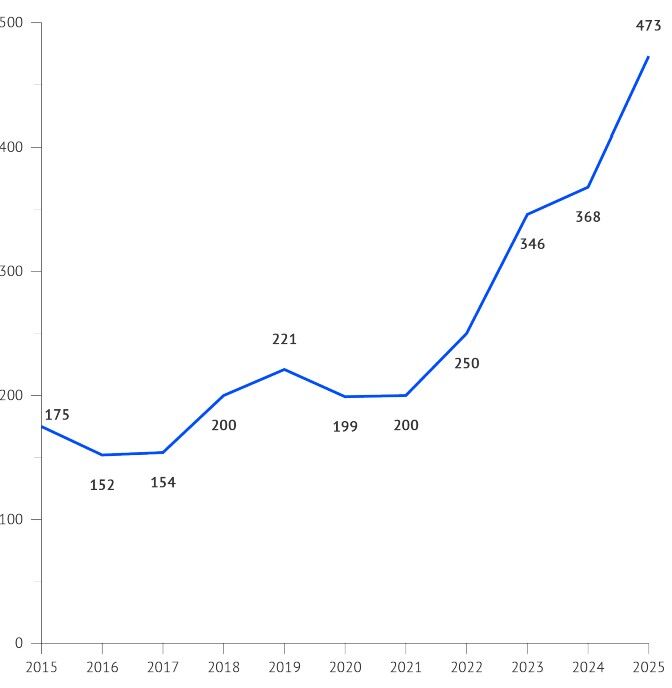
The Colorado Commission on Judicial Discipline disclosed that it received a record number of misconduct complaints about judges in 2025. The total stood at 473, which was nearly 29% higher than in 2024.
At the same time, only 31 reports were referred to the commission for further action after an initial screening. As in prior years, the vast majority of complaints pertained to judges’ rulings, which typically must be challenged on appeal and not through the disciplinary process.
“I think this increase is positive and there’s a couple of factors that are going on. One is that we are in the press,” said Anne Mangiardi, the commission’s executive director. “More people know we exist.”
She also attributed the increased number of reports to the commission’s updated website, which now has an online complaint form. Further, reports are coming from “high-quality” sources in greater numbers.
“Attorneys, public defenders, district attorneys, other court staff like probation officers and interpreters. Those people who are in courtrooms every day,” Mangiardi said. “We are getting a level of trust with that group of legal professionals and that is really positive.”
The biggest concern the commission sees is complaints about delayed rulings, Mangiardi added. Commonly, the commission will hear that a judge is overworked and has let a case fall through the cracks.
“Rural judges struggle in different ways than judges in urban jurisdictions. They tend to have different kinds of experience coming onto the bench. But more importantly, they don’t have that kind of built-in mentorship,” she said. “They’re not around their colleagues all the time.”
Sen. Mike Weissman, D-Aurora, asked if the commission believed it should also have the authority to address misconduct by magistrates, who are judicial employees empowered to handle aspects of certain cases in the trial courts.
Bob Gardner, a discipline commissioner and former Republican senator from El Paso County, said he had reservations about that idea.
“I think when you start down the road of ‘we will add magistrates,’ then where will municipal judges go? And there’s a whole set of administrative law judges in the executive branch that perform judicial functions,” he said.
DEPARTMENT OF LAW
Attorney General Phil Weiser spoke at length about his litigation against the federal government, including actions to recover intentionally withheld money. He said that if the executive branch retaliates against Republican-led states as well, he would file court briefs supportive of their state sovereignty.
“This administration has taken numerous actions, many of which go smack against core constitutional principles like the separation of powers,” he said. “Many of which target vulnerable communities, whether immigrants, LGBTQ+ Coloradans or even our state as a whole.”
Weiser, who is seeking this year’s Democratic nomination for governor, also mentioned a new initiative for reporting misconduct by federal immigration agents. On the subject of policing locally, Weiser said there is more of a focus on “active learning” for peace officers.
“Instead of the ‘sage on the stage,’ so to speak,” he said, “having people learn by doing, which we believe will better prepare officers and ensure better performance in the field.”
PUBLIC DEFENDER
The Office of the State Public Defender noted two budgetary priorities: Handling an increased workload following the Aurora City Council’s decision to shift domestic violence prosecutions from municipal to state court beginning last year, and representing clients impacted by the misconduct of former state DNA scientist Yvonne “Missy” Woods.
The written report from the office indicated there were 2,557 known cases that Woods touched. But additional misconduct continues to surface.
“We’ve gotten 200 more notices. So, as I sit here today, we’ve received about 2,800 notices of cases that resulted in conviction who had an analyst who engaged in misconduct,” said James Karbach, the director of legislative policy and external communication. “Many of those are Missy Woods. But what we’ve also received notices of is three other analysts across Colorado — two in the Colorado Bureau of Investigation and one in the Northern Colorado Regional Forensic Crime Lab — that also engaged in misconduct in the past that, in our opinion, we should’ve known about.”
Some district attorney’s offices have not fully provided notice of affected cases, even though the deadline for doing so has passed. Moreover, the public defender’s office is aware of additional Woods cases for which prosecutors have not yet provided notice.
“While the process is working, it’s not working perfectly,” said Karbach.
ACCESS TO JUSTICE COMMISSION
Elisa Overall, executive director of the Colorado Access to Justice Commission, spoke about the statewide listening tour she participated in last year. Compared to the prior iteration in 2021, she said the need for more judges was a new concern.
Despite the large budget deficit this year, she asked lawmakers not to strip legal aid funding. Overall also requested that lawmakers use simple language whenever possible in crafting bills to aid self-represented litigants.
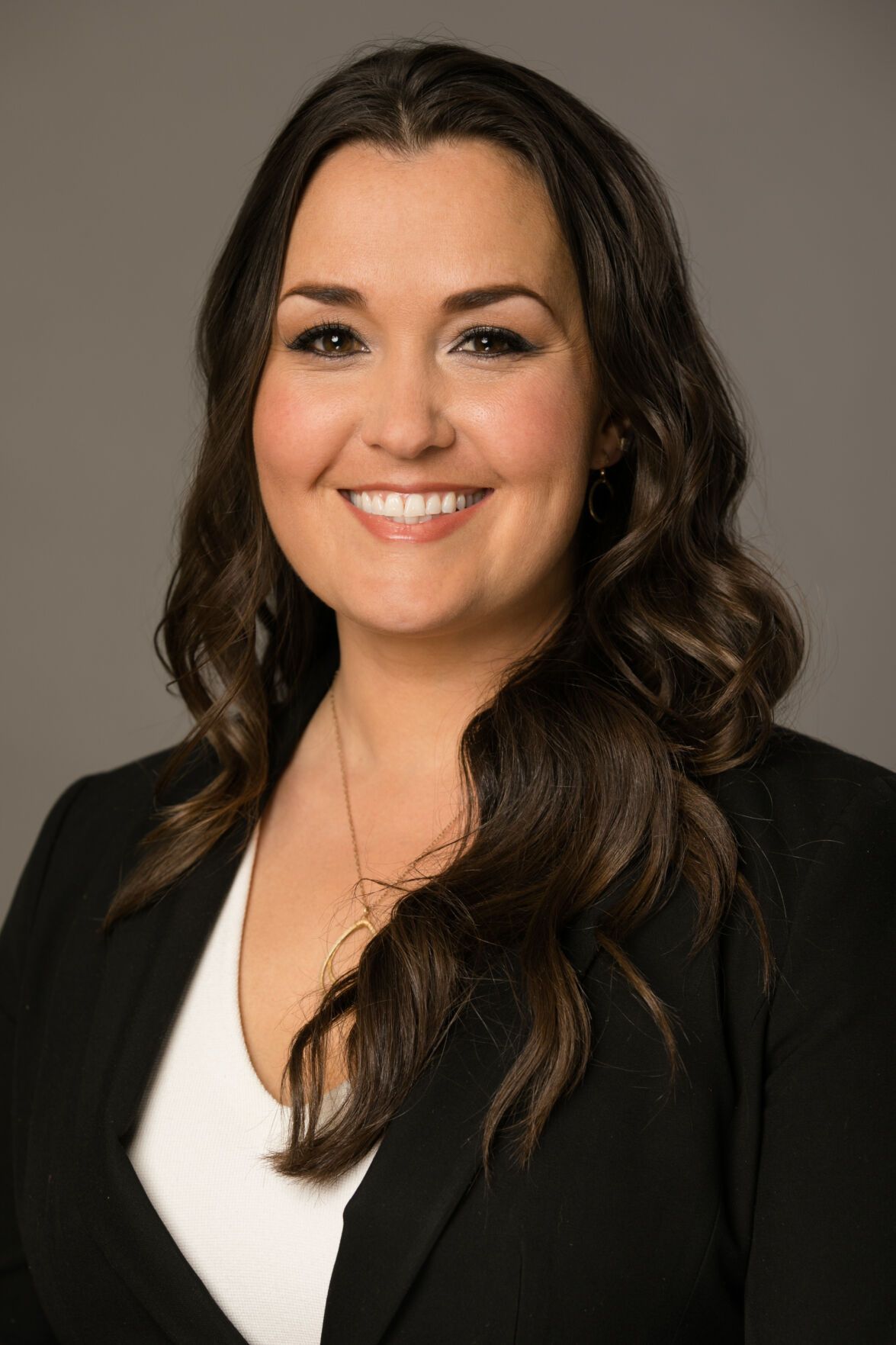
“What are you using to measure success?” asked Rep. Ava Flanell, R-Colorado Springs, referring specifically to increasing rural Coloradans’ access to justice.
Overall said the goal is to increase the number of practicing attorneys in rural areas. She also said approximately 1,000 people have been served through virtual clinics in recent years.
OTHER AGENCIES
Chris Henderson, who leads the Colorado Office of the Child’s Representative, said his key goal is to enact legislation overturning a state Supreme Court decision from last year. The court held that a child’s legal representative in welfare proceedings cannot pursue neglect allegations on their own, as that responsibility lies with county governments.
Joanna Landau, the new director of the Office of the Alternate Defense Counsel, told lawmakers the cost of criminal cases is increasing, to an average of $2,409 per case in this fiscal year, compared to $1,456 in 2018. The office employs contract attorneys to handle criminal cases when the public defender’s office has a conflict.

Federal judge warns DOJ against raising repeatedly rejected arguments in immigration detention cases
Michael Karlik
michael.karlik@coloradopolitics.com
Updated 2 hours ago
A federal judge in Colorado warned the U.S. Department of Justice on Monday against raising arguments that she and other judges have repeatedly rejected in cases challenging the lawfulness of immigration detentions. In a Jan. 26 order finding the government...

Colorado Supreme Court to address child’s CCTV testimony
Michael Karlik
michael.karlik@coloradopolitics.com
Updated 1 day ago
The Colorado Supreme Court announced on Monday that it will review the impact of a victim’s closed-circuit testimony on the prosecution of a juvenile defendant. At least three of the court’s seven members must agree to hear an appeal. There...

10th Circuit to hold all-judges hearing, judicial committee turns down ‘civility code’ | COURT CRAWL
Michael Karlik
michael.karlik@coloradopolitics.com
Updated 2 days ago
Welcome to Court Crawl, Colorado Politics’ roundup of news from the third branch of government. The Denver-based federal appeals court agreed to hold a rare all-judges hearing in a criminal case, plus a state Supreme Court committee overwhelmingly rejected a...

Divided Colorado Supreme Court curtails use of laced-substances defense
Michael Karlik
michael.karlik@coloradopolitics.com
Updated 19 minutes ago
The Colorado Supreme Court on Monday walked back the ability of criminal defendants to claim their conduct was the result of consuming an intoxicating substance that secretly contained another behavior-altering substance. Under state law, “involuntary intoxication” is an affirmative defense,...
Colorado justices say utilities commission overreached by immunizing Xcel in rate document
Michael Karlik
michael.karlik@coloradopolitics.com
Updated 2 days ago
Xcel Energy cannot rely upon a rate-setting document to broadly immunize itself from liability against electrocutions, the Colorado Supreme Court ruled on Monday. The justices originally heard the electrocution-related lawsuit from Francisco Cuevas to decide whether Xcel’s tariff, which sets...
Colorado Supreme Court committee rejects civility proposal amid fears of weaponization by judges, ‘jerks’
Michael Karlik
michael.karlik@coloradopolitics.com
Updated 2 days ago
The Colorado Supreme Court’s Civil Rules Committee overwhelmingly rejected a proposal last week to create an enforceable “civility code” for lawyers and legal paraprofessionals, which would allow judges to quickly impose corrective action without a formal complaint and investigation by...
10th Circuit to address resentencing of probation violators in rare all-judges hearing
Michael Karlik
michael.karlik@coloradopolitics.com
Updated 4 days ago
The Denver-based federal appeals court agreed on Thursday to hold a rare all-judges hearing to determine the proper procedure for resentencing a criminal defendant who has violated the terms of his probation. In the federal appellate courts, the vast majority...
Appeals court overturns Adams County sex offense convictions due to prosecutor’s misconduct
Michael Karlik
michael.karlik@coloradopolitics.com
Updated 3 days ago
Colorado’s second-highest court reversed multiple child sex assault convictions on Thursday after concluding an Adams County prosecutor committed misconduct while cross-examining the defendant. A three-judge Court of Appeals panel observed the charges against Daniel Michael Boerner depended on the jury...

Fort Carson soldier’s wife could be deported
Carol McKinley
carol-mckinley@coloradopolitics.com
Updated 6 days ago
As the country’s largest immigration enforcement crackdown continues in Minnesota’s Twin Cities, a Fort Carson sergeant is fighting a personal immigration crisis — one that may implode his family. Sgt. Tyler Garza’s wife, Jennifer Maradiaga Baca, is not a legal...
Elizabeth School District dismisses challenge to book-ban injunction on eve of appellate arguments
Michael Karlik
michael.karlik@coloradopolitics.com
Updated 5 days ago
An Elbert County school district has dismissed its challenge to a judge’s injunction ordering it to return banned books to library shelves, days before the Denver-based federal appeals court was set to hear oral arguments this week. Although a three-judge...
PREV
PREVIOUS

Federal judge warns DOJ against raising repeatedly rejected arguments in immigration detention cases
A federal judge in Colorado warned the U.S. Department of Justice on Monday against raising arguments that she and other judges have repeatedly rejected in cases challenging the lawfulness of immigration detentions. In a Jan. 26 order finding the government is wrongfully detaining a Cuban national without a bond hearing, U.S. District Court Judge Charlotte […]
Colorado's lack of snow pack hurting outdoor industry; could spell drought conditions this summer
A snowy weekend forecast in January was a relief to skiers, hydrologists, fire officials and ski resort staff in Colorado as the state continues to see record high temperatures and record low snowfall. A USDA map showed the average statewide snowpack on Tuesday at 58% of the median. It’s the lowest snowpack year Colorado has […]