

Colorado justices take comments on new family law rules, hear concerns about ‘informal’ proceedings
The Colorado Supreme Court received generally supportive comments last month from the legal community on a sweeping set of new rules specific to family law cases, but also heard concerns about a proposal to move unrepresented litigants into “informal” trials where different rules apply.
During a May 13 public hearing, the justices heard from multiple attorneys who defended the effort to generate a set of procedures specific to domestic relations cases apart from the rules applicable to civil cases generally.
“Family law cases are very different than other types of civil cases. Most civil cases are really fights over money or property,” said attorney Wesley Hassler. “Family law cases — when you take allocation of parental responsibility cases into account, and also dissolution of marriage cases — they’re fights over children. A substantially different set of rules are needed when it comes to a fight over people, as opposed to property and money.”
Not everyone was sold on the idea that a new rulebook was necessary, however. Justice William W. Hood III admitted his initial reaction was that “more rules typically breed more litigation.”
“I’m just wondering if you can respond to that observation and whether this new set of rules, even as elaborate as it may be, is still a net gain,” he asked Kristi Anderson Wells, chair of the Colorado Bar Association’s Family Law Section.
“Certainly, there was feedback in the family law community that the proposed rules are offensive because they’re basically a dumbing-down of the civil rules for family law attorneys,” responded Anderson Wells. But the Family Law Section’s leadership “came to the conclusion that this could be helpful.”
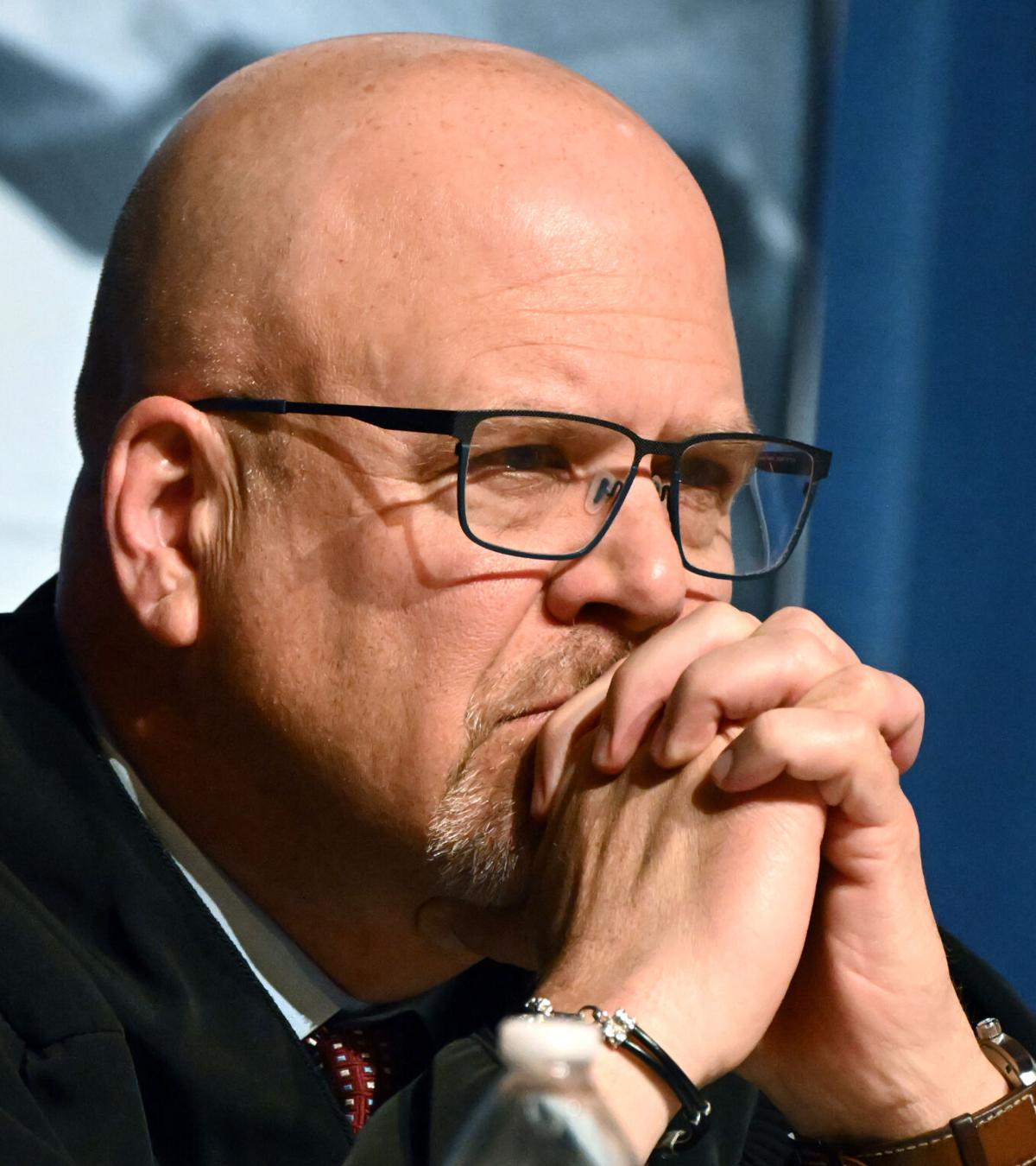
Justice William W. Hood III listens during oral arguments at the Colorado Supreme Court's "Courts in the Community" event on May 9, 2024 at Central High School in Pueblo. (Photo by Jerilee Bennett, The Gazette)

While those at the hearing and those who submitted written comments spanning 246 pages offered suggestions for revisions or tweaks, many commenters focused on one particular component. The new rules establish “informal domestic relations trials” for divorce, child support and custody matters — mostly when neither side is represented by a lawyer.
Although the rules lay out the specifics of what informal trials entail, the general idea is to eliminate cross-examination and permit the judge to hear from and ask questions of both parties directly. The rules of evidence also do not strictly apply, and judges will not weed out evidence that might normally be inadmissible. Judges “may allow” a party to opt-out of the informal trial, and they may also “refuse to allow” the parties to use the informal route.
Denver District Court Magistrate Michelle Crozier Haynes told the justices she is using an informal trial procedure at times, as nearly eight in 10 parties in domestic relations cases do not have an attorney. Specifically, she heard feedback that the process benefits domestic violence victims.
“It’s devastating for a victim of domestic violence to have to be cross-examined by their abuser for an hour and a half or any amount of time,” she said.


Sarah E. Lipka of Colorado Legal Services said approximately 10 states already allow for informal trials. A 2023 report from Montana suggested parties felt more comfortable and the process was more manageable for courts.
However, Lipka requested that parties be allowed to opt-in to the informal trials.
“This new method of trial, which will be primarily for those who cannot afford an attorney, should be opt-in because they will be giving up some procedural due process protections,” she said.
In a written comment, attorney Christopher J. Linas elaborated that it was concerning if judges may require informal trials over a party’s objection. Further, the rule would create a “two-tiered system” where people with attorneys would receive the right to call witnesses and object to evidence, unlike self-represented litigants.
“Indeed, if a parent hands a child a pen and paper and tells that child to write a letter to the judge choosing which parent that child wants to live with, then the court would have no choice but to receive that letter into evidence,” he wrote. “Without rules of evidence, innumerable parents will be incentivized to bribe, manipulate, or even threaten their children into creating exhibits that the trial court would then be required to receive into evidence.”
Angela R. Arkin, a former trial judge in the previously configured 18th Judicial District, told the Supreme Court she heard concerns from judges about receiving “piles of evidence” in informal hearings. She also raised the possibility that a litigant with an attorney will opt-in to the informal procedure, only for the attorney to object to the judge’s questioning.
Judges “want to make sure that they are capable of leveling the playing field in a way that is helpful and meaningful,” Arkin said.
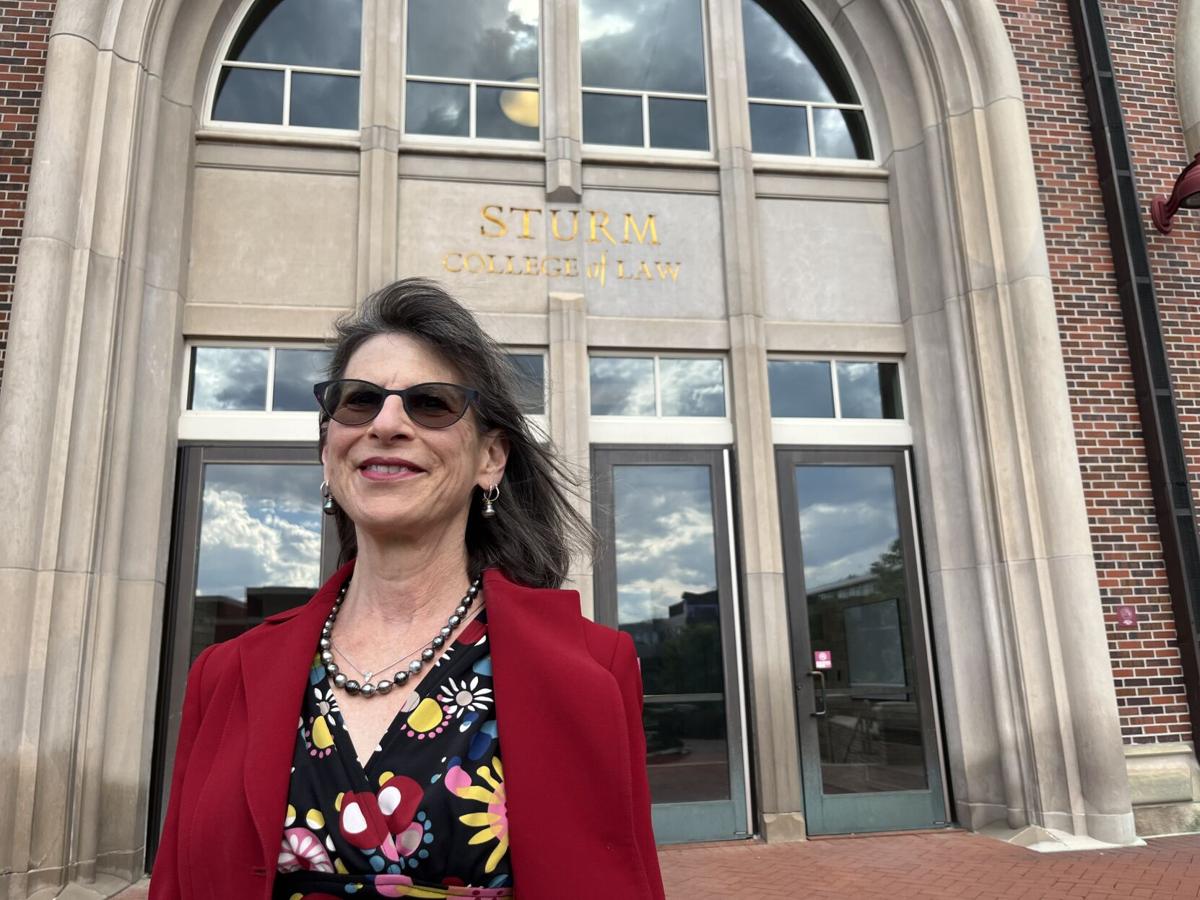
Angela R. Arkin, who helped develop Colorado's licensed legal paraprofessional program, stands outside the University of Denver's Sturm College of Law on June 28, 2024.
Michael Karlik michael.karlik@coloradopolitics.com

The Supreme Court also heard comments about whether independent custody experts, known as child family investigators and parental responsibilities evaluators, should testify in depositions pursuant to court orders.
Jeanette Troncoso, a CFI and PRE, advocated against depositions, arguing such experts are “investigative arms of the court.”
“In judicial process, judicial immunity has been extended from judges to the participants, such as prosecutors and grand jurors,” she said. “Therefore, we respectfully propose … a paragraph be added for CFIs and PREs to be granted quasi-judicial immunity.”
Attorney Caroline C. Cooley countered in a written comment that taking testimony from CFIs and PREs in depositions could clarify any disputes and streamline the court proceedings. She argued against “sacrificing the due process afforded to litigants who want to investigate the recommendations contained in the CFI or PRE report.”
Colorado Politics Must-Reads:

Judge grants partial injunction to GEO in fight against state health inspection law
Kyla Pearce
kyla.pearce@gazette.com
Updated 2 hours ago
A judge ruled Thursday that The GEO Group does not have to follow parts of a new state law requiring more frequent health and safety inspections at the U.S. Immigration and Customs Enforcement processing center in Aurora. Under the order...

Parker man faces 20 years to life for serial sexual assaults
Nicholas Fogleman
nicholas.fogleman@denvergazette.com
Updated 4 hours ago
A 25-year-old Parker man who sexually assaulted three women in 2025 pleaded guilty Wednesday and will serve 20 years to life in prison. Javier Rodriguez-Andrade pleaded guilty to charges stemming from three sexual assaults involving women ages 19 to 24. ...
Divided appeals court upholds warrantless DNA collection in Colorado cold case, cautions of government overreach
Michael Karlik
michael.karlik@coloradopolitics.com
Updated 3 hours ago
Colorado’s second-highest court upheld the warrantless collection of a suspect’s DNA from a discarded soda can as constitutional on Thursday, while warning about potential abuse of DNA privacy in the absence of further guardrails. By 2-1, a three-judge Court of...
Man charged in Northglenn homicide of wife
Matt Kyle
matt.kyle@denvergazette.com
Updated 4 hours ago
A man has been formally charged with murder and burglary relating to a homicide last week in Northglenn. Alexei Munive-Rodriguez, 48, was arrested Sunday after he was at large following the homicide, which occurred Friday. Police were dispatched around 10:30...
10th Circuit grants immunity to officers for fatal Manitou Springs shooting
Michael Karlik
michael.karlik@coloradopolitics.com
Updated 6 hours ago
The Denver-based federal appeals court ruled on Wednesday that responding officers from Manitou Springs and El Paso County cannot be held constitutionally liable for shooting and killing a man after a 20-minute standoff. Wilford Deweese allegedly pulled out a gun...

10th Circuit rejects invitation for full-court review of tax-avoidance case
Michael Karlik
michael.karlik@coloradopolitics.com
Updated 24 hours ago
The Denver-based federal appeals court declined to reconsider the standards for holding entities liable for their tax-avoidance schemes, with a majority of judges voting against full-court review on Monday. In April, a three-judge panel of the U.S. Court of Appeals...
Colorado judge blasts state forensics lab in dismissing child sex case
Jenny Deam
jenny.deam@gazette.com
Updated 1 day ago
In a potentially widely consequential action, a Weld County district judge dismissed a child sexual assault case, citing the ongoing scandal at the Colorado Bureau of Investigation’s forensic lab that “has left a dark mark on the history of Colorado...
10th Circuit sympathetic to Colorado consumer protection law governing interest rates
Michael Karlik
michael.karlik@coloradopolitics.com
Updated 2 days ago
Members of the Denver-based federal appeals court appeared sympathetic on Tuesday to Colorado’s assertion that it can lawfully require certain out-of-state banks to abide by the state’s own ceilings on interest rates when they lend to consumers in Colorado. The...
Colorado justices to decide insurance companies’ obligation to disclose relevant policies
Michael Karlik
michael.karlik@coloradopolitics.com
Updated 1 day ago
The Colorado Supreme Court announced on Monday that it will decide whether an insurance company violated state law by withholding an at-fault driver’s policy for nearly a year when there was no dispute that the policy was not in effect...

Judicial performance evaluations released, Montezuma County judge disciplined | COURT CRAWL
Michael Karlik
michael.karlik@coloradopolitics.com
Updated 3 days ago
Welcome to Court Crawl, Colorado Politics’ roundup of news from the third branch of government. Colorado’s citizen-led judicial performance commissions released their voter narratives for the judges standing for retention in November, plus a disciplinary panel imposed consequences on a...