

Vape shops challenge Denver’s flavored tobacco ban in court

The smoke has yet to settle in the battle over the city’s flavored tobacco ban as local vape shop owners have sued the City and County of Denver, asking the court to declare the ordinance unconstitutional and stop its enforcement.
The Rocky Mountain Smoke Free Alliance filed a complaint in Denver District Court on Thursday arguing that the ordinance is unconstitutionally vague and violates multiple aspects of both the Colorado and U.S. constitutions.
The lawsuit does not seek monetary damages.
The plaintiffs assert that the city spares what they call “the most harmful products,” such as hookahs and cigarettes, while banning “lower-risk alternatives.”
“This law picks winners and losers,” said Joshua A. Weiss, attorney at Brownstein Hyatt Farber Schreck, in a statement Thursday. “Denver banned flavored vaping products but carved out an exemption for hookah tobacco, even though it is flavored and widely used by adults. Combined with vague definitions and enforcement based on packaging and marketing, the ordinance violates equal protection, due process, and constitutional protections for lawful commercial speech.”
Philip Guerin, a vape shop owner and president of the Rocky Mountain Smoke Free Alliance, added: “If City Council really cared about public health, they would have banned cigarettes a long time ago. Why isn’t the City Council banning them?”
The arguments in the lawsuit “are without merit and show this industry will go to any length to continue addicting kids with flavored products,” said Jodi Radke, Rocky Mountain/Great Plains regional advocacy director for the Campaign for Tobacco-Free Kids, in a statement to The Denver Gazette:
“By filing a lawsuit against Denver’s law ending the sale of flavored tobacco products, vape shops are once again prioritizing their profits over the health of Denver kids. Denver voters overwhelmingly upheld the law in November, and we’re confident the courts will uphold it as well. The courts have repeatedly upheld state and local laws that end the sale of flavored tobacco products.”
Specifically, the plaintiffs assert:
• Denver bans flavored vape products while explicitly exempting hookah lounges that sell flavored tobacco, even though hookah products are more potent and pose significant health risks. Vape shops and hookah lounges serve the same adult customers and market the same alternatives to cigarettes, yet only one is shut down.
• The ordinance relies on vague and subjective standards, forcing businesses to guess what terms like “cooling” or “numbing” mean and presuming products are illegal based on packaging, images, or truthful descriptions.
• The law restricts lawful adult commerce and chills protected speech by tying legality to marketing and labeling rather than product content.
• Small mom-and-pop businesses are closing, employees are losing jobs, and $13 million in tax revenue is being lost, while smoking rates have not declined.
Enforcement of Denver’s flavored tobacco ban, which prohibits the sale of any flavored tobacco or nicotine product, including menthol, within the City and County of Denver, began on Jan. 1.
City officials said that while education efforts will continue, retailers can expect both public-facing and undercover investigations to ensure compliance.
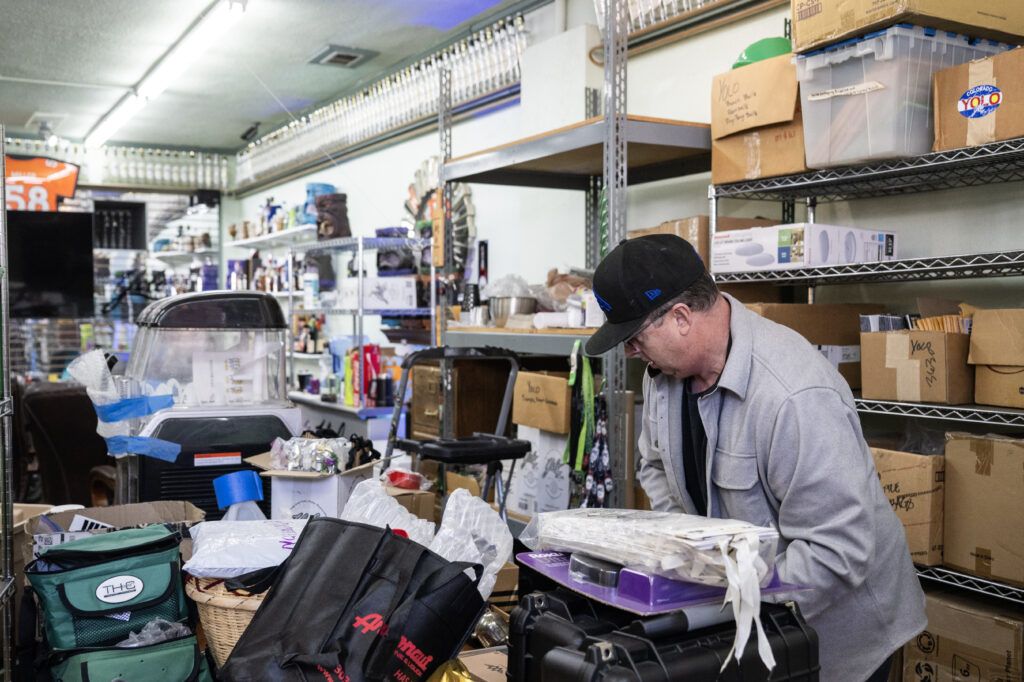
Guerin said he supports undercover visits to prevent underage purchases but finds the city’s stepped-up enforcement efforts ironic.
“Essentially, they’re doing what we’ve been begging them to do in the first place,” Guerin told The Denver Gazette.
Guerin, who owns Myxed Up Creations on East Colfax, told the Denver Gazette that since the city’s ban took effect, his overall business revenue is down by 60%
The blowback over the city’s ban on flavored tobacco stems from arguments that the product’s sweet and candy-like flavors target youth, in particular, and serve as a gateway to further substance abuse.
City documents claim that the economic impact of flavored tobacco products in Colorado amounts to $2.2 billion in annual healthcare costs, $4.4 billion in smoking-caused productivity losses, and $415 million in estimated Medicaid costs, for a total tax burden of $772 per household.
In late December 2024, the Denver City Council voted 11 to 1 to outlaw the sale of flavored tobacco products within the city and county.
Denver Mayor Mike Johnston supported the measure.
Johnston’s office declined to comment on the legal matter, deferring to the City Attorney’s Office.
The measure was challenged by a referendum and placed on the November 2025 ballot, when approximately 70% of voters approved keeping the ban in place.
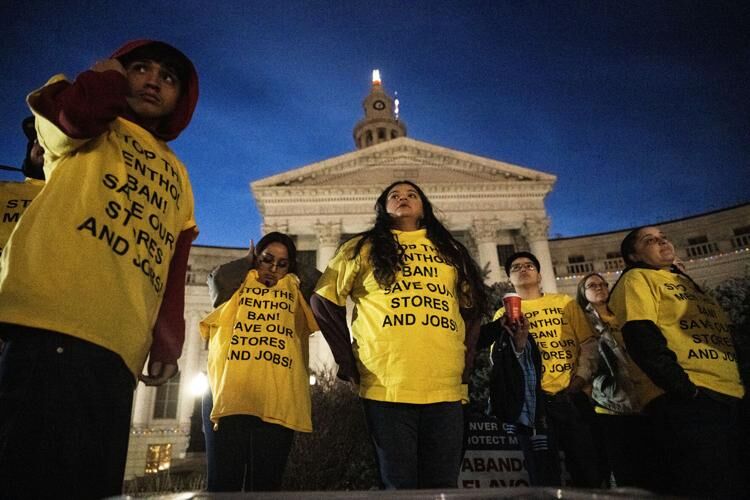
Michael Bloomberg, the former mayor of New York City, waded into the fight to ensure the ban stayed on the books, contributing more than $5 million to Denver Kids vs Big Tobacco, according to Denver Searchlight, the city’s online database for campaign and finance disclosure.
Bloomberg, known for his anti-tobacco stance, has sought to advance policies that discourage tobacco use through his organization, Bloomberg Philanthropies.


PUC schedules virtual hearing on proposed rules for public safety power shutoffs
Scott Weiser
scott.weiser@gazette.com
Updated 6 hours ago
The Colorado Public Utilities Commission will hold a virtual public comment hearing to gather input on proposed new rules for Public Safety Power Shutoff events, a wildfire prevention measure that temporarily cuts power to reduce ignition risks from utility equipment...

Colorado farmers warn U.S. Sen. John Hickenlooper tariffs and research cuts endanger agriculture
Marianne Goodland
marianne.goodland@coloradopolitics.com
Updated 2 days ago
Northern Colorado farmers told U.S. Sen. John Hickenlooper this week that tariffs and President Donald Trump’s decision to import $40 billion worth of beef from Argentina have hurt Colorado’s agricultural industry. But the administration’s cuts to scientific research are almost...
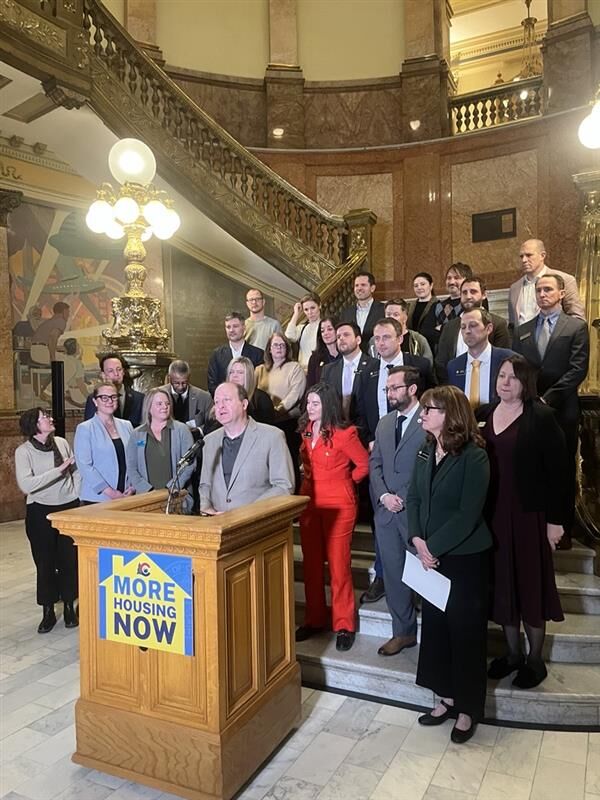
Gov. Polis, Democratic lawmakers introduce trio of housing affordability bills
Marissa Ventrelli
marissa.ventrelli@coloradopolitics.com
Updated 1 day ago
Democratic lawmakers were joined by housing advocates and Gov. Jared Polis at the Capitol on Wednesday to announce a trio of bills they say will increase affordable housing in Colorado. “This session, Colorado Democrats are focused on lowering costs, and...

Colorado-based Energy Fuels acquiring Australian rare-earth producer for $299M
Dan Boniface
dan.boniface@denvergazette.com
Updated 2 days ago
Energy Fuels on Tuesday announced it is acquiring an Australian company that produces rare earth elements and alloys in a deal worth $299 million. The Lakewood-based company, which describes itself as a leading U.S. producer of uranium, rare earth elements...

Museum adopts new leadership model | NONPROFIT REGISTER
Joanne Davidson Special to Colorado Politics
joanne-davidson-special-to-colorado-politics@coloradopolitics.com
Updated 3 days ago
CHILDREN’S MUSEUM OF DENVER AT MARSICO CAMPUS Denver News: The board of the Children’s Museum of Denver at Marsico Campus has voted unanimously to adopt a co-CEO leadership model that positions the organization as a national innovator among cultural institutions embracing this forward-thinking...

35th MLK Humanitarian Awards highlight tribute concert | NONPROFIT REGISTER
Joanne Davidson Special to Colorado Politics
joanne-davidson-special-to-colorado-politics@coloradopolitics.com
Updated 5 hours ago
DR. MARTIN LUTHER KING JR COLORADO HOLIDAY COMMISSION Denver News: A charitable foundation that was founded in 1931 to address inequities for Black Americans, an Eaglecrest High School senior who plans to attend college in Japan and the Denver Police Department’s first female...

Denver District 10 launches test program to pay pet deposits
Deborah Grigsby
deborah.smith@denvergazette.com
Updated 2 days ago
Denver’s self-proclaimed “pet whisperer,” Councilman Chris Hinds, has launched a new program to help renters avoid having to choose between a home and their pet. Funded through Hinds’ own council budget, the program seeks to prevent relinquishment, as well as...

Colorado air regulators propose higher fees for pollution permits and reports
Scott Weiser
scott.weiser@gazette.com
Updated 3 days ago
Colorado’s air quality agency plans to raise charges for air pollution permits and emissions reports for businesses that release even modest amounts of contaminants, potentially increasing fees by 65-70% over two years to generate $13.5-$14 million, according to state budget...

Denver gas prices surge but diesel mix-up not to blame, expert says
Dan Boniface
dan.boniface@denvergazette.com
Updated 4 days ago
Denver gas prices surged 16.6 cents per gallon last week, but one expert said the public should not blame the hike on a recent diesel mix-up that damaged hundreds of vehicles and contaminated nearly 50 gas stations. “No, it has...

AI in the exam room: blending technology with the human touch
Breeanna Jent
breeanna-jent@coloradopolitics.com
Updated 6 hours ago
As artificial intelligence has become more ubiquitous in everyday life — from a typical smartphone’s autocorrect function to chatbots that can simulate conversations with humans, quickly analyze data sets and more — it’s also changing how medical professionals and organizations...
PREV
PREVIOUS
Report: Colorado government has grown beyond TABOR’s limits over 30 years
Colorado’s government has grown substantially over the past three decades despite voter-approved limits designed to restrain that expansion, according to a new report from the Independence Institute. The analysis examines state spending, revenue sources, and employment trends since the Taxpayer’s Bill of Rights went into effect in 1992. TABOR was intended to “reasonably restrain most […]

10th Circuit to address resentencing of probation violators in rare all-judges hearing
The Denver-based federal appeals court agreed on Thursday to hold a rare all-judges hearing to determine the proper procedure for resentencing a criminal defendant who has violated the terms of his probation. In the federal appellate courts, the vast majority of cases are decided in three-judge panels. Occasionally, the courts will vote to have all […]